Suspension Leg Curl
Suspension Leg Curl is a supine hamstring exercise performed with the heels supported in suspension straps while you lie on the floor. It trains knee flexion under bodyweight tension, so the hamstrings do most of the work while the glutes, abs, and hip stabilizers keep the pelvis from wobbling or overextending.
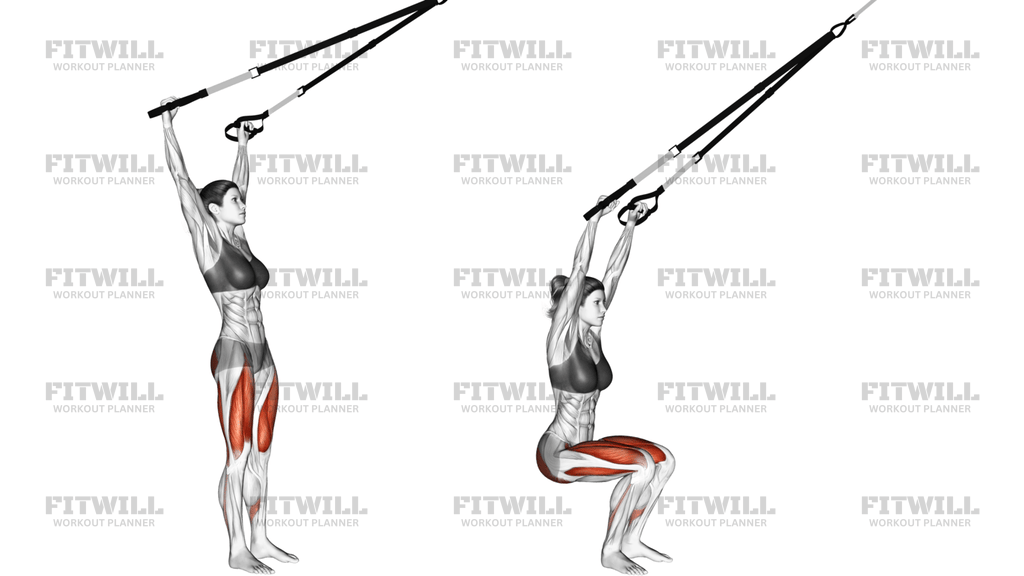
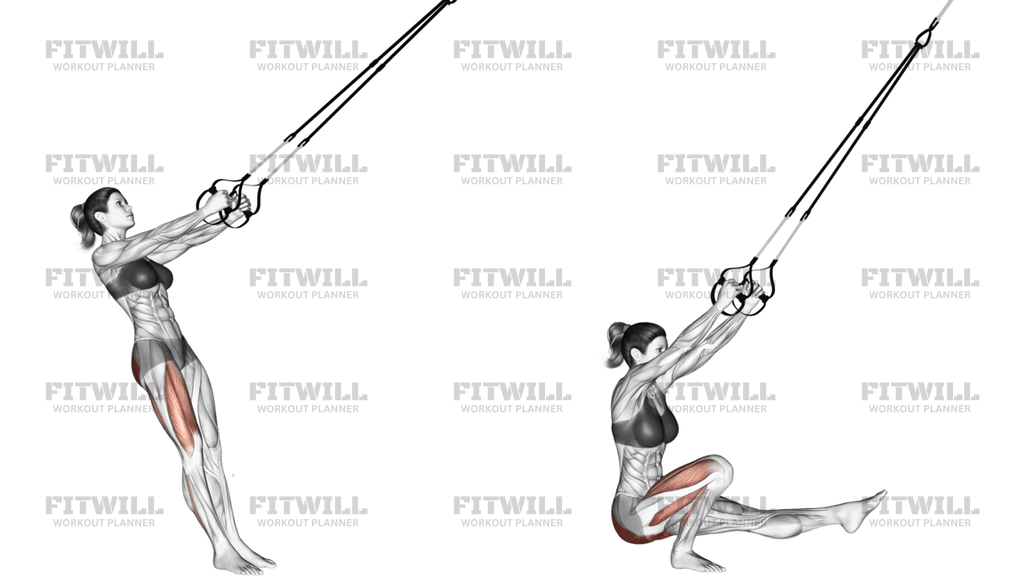
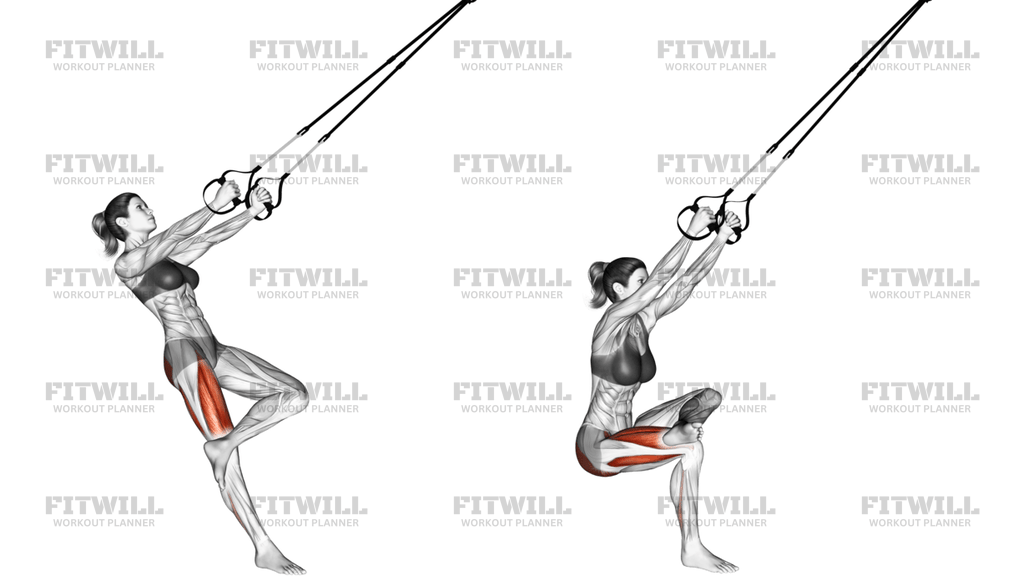
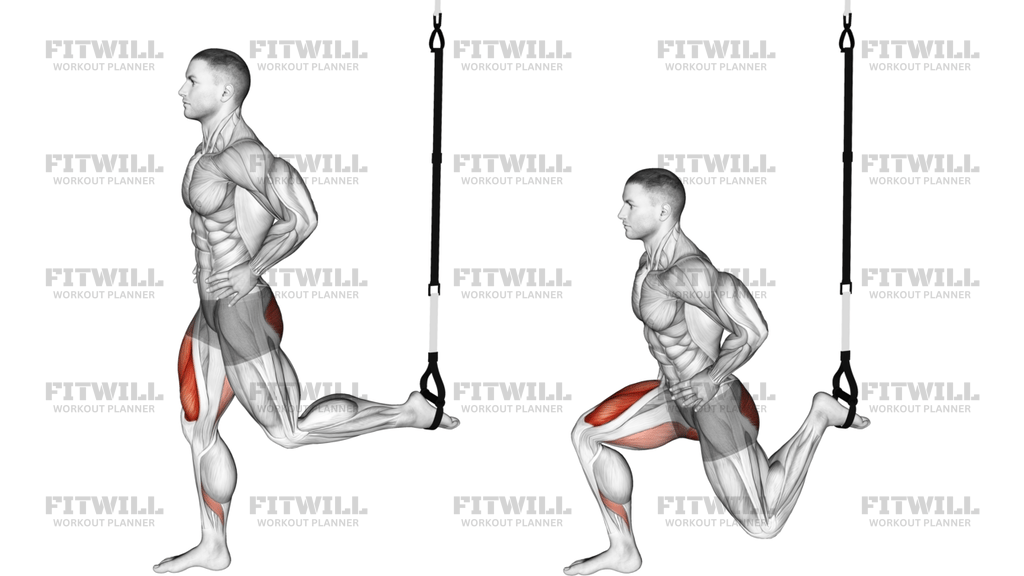
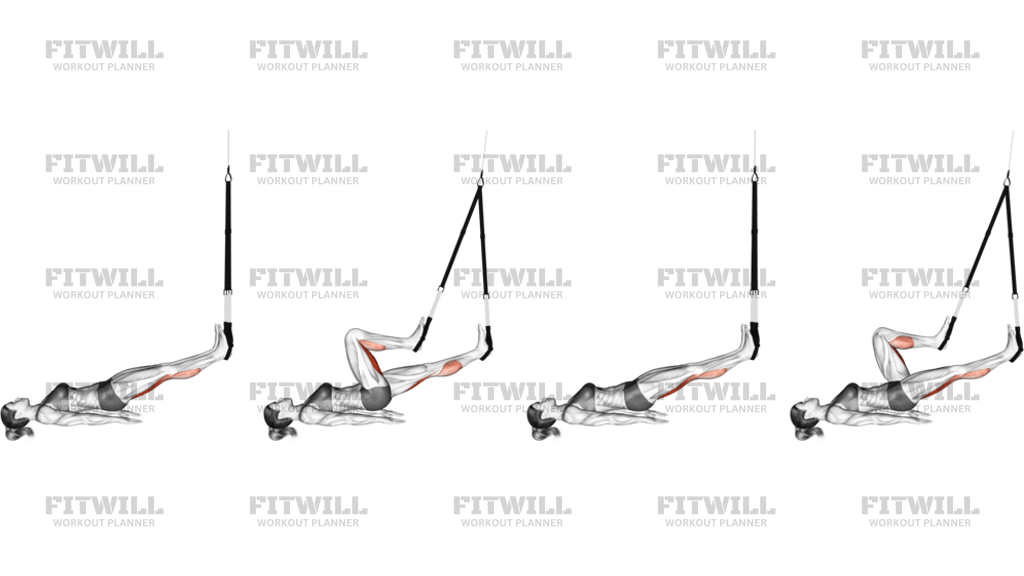
The image shows the classic start and finish positions for a floor-based suspension curl: legs long, straps taut, then heels drawn toward the hips as the knees bend. That setup matters because the straps create instability as well as resistance. If your heels drift, your hips sag, or your ribs flare, the hamstrings lose tension and the movement turns into a sloppy bridge instead of a clean curl.
This exercise is useful when you want hamstring strength without loading the spine heavily. It can fit into lower-body strength work, posterior-chain accessory work, or warmup activation before squats, deadlifts, or running sessions. Compared with a machine curl, the suspension version asks for more control through the core and hips, which makes good body alignment part of the exercise rather than just a byproduct.
A good repetition begins from a stable floor position with the heels secured in the straps and the knees extended enough to feel tension. From there, the curls should happen by pulling the heels toward the glutes while keeping the torso quiet and the pelvis level. The range of motion should stay smooth and repeatable, with no jerking from the straps or snapping at the knees. A brief squeeze near the top helps, but the real goal is keeping constant hamstring tension through the whole rep.
Because the straps can swing and the body can arch, the most important technical standard is control. Use a body angle and foot position that let you keep tension without cramping, and stop the set when the hips start to drop or the lower back takes over. When done well, Suspension Leg Curl feels like a direct hamstring curl with a strong anti-rotation and anti-extension demand built in.
[ Workout Log & Planner ]
Put your next workout in Fitwill
Keep your plan and training log ready when you are.


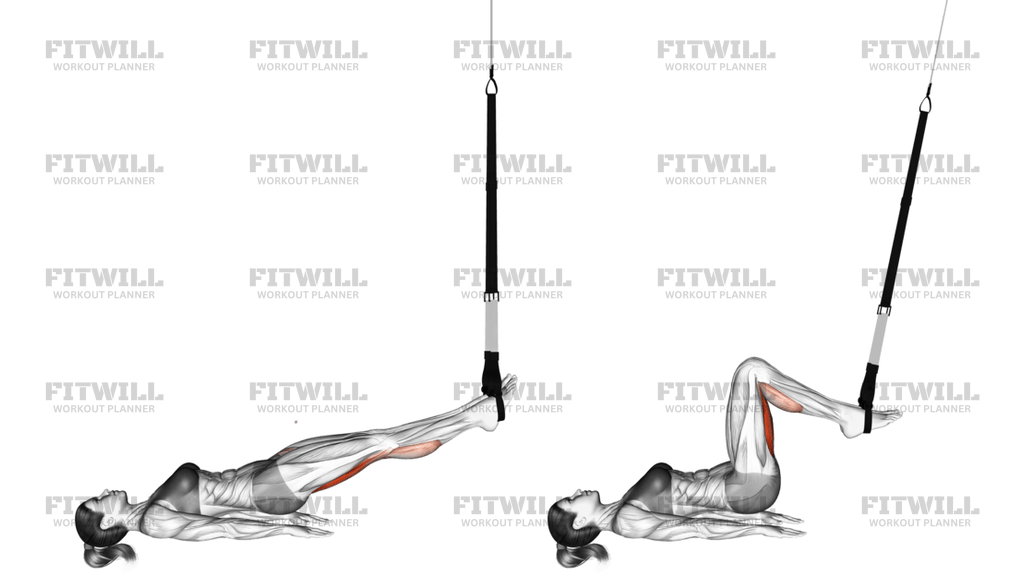
Instructions
- Lie on your back with the heels placed in the suspension straps and your legs extended so the straps are taut.
- Set your arms on the floor slightly out from your sides and press the shoulders down to keep the upper body quiet.
- Brace your abs and lightly tuck the pelvis so your lower back stays in contact with the floor.
- Keep the knees soft but extended enough to start with tension through the hamstrings.
- Curl the heels toward your glutes by bending the knees and drawing the straps in under control.
- Keep the hips level as the knees travel in; do not let the pelvis twist or the low back arch hard.
- Squeeze the hamstrings near the top, then lower the legs back out slowly until the knees are nearly straight again.
- Exhale as you curl and inhale as you return to the long position.
- Reset the straps and your pelvis before the next rep if the legs start shaking or the heels drift.
Tips & Tricks
- Keep the heels centered in the straps; if the feet slide, the curl turns into a balance drill instead of a hamstring set.
- Start with a smaller knee bend if your hamstrings cramp, then build range only after the rep path stays smooth.
- Think about pulling the straps apart slightly as you curl so the legs stay parallel instead of drifting inward.
- Do not let the ribs pop up off the floor; a flared ribcage usually means the abs have stopped controlling the pelvis.
- If the hips rise too high, shorten the range and keep the glutes lightly engaged rather than chasing a bigger curl.
- Lower the legs slowly on the way out; the eccentric phase is where the hamstrings usually lose tension first.
- Use a setup that keeps the straps taut at the start, because slack straps make the first part of the rep unstable.
- Stop the set when the curl becomes jerky or when one heel is traveling noticeably faster than the other.
Frequently Asked Questions
What muscle does Suspension Leg Curl target most?
The hamstrings are the main target, especially because the movement is driven by knee flexion against strap tension.
Can beginners perform this exercise?
Yes, if they can keep the heels in the straps and control the pelvis. A smaller range of motion is often better than forcing a full curl too early.
Where should my feet and heels sit in the straps?
The heels should sit securely in the suspension straps so the line of pull stays stable. If the feet slide toward the toes, the curl gets harder to control and the hamstrings lose clean tension.
Should my hips lift during the curl?
A small, controlled lift is fine if it comes from the glutes and hamstrings, but the hips should not bounce or swing. If the pelvis is rising aggressively, the set is too hard or the range is too long.
What is the difference between this and a machine leg curl?
A suspension curl is less fixed and asks the core and hips to stabilize the body while the hamstrings curl the heels in. A machine curl gives more support and usually isolates the knee bend more strictly.
Why do my hamstrings cramp during this exercise?
Cramping usually happens when the curl is too long, the straps are set too far away, or the hamstrings are not used to loaded knee flexion. Shorten the range and slow the lowering phase.
How should I breathe during Suspension Leg Curl?
Exhale as you pull the heels in and inhale as you let the legs lengthen back out. Keeping the breathing steady helps prevent rib flare and loss of pelvic position.
What should I do if the straps swing a lot?
Reduce the effort, tighten the starting position, and use a slower tempo. Excess swing usually means the curl is too explosive or the body is not staying braced against the floor.