Suspension Rear Lunge
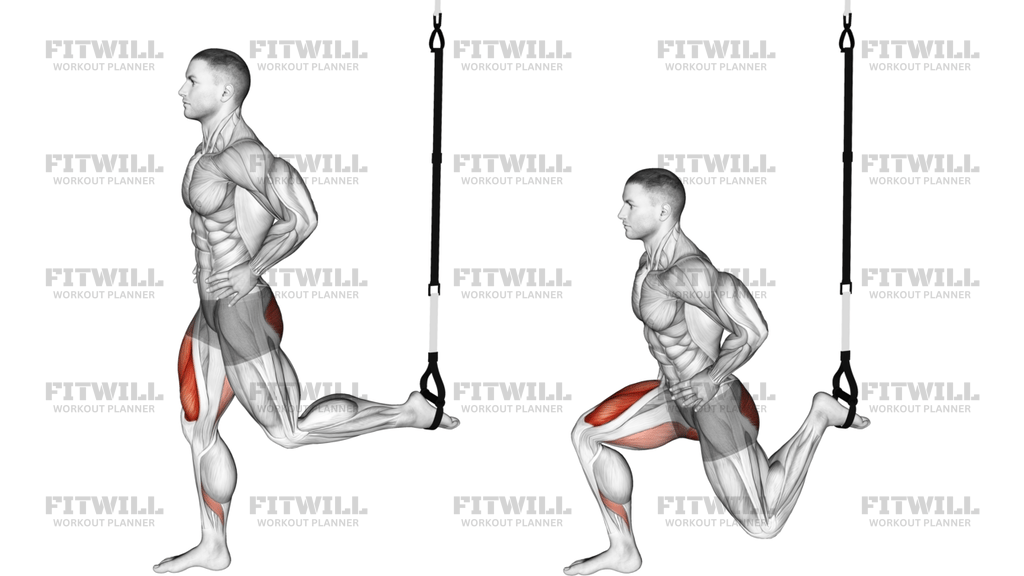
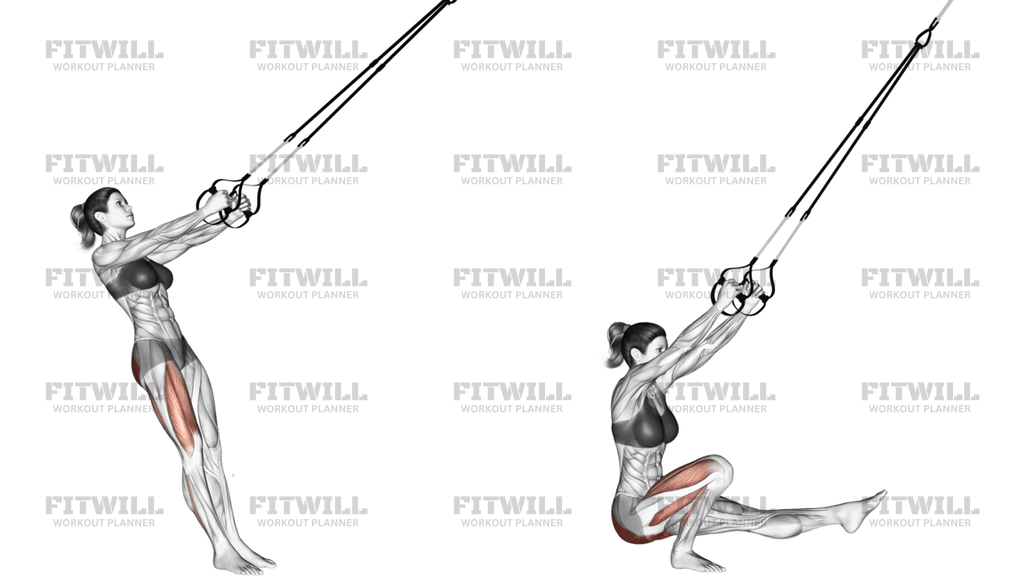
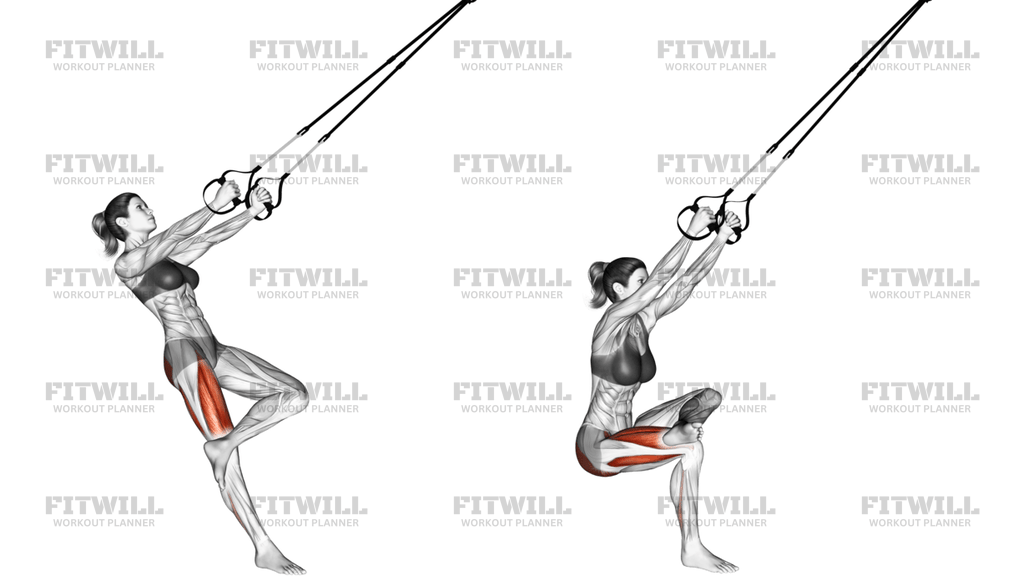
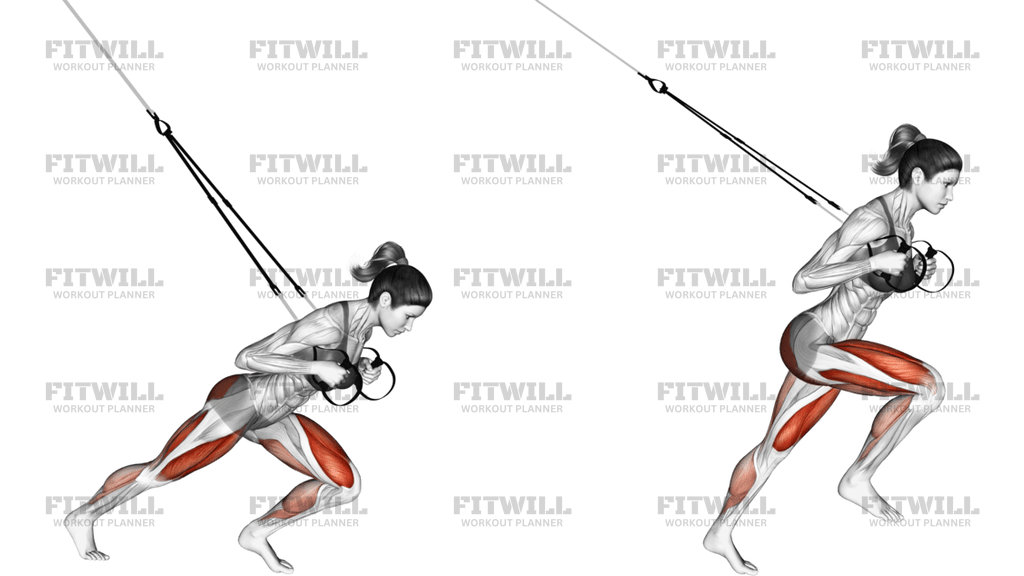
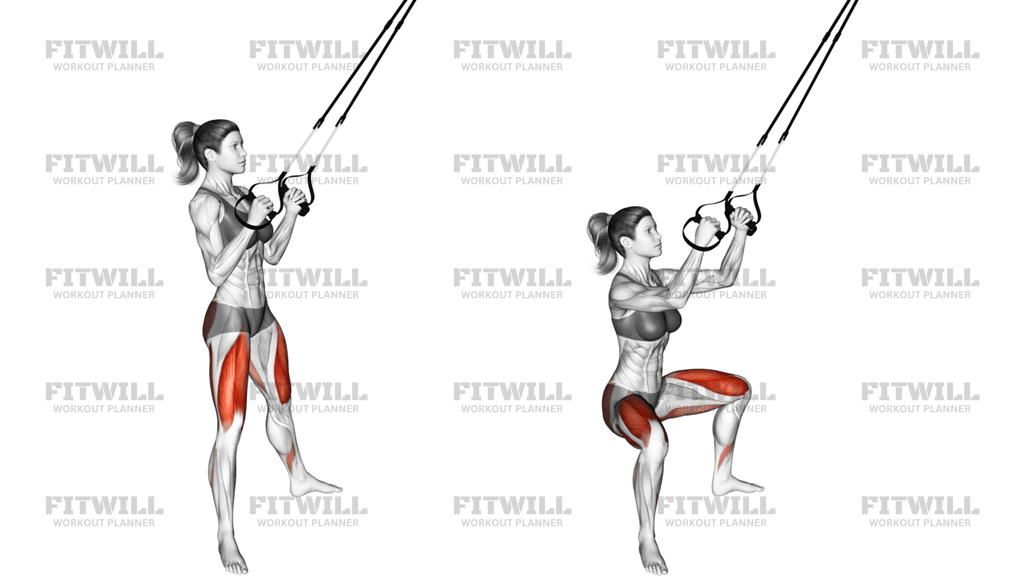
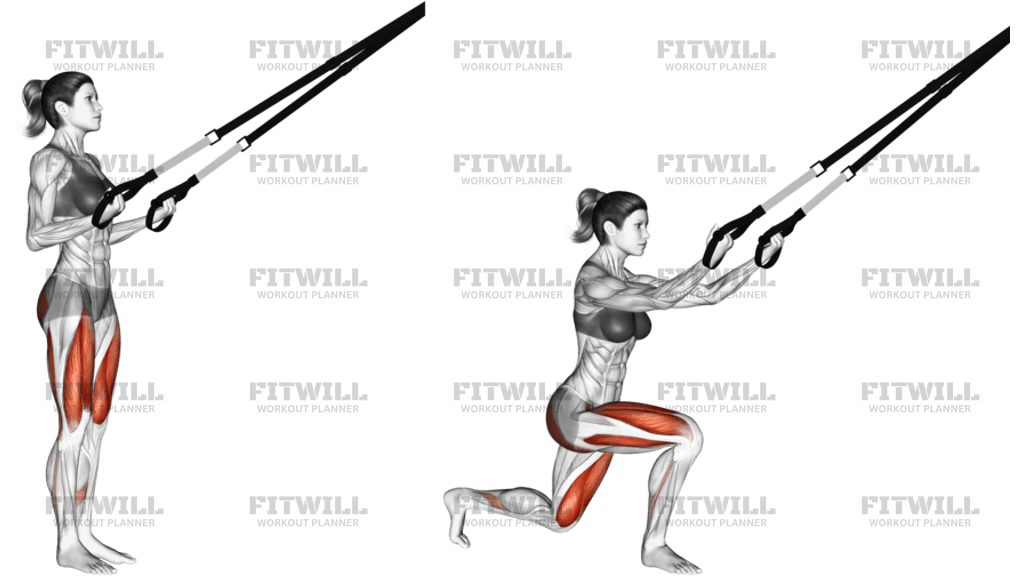
Suspension Rear Lunge is a supported split-stance lower-body exercise that uses suspension straps to help you balance while you step one leg back and sink into a controlled lunge. The image shows the hands lightly holding the straps in front of the body, the torso staying tall, the front foot planted, and the rear knee lowering toward the floor. That support makes the movement easier to control than a free rear lunge, which is useful when you want to reinforce knee tracking, hip control, and clean repetition quality.
The main training emphasis is the glutes, with the quads and hamstrings contributing strongly as the front leg drives you back to standing. In anatomy terms, the work centers on the gluteus maximus, with help from the quadriceps, biceps femoris, rectus abdominis, and erector spinae. Because the straps reduce balance demands, you can focus on loading the front leg and keeping the pelvis square instead of fighting to stay upright.
Setup matters here. Stand facing the anchor point, hold the handles with straight or slightly bent arms, and take enough tension in the straps that they support balance without pulling you forward. Before each rep, brace the trunk, plant the front foot, and step the other leg back on the ball of the foot. Keep the front heel down, let the back knee travel toward the floor, and make sure the front knee tracks in line with the toes rather than collapsing inward.
Each repetition should feel like a smooth descent and a strong drive back up. Lower under control until the rear knee is close to the floor or you reach your available pain-free depth, then press through the front foot to return to standing. Use the straps only as a guide, not as a pull-up assist; the legs should create the lift. Breathe in on the way down, exhale as you stand, and reset your stance before the next rep.
This variation is useful for beginners learning lunge mechanics, for lifters working around balance limitations, and for accessory work when you want unilateral leg training without loading a barbell. It also fits well in warm-ups, lower-body sessions, and corrective strength blocks. The biggest wins come from steady tempo, a tall chest, and consistent front-foot pressure rather than from chasing depth or speed.
[ Workout Log & Planner ]
Put your next workout in Fitwill
Keep your plan and training log ready when you are.


Instructions
- Stand facing the suspension anchor and hold both handles with your arms in front of your chest.
- Step back far enough that the straps have light tension and your body stays balanced without leaning forward.
- Set your front foot flat on the floor, point both toes mostly forward, and stack your ribs over your pelvis.
- Brace your trunk, then step one leg straight back so the back heel lifts and the rear foot stays on the ball of the foot.
- Lower into the lunge by bending both knees until the rear knee moves close to the floor and the front thigh approaches parallel.
- Keep the front knee tracking over the middle toes and keep most of your weight in the front heel and midfoot.
- Press through the front foot to stand back up while keeping tension in the straps and your torso tall.
- Finish each rep with the hips and knees fully extended, then reset your stance before starting the next lunge.
Tips & Tricks
- Hold the handles lightly; if you are hanging on hard, the straps are doing too much of the work.
- Keep the anchor tension steady so you can balance, but do not let the straps pull your shoulders forward.
- Let the front knee move forward naturally as long as it stays aligned with the toes and the heel stays down.
- Take a longer split stance if your back knee hits the floor too early or your torso folds over.
- Shorten the stance if you cannot keep the front shin and torso position stable during the descent.
- Lower under control for two to three seconds so the front leg stays loaded instead of bouncing out of the bottom.
- Use the rear leg as a kickstand only; the front leg should drive you back to standing.
- Stop the set if the front knee caves inward or the pelvis twists away from the anchor.
Frequently Asked Questions
What muscle does Suspension Rear Lunge target most?
The glutes are the primary target, with the front-leg quads and hamstrings also working hard to control the lunge.
How do the suspension straps change the movement?
The straps add balance support, which makes it easier to stay upright and focus on the front leg instead of fighting for stability.
Should I pull on the handles during the rep?
No. Keep light tension in the handles, but let the legs do the lifting and lowering while the straps only help you stay balanced.
How far back should the rear leg step?
Step back far enough that both knees can bend comfortably and the back knee can approach the floor without forcing the torso to collapse.
Can beginners use this version of the lunge?
Yes. The straps make it a good option for learning split-stance mechanics before moving to an unsupported rear lunge or a loaded variation.
What should the front knee do during the descent?
It should track in line with the toes and stay controlled, not collapse inward or drift sharply side to side.
How low should I go?
Go only as low as you can while keeping the front heel down, the torso tall, and the rear knee controlled near the floor.
What is the main form mistake to avoid?
Do not use the straps to yank yourself up or down. If the handles are taking over, the front leg is no longer the main driver.