Barbell Larsen Press
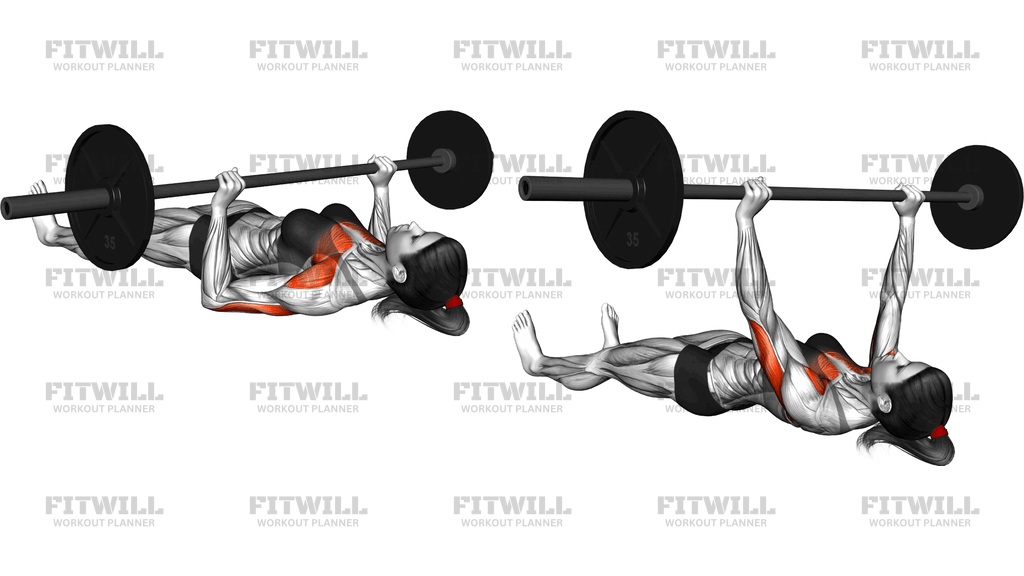
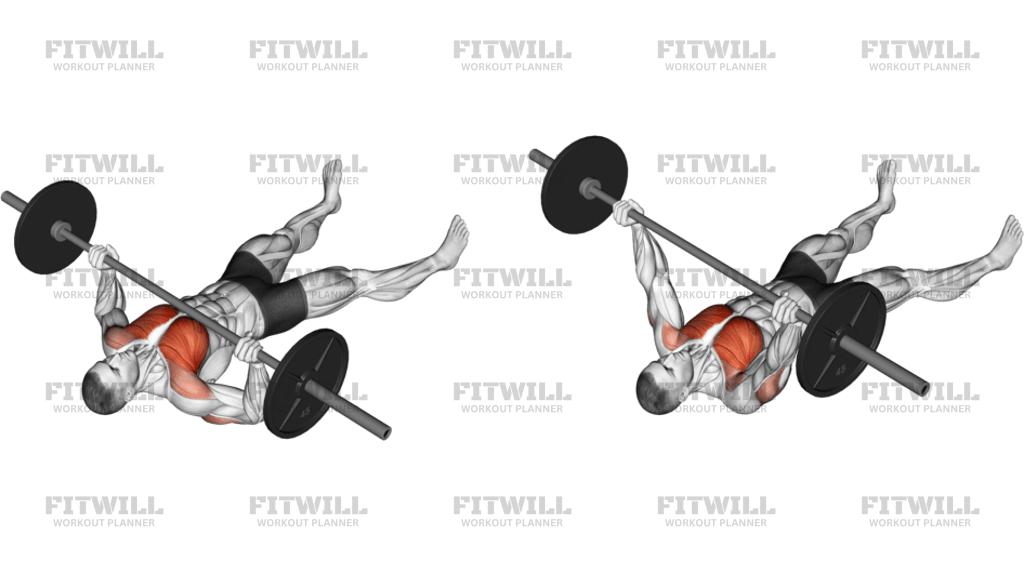
The Barbell Larsen Press is a bench press variation performed with your legs stretched straight out along the bench instead of planted on the floor. By removing your feet from the ground, you cut off leg drive entirely, which forces your chest, shoulders, and triceps to do all of the work and makes your torso stabilize the bar without help from your lower body. It looks like a regular bench press, but the feel is noticeably different from the first rep.
This variation is especially useful for lifters who rely heavily on arching and driving through their legs during a standard bench press. With the legs out of the equation, you get an honest read on your upper-body pressing strength, and the constant tension on the chest can help break through sticking points in the mid-range of the press. Powerlifters use it as an accessory to strengthen their competition bench under stricter conditions, while general lifters use it to build chest size with cleaner technique.
The setup matters more than in a normal bench press. Because your legs are extended and your body cannot anchor through the floor, your shoulder blades must stay pulled back and down, and your core has to work harder to keep your torso from shifting. Use a lighter load than your regular bench press at first — the Larsen Press typically handles 10 to 20 percent less weight, and jumping in too heavy is the most common mistake people make with it.
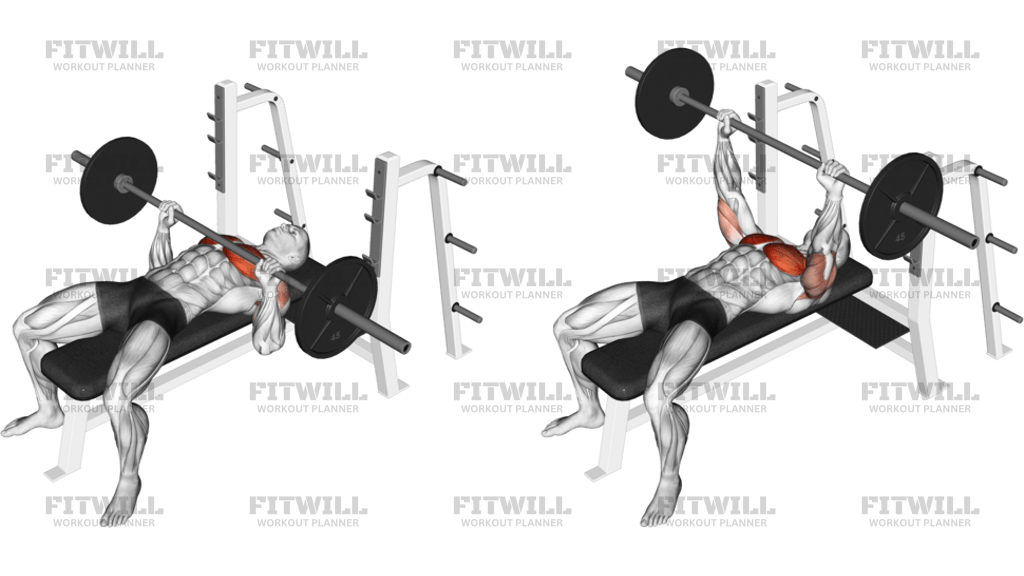
To perform it well, lie flat on a bench with your eyes under the bar, extend your legs straight down the length of the bench, and let your feet rest lightly on the floor or hover just above it without pressing down. Grip the bar slightly wider than shoulder width, lower it to your mid-chest under control, then press it back up in a slight arc until your arms are extended over your shoulders. Keep the movement smooth and deliberate rather than bouncing or rushing the descent.
You will most often see the Larsen Press programmed as an accessory movement in moderate rep ranges, somewhere between 6 and 12 reps per set, after the main pressing work of the day. It pairs well with rows and pull-ups to balance the pressing volume. Safety-wise, always use a rack with safety pins set at bench height or a competent spotter, since the reduced stability of this variation makes a missed rep more likely when you are fatigued.
[ Workout Log & Planner ]
Put your next workout in Fitwill
Keep your plan and training log ready when you are.


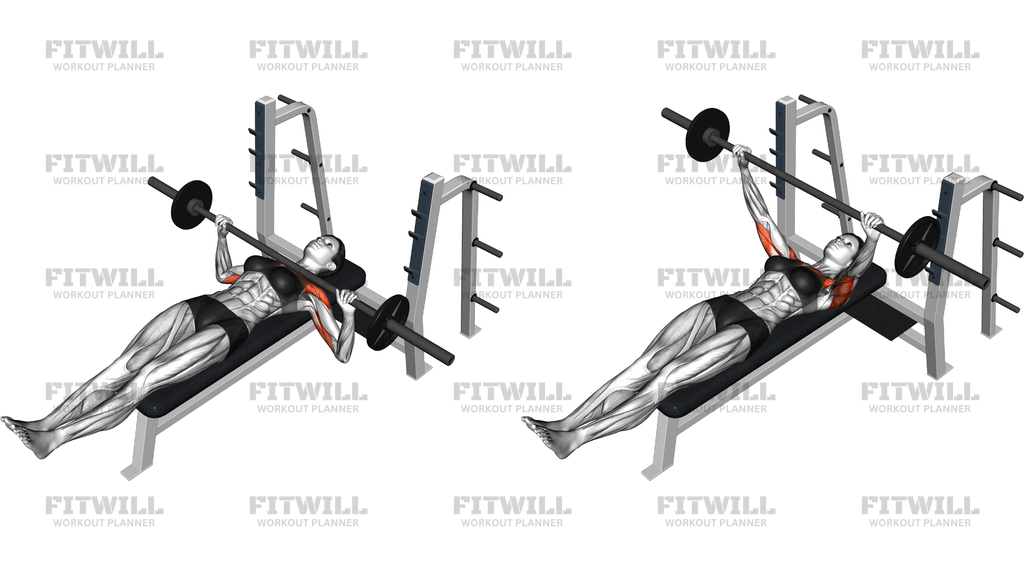
Instructions
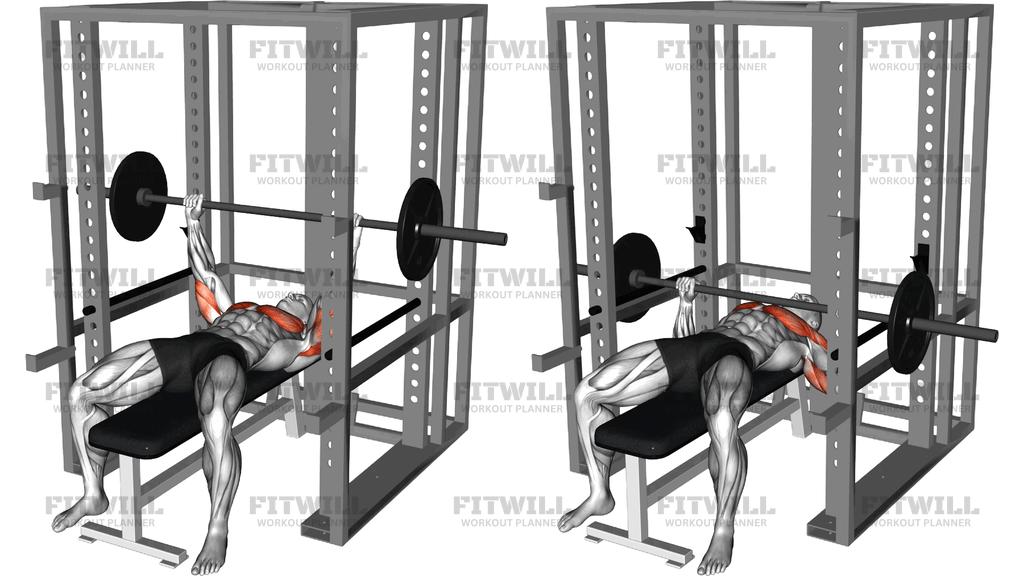
- Set a flat bench inside a power rack and adjust the safety pins just below the level of your chest when you are lying on the bench.
- Lie back with your eyes directly under the barbell, then extend both legs straight down the length of the bench so your feet rest lightly on the floor past the end, with no pressure through your heels.
- Grip the bar slightly wider than shoulder width, squeeze it firmly, and pull your shoulder blades back and down into the bench.
- Take a breath into your belly and brace your core before unracking, then bring the bar out over your mid-chest with straight arms.
- Lower the bar under control toward your mid-chest, keeping your elbows at roughly a 45 to 70 degree angle to your torso.
- Touch your chest lightly at the sternum level without bouncing, keeping your wrists stacked over your elbows.
- Press the bar up and slightly back in a gentle arc until it finishes over your shoulder joints with arms fully extended.
- Exhale as you press, then inhale again at the top before starting the next repetition.
- Complete all reps, then guide the bar back over your face and shoulders to rack it before relaxing your grip and core.
- Rest your feet fully passive throughout the set — if you feel yourself pressing into the floor, reset your position before continuing.
Tips & Tricks
- Start with roughly 60 to 80 percent of your normal bench press working weight; the loss of leg drive makes the bar feel heavier than the plate math suggests.
- The most common mistake is unconsciously pressing your feet into the floor to stabilize — if your heels dig in, you have turned it back into a regular bench press.
- Keep your hips in contact with the bench. Lifting the hips to shorten the range defeats the purpose of the strict setup.
- If the bar wobbles at the top, your grip may be too narrow or your shoulder blades have drifted apart — reset them against the bench before the next rep.
- Chalk or a full-grip on the bar helps more here than usual, since hand slippage is harder to manage without a braced lower body.
- Position yourself so the bar is racked closer to your head than in a standard bench setup, because reaching too far to unrack pulls your shoulder blades out of position.
- Stop the set when your core starts fatiguing and your torso begins rotating, not just when your chest gives out — sloppy stabilization is where form breaks down.
- Use a pause on the chest for a rep or two at lighter loads if you want extra stretch tension on the pecs, but keep the pause controlled rather than relaxing at the bottom.
- Do not attempt this variation with a max-effort load without safety pins; the legs cannot rescue a stalled bar the way they can in a regular bench press.
Frequently Asked Questions
What muscles does the Barbell Larsen Press work?
It primarily trains the chest, with the front shoulders and triceps assisting on every rep. Because leg drive is removed, your core also works harder than in a standard bench press to keep your torso stable.
How is the Barbell Larsen Press different from a regular bench press?
In the Larsen Press your legs are stretched straight out with your feet resting lightly or hovering, so you cannot arch heavily or drive through the floor. This makes the press stricter and shifts all of the load onto your upper body.
Is the Barbell Larsen Press good for beginners?
It can be, but most beginners should learn the standard bench press first. If you do try it, use a light weight with safety pins set, since the reduced stability takes some getting used to.
Why is my Larsen Press weaker than my regular bench press?
That is expected. Leg drive and a strong arch contribute a meaningful amount to a normal bench press, so losing 10 to 20 percent or more of your working load on the Larsen Press is normal, not a sign of weakness.
Where should my feet be during the Barbell Larsen Press?
Extend your legs straight down the bench and let your feet rest on the floor with no pressure, or hold them slightly off the floor. The key is that they contribute nothing to the press.
What is the most common mistake with this exercise?
Pressing the feet into the floor without realizing it, which turns the movement back into a regular bench press. Another frequent error is loading it like a normal bench press and having the bar drift or stall.
Can I do the Barbell Larsen Press with dumbbells instead?
Yes, a dumbbell version with the same legs-extended position is a reasonable substitute, especially if you train without a spotter. The barbell version loads the pattern more heavily, but the dumbbell variation is easier to bail from.
How many sets and reps should I do for the Barbell Larsen Press?
It works best as an accessory lift in the 6 to 12 rep range for 2 to 4 sets, done after your main pressing work. Keep at least a couple of reps in reserve on early sets while you learn the position.
Is the Barbell Larsen Press safe without a spotter?
Only if you set safety pins in a rack just below your chest height. Since your legs cannot help you recover a stalled bar, the pins or a spotter are essential for heavy sets.