Barbell Clean Pull
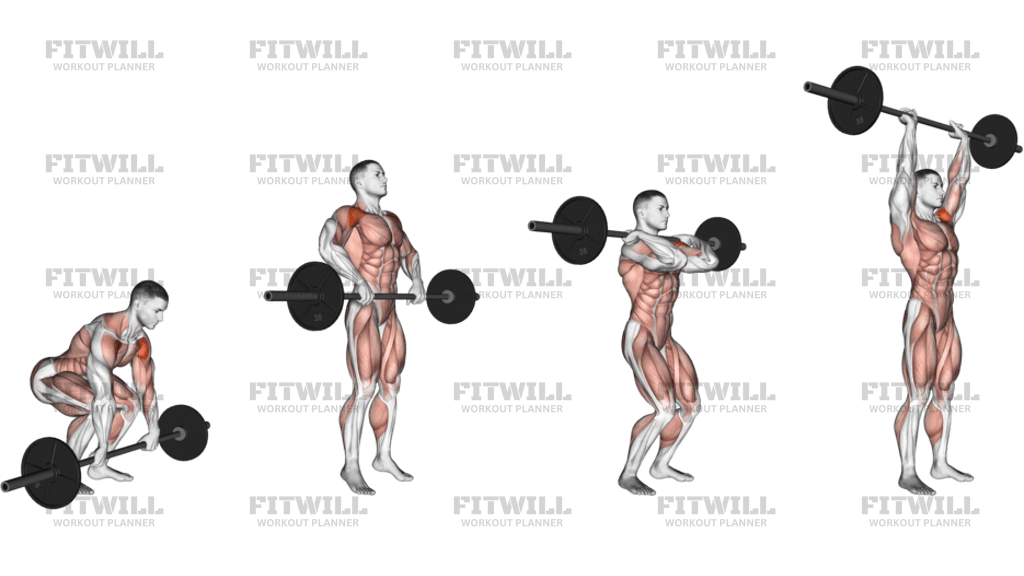
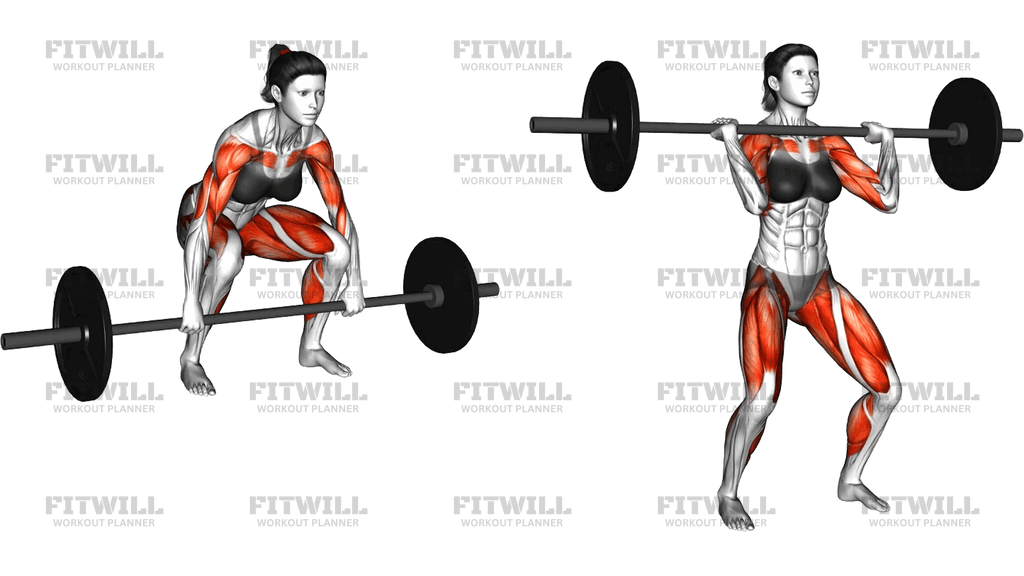
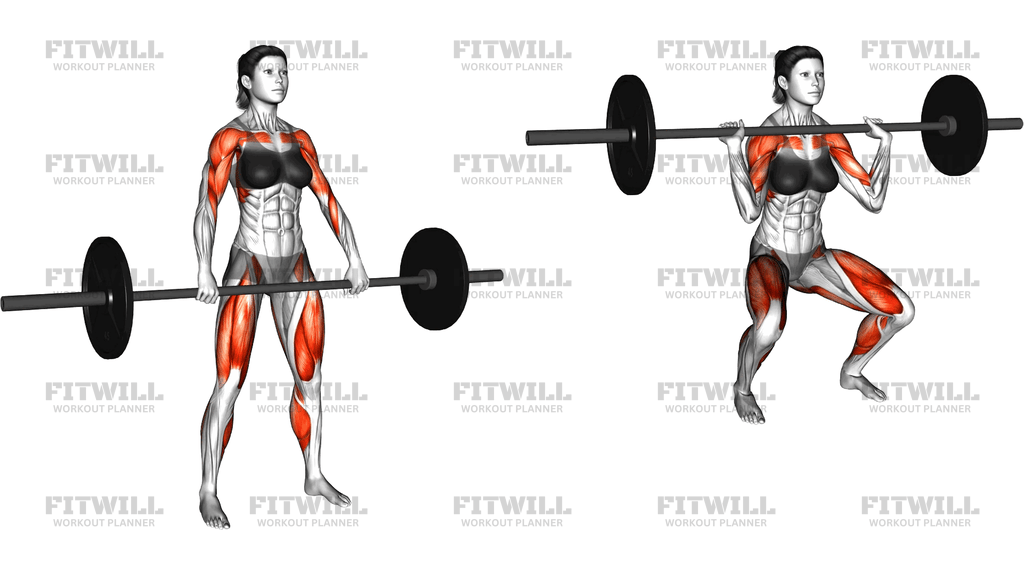
The Barbell Clean Pull is the strength-building backbone of the clean. You set up exactly as you would for a clean, pull the bar from the floor with an aggressive leg and hip drive, and finish with a powerful shrug and elbow lift, but you stop before the catch. That means you get all the explosiveness and loading of the full lift without needing the wrist mobility, front rack position, or turnover speed a clean demands.
This lift is a staple for weightlifters, sprinters, and field-sport athletes because it trains the stretch-shortening chain: quads and glutes extend the knees and hips, hamstrings and lower back hold the spine in place, and the traps and upper back finish the pull as the bar rises toward the chest. In the final position the bar sits around waist to lower-chest height with elbows high and out to the sides, much like the top of a wide upright row driven by the whole body.
Setup matters more here than in most barbell work. Because the goal is maximal bar speed, a sloppy starting position gets amplified. Feet stay roughly hip-width with the bar over the mid-foot, the grip is slightly wider than the shoulders, and the shoulders sit just ahead of the bar with a flat, braced back. If your hips shoot up first or the bar drifts away from your legs, the bar loses its path and the pull turns into a stiff good morning.
To execute well, think of the pull in layers: push the floor away with your legs while the bar sweeps back into your thighs, then when the hips reach full extension, keep pulling with the traps and elbows so the bar continues upward. The arms are ropes, not motors, until the very top. Adding too much arm pull too early is the most common error and it bleeds power out of the hips where the real force is produced.
Because the clean pull skips the catch, it also lets you load heavier than your clean for building the pull itself, or lighter than your clean for speed work. Use it as a primer before cleans, as a main strength movement on pulling days, or as a bridge for lifters who are not yet ready to receive a bar in the front rack. Keep reps in the low range, typically three to five, so every rep stays fast and sharp rather than grinding into a slow deadlift.
[ Workout Log & Planner ]
Put your next workout in Fitwill
Keep your plan and training log ready when you are.


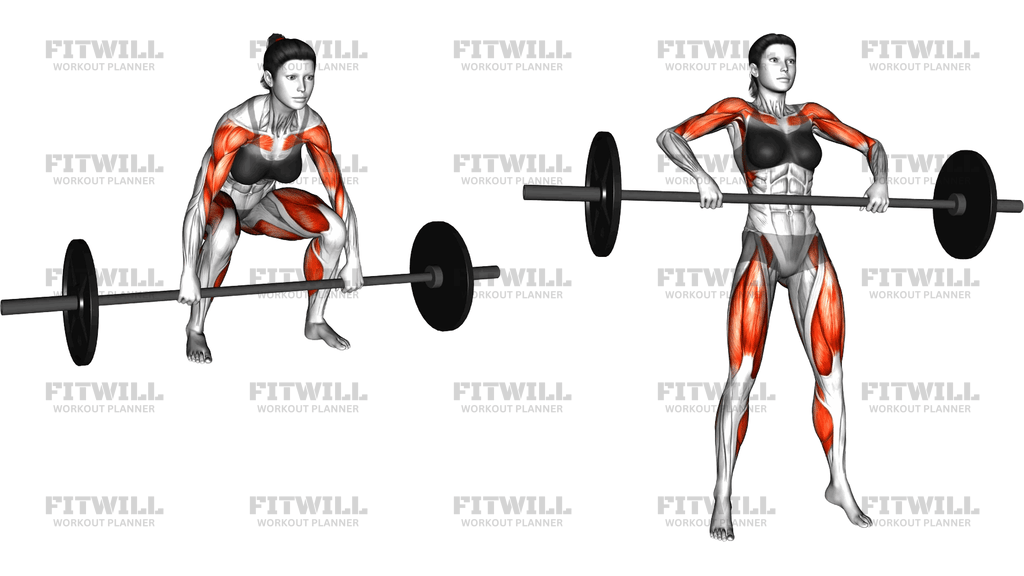
Instructions
- Stand over the barbell with feet about hip-width apart, the bar directly over the middle of your feet, and set your grip slightly wider than shoulder width with a full hook or overhand grip.
- Bend the knees and hinge at the hips to bring the shoulders slightly in front of the bar, chest up, back flat, and the bar touching or nearly touching your shins.
- Take a breath into your belly and brace the trunk like you are about to be punched, keeping the lats tight so the elbows point down and back.
- Drive the floor away through your whole foot, extending the knees while the bar sweeps back into your upper thighs.
- As the hips reach full extension, force the knees, hips, and ankles into a tall jump position and let the momentum carry the bar upward.
- Continue the pull by shrugging the traps and pulling the elbows high and out to the sides, letting the bar rise toward your lower chest, keeping it close to the body.
- At the top, stand tall with the traps elevated and elbows wide, but do not rotate the bar or attempt a catch.
- Lower the bar under control by extending the arms, letting it travel back down the thighs, bending the knees slightly to absorb it toward the floor or the hang position.
- Exhale at the top or during the lowering phase, reset your brace and back angle, and take a full breath before starting the next rep.
Tips & Tricks
- If your hips shoot up before the bar moves, you are deadlifting the bar instead of pulling it. Lower the weight and cue yourself to push the floor with your legs for the first third of the pull.
- A bar that swings away from the body at the top usually means the hips are not fully extended before the shrug. Finish tall with glutes squeezed before the elbows lift.
- Early arm bend is the classic clean pull mistake. Keep the arms straight until the hips finish extending, then think of the elbows as the last link in the chain.
- Do not turn the top into a slow upright row. The bar should rise because of hip and leg explosion, with the shrug and elbow pull only continuing that momentum.
- Keep the bar path vertical and close to the thighs. If it arcs around your knees, your starting shoulder position is too far behind the bar.
- Hook grip or straps let you focus on speed instead of grip survival, but the grip is still highlighted in the finish, so avoid loosening your fingers at the top.
- Every rep should look identical. If the bar slows down or your torso collapses, end the set, because clean pulls train speed and quality positions, not fatigue.
- On the descent, keep the bar against your legs rather than dropping it from the top, which protects your lower back and lets you reset in a strong position.
- Start from the floor every rep if you are training the full lift; if your goal is the second pull specifically, use hang clean pulls from mid-thigh instead.
Frequently Asked Questions
What muscles does the Barbell Clean Pull work?
It primarily trains the glutes, hamstrings, and quads through explosive hip and knee extension, with the traps and upper back finishing the pull at the top. The lower back, forearms, and calves all contribute to keeping the spine rigid and the body tall through the pull.
How is the Barbell Clean Pull different from a power clean?
The clean pull stops after the explosive second pull with a tall shrug and high elbows, while a power clean continues into the catch at the shoulders. This makes the pull easier to learn and lets you use heavier loads or focus purely on pulling power.
Is the Barbell Clean Pull suitable for beginners?
Yes, as long as you can hip hinge and deadlift with a flat back. Beginners should start light from a hang position at mid-thigh to learn the aggressive extension and shrug before pulling from the floor.
Why do my elbows point out to the sides at the top of the Barbell Clean Pull?
That wide, high elbow position is the natural finish of the pull, similar to the top of a wide upright row, and it keeps the bar close to your body. It also mimics the trajectory the bar needs if you later transition to the full clean.
Should I use a hook grip or straps for the Barbell Clean Pull?
Either is fine. A hook grip builds grip strength and stays specific to the clean, while straps let you focus on speed and hip drive with heavier loads without your grip becoming the limiting factor.
How heavy should I go on clean pulls?
Most lifters use anywhere from 80 to 110 percent of their best clean, depending on the goal. Lighter loads build speed and positions, heavier loads build raw pulling strength, but every rep should stay fast and technically clean.
How many reps and sets should I do for the Barbell Clean Pull?
Keep sets short, typically three to five reps for three to five sets. Once reps get slow or your torso starts rounding, the set is over because the lift trains explosiveness, not endurance.
Can the Barbell Clean Pull replace deadlifts in my training?
Not entirely. Clean pulls emphasize explosive extension and bar speed, while deadlifts build maximal slow strength from a static start. They pair well together, with pulls for power and deadlifts for absolute strength.
My lower back gets sore after clean pulls. Is that normal?
Some muscular fatigue in the lower back is expected since it works hard to hold your spine rigid during powerful hip extension. Sharp pain or a rounded-back pull is a problem, so reduce the load, film your setup, and make sure your back stays flat from the floor through the finish.
What can I substitute if I do not have a barbell for the Barbell Clean Pull?
Dumbbell or kettlebell clean pulls work well and are easier on the grip, while trap bar clean pulls are a close match with a more forgiving back angle. Resistance band pulls can also teach the jump-and-shrug pattern when no weight is available.