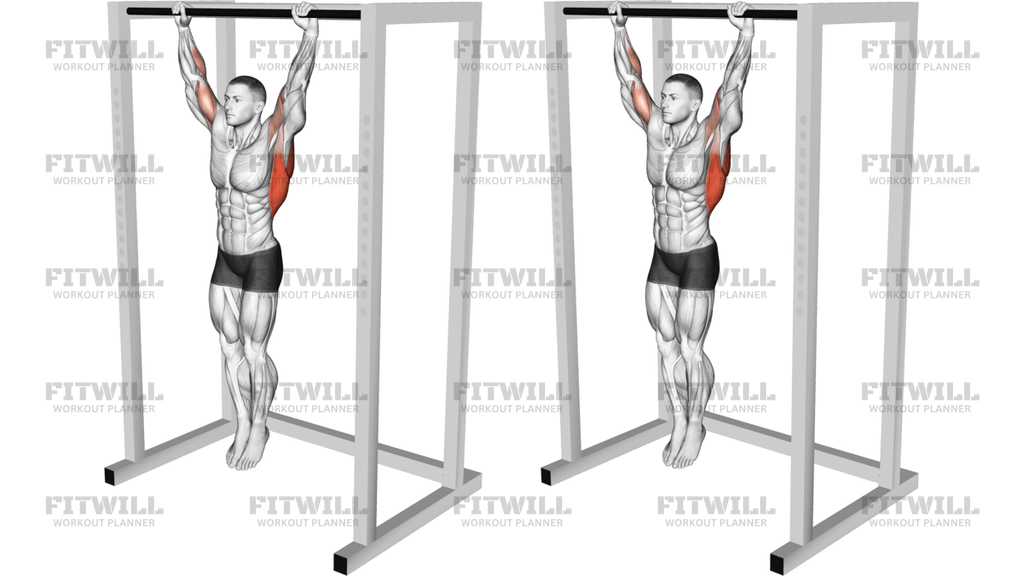
Dead Hang Stretch
The Dead Hang Stretch is exactly what it sounds like: you grip an overhead pull-up bar with straight arms and simply let your body hang, allowing gravity to pull your spine, shoulders, and lats into a long, passive stretch. There is no pulling, no bending, and no rep counting in the traditional sense — the goal is to relax into the position and let the tension drain out of the tissues that spending hours sitting, lifting, or training tends to shorten. It is one of the simplest movements in the gym, yet it addresses several areas at once that almost nothing else touches so directly.
This stretch is particularly valuable for anyone with compressed or stiff shoulders and an upper back that feels locked down. Pull-up athletes and climbers use it to maintain shoulder range of motion and recover between pulling sessions, while desk workers benefit from the way it decompresses the spine and opens the latissimus dorsi, teres major, and chest after long stretches of sitting. Powerlifters who squat and bench heavy also use it as a low-effort way to restore overhead reach without needing a partner or stretching straps.
The main areas loaded during the Dead Hang Stretch are the lats, the upper back and trapezius region, the shoulder joint capsule, the forearms and fingers from supporting your body weight, and the thoracic and lumbar spine, which get gently tractioned as your hips sink toward the floor. Because you are hanging vertically with straight arms, the stretch travels naturally from your fingertips up through the wrists, elbows, armpits, and rib cage.
Setup matters more than it might seem. The bar needs to be high enough that your feet clear the floor when your arms are fully extended, and your grip should be roughly shoulder-width or slightly wider with palms facing away. If the bar is too low and your feet stay grounded, you lose the decompression effect and end up doing a half-hearted reach instead of a true hang. Chalk or a secure overhand grip helps you relax fully rather than clinging on with white-knuckled tension.
Execution is about patience, not effort. Step up to the bar, establish your grip, and lower yourself under control so you are not dropping into the shoulder socket. Once hanging, breathe slowly and let your hips and legs settle — the longer you hold, the more your lats and shoulders release. Avoid swinging, and keep your neck relaxed rather than jutting the chin up toward the bar.
Practically, the Dead Hang Stretch works well as a warm-up opener before upper-body pulling, as a cool-down after back or shoulder training, or as a standalone daily habit for spinal decompression. Start with 15 to 30 second holds and build toward 45 to 60 seconds as your grip and shoulders adapt. If your grip fails before you feel a stretch, use lifting straps or a assisted hang with feet lightly touching a block, and never force the position through pain in the shoulder or neck.
[ Workout Log & Planner ]
Put your next workout in Fitwill
Keep your plan and training log ready when you are.


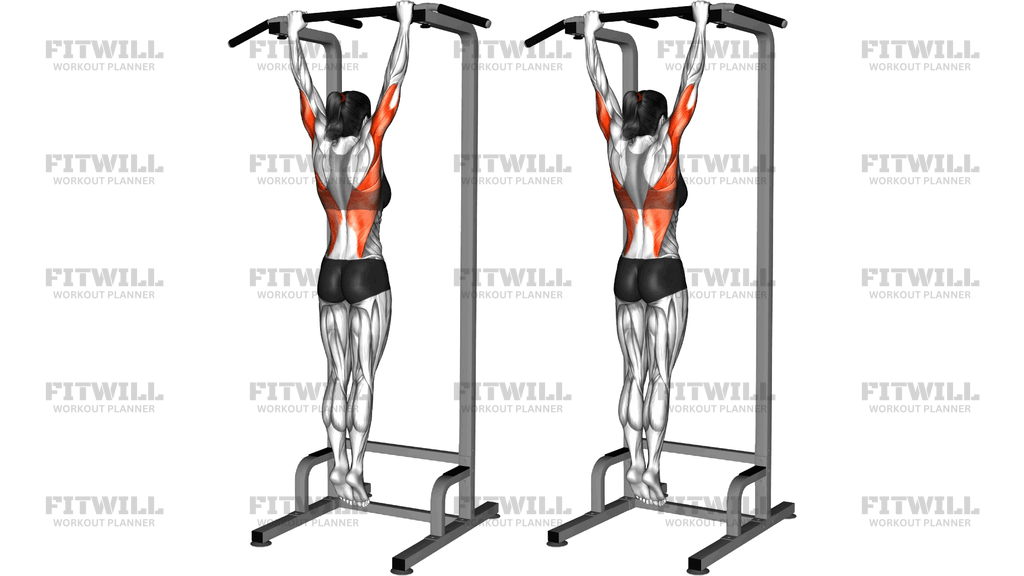
Instructions
- Stand under a sturdy pull-up bar set high enough that your feet clear the floor when your arms are straight.
- Reach up and grip the bar with an overhand grip, hands about shoulder-width apart or slightly wider, wrapping your thumbs around the bar.
- Take a breath, brace lightly through the torso, and step or jump off the ground, lowering your body weight smoothly into the hang so you do not drop jerkily into the shoulders.
- Let your arms stay fully straight and allow your hips and legs to sink downward until your body forms one relaxed vertical line from hands to feet.
- Soften your shoulders away from your ears without actively pulling the shoulder blades down, and let your head hang neutral between your arms.
- Breathe slowly and deeply through your nose, and with each exhale let the lats, shoulders, and spine relax a little further into the stretch.
- Hold the passive hang for 15 to 60 seconds depending on your comfort and experience, keeping your body still and avoiding any swinging.
- To finish, place your feet on the floor or a step, transfer your weight gradually, release one hand at a time from the bar, and stand up slowly.
- Reset your grip and shoulder position before the next hang rather than re-gripping mid-air while fatigued.
Tips & Tricks
- If your fingers start slipping before you feel a stretch in your lats, use chalk or lifting straps — a losing grip battle keeps your forearms and upper traps tense and defeats the purpose of the hang.
- A common mistake is shrugging up toward the ears and half-holding the hang with active shoulders; deliberately let the shoulders ride up toward the bar so the joint gets real lengthening.
- Keep your chin tucked and neck neutral; craning the head toward the bar tightens the upper trapezius and reduces the stretch through the lats and armpits.
- Resist the urge to swing or twist while hanging — momentum shifts the stretch out of the lats and loads the elbow and shoulder joints with unnecessary stress.
- If full bodyweight is too intense on the shoulders, bend the knees and lightly touch your toes to a low step or block so you are only partially suspended.
- Exhale slowly and long during each hold; holding your breath while hanging tends to stiffen the rib cage and limits how far the lats and chest can release.
- Build hang time gradually — if your forearms shake or your fingers open involuntarily, end the set rather than riding out a failing grip.
- For extra lat emphasis, think about lengthening through the armpits and letting the ribs spread away from the hips rather than just sinking at the hips.
- Do the Dead Hang Stretch after pulling workouts or long sitting sessions rather than right before heavy pressing, when the shoulder capsule is most receptive to gentle traction.
Frequently Asked Questions
Which muscles does the Dead Hang Stretch target?
It primarily lengthens the lats and the shoulder joint area, with secondary stretch through the upper traps, chest, and forearms. Your grip also works isometrically to hold your body weight on the bar.
Can beginners do the Dead Hang Stretch?
Yes — most beginners can start with 10 to 20 second holds using an overhand grip on a pull-up bar. If bodyweight is too much at first, keep your toes lightly supported on a low step while hanging.
How long should I hold a Dead Hang Stretch?
Start with 15 to 30 seconds and build toward 45 to 60 seconds per hang as your grip and shoulders adapt. Two to three hangs per session is plenty for most people.
Why does my grip give out before my lats feel stretched?
Forearm strength usually fatigues faster than the lats relax, especially in beginners. Use chalk, lifting straps, or a partially supported hang with feet on a low block so the stretch, not your grip, becomes the limiting factor.
Should I keep my shoulders relaxed or pulled down during a Dead Hang Stretch?
For a stretch, let the shoulders ride up toward your ears instead of actively pulling the shoulder blades down and back. Active depression turns it into a strength hold and shortens the tissue you are trying to lengthen.
Is it normal to feel the Dead Hang Stretch in my lower back?
A mild traction sensation in the spine is common and expected since the hang decompresses the torso. If you feel sharp or radiating pain rather than a comfortable lengthening, stop and reduce the hang time or support some weight with your feet.
What can I use instead of a pull-up bar for the Dead Hang Stretch?
Any secure overhead surface works, such as a sturdy door-frame pull-up handle or a stable overhead beam, as long as it fully supports your weight. Without an overhead option, a child's pose or doorway lat stretch offers partial alternatives.
Should I do the Dead Hang Stretch before or after my workout?
Short hangs of 15 to 30 seconds work well before upper-body pulling as a gentle opener, while longer hangs fit better after training or at the end of the day for decompression and recovery.
Is hanging with straight arms safe for the shoulders?
For healthy shoulders, a controlled dead hang is generally well tolerated and gradually improves tolerance for overhead positions. Lower yourself into the hang smoothly rather than dropping, and avoid the stretch if you have an active shoulder injury or feel pinching.