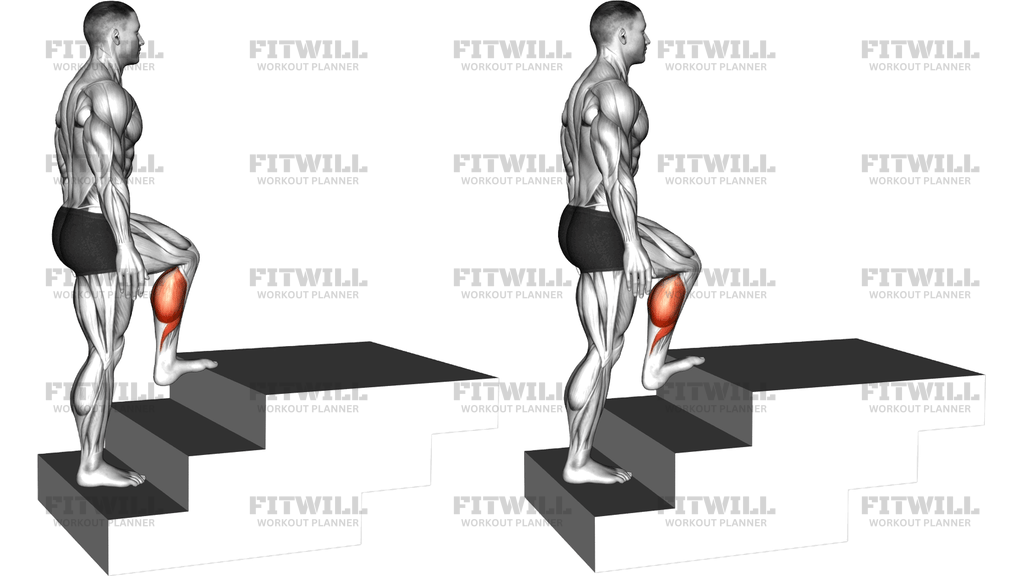
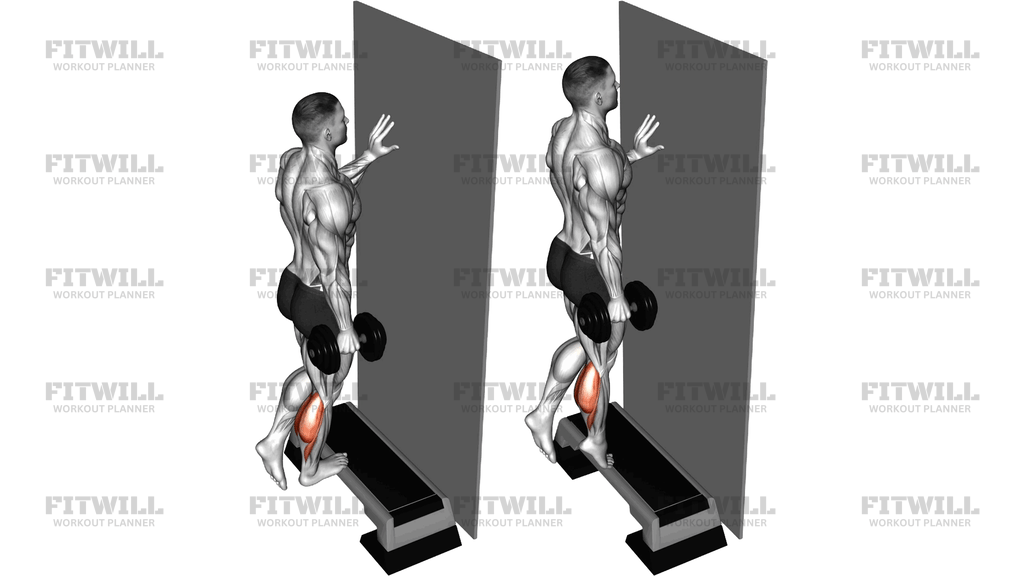
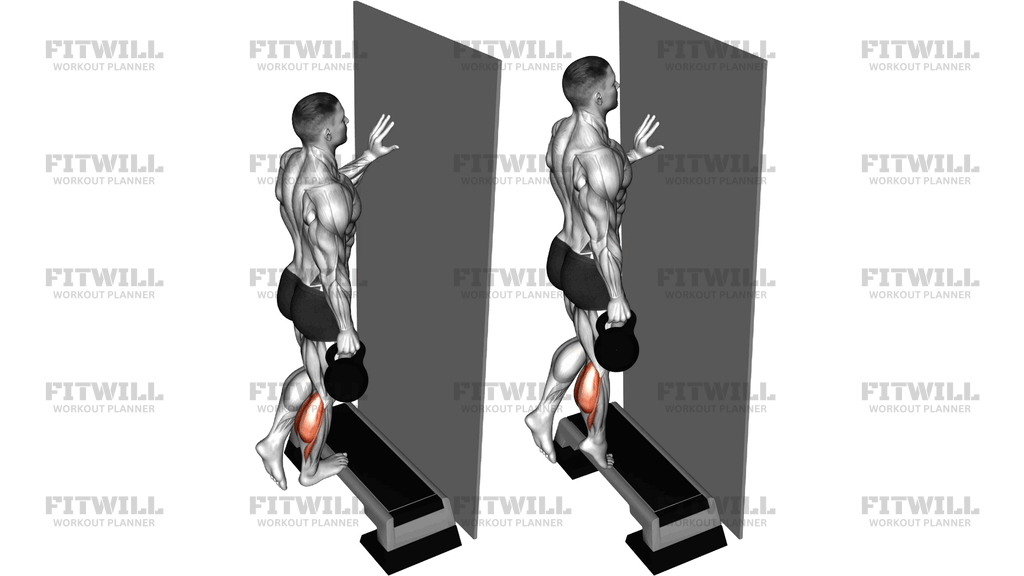
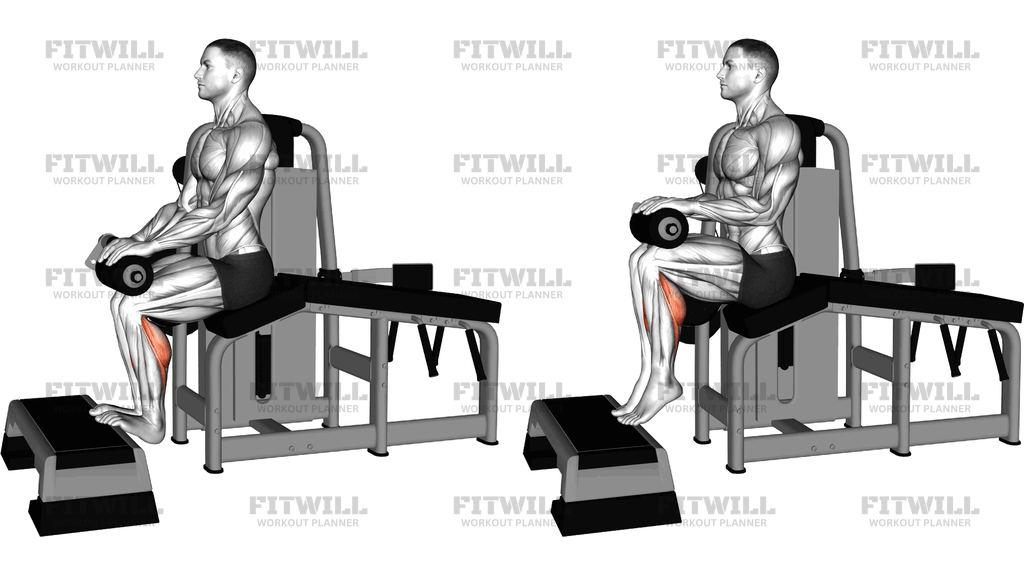
Single Leg Calf Raise Off Step
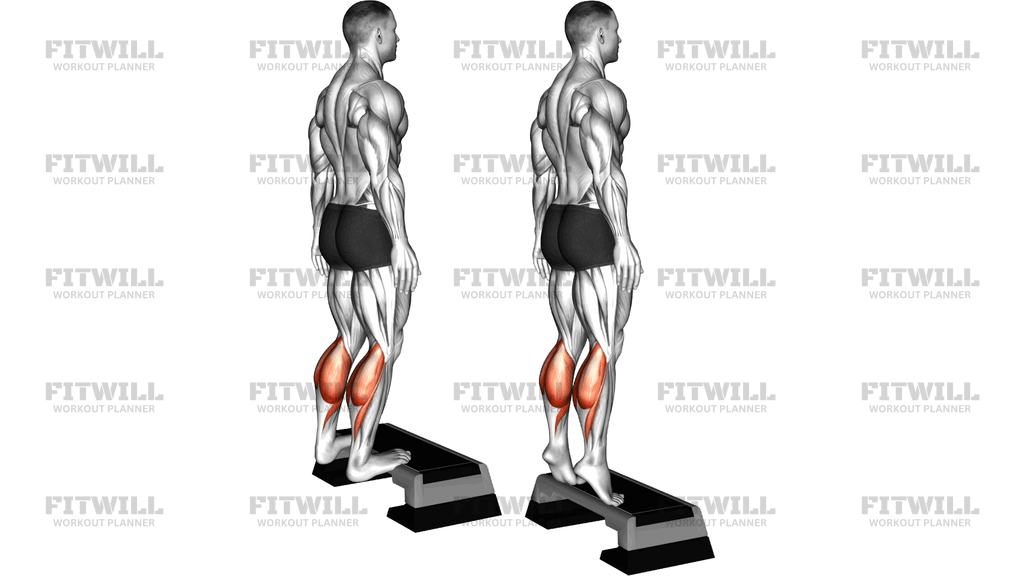
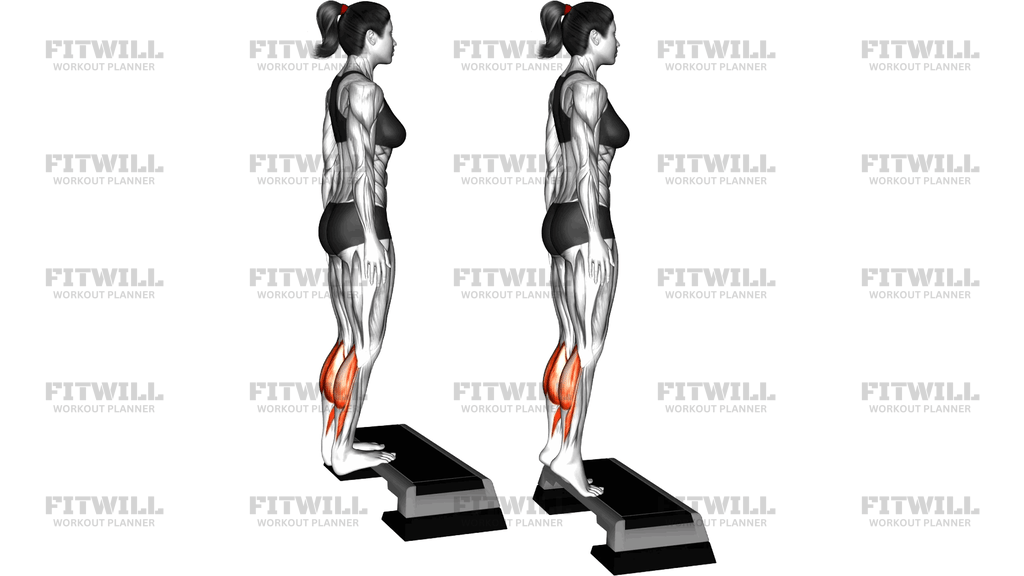
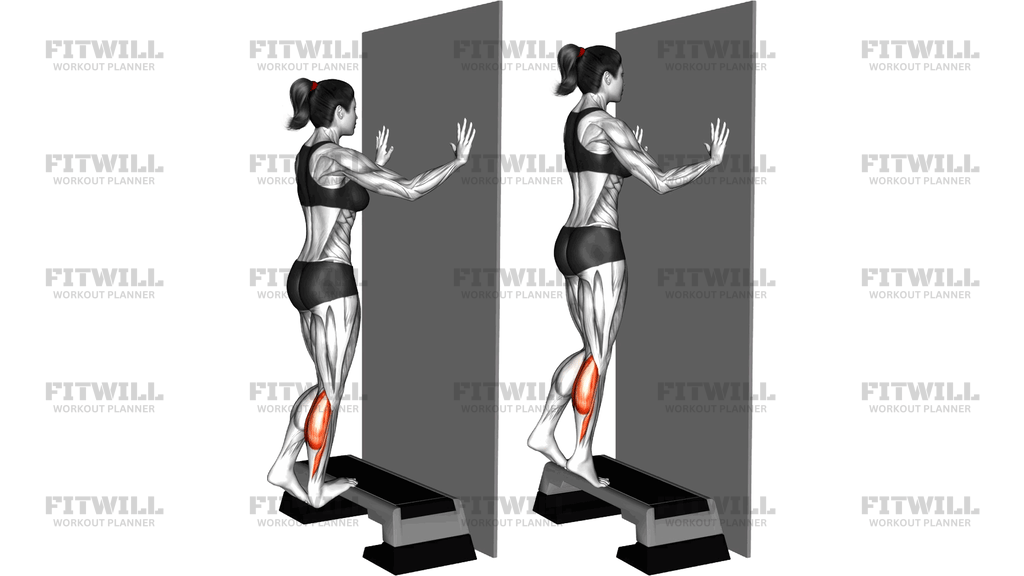
The Single Leg Calf Raise Off Step is a bodyweight calf exercise performed with the ball of one foot placed on the edge of a step platform while the heel hangs freely off the back. You face a wall and place your hands on it for light balance support, lift the free foot so it rests behind the working ankle, then press up onto the ball of the foot and lower the heel below the level of the step. This setup gives you a fuller range of motion than floor-based calf raises because the heel can drop past the level of your forefoot at the bottom of each rep.
Working one leg at a time is what makes this movement valuable. Each calf has to handle your full bodyweight on its own, which quickly exposes left-right differences in strength and ankle mobility. Many people discover that one side is noticeably weaker or stiffer once they move away from two-legged raises, and this exercise gives you a direct way to fix that imbalance. It also doubles as a useful ankle stability drill, since the standing ankle has to control small wobbles in every direction while you rise and lower.
The main muscle at work is the gastrocnemius, the visible two-headed muscle of the calf, with the soleus underneath contributing throughout. Smaller muscles around the ankle and foot, including the peroneals and deeper calf muscles, work to keep the heel tracking straight as you rise. Because the knee stays essentially straight during the rep, the gastrocnemius gets emphasized more than it would in a bent-knee variation, which shifts demand toward the soleus.
Setup matters more here than in most calf work. The ball of the foot should sit firmly on the step with the heel and midfoot hanging off the edge, and your hands on the wall should provide balance only, not carry part of your weight. If you lean too heavily into the wall, you unload the calf and make the exercise easier than it looks. Keep the working leg straight but not locked, and let the heel drop fully at the bottom to earn the stretched position that makes step-based raises worthwhile.
This exercise suits lifters who want stronger calves for squats and jumping, runners and hikers looking for more resilient ankles, and anyone rehabbing or pre-habbing the lower leg with a controlled, loadable movement. Beginners can start with a shallow range and a handhold on the wall, while more advanced trainees can pause at the top, slow the lowering phase, or add weight in a backpack once bodyweight becomes easy.
Keep the tempo honest. The most common problem with calf raises is bouncing out of the bottom, which turns a strength exercise into a stretch reflex drill. Move smoothly, pause briefly at the top, and control the descent so the calf does the work from start to finish.
[ Workout Log & Planner ]
Put your next workout in Fitwill
Keep your plan and training log ready when you are.


Instructions
- Stand facing a wall about an arm's length away and place both palms flat against it at roughly chest or shoulder height.
- Position the ball of one foot along the edge of a step platform so your heel and midfoot hang off the back, then hook the top of your free foot behind your working ankle.
- Keep the working knee straight but soft, stack your weight over the ball of the foot, and let the heel drop slightly below the level of the step to set your starting range.
- Brace your core and put only light pressure into the wall with your hands so your leg, not your arms, supports your bodyweight.
- Press through the ball of the foot and big toe to rise as high as you can onto your toes, keeping the heel from drifting inward or outward.
- Pause for a beat at the top with the calf fully shortened and your ankle stable.
- Lower slowly until the heel passes just below the level of the step and you feel a stretch along the calf, without letting the heel slam down.
- Breathe in on the way down and breathe out as you press up through each rep.
- Complete all reps on one leg, then switch feet and repeat on the other side, stepping off the platform carefully between sets.
Tips & Tricks
- Bouncing out of the stretched position at the bottom is the most frequent fault on this step setup. Let the heel drop fully, then start the next rep from a near-dead stop so the calf, not momentum, drives the movement.
- If your foot rolls toward the outside edge as you rise, focus on driving through the base of the big toe. That keeps the ankle tracking straight and trains the calf in a more functional line.
- Leaning your body into the wall silently steals load from the calf. Check yourself by lightly touching the wall with fingertips; if you push harder when the rep gets tough, lighten the pressure instead of the effort.
- Keep the knee of the working leg straight but not hyperextended. Bending the knee during the raise shifts work from the gastrocnemius toward the soleus and changes what the exercise targets.
- If your ankle feels pinched at the bottom rather than stretched, limit the drop so the heel only reaches step level for the first few sessions and increase the range gradually.
- Aim for an even tempo, roughly two seconds up and two to three seconds down. Rushed reps on one leg usually mean the ankle stabilizers are fatigue-limited rather than the calf.
- If balance is the limiting factor, stand slightly closer to the wall and use lighter hand contact, or hold the free foot lower behind the working ankle rather than higher up the calf.
- Start with the weaker or tighter leg first and match the reps with the stronger side so imbalances narrow instead of widen.
- Once sets of fifteen to twenty controlled reps feel routine, hold a dumbbell or wear a weighted backpack, keeping one hand free for the wall.
Frequently Asked Questions
Which muscles does the Single Leg Calf Raise Off Step work?
The gastrocnemius is the primary mover, with the soleus assisting throughout the range. The smaller ankle stabilizers, including the peroneal muscles, work continuously to keep the heel aligned on the narrow edge of the step.
Why use a step instead of doing single leg calf raises on the floor?
The step lets your heel drop below the level of your forefoot, which extends the range of motion into a full calf stretch that floor raises cannot reach. This longer range is generally more productive for both strength and flexibility.
How much should I lean on the wall during the Single Leg Calf Raise Off Step?
Use the wall only for balance, keeping hand pressure light enough that you could lift a palm for a moment without losing position. If your shoulders or arms feel tired before your calf does, you are leaning too much.
Should the knee be straight or bent in this exercise?
Keep the working knee essentially straight. A straight leg biases the gastrocnemius, while a bent knee would relax it and shift more work to the soleus.
I feel this in my ankle more than my calf. What should I change?
Slow the tempo and reduce the depth at the bottom so the heel only drops to step level, and focus on pressing through the base of the big toe. As the ankle stabilizers get stronger over the first few sessions, the calf sensation usually takes over.
How many reps and sets should I do?
Start with two to three sets of eight to twelve controlled reps per leg, prioritizing a full range over rep count. As you improve, progress to higher reps or add external load rather than letting form get sloppy.
What can I use if I don't have a step platform?
Any stable, low, raised surface such as a stair, a solid aerobic step, or a thick bumper plate works, as long as it cannot tip and has room for your heel to hang off the edge. Always face a wall or rail for light balance support.
Is the Single Leg Calf Raise Off Step safe for beginners?
Yes, as long as you start with a partial range, keep a hand on the wall, and step on and off the platform carefully. Beginners often lack ankle control at the bottom of the range, so build depth gradually across sessions.
How far should my heel drop at the bottom of each rep?
Lower until the heel sits slightly below the level of the step and you feel a clear stretch along the calf, then reverse the movement without bouncing. If the drop causes pinching or discomfort, shorten the range and build back up.
Should I do both legs in the same set or finish one side first?
Finish all reps on one leg before switching so you can focus fully on balance and heel tracking. Starting with your weaker side and matching reps on the stronger side helps correct side-to-side differences.