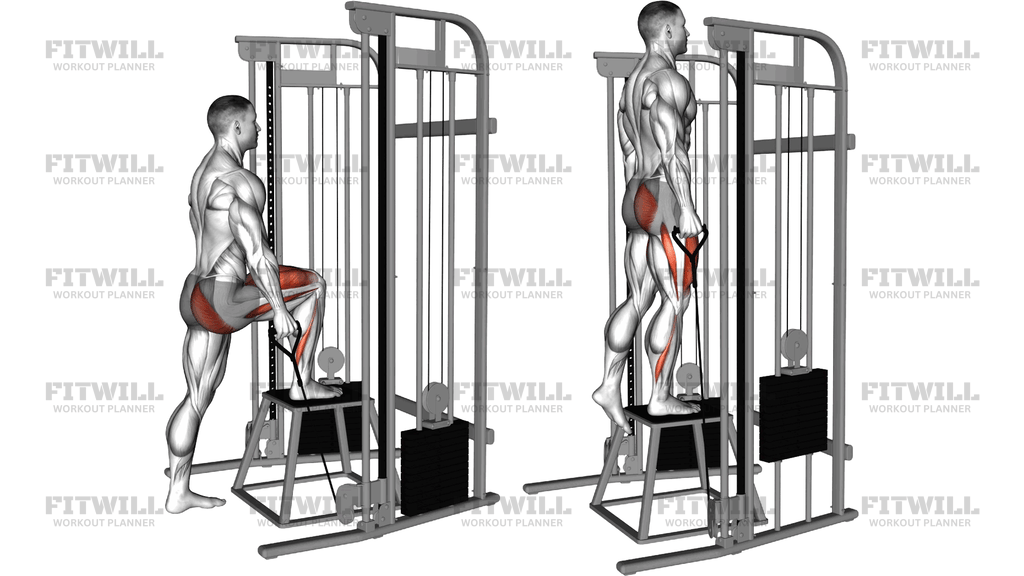
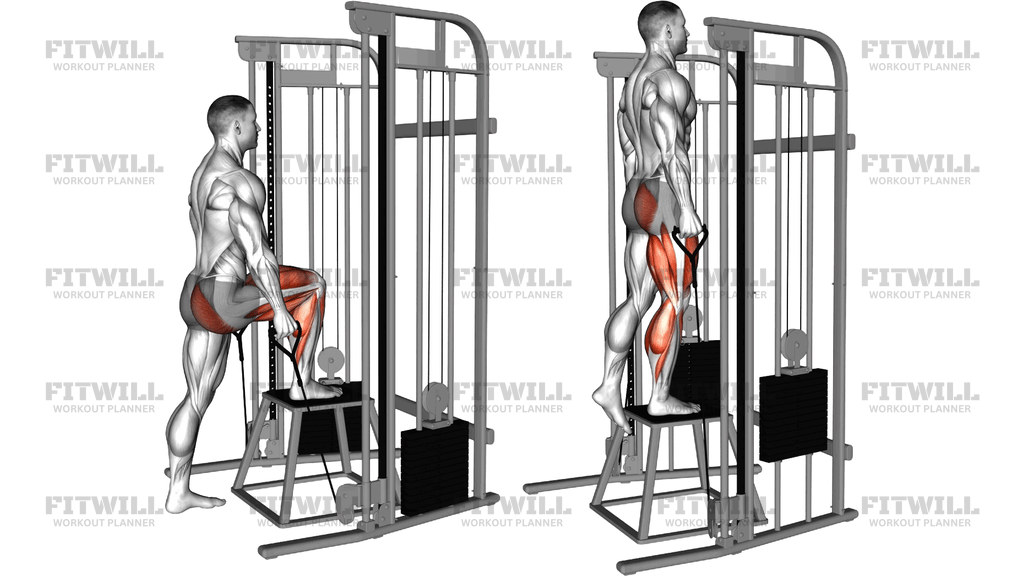
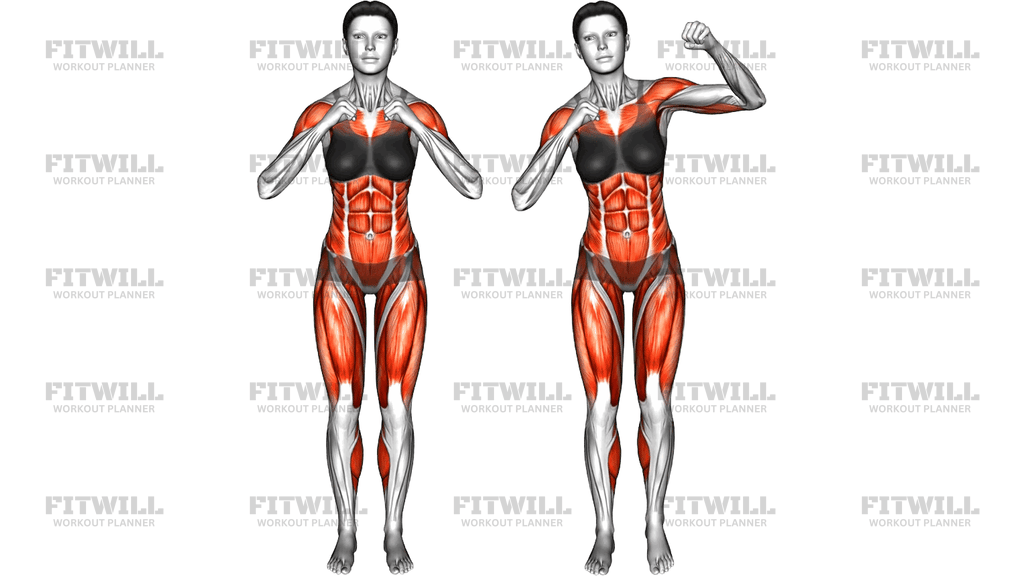
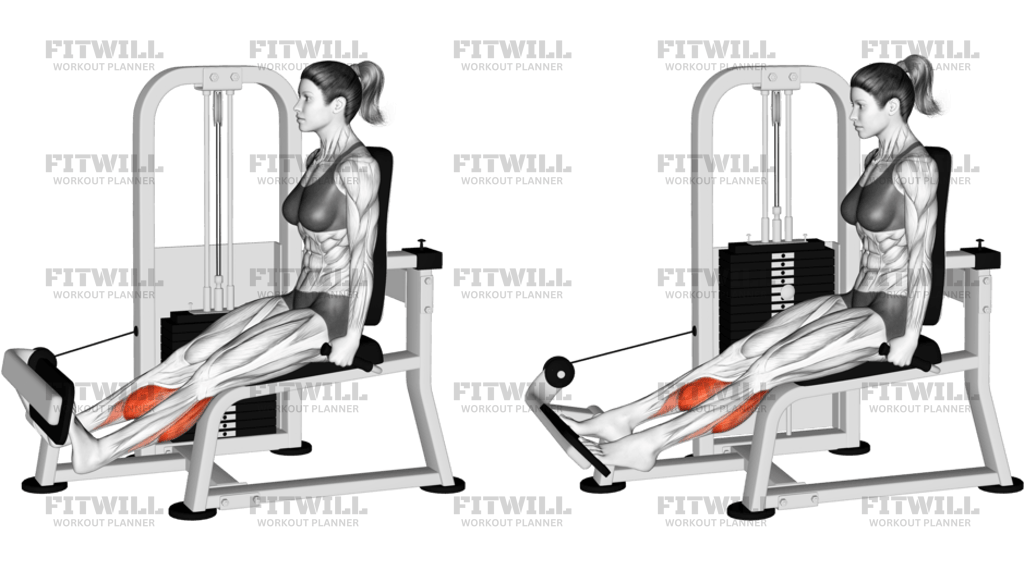
Bodyweight Standing Calf Raise On A Stepbox
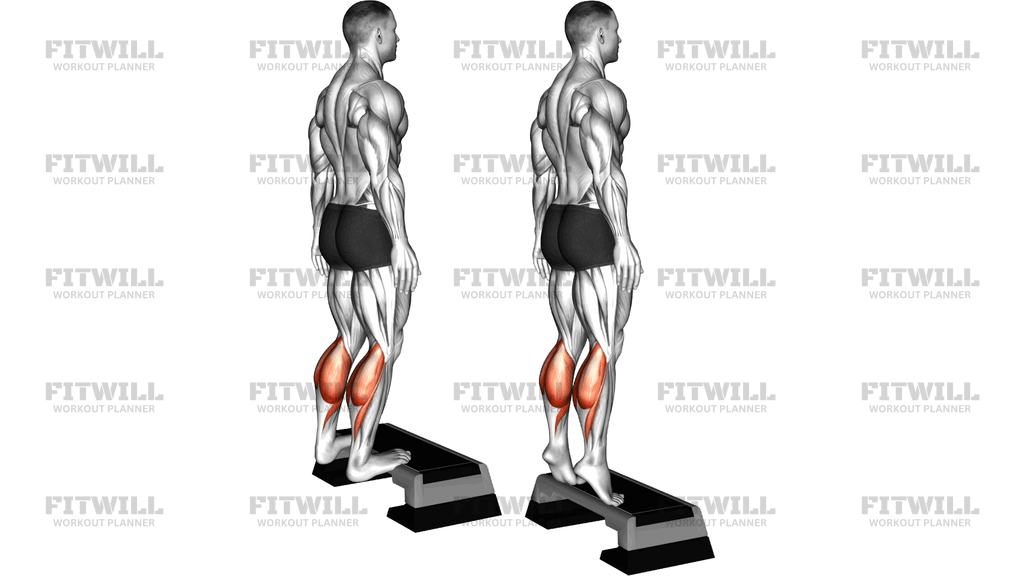
The Bodyweight Standing Calf Raise On A Stepbox is a simple but highly effective way to train the calves through a full range of motion. You stand on a step platform or sturdy stepbox with only the balls of your feet on the surface, letting your heels hang off the edge. From there you rise as high as possible onto your toes and lower your heels below the level of the step before driving back up. That extra drop below the step is what separates this from a flat-floor calf raise, because it lets the calf muscles lengthen fully at the bottom.
This movement primarily works the gastrocnemius, the visible two-headed muscle at the back of the lower leg, with the soleus underneath it assisting throughout. Because you are standing with straight legs, the gastrocnemius does most of the work, and the smaller stabilizing muscles around the ankle get plenty of demand as they keep you balanced on a narrow surface. It is a useful exercise for anyone who wants stronger, more resilient calves without equipment beyond a step: runners, hikers, lifters chasing balanced leg development, and people rebuilding calf strength after long periods of inactivity all benefit from it.
The setup matters more than it might seem. Placing the balls of the feet firmly on the edge of the stepbox, with the arch and heel clear of the platform, creates room for the heels to travel down at the bottom and for the ankles to extend fully at the top. If your feet sit too far back on the step, you lose range of motion; if your heels rest on the edge itself, the movement becomes uncomfortable and less effective. A stable stepbox that will not tip or slide is essential, since your full body weight rests on a small contact area.
To execute the exercise well, stand tall with your legs straight but not locked, engage your core lightly, and lift your heels as high as your ankles allow, pressing through the big toe and ball of the foot. Pause briefly at the top, then lower with control until you feel a stretch through the calf at the bottom. Bouncing out of the stretch is the most common error, and it robs the muscle of tension while adding stress to the Achilles tendon. Slow, deliberate reps with a momentary squeeze at the top produce far better results than fast, sloppy ones.
In practice, this exercise fits into warm-ups, finishers, and dedicated lower-leg sessions alike. Because it requires no load, you can easily progress by adding repetitions, slowing the tempo, extending the pause at the top or bottom, or later holding a weight in one hand while using the other for light support. If balance is a challenge at first, standing near a wall or rack and resting a fingertip on it is a smart way to learn the movement without compromising form.
[ Workout Log & Planner ]
Put your next workout in Fitwill
Keep your plan and training log ready when you are.


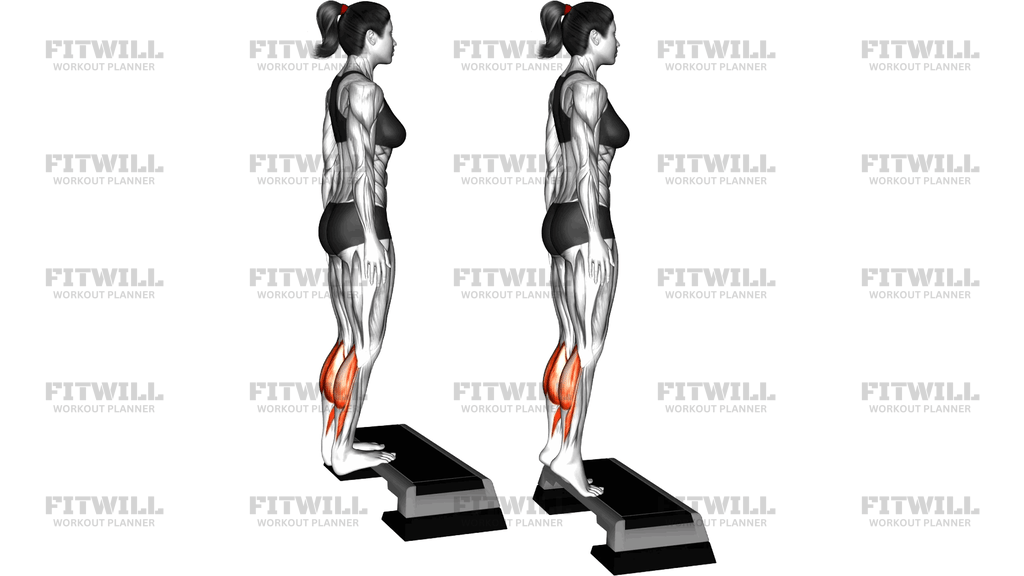
Instructions
- Place a stable stepbox or step platform on a non-slip floor, and stand on it so the balls of both feet are firmly on the edge with your heels hanging off completely.
- Set your feet about hip-width apart, toes pointing forward or slightly outward, and shift your weight fully onto the forefoot.
- Stand tall with your legs straight but not locked, ribs down, and brace your core lightly; let your arms hang at your sides or rest one hand lightly on a wall for balance.
- Lower your heels slowly toward the floor until you feel a clear stretch through both calves, keeping your knees straight.
- Press through the balls of your feet and big toes to rise as high as possible onto your toes, extending fully at the ankles.
- Pause for a second at the top with the calves contracted before beginning the descent.
- Breathe in as you lower your heels below the step, and breathe out as you press up to the top.
- Lower under control rather than dropping your heels, and avoid bouncing at the bottom of each rep.
- Complete your target repetitions, then step off the box carefully one foot at a time, using a wall or rack for support if needed.
Tips & Tricks
- Keep the balls of your feet planted in the same spot for every rep; letting them creep inward or outward changes the ankle path and reduces the calf stretch.
- If your heels touch the floor at the bottom, the stepbox is too low for your ankle mobility or your range is too deep too soon, so shorten the descent slightly or use a taller step.
- Pause for a full second at the top of each rep; most people rush through the contracted position, which is where the gastrocnemius works hardest.
- A slight outward toe angle is fine, but avoid turning the feet sharply outward or inward, which shifts stress away from the calves and irritates the ankles.
- Keep your knees straight throughout; bending them brings the soleus into greater play and turns this into a different movement.
- If you wobble on the edge of the stepbox, stand sideways to a wall and touch it with one fingertip rather than widening your stance, which keeps the balance demand but adds safety.
- Control the negative for two to three seconds; dropping the heel quickly into the stretch is the main reason people feel strain at the Achilles rather than work in the calf.
- Wear flat, flexible shoes or go barefoot so you can grip the edge of the step and feel where your weight sits.
- Progress gradually with reps or tempo before adding weight; the calves handle high volume well, but the Achilles tendon adapts more slowly than the muscle.
Frequently Asked Questions
Which muscles does the Bodyweight Standing Calf Raise On A Stepbox work?
The gastrocnemius, the large visible calf muscle, does most of the work, with the soleus underneath assisting and the small ankle stabilizers keeping you balanced on the edge of the stepbox.
Why use a stepbox instead of doing calf raises on the floor?
The step lets your heels drop below the level of your forefoot, giving the calves a full stretch at the bottom and a longer working range than a flat-floor raise allows.
Is the Bodyweight Standing Calf Raise On A Stepbox suitable for beginners?
Yes, it is a very accessible starting exercise. Beginners should use a step of modest height, keep a wall or rack nearby for balance, and focus on slow, controlled reps before adding volume.
Should my knees be straight or bent during this exercise?
Keep them straight but not locked. Straight knees place the emphasis on the gastrocnemius, while bending the knees shifts more work to the soleus, which is a different emphasis.
How deep should I lower my heels off the edge of the step?
Lower until you feel a comfortable stretch through the calf, not pain at the back of the ankle or Achilles. Your heels do not need to touch the floor to make the rep effective.
What is the most common mistake with this movement?
Bouncing out of the bottom stretch. The rebound takes tension off the calves and loads the Achilles tendon sharply, so pause at the bottom briefly and drive up deliberately.
What can I use if I do not have a stepbox?
A sturdy stair, a stable low platform, or a thick weight plate works, as long as the surface will not tip or slide and your heels have clear space to hang off the edge.
How can I make the Bodyweight Standing Calf Raise On A Stepbox harder?
Add repetitions, slow the lowering phase to three or four seconds, extend the pause at the top, perform it single-leg, or hold a dumbbell in one hand with the other hand on a wall for balance.
Is it safe to do this exercise every day?
Many people tolerate frequent calf work well, but if your calves or Achilles feel persistently sore, reduce volume and allow recovery. Stop and reassess if you feel sharp pain at the back of the ankle.