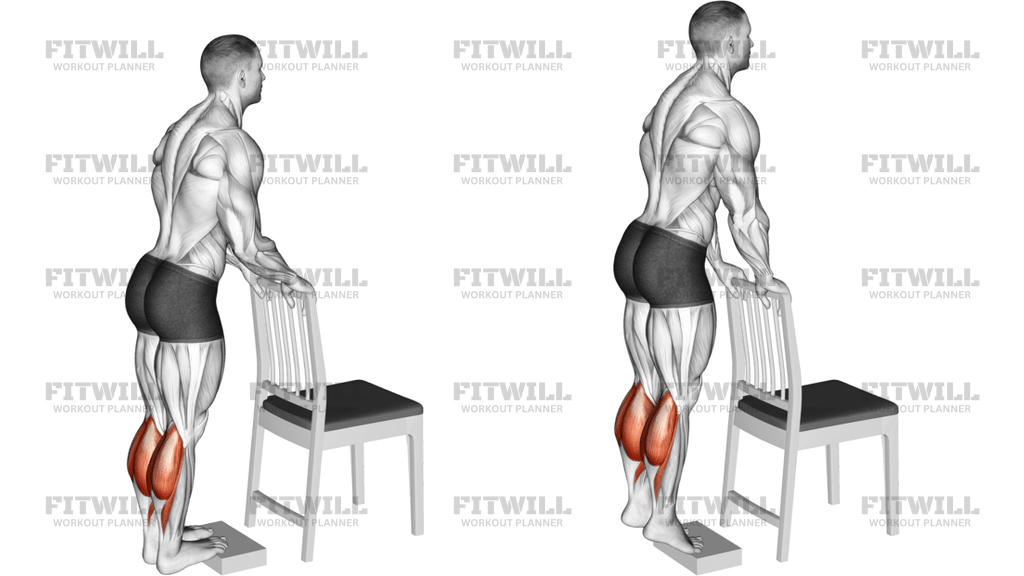
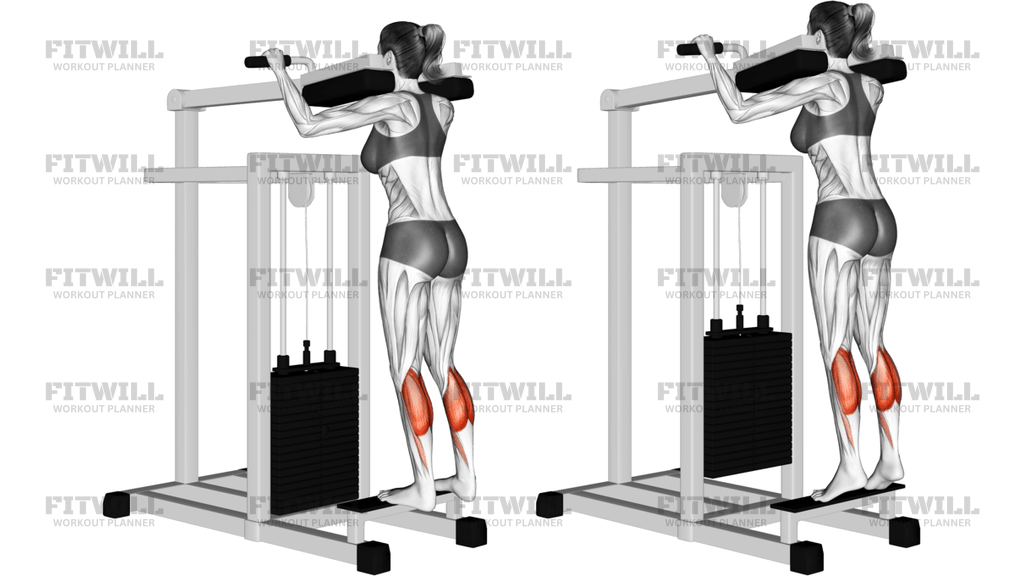
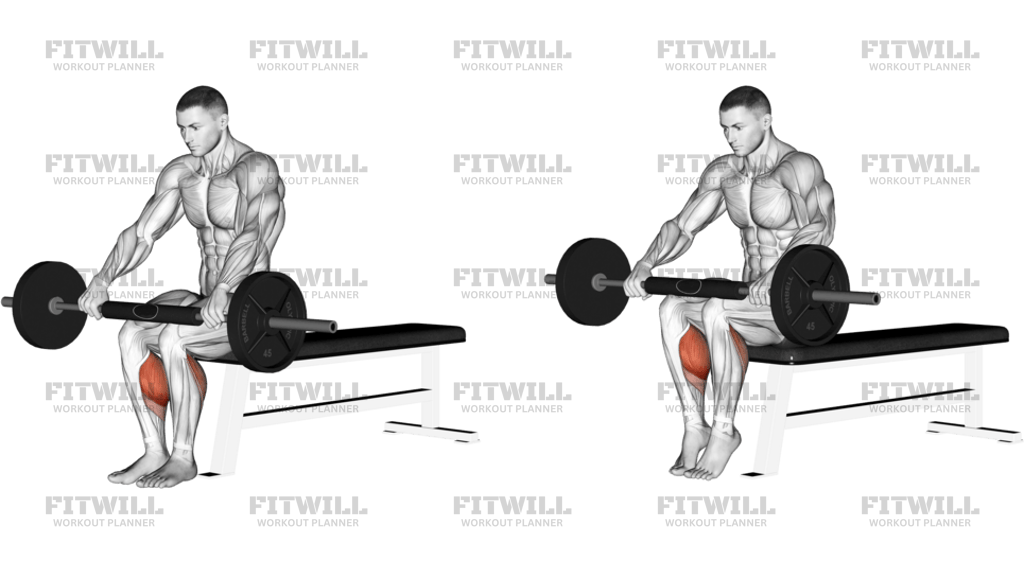
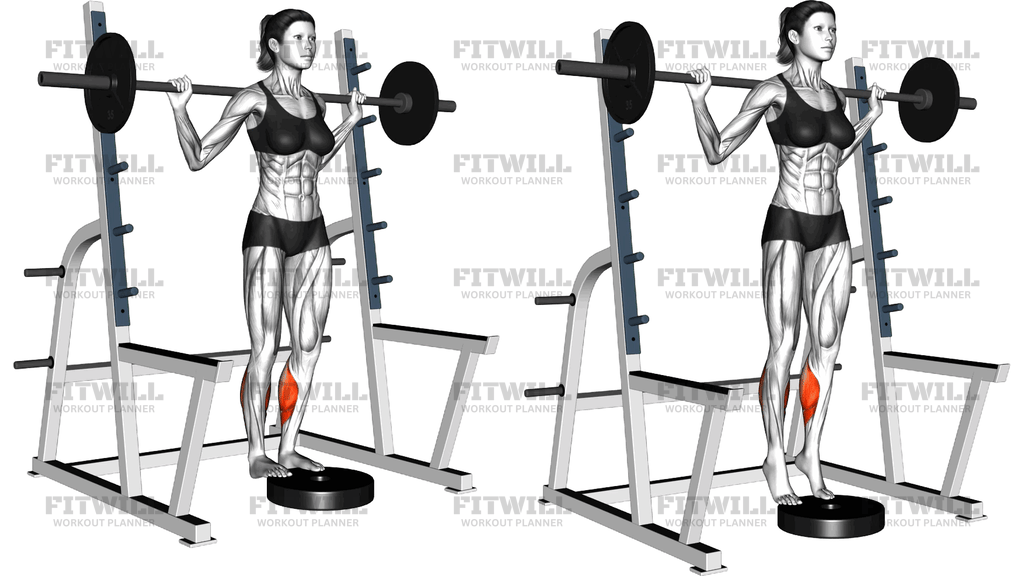
Barbell Standing Single Leg Calf Raise
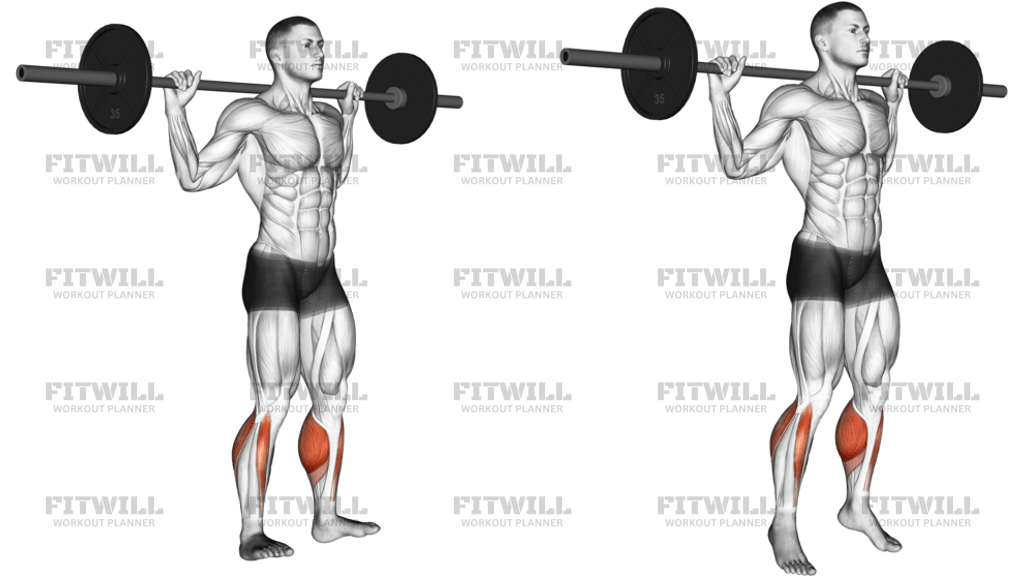
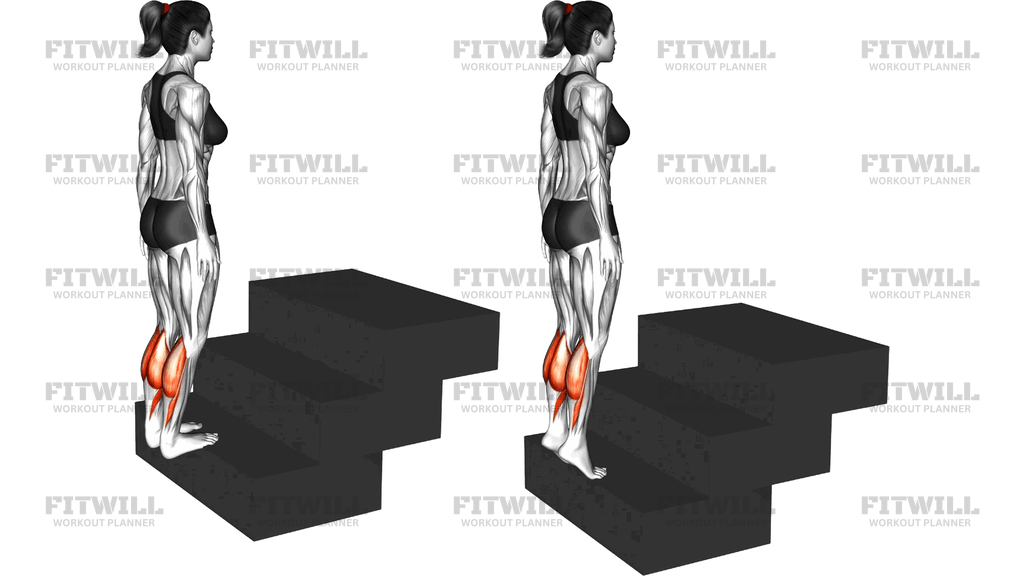
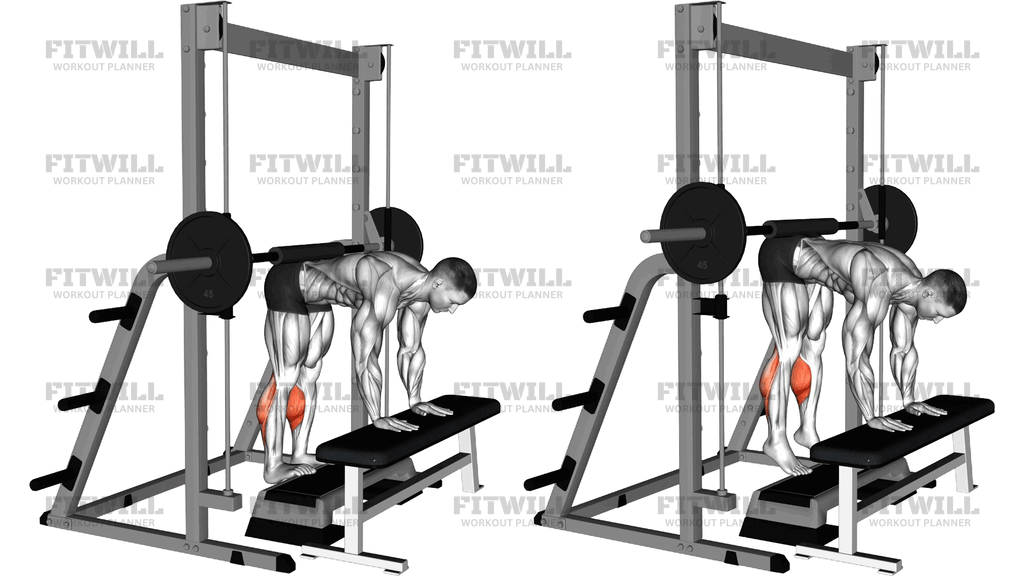
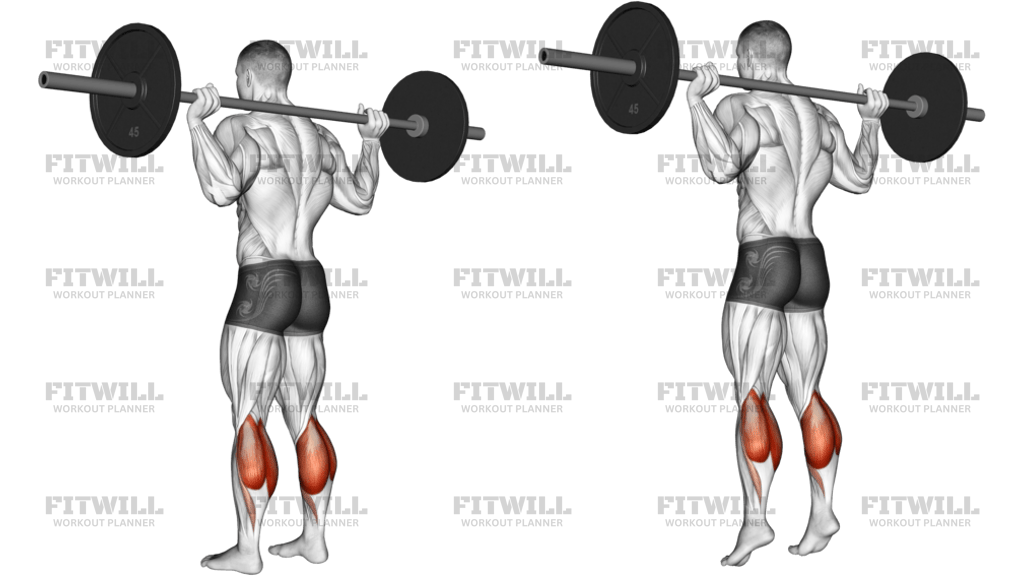
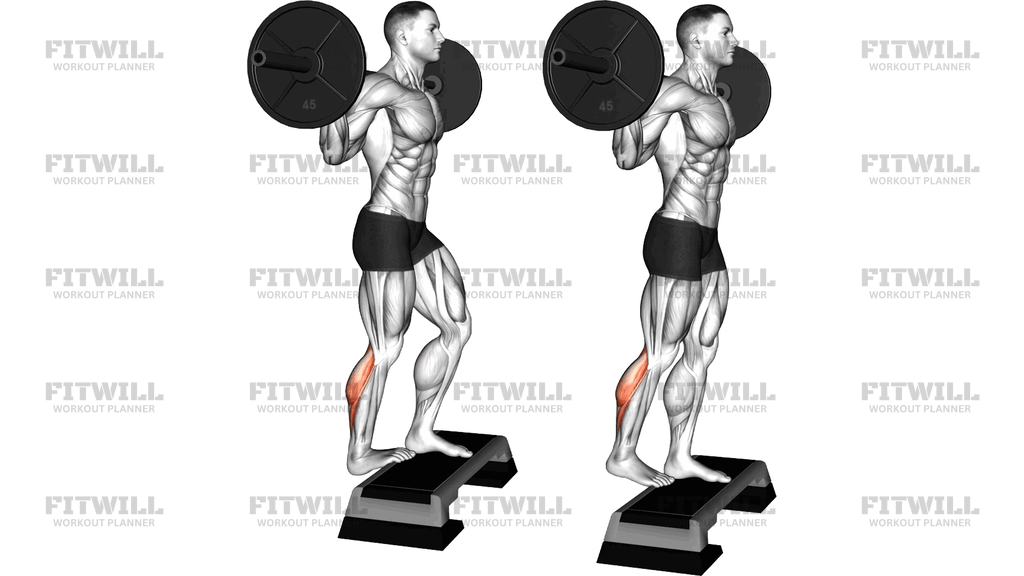
The Barbell Standing Single Leg Calf Raise is a unilateral calf builder performed with a barbell resting across your upper back, exactly like the bar position for a back squat. You stand on one leg on a step platform or calf block with the ball of the foot planted and the heel hanging off the edge, then drive up onto your toes and lower the heel below the level of the platform for a full stretch. Because one leg carries the entire load, this version is far more demanding than a two-legged calf raise at the same weight.
The single-leg setup does two important things. First, it lets you load the gastrocnemius heavily without needing enormous plate counts, since each rep targets only one calf. Second, it exposes left-to-right differences in calf strength and ankle range of motion that a two-legged raise can hide. That makes it a favorite for lifters fixing imbalances, runners and field-sport athletes who push off one leg at a time, and anyone whose calves have stalled on machine work.
The movement primarily trains the gastrocnemius, the two-headed calf muscle that crosses both the knee and ankle and does its best work with the leg straight. The soleus sits underneath and assists throughout, while the smaller stabilizers around the ankle work hard to keep you balanced over a narrow base on an elevated surface.
Setup matters more here than in most calf exercises. The heel must be free to drop below the platform edge, the bar must sit securely on your traps so you are not fighting it for balance, and your working knee stays essentially straight. A loose or low bar position will turn the set into a balancing act, so take the time to brace before you ever lift the free foot off the floor.
To execute well, place the ball of one foot firmly on the platform, hold the other foot slightly behind you, and rise as high as your ankle allows by pressing through the big toe and ball of the foot. Pause briefly at the top, then lower under control until you feel a solid stretch in the calf before starting the next rep. Hold a rack or squat stand with one hand if you need light balance support, but let the working leg do all of the pushing.
Because the balance demand is real, start with a light bar or just the empty barbell and master the tempo first. This exercise slots in well as a primary calf movement for 3-4 sets of 8-12 reps per leg, usually early enough in the session that fatigue does not compromise your footing.
[ Workout Log & Planner ]
Put your next workout in Fitwill
Keep your plan and training log ready when you are.


Instructions
- Set a barbell in a rack at roughly upper-chest height and position it across your upper traps with a comfortable grip, as you would for a back squat.
- Place a step platform or sturdy calf block in front of you, ideally inside or beside a rack so you can take the bar out safely and steady yourself if needed.
- Step onto the platform with the ball of one foot centered and firmly planted, leaving your heel fully off the edge, and keep your torso tall with your core braced.
- Lift your free foot off the floor and hold it slightly behind your working leg, letting it hang relaxed rather than resting on the platform.
- Keeping your working knee nearly straight, press through the ball of your foot and big toe to raise your heel as high as possible, and squeeze the calf at the top for a one-second pause.
- Lower your heel slowly and fully below the platform edge until you feel a deep stretch in the calf, without bouncing at the bottom.
- Breathe in at the bottom or on the way down, then exhale as you press up to the top of each rep.
- Complete all reps on one side, then carefully set the free foot down, switch legs, and match the rep count on the other side.
- After finishing both legs, re-rack the bar by walking it back into the rack rather than stepping off the platform with it still on your shoulders.
Tips & Tricks
- Use a wall, rack upright, or squat stand for fingertip balance only. Leaning on it transfers load away from the calf and defeats the purpose of the single-leg setup.
- A common mistake is letting the bar roll forward onto the neck, which pitches the torso forward. Pull your elbows down and keep the chest up so the bar stays planted on the traps.
- If your heel drops off the inside of the platform, your ankle is rolling inward. Keep the weight spread across the ball of the foot and actively push through the big toe.
- Bouncing out of the bottom stretch is the most frequent fault on calf raises. Use a deliberate one-second pause in the stretched position to build tension and protect the Achilles.
- Shorter platform heights limit the stretch. Choose a step tall enough that your heel can hang clearly below your toes, but never so tall that the stretch forces your heel off the ball of the foot.
- Keep the working leg's knee straight but not locked hard. A slight soft knee keeps the gastrocnemius loaded while sparing the joint at the top.
- Do the weaker leg first and match its rep count with the stronger leg to close strength gaps instead of widening them.
- If balance falls apart before the calf fatigues, drop the weight or add light support before abandoning the exercise. Stability under load improves quickly with practice.
- Avoid letting the free foot touch or push off the platform. It should hang behind you as a counterweight only.
Frequently Asked Questions
Which muscles does the Barbell Standing Single Leg Calf Raise work?
The gastrocnemius is the primary muscle, with the soleus assisting underneath. The ankle stabilizers also work hard to keep you balanced over one foot on the platform.
Why use a barbell instead of body weight for single-leg calf raises?
One calf can usually handle more than its share of body weight, so the barbell lets you load the muscle into a productive strength range. The back-bar position also mimics a squat setup you already know how to brace.
Why stand on a step platform with the heel hanging off?
The elevated edge lets your heel drop below the level of your toes, giving the calf a full stretch at the bottom and a longer range of motion than flat-floor raises allow.
Is the Barbell Standing Single Leg Calf Raise suitable for beginners?
Beginners can do it with just the empty bar or a very light load, ideally holding a rack for balance. If the balance demand is too much, master two-legged barbell calf raises first.
Should my working knee be locked or bent?
Keep it essentially straight with only a slight soft bend. Straightening the knee biases the gastrocnemius, while a deeply bent knee would shift work toward the soleus, which is a different exercise.
What is the most common mistake with this exercise?
Bouncing through the bottom stretch and cutting the top range short. Both habits shorten the effective rep, so pause in the stretch and press all the way up to a full calf contraction.
What can I use if I have no barbell or step platform?
A pair of dumbbells held at your sides works for load, and any stable surface such as a sturdy plate, low box, or stair edge can replace the platform. Just make sure the surface cannot slide.
How many reps and sets should I do per leg?
Three to four sets of 8-12 reps per leg with a controlled tempo works well for strength and size. Because balance is a limiting factor early on, err toward moderate loads and clean reps.
Is it safe to hold a heavy bar on my back while balancing on one foot?
It is safe with sensible loading, a secure bar position on the traps, and a rack or wall within reach for light support. Set up inside a rack, use collars on the bar, and step off only after setting the bar back.
Can I do the Barbell Standing Single Leg Calf Raise every day?
Daily training is unnecessary and can leave the calves and Achilles chronically sore under load. Two to three focused sessions per week with recovery days between them is a better long-term approach.