Bodyweight Calf Raise On A Stepbox
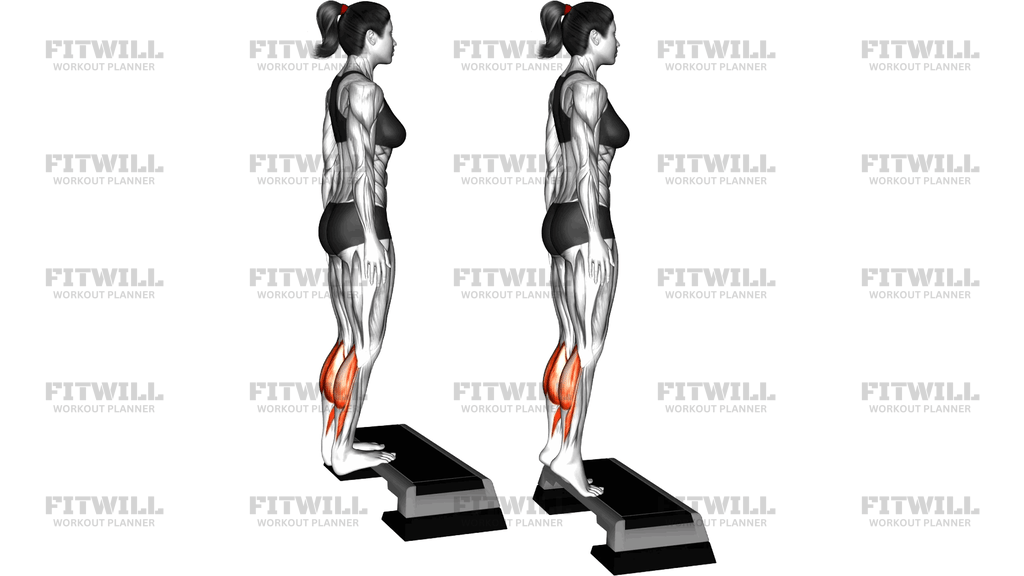
The Bodyweight Calf Raise On A Stepbox is a simple but highly effective lower-leg exercise performed on a step platform or sturdy stepbox. You stand with the balls of your feet on the edge of the step, let your heels hang below the level of the platform, and then press up onto your toes before lowering back down through a full range of motion. Because the heel can drop below the step, this version trains the calves through a longer range than floor-based calf raises, which is what makes it worth the extra setup.
The primary muscles worked are the calves, with the gastrocnemius doing most of the visible work when the knees stay straight and the soleus contributing underneath it. The muscles and tendons around the ankle also work to keep you balanced on a relatively narrow surface, which is a quietly useful benefit for running, jumping, and everyday walking. Since no external load is required, the exercise is accessible to nearly anyone, and it scales easily through single-leg variations or added reps rather than added weight.
This movement is especially valuable for people who run, jump, or hike, because calf strength and ankle range of motion directly affect push-off power and shock absorption. It is also a common rehabilitation-friendly progression for achilles and calf issues, since the slow tempo and full stretch at the bottom are easy to control. Beginners can start with both feet on the step and a hand on a wall or rail, while more advanced lifters can add pauses, slow negatives, or one-leg sets.
Setup matters more than it might seem. The edge of the stepbox should sit roughly under the balls of your feet, not the middle of the foot or the arch, so your heels can drop freely without your toes sliding off. Standing tall with straight legs keeps the emphasis on the calves rather than letting the knees bend and shift work toward the soleus in a seated-raise style. If the step is too high to control at the bottom, start with a lower platform and build up.
To execute well, think of the movement as a smooth rollercoaster rather than a bounce: rise as high onto the toes as possible, squeeze briefly at the top, then lower slowly until you feel a definite stretch in the calf before starting the next rep. Avoid rushing, bouncing out of the bottom, or rolling the ankles outward, which are the three most common faults on this exercise. Keep the movement honest and your calves will tell you the next day that you did it right.
[ Workout Log & Planner ]
Put your next workout in Fitwill
Keep your plan and training log ready when you are.


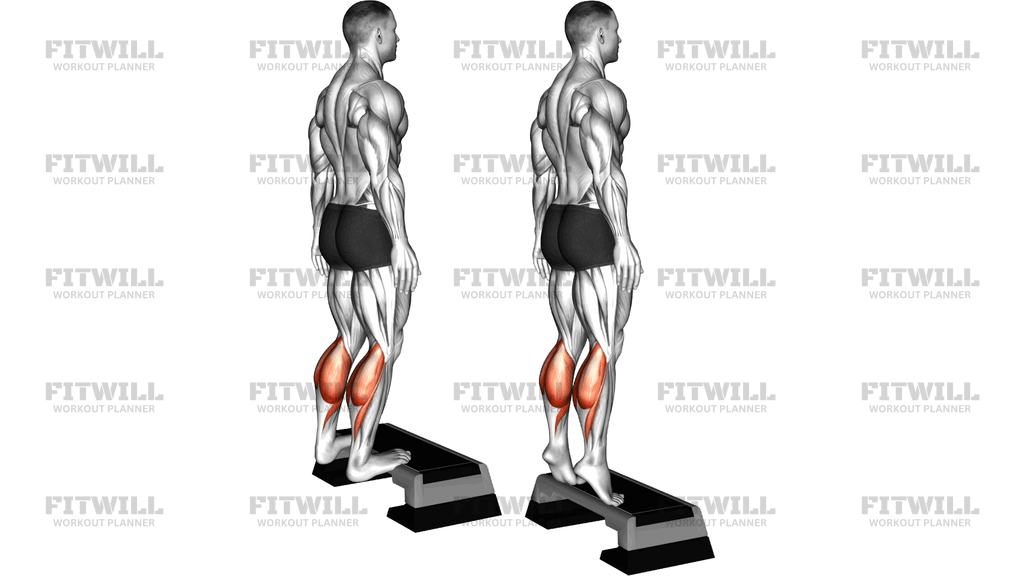
Instructions
- Stand on a stepbox or step platform with the balls of both feet on the edge and your heels hanging off behind the platform.
- Place your feet about hip-width apart, with the edge of the step sitting under the base of the toes so the heels can drop freely below the step.
- Stand tall with your legs straight, ribs stacked over your hips, and arms relaxed at your sides; hold a wall or rail with one hand if you need balance support.
- Brace your core lightly and shift your weight onto the balls of your feet before starting the rep.
- Press through the balls of your feet and lift your heels straight up as high as you can, keeping your knees extended and your ankles from rolling outward or inward.
- Pause for a moment at the top with your calves fully contracted and your weight over the big toe area.
- Lower your heels in a slow, controlled manner until they drop slightly below the level of the step and you feel a stretch across the calves.
- Breathe out as you rise onto your toes and breathe in as you lower your heels back down.
- Complete your reps without letting the heels touch or slam down at the bottom, then step off the platform carefully once the set is finished.
Tips & Tricks
- Do not bounce out of the stretched position at the bottom; the rebound takes work away from the calves and loads the achilles tendon abruptly.
- Keep the edge of the step under the base of your toes. Placing the step too far forward turns the movement into a partial raise because the heels cannot drop fully.
- If your balance is shaky, one fingertip on a wall is enough for support. Holding on with a full grip and leaning back transfers load away from the calves.
- Watch for ankle rolling, where the feet cave outward as you rise. Keep your weight spread across the ball of the foot and think of pushing over the big toe.
- Lock the knees in place. If the knees flex as you fatigue, the gastrocnemius loses tension and the set quietly becomes easier than it should be.
- A one- or two-second pause at the top forces a real contraction instead of a quick momentum-driven lift, which is a common fault when reps get high.
- Use a lower step if you cannot control the bottom position. A huge stretch is only useful if you can stop and reverse it without collapsing.
- Progress with tempo before adding load: try a three-second lowering phase, then move to single-leg raises once both-leg sets feel easy.
- If your calves cramp, which is common early on, reduce the range slightly and work back toward the full stretch over several sessions.
Frequently Asked Questions
Which muscles does the Bodyweight Calf Raise On A Stepbox work?
It primarily targets the calves, especially the gastrocnemius when the knees stay straight, with the soleus assisting underneath. The ankle stabilizers also work throughout to keep you balanced on the edge of the step.
Why use a stepbox instead of doing calf raises on the floor?
The step allows your heels to drop below the level of your toes, which extends the range of motion into a full calf stretch. Floor calf raises stop at floor level, so the stretch portion of the movement is limited.
Should my knees be straight or bent during this exercise?
Keep your knees straight or nearly straight. Straight knees put the gastrocnemius in its most effective working position, while bent knees shift more of the work toward the soleus.
How deep should my heels drop below the step?
Lower until you feel a clear but comfortable stretch in the calves, usually just below the level of the step. Stop short of any pinching or painful stretch, especially at the back of the ankle.
Is the Bodyweight Calf Raise On A Stepbox good for beginners?
Yes, it is one of the best starting points for calf training because the load is light and easy to regulate. Beginners can hold a wall for balance and use a lower step until the full range feels controlled.
Why do my calves cramp when I do this movement?
The calves work through a long range in a stretched position, which commonly triggers cramping in people new to the exercise. Use a smaller range, slower tempo, and shorter sets for the first few sessions.
Can I make the Bodyweight Calf Raise On A Stepbox harder without adding weight?
Yes. Try pausing two seconds at the top, lowering over three to five seconds, or performing the exercise one leg at a time. Single-leg reps on a stepbox are demanding even without external load.
What should I do if I lose my balance on the step?
Stand near a wall or rack and rest one or two fingertips on it for light support rather than gripping and leaning. Also make sure your feet are centered on the edge and not drifting forward as the set goes on.
How many reps should I do?
Two to four sets of 12 to 20 controlled reps works well for muscle, while lower-body power or rehab programs may call for different ranges. Prioritize full range and controlled lowering over chasing a high rep number.
Is this exercise safe for the achilles tendon?
It is commonly used in gradual calf and achilles strengthening programs, but the stretched position does load the tendon significantly. If you have a current or recent tendon issue, start with a shorter range and clear the progression with a qualified professional.