Barbell Jefferson Curl
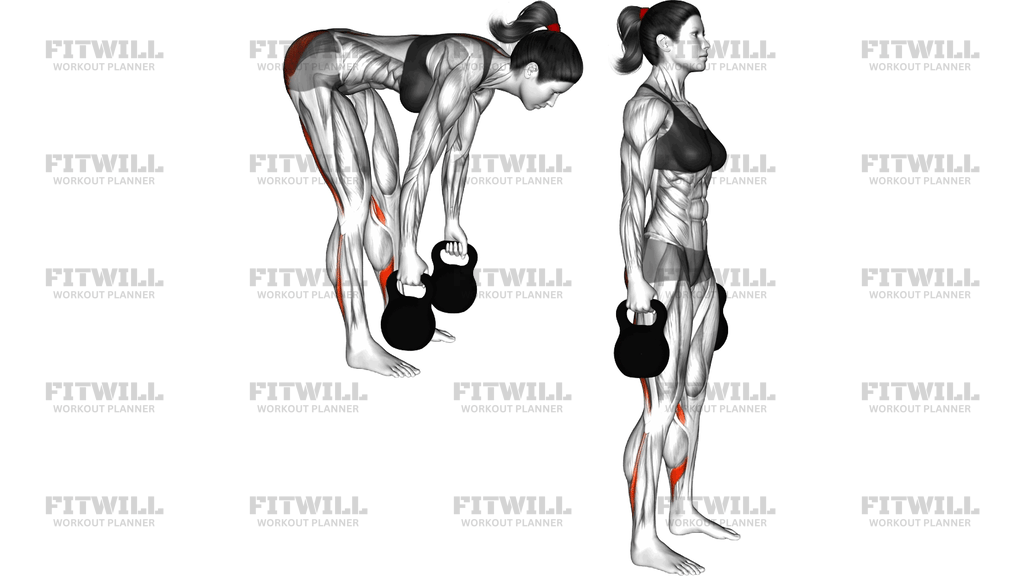
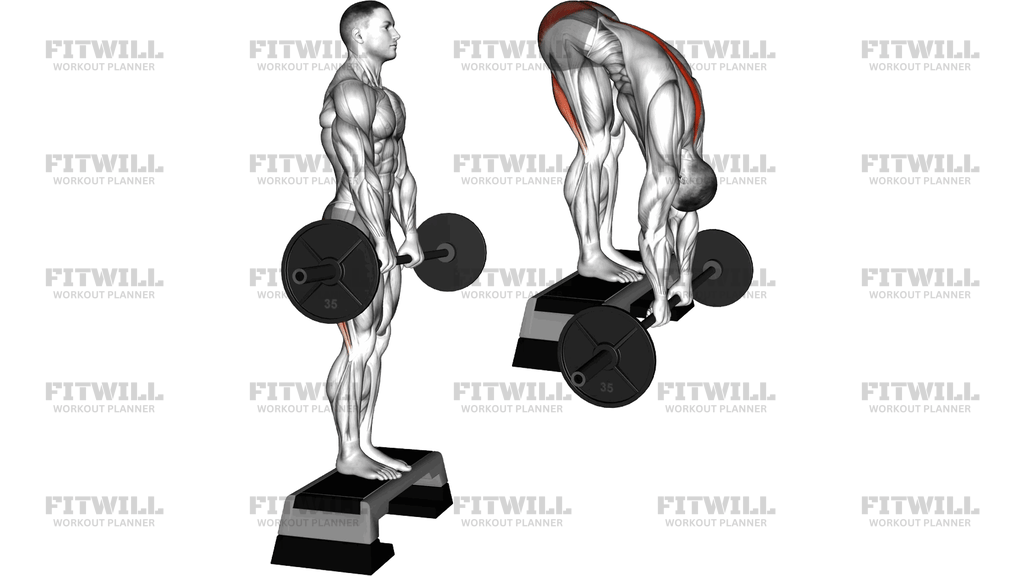
The Barbell Jefferson Curl is a loaded spinal flexion exercise that trains your spine through a full, deliberate rounding motion from a standing position. You stand on a step platform or similar elevation so the barbell can travel below your feet, hold it at hip height with a shoulder-width grip, and then roll your spine down vertebra by vertebra until the bar reaches its lowest point. Unlike deadlifts and hinges, which cue a flat back at all costs, the Jefferson Curl intentionally flexes the spine under light load, making it one of the most direct ways to strengthen and mobilize the erector spinae, hamstrings, and the entire posterior chain through end-range flexion.
This movement has its roots in gymnastics and circus strength conditioning, where athletes routinely handle loaded spinal flexion. For the general lifter, it is useful for building resilience in the lower back, restoring range of motion after years of avoiding flexion, and improving hamstring flexibility under load. People who feel stiff reaching toward the floor, or who want their back to tolerate bending tasks better, often benefit from practicing it with very light weight. It is also a popular accessory in posterior-chain routines alongside Romanian deadlifts and good mornings.
Setup matters more here than in almost any other barbell drill. The elevation beneath your feet is not optional decoration: it gives the bar clearance so you can reach a full flexed position without plates hitting the floor, and without having to stand on an unstable surface. Start with an empty bar or a very light barbell, grip it just outside hip width, and keep your knees straight but not forcefully locked. Your stance should be about hip width with feet fully supported on the platform.
Execution is a slow, controlled peel downward. Begin by tucking your chin, then round through the upper back, mid back, and finally the lower back, letting the hips shift slightly backward as you descend. Let the arms hang long as the bar slides down your shins toward the floor. At the bottom you should feel a deep stretch through the hamstrings and along the spine. Reverse the order on the way up, stacking the lower back first and finishing tall with your head coming up last, exhaling as you rise.
The most important practical point is load selection. This is famously an exercise where the ego has no place: most lifters should spend weeks with an empty bar before adding weight, and even experienced practitioners often work with far less than they deadlift. Slow tempo, full control, and no bouncing at the bottom are what make the Barbell Jefferson Curl effective and repeatable. If you feel sharp pain rather than a spreading stretch, stop and reduce range or load.
[ Workout Log & Planner ]
Put your next workout in Fitwill
Keep your plan and training log ready when you are.


Instructions
- Stand on a sturdy step platform with your feet about hip width apart, toes pointing forward, and your whole foot supported on the surface.
- Hold a light barbell with an overhand grip slightly wider than your hips, arms fully extended, and the bar resting against the front of your thighs.
- Straighten your knees so your legs are firm but not jammed, and set your weight evenly across both feet.
- Take a breath in, then start the descent by tucking your chin toward your chest.
- Roll your spine down one section at a time — upper back, then mid back, then lower back — letting your hips drift slightly back as the bar slides down your legs.
- Keep your arms relaxed and straight so the barbell hangs like a weight at the end of your arms rather than being pulled down.
- Continue until the bar reaches its lowest point under full flexion, with a strong stretch through the hamstrings and along the length of your spine.
- Reverse the movement by re-stacking from the lower back upward, finishing with your upper back and head coming up last.
- Exhale as you roll back up and stand fully tall with the bar back against your thighs before starting the next repetition.
- Reset your stance and grip between reps if anything shifted, and keep every rep slow enough that you could stop at any point.
Tips & Tricks
- Start with an empty barbell for at least your first few sessions; the range of motion, not the weight, is the training stimulus early on.
- Think of the descent as vertebra by vertebra, not a hinge — if your back stays flat the whole way down, you are doing a stiff-leg deadlift instead of a Jefferson Curl.
- Keep your knees straight but soft; forcing them dead straight often makes lifters hitch at the bottom and lose the smooth spinal roll.
- Do not bounce or drop deeper at the bottom of the rep — the loaded end-range position is exactly where patience matters most.
- Let your hips shift backward slightly as you descend; driving them too far back turns it into a hinge and dumping them forward rounds your lower back too early.
- If the plates touch the floor before you reach full flexion, use a higher platform rather than shortening the movement.
- Breathe out on the way up and avoid holding your breath through the whole rep; the rising phase is where most people naturally strain.
- A slow tempo of three to five seconds down and up keeps you honest and exposes exactly where your spine stops moving smoothly.
- If one section of your back feels stuck, practice the unweighted bodyweight version daily before adding load again.
Frequently Asked Questions
Which muscles does the Barbell Jefferson Curl work?
The primary work is done by the erector spinae along the spine, which control the rounding and re-stacking under load. The hamstrings and glutes work hard at the bottom of the range, where the hips shift back and the stretch is deepest.
Is it safe to round your back with a barbell?
Loaded flexion is generally well tolerated when the load is light, the tempo is slow, and the range is built up gradually. Start with an empty bar, progress slowly, and stop if you feel sharp or radiating pain rather than a stretch.
Why does the Barbell Jefferson Curl use a step platform?
The elevation gives the barbell room to travel below your feet at full flexion, so the plates clear the floor and you can reach your complete range without cutting the movement short.
How much weight should a beginner use?
Begin with an empty barbell or even a broomstick and focus on a smooth segmental roll. Many lifters spend several weeks before adding plates, and loads often stay far below deadlift numbers indefinitely.
How is the Jefferson Curl different from a stiff-leg deadlift?
A stiff-leg deadlift keeps the spine relatively flat and hinges at the hips, while the Jefferson Curl deliberately rounds the spine section by section toward the floor. They train overlapping muscles but through very different ranges and positions.
What is the most common mistake with this exercise?
The most common mistake is loading it too heavily, which turns the slow spinal roll into a fast rounded deadlift with a bounce at the bottom. Rushing the descent and skipping the chin tuck at the start are also frequent errors.
Can the Barbell Jefferson Curl improve hamstring flexibility?
Yes, the bottom position places the hamstrings under a deep, controlled stretch while the knees stay straight, which is why many lifters use it as a loaded flexibility drill. Keep the weight light so the stretch, not the load, is the focus.
What can I use instead of a barbell if I do not have one?
Dumbbells held in both hands work well, as does a light kettlebell or a weight plate, as long as you can keep the arms hanging straight. The bodyweight version standing on a step is a fine starting substitute.
How should I program the Barbell Jefferson Curl?
Two to three sets of five to eight slow repetitions once or twice per week is plenty for most people. Keep it early in a session when you are fresh, and increase range or load only when every rep stays smooth and controlled.
Should my knees bend during the movement?
No, the knees stay straight throughout so the hamstrings remain under continuous stretch. If you find yourself bending them to reach lower, reduce the range or the weight and rebuild the descent.