Lever Bent Over Single Arm Lats Focused Row
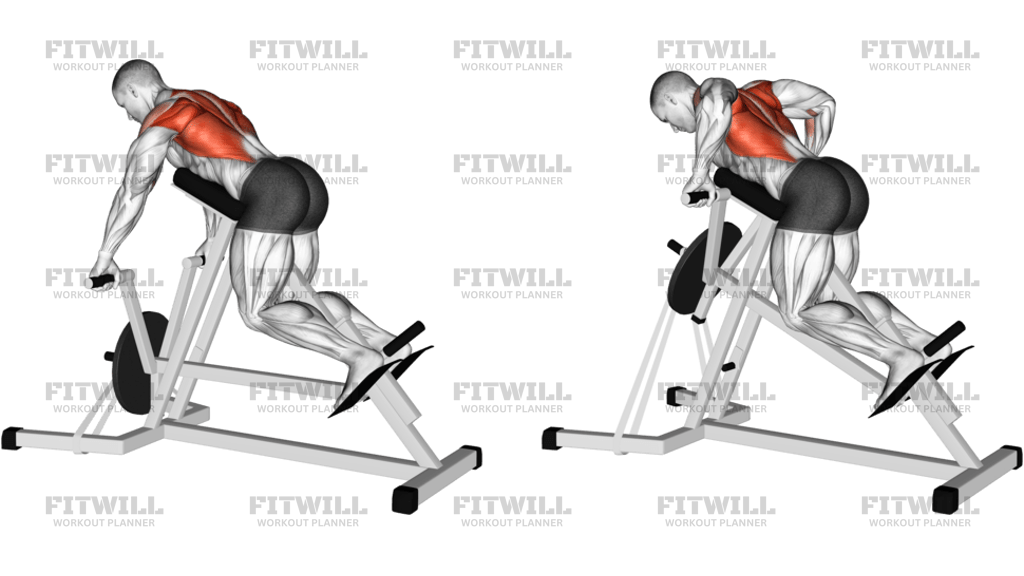
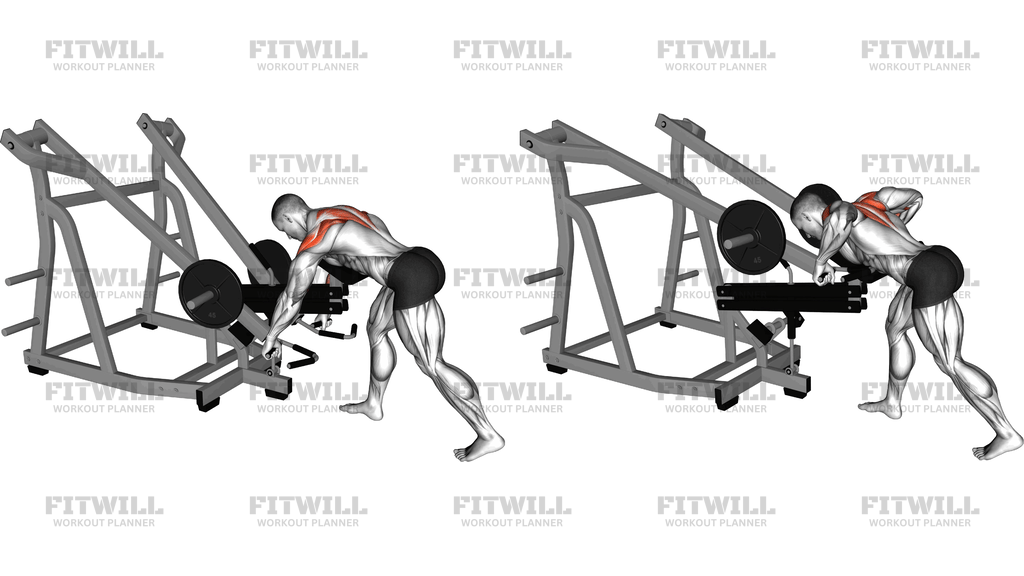
The Lever Bent Over Single Arm Lats Focused Row is a plate-loaded machine row performed from a bent-over, supported position. You set up on the leverage machine with one knee on the pad and the same-side hand braced on the machine frame, hinge forward over the chest support, and row the moving handle with the free arm. Because the machine's lever arm carries the resistance and fixes the path of the pull, the emphasis lands squarely on the lat of the working side rather than on stabilizing the whole torso.
The single-arm setup is the point of this exercise. With one side working at a time, you can find a longer stretch at the bottom of each rep and pull the handle back toward your hip, which flares the elbow slightly away from the ribs and drives the elbow higher behind the torso. That path biases the lat and teres major while still recruiting the rhomboids, mid traps, and rear delt. Lifters who feel traditional rows mostly in their arms or lower back often get a much cleaner lat sensation on a supported machine row like this.
It suits a wide range of trainees. Beginners appreciate the guided path and the supported torso, which removes a lot of the balance and spinal positioning demands of a free-weight bent-over row. More experienced lifters use it as a heavy, low-fatigue lat builder, a way to address one side at a time, or a finisher where they can push close to failure without a spotter. It also fits well into rehab-adjacent or return-to-training programs because the machine limits unwanted torso rotation.
Setup matters more than it looks like it would. The pad height and your foot placement determine how much forward lean you can get, and forward lean is what puts the lat in a stretched position at the start of each rep. Set up so your chest is angled down toward the pad, your working arm hangs fully extended toward the handle, and your spine stays long rather than rounded. If your setup forces you to shrug or shorten the range, adjust before adding load.
Execution comes down to three things: lead with the elbow, keep the shoulder blade controlled, and finish the pull with the lat. Drive the elbow up and back toward your hip, squeeze briefly at the top, then lower the handle under control until the arm is long and the lat is stretched. Because the machine supports your torso, it is tempting to rush the eccentric; that is where most of the growth stimulus lives, so treat the lowering half with the same attention as the pull.
In practice you will see this movement used on back day as a main lat exercise or as a secondary after pull-ups or barbell rows. Keep the load honest: if your torso twists toward the handle or your shoulder hikes up on every rep, the weight is beyond what you can steer with the lat alone.
[ Workout Log & Planner ]
Put your next workout in Fitwill
Keep your plan and training log ready when you are.


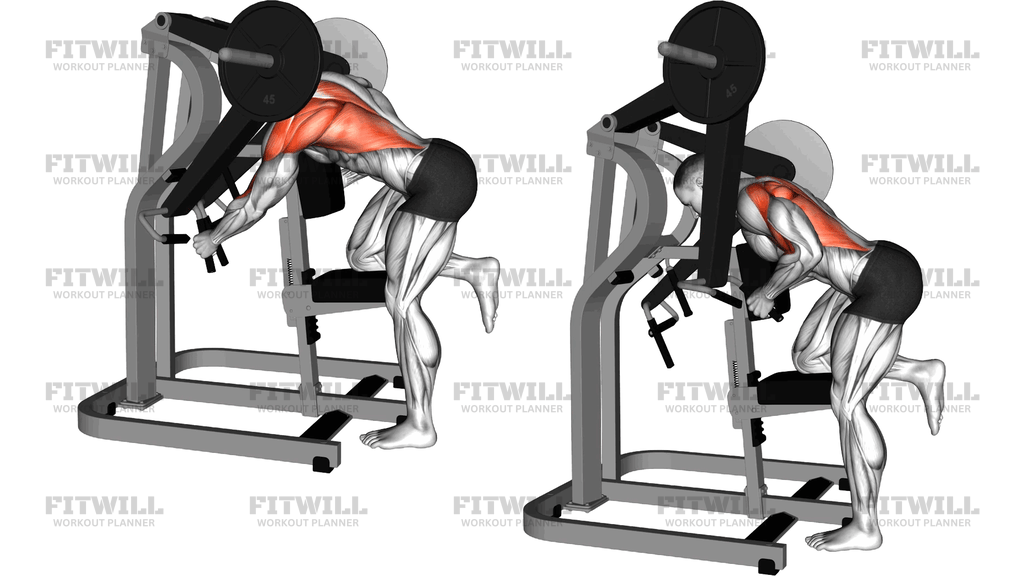
Instructions
- Load the weight plates onto the machine's lever arm and set the pad height so that when you place one knee on it, your torso hinges forward over the chest support at roughly 45 degrees or more.
- Grip the machine frame with the hand on the same side as your kneeling leg, plant the opposite foot flat on the floor, and reach the free hand down to the rowing handle so the arm hangs fully extended.
- Set your spine long, brace your abdominal wall, and let the working shoulder drift slightly forward so the lat reaches a mild stretch at the bottom.
- Exhale and pull the handle back by driving your elbow up and toward your hip, keeping the elbow slightly flared rather than pinned tight to the ribs.
- Pull until the handle reaches your lower ribs or hip area and the upper arm is just behind your torso; pause for a beat and squeeze the lat without shrugging.
- Lower the handle slowly under control until the arm is straight again, letting the lat lengthen fully before starting the next rep.
- Breathe in as the handle returns and exhale on each pull; keep the breath steady instead of holding it through the set.
- Complete all repetitions on one side, then reposition so the opposite knee is on the pad and row with the other arm.
- Step off carefully and unload or adjust the plates only after the lever arm has come to a complete rest.
Tips & Tricks
- If your shoulder shrugs toward your ear at the top of the pull, the weight is too heavy for the lat to control — drop the load and consciously keep the upper trap relaxed while the elbow travels back.
- Do not let the torso rotate toward the working arm to steal range; the pad is there to hold you square, so any twisting usually means you are pulling past a range your lat actually controls.
- Keep the wrist neutral and the grip just firm enough to hold the handle; squeezing the handle hard shifts effort into the forearms and biceps and away from the lat.
- Aim the elbow at your hip, not straight back at the ceiling — a path too vertical turns this into a rear-delt and trap row and shortchanges the lat.
- Let the shoulder blade move with the arm: reach forward at the bottom, pull the blade down and back at the top, rather than locking the shoulder girdle in place.
- On the kneeling side, drive that foot's heel and knee into the pad for stability; a loose lower body lets your whole position drift as the set gets hard.
- Slow the last third of the lowering phase where the arm approaches straight — that is the stretched lat position, and letting it slam back wastes most of the benefit.
- Match reps and load exactly between sides by always starting with your weaker arm; the supported position makes side-to-side differences easy to hide but worth correcting.
- Check the pad height before each set: too high and you cannot lean over enough to stretch the lat, too low and your chest ends up resting on the pad instead of hovering over it.
Frequently Asked Questions
Which muscles does the Lever Bent Over Single Arm Lats Focused Row work?
The lat of the working side is the primary mover, with the teres major, rear delt, rhomboids, and mid traps assisting, and the biceps and forearms handling the grip and elbow flexion. The lower back and core work lightly to hold your bent-over position on the pad.
Why pull the elbow toward the hip instead of straight back?
Elbow travel aimed at the hip keeps the arm path in line with the lat's fibers, which is what makes this version lats-focused. A straight-back, high-elbow path shifts the emphasis toward the rear delt and upper back.
Is this machine row suitable for beginners?
Yes, and it is one of the friendlier rowing setups for someone new. The pad supports your torso and the lever arm fixes the path, so you can learn to feel your lat working without also managing balance and spinal position under a barbell.
How is this different from a dumbbell bent-over single-arm row?
The machine supports your chest and kneeling leg, removes balance demands, and locks the resistance path, so you can focus entirely on the pull and safely train closer to failure. The dumbbell version demands more stabilizer and lower back work and allows more freedom in the arm path.
Should my knee be on the pad and my hand on the frame, or the other way around?
Place the knee and hand of one side on the machine for support and row with the opposite arm, then switch. This staggered, supported stance is what creates the bent-over angle and keeps your torso from rotating during the pull.
Why do I feel this more in my biceps than my lats?
That usually means you are yanking with the arm rather than driving the elbow back, or the load is too heavy to steer with the lat. Lighten the weight, start each rep from a full stretch, and think about pulling your elbow to your hip while keeping the grip relaxed.
How heavy should I go on this exercise?
Choose a load you can pull through a full range — arm long at the bottom, handle to the hip at the top — without your torso twisting or your shoulder shrugging. Because the machine is stable, it tolerates moderately heavy work well, but form should set the ceiling.
Can I use the Lever Bent Over Single Arm Lats Focused Row if I have lower back sensitivity?
The supported torso position makes it a reasonable option compared to free-weight bent-over rows, but the bent-over angle still loads the spine somewhat. Set the pad and lean angle so your back stays long and neutral, keep the load moderate, and clear any specific back issue with a qualified professional first.
What can I substitute if my gym does not have this machine?
A single-arm dumbbell row with one hand and knee on a flat bench gives you the same one-side-at-a-time, bent-over pattern. A chest-supported machine row or a single-arm cable row from a low pulley are also close alternatives, though the exact lat-stretch angle will differ.