Lever Low Row
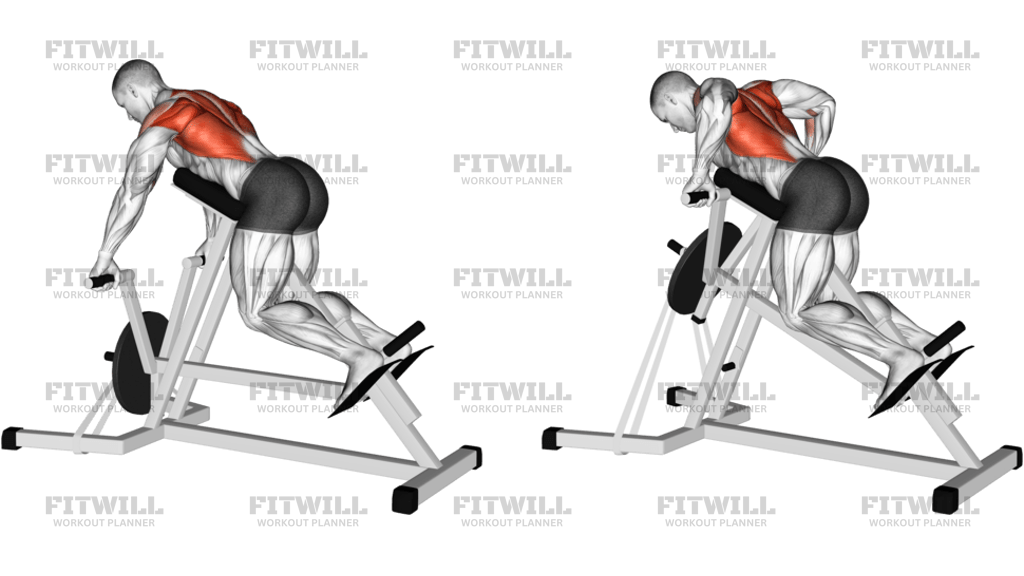
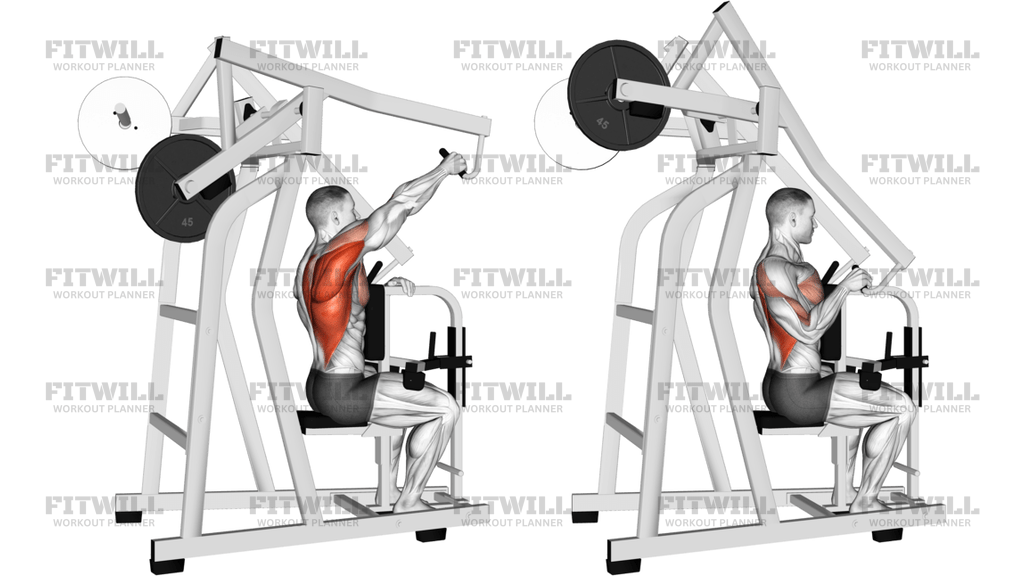
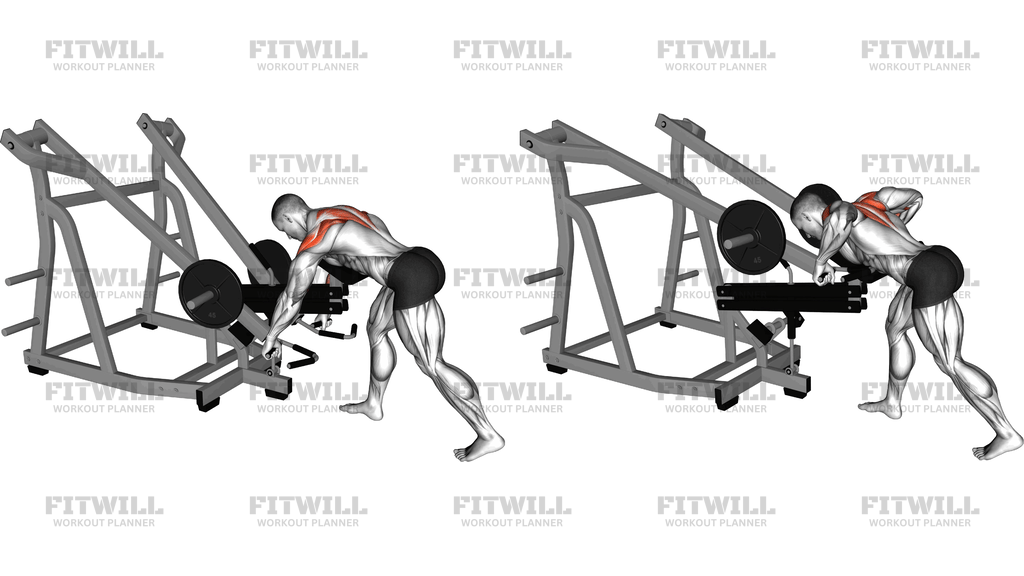
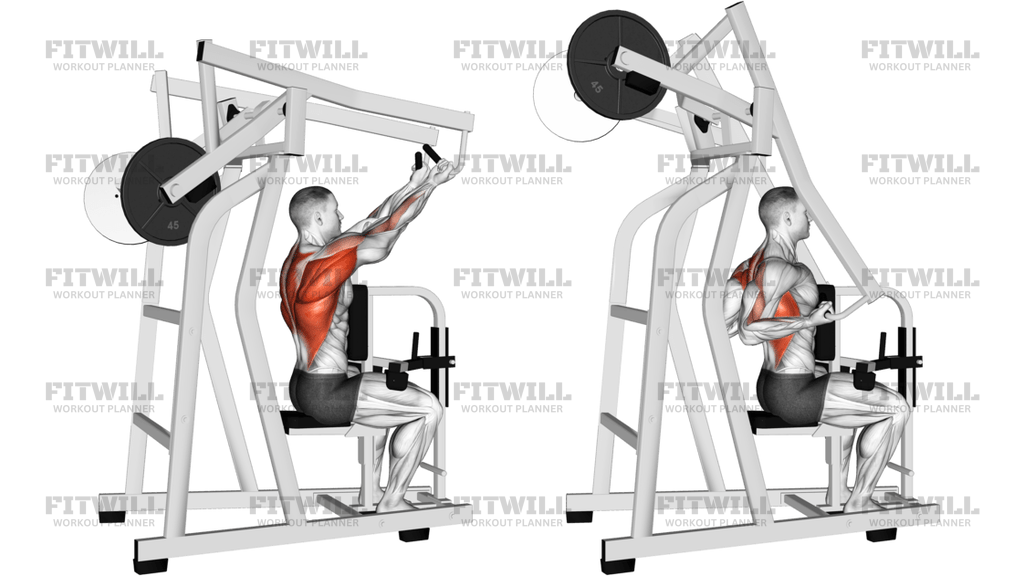
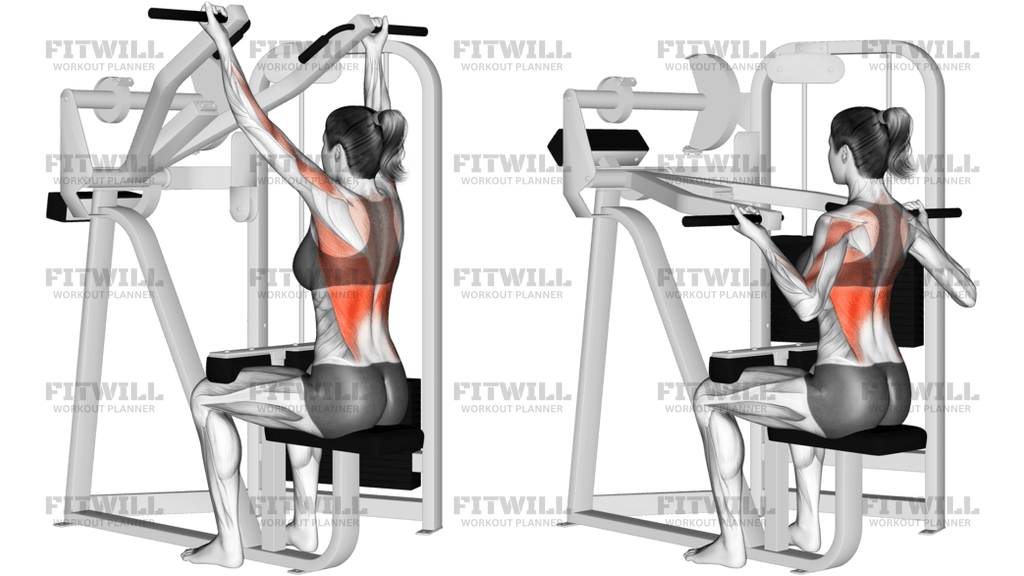
Lever Low Row is a chest-supported rowing exercise performed on a plate-loaded leverage machine. It trains the lats through shoulder extension and adduction while the upper back, rear shoulders, biceps, and forearms help control the pull. Because the torso is braced against the pad, the movement stays strict and the line of pull is easier to repeat than a free row.
The low handle path changes the emphasis slightly compared with a high row: you pull from the machine's extended start position into a strong finish near the lower ribs or upper waist. That makes this version useful when you want a heavy back builder without relying on body English. The chest pad and seated position also reduce lower-back fatigue, so most of the work stays on the pulling muscles rather than on holding the torso still.
Setup matters. If the seat is too high or too low, the handles will drift toward the wrong line and your shoulders will lose a clean groove. Adjust the seat so you can reach forward with your arms almost straight, shoulders controlled, and feet planted. Keep the chest in contact with the pad, brace lightly through the trunk, and let the shoulder blades reach forward before each rep without collapsing the neck.
Each rep should start with the elbows traveling back and slightly down, not with a shrug or a yank. Pull until the handles reach the lower rib area, squeeze the back for a brief pause, then return slowly until the arms are long again and the shoulder blades can open under control. The machine should feel smooth and stable from start to finish, with the same path on every repetition.
This is a strong choice for back-focused hypertrophy work, accessory pulling volume, or as a safer heavy row when you want a fixed path and chest support. Use a load that lets you keep the chest pinned, the neck relaxed, and the eccentric phase deliberate. If your torso is bouncing or the handles are being yanked into place, the set is too heavy or the seat position is off.
[ Workout Log & Planner ]
Put your next workout in Fitwill
Keep your plan and training log ready when you are.


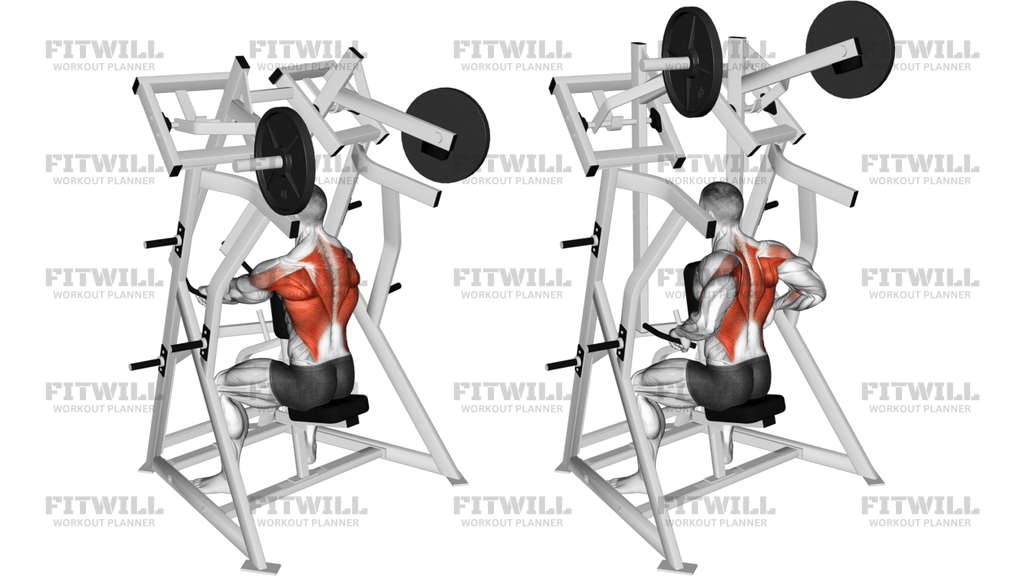
Instructions
- Adjust the seat so the handles line up with your lower ribs or upper waist, then place your chest firmly against the pad and plant both feet on the platform.
- Grab the handles with a neutral grip, keep your wrists straight, and let your arms extend forward until you feel a light stretch through your lats and upper back.
- Set your shoulders down and slightly forward without rounding hard through the lower back or lifting the chest off the pad.
- Brace your trunk and start the pull by driving your elbows back and slightly down toward your hips.
- Continue pulling until the handles reach your lower ribs and your shoulder blades are squeezed together without shrugging.
- Hold the squeezed position for a brief pause, keeping the chest on the pad and the neck long.
- Lower the handles slowly until your arms are long again and the shoulder blades can move forward under control.
- Exhale as you pull, inhale as you return, and keep each repetition on the same path.
Tips & Tricks
- If the handles rise toward your chest instead of your lower ribs, lower the seat or shorten the setup.
- Keep the chest glued to the pad; reaching for extra range by lifting off the pad usually turns the rep into momentum.
- Think elbows back, not hands back. That cue helps the lats and upper back drive the row instead of the forearms taking over.
- Finish with the elbows near your sides, but do not crank the shoulders behind the torso or over-squeeze into a shrug.
- Use a neutral wrist and relaxed grip pressure so the forearms do not fail before the back.
- Let the shoulder blades move forward on the way down, but keep that forward reach controlled rather than collapsing.
- A slower lowering phase makes this machine feel much heavier and usually improves back tension immediately.
- If your lower back has to help, reduce the load and make the seat position match the machine's pull line.
Frequently Asked Questions
What muscle does Lever Low Row target most?
The lats are the main target, with the upper back, rear shoulders, biceps, and forearms helping through the pull.
Can beginners perform this exercise?
Yes. The chest support and fixed path make it beginner-friendly as long as the seat is set correctly and the load stays manageable.
Where should the handles travel on each rep?
Pull them toward your lower ribs or upper waist, not up toward the chest or shoulders.
What is the most common form mistake on this machine?
People usually shrug, yank the weight, or lift off the chest pad to fake more range.
Should I keep my chest on the pad the whole time?
Yes. Keeping contact with the pad is what makes the lever low row strict and keeps the lower back from taking over.
How do I breathe during the set?
Inhale as you reach forward, then exhale as you pull the handles back toward your torso.
What grip works best on this row?
A neutral grip is the most natural choice on this machine and usually keeps the elbows tracking well.
Is this a good replacement for a barbell row?
It can be a good substitute when you want a chest-supported row with less lower-back loading and a more consistent path.