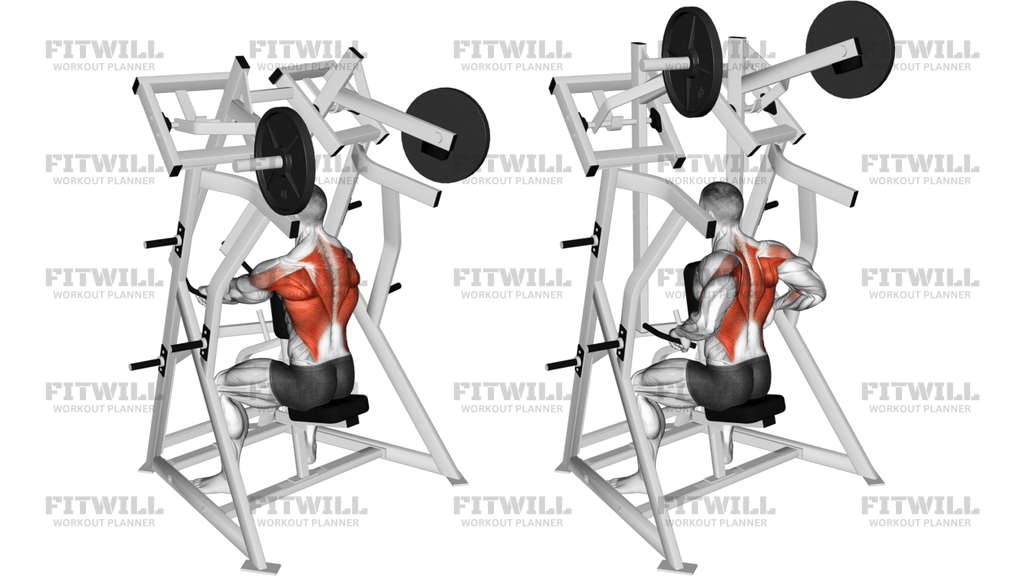
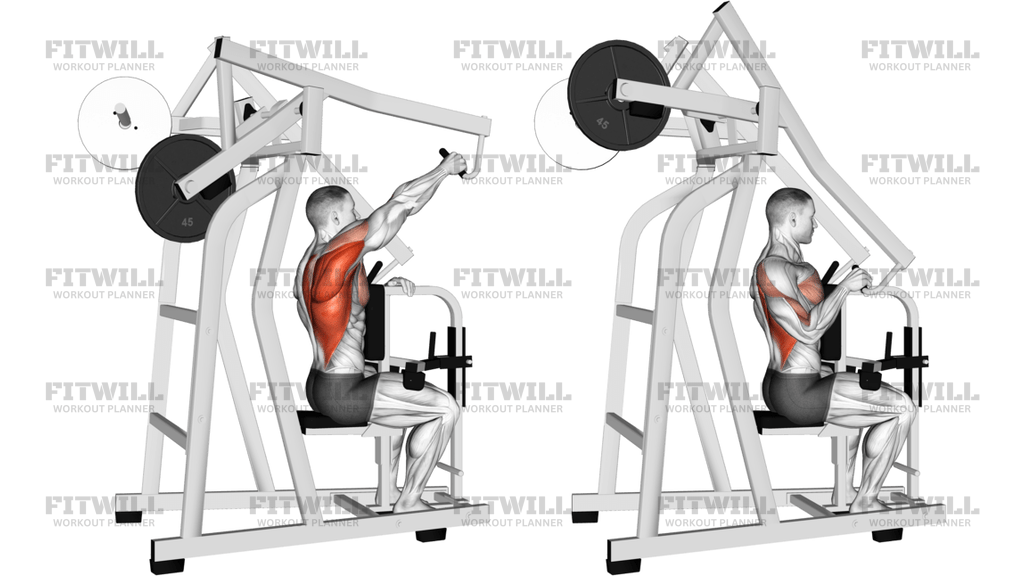
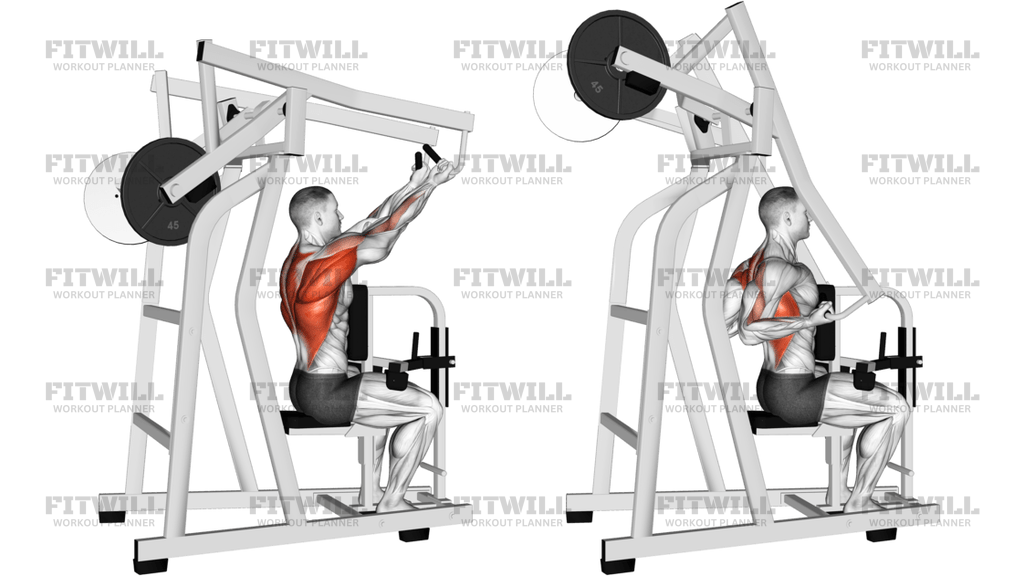
Lever Incline Prone Neutral Grip Row
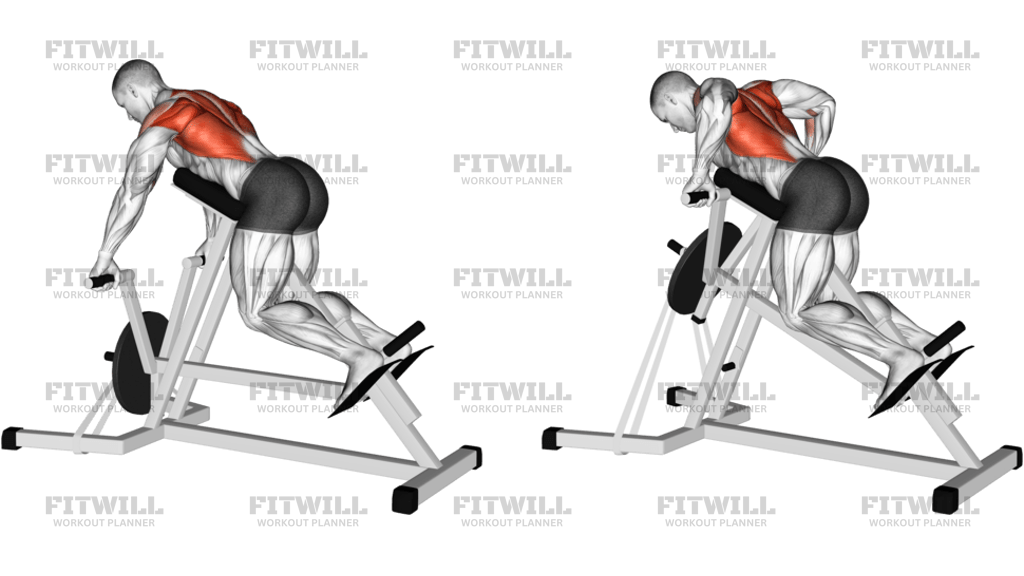
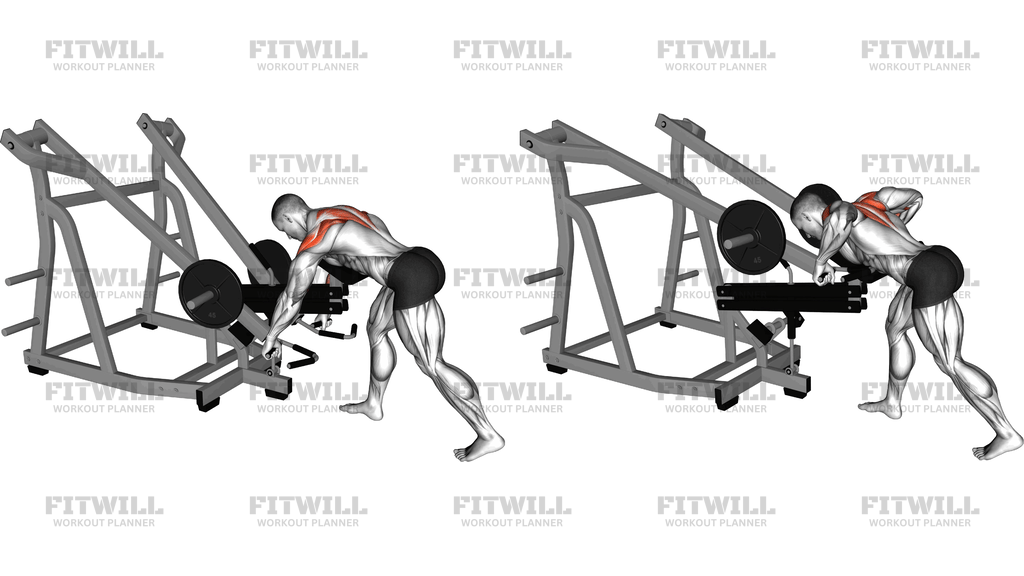
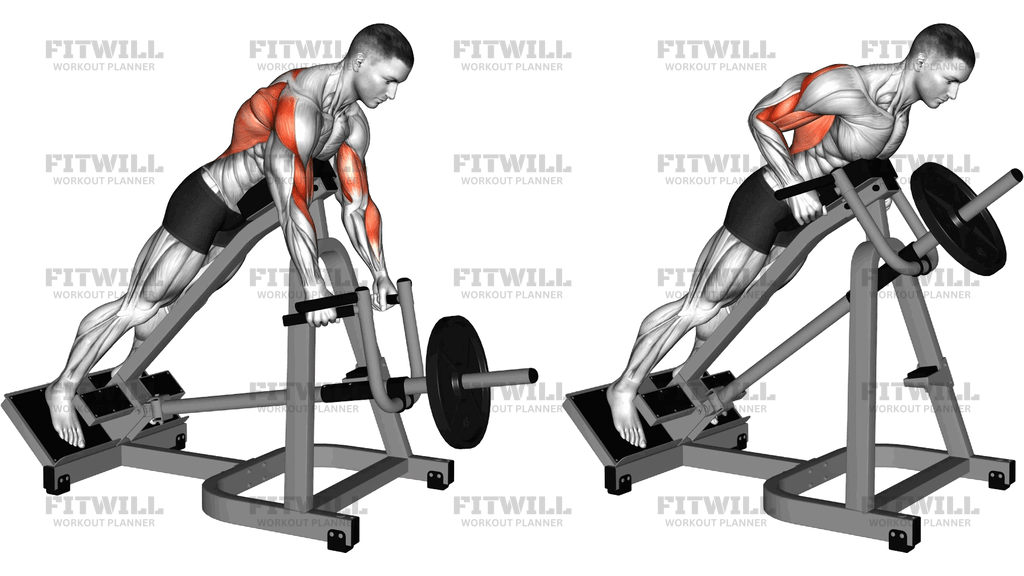
The Lever Incline Prone Neutral Grip Row is a plate-loaded machine row performed lying face down on an inclined pad, pulling the lever arms with a neutral (palms-facing) grip toward your torso. The angled body position puts your chest against the pad and your feet planted on the rear footplates, so your spine is supported throughout and your torso stays fixed at the machine's built-in incline. This removes the need to hold yourself up, which is what makes it different from a bent-over barbell row or a dumbbell row on a bench.
Because your torso is braced and the pull path is guided by the lever arm, this movement lets you load the upper back and lats heavily without lower back fatigue creeping in. The neutral grip keeps your shoulders in a comfortable, slightly rotated position, which many lifters find friendlier for the shoulder joint than a fully pronated grip. Expect the lats, rhomboids, and mid traps to do the bulk of the work, with the biceps, rear delts, and forearms assisting.
This setup suits lifters who want rowing volume without hammering the lower back, people returning from back tweaks who still need horizontal pulling, and anyone whose lower back gives out before their lats do on free-weight rows. It's also a solid choice for building back thickness, since the prone position makes it hard to cheat with body English — the pad pins your chest, so the plates only move if your elbows do.
Setup matters more than it looks. The pad should sit against your upper chest and sternum, not your belly, and your feet need firm contact on the footplates with legs mostly straight but knees soft. If the pad is too low on your torso, you lose the bracing benefit and start lifting your chest to fake range. If your feet slip off the plates, the whole position collapses. Take a moment to lock these two contact points in before the first rep.
Execution is simple to describe but easy to rush: pull the handles up toward the pad with your elbows leading, squeeze your shoulder blades back and down at the top, then lower the weight under control until your arms are extended and your shoulder blades have protracted slightly. Keep your neck neutral and your chest glued to the pad — that's the whole game with this movement.
In practice, you'll see this exercise used as a primary back builder on machine-based days, as a finisher after heavy barbell work, or as a safer rowing variation in commercial gyms where the leverage machine allows quick weight changes without adjusting a bench or bracing position.
[ Workout Log & Planner ]
Put your next workout in Fitwill
Keep your plan and training log ready when you are.


Instructions
- Adjust the inclined pad so it presses firmly against your upper chest and sternum when you lean into the machine.
- Place the balls of your feet on the rear footplates with your legs straight but knees slightly soft, so your body forms a stable line down the incline.
- Grip the two handles with a neutral grip, palms facing each other, and let your arms hang fully extended toward the floor at the start.
- Brace your core, keep your neck in line with your spine, and press your chest into the pad so your torso cannot lift during the set.
- Initiate the pull by driving your elbows up and back toward your hips, keeping them roughly 45 degrees or less from your torso rather than flared wide.
- Pull until your hands reach the sides of the pad and your shoulder blades are squeezed together and down; pause briefly at the top.
- Lower the weight slowly by extending your arms and letting your shoulder blades spread slightly, resisting the descent rather than dropping it.
- Exhale as you pull up, inhale as you lower, and keep the breathing rhythm steady across the set.
- After your final rep, extend your arms fully and let the lever arm settle onto its rest before releasing your grip and stepping off the footplates.
Tips & Tricks
- If your chest pops off the pad on hard reps, the weight is too heavy or you're turning the row into a partial pullover — drop the load and keep the sternum pinned.
- Chest-height placement on the pad is what makes this exercise work; if the pad rides against your abdomen, your lower back takes over and the lat stretch at the bottom shortens.
- The neutral grip is easier on the shoulders than a pronated grip, but don't use that as license to shrug — keep your upper traps relaxed and pull with the elbows instead.
- Avoid yanking the first rep off the rest; take the slack out of the lever arm with a light squeeze before pulling to full tension, since machine rows are easy to bounce.
- If your forearms burn out before your back, loosen your grip slightly and think of pulling with your pinky-side of the hand leading — over-squeezing the handles recruits forearm flexors excessively.
- Let the shoulder blades move at the bottom of each rep. Holding them retracted the whole time turns this into a short-range shrug and steals the lat stretch.
- Because the incline position locks you in, range of motion errors show up as short pulls rather than torso sway — film a side view and confirm your hands travel all the way to the pad.
- On the descent, a one-to-two-second lowering phase is enough; slower than that mostly just adds forearm fatigue on this machine rather than extra back stimulus.
Frequently Asked Questions
Which muscles does the Lever Incline Prone Neutral Grip Row target?
The primary movers are the lats, with strong contribution from the rhomboids and mid traps as the shoulder blades retract. The biceps, rear delts, and forearms assist throughout the pull.
How is this different from a seated cable row?
Your torso is pinned to an inclined pad instead of held upright by your own lower back, which removes lumbar fatigue and makes cheating with torso swing nearly impossible. The neutral grip and fixed lever path also keep the shoulders in a more consistent position rep to rep.
Why does this machine use a neutral grip instead of an overhand grip?
Palms-facing grips place the upper arm closer to the torso and reduce the degree of internal shoulder rotation needed at the top of the pull. Most lifters can row deeper and more comfortably this way, especially those with cranky shoulders.
Is the Lever Incline Prone Neutral Grip Row suitable for beginners?
Yes — the guided lever path and supported torso make it one of the more forgiving rows to learn. Beginners should start light, focus on pinning the chest to the pad, and master the full range before adding weight.
My lower back gets tired on barbell rows — is this a good swap?
It's a practical substitution, since the pad and footplates support your body and the load travels through the machine rather than along your spine. Keep in mind it trains the same pulling muscles, so you can maintain rowing volume without the same lower back demand.
How high should the pad sit on my torso?
It should press against your upper chest and sternum. If it sits near your belly, your chest can lift and your lower back extends to finish reps, which defeats the purpose of the prone setup.
Should my elbows be wide or tucked during the pull?
Keep them roughly 45 degrees or less from your torso, driving them back toward your hips. Excessively wide elbows shift work toward the rear delts and can pinch at the top of the range with a neutral-grip machine row.
How heavy can I go on this exercise?
The supported position tolerates fairly heavy loading, but only if your chest stays glued to the pad and the plates lower under control. Once your sternum starts popping off the pad, the set is done regardless of how many reps are left.
What can I do if my gym doesn't have this machine?
A chest-supported incline dumbbell row on a high bench is the closest substitute — set the bench to a similar incline, keep a neutral grip, and match the same elbow path. A T-bar row with chest support also covers similar ground.