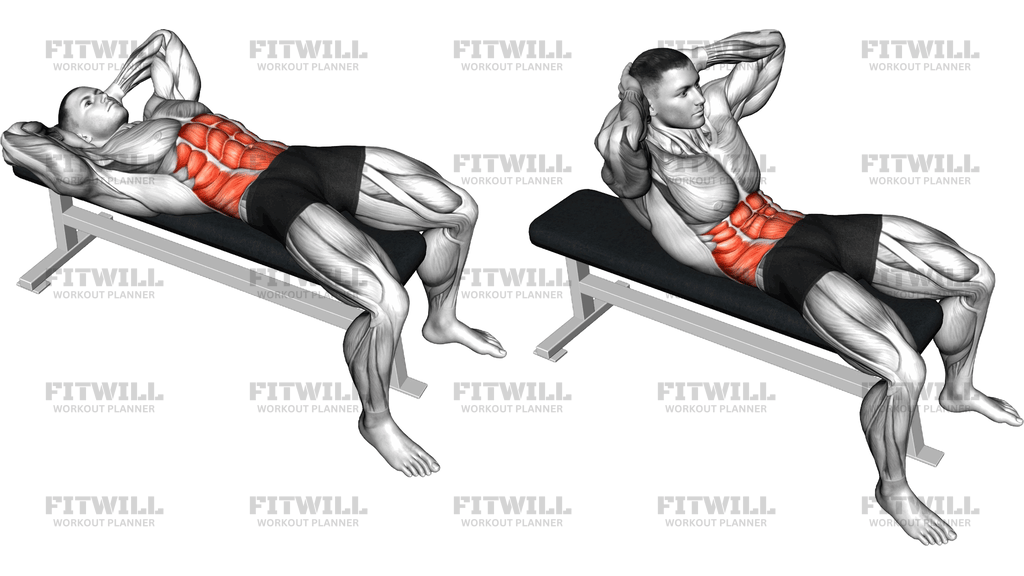
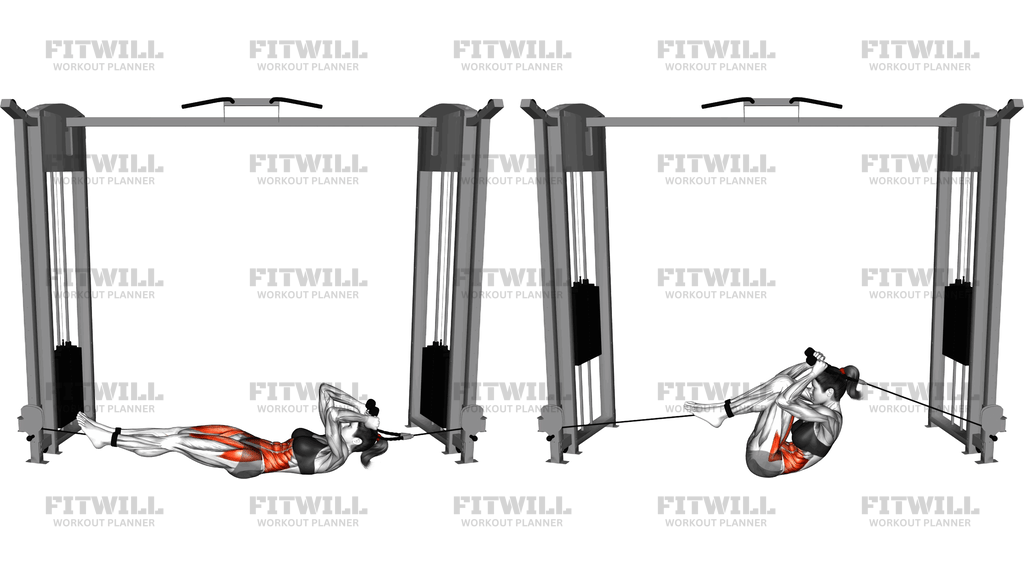
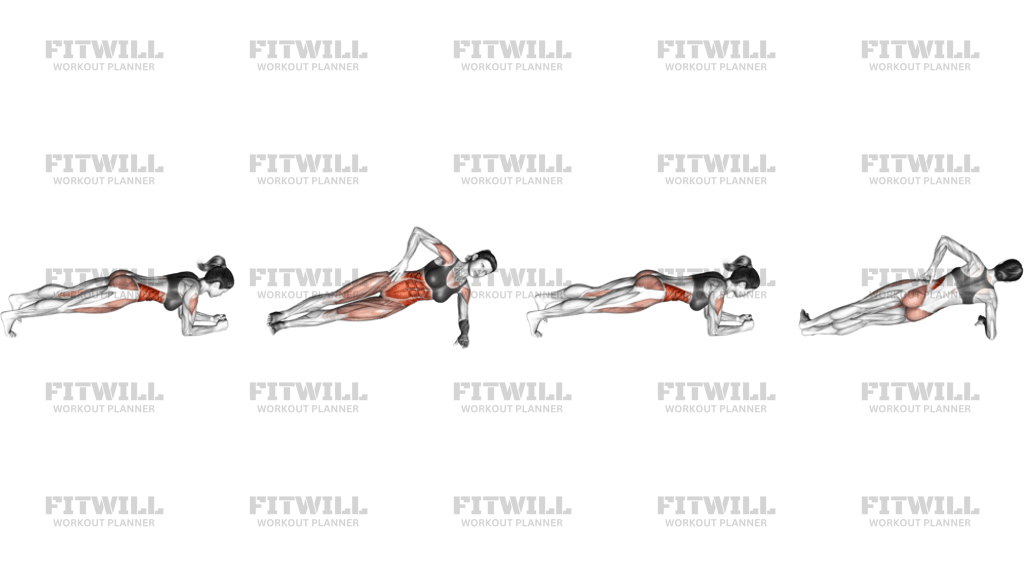
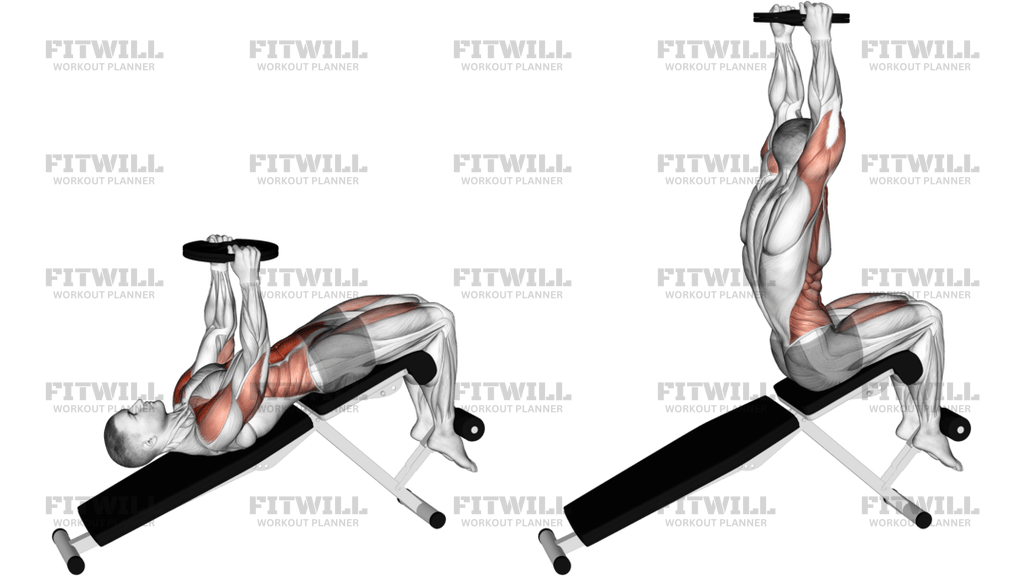
Weighted Plate Crunch (Hands Overhead)
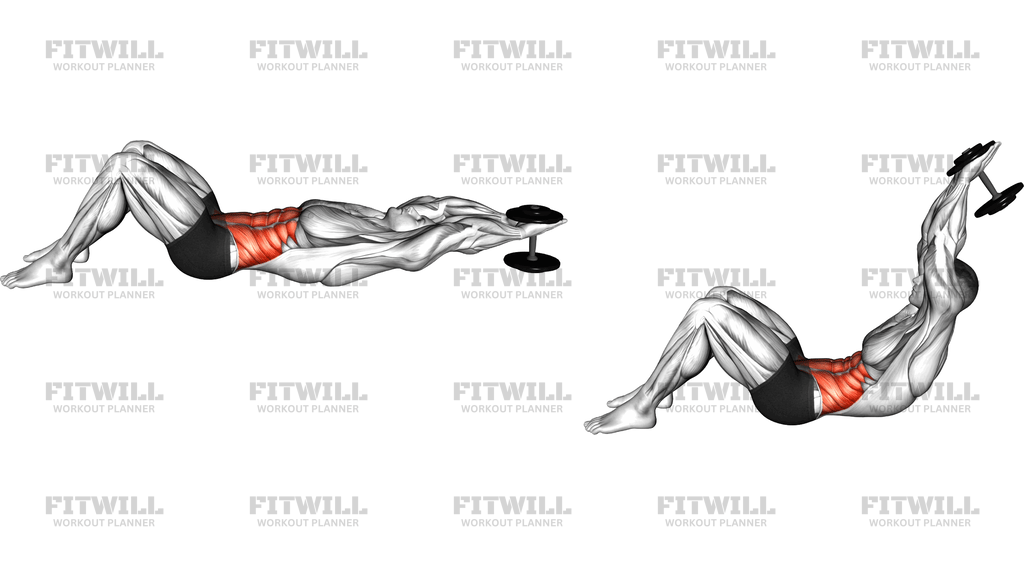
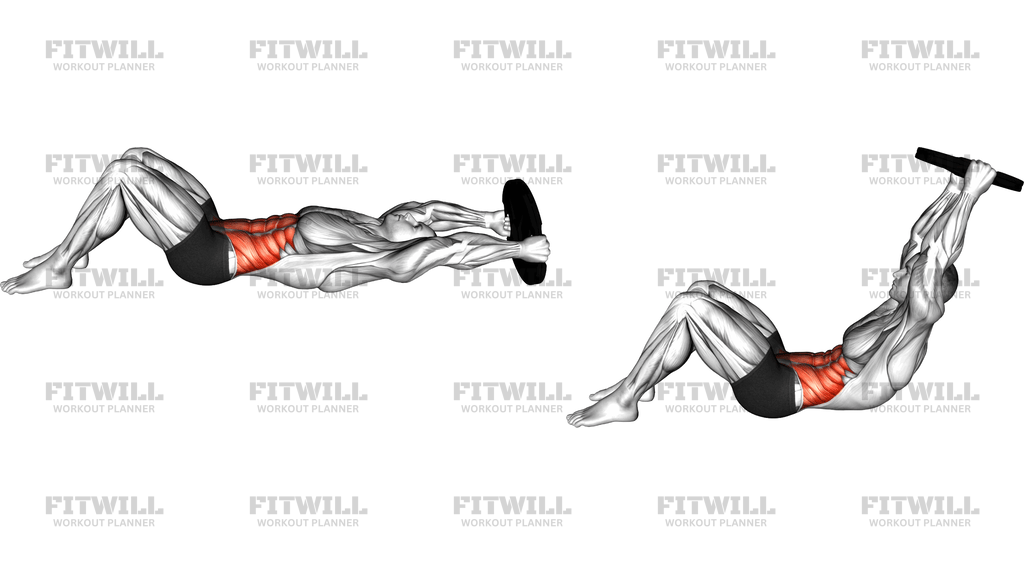
The Weighted Plate Crunch (Hands Overhead) is a floor-based abdominal exercise where you lie on your back with knees bent and hold a single weight plate in both hands. Your arms stay extended straight overhead, reaching behind or above your head, and that extended position stays locked in as you curl your upper body up toward your knees. Because the plate travels at the far end of a long lever arm, the same small plate creates far more load on the rectus abdominis than holding it against your chest.
This movement suits lifters who find bodyweight crunches too easy but who do not want to jump straight to heavy cable or machine work. It is a natural progression step: once you can perform high-rep floor crunches with clean technique, adding a 5 to 10 kg plate in extended hands raises the demand without changing the pattern. It also fits well into home training, since all you need is one plate and floor space.
The primary muscle worked is the rectus abdominis, the front wall of the abdomen that flexes the spine. Holding the arms overhead adds a stretch and stability demand on the lats and shoulders, while the hip flexors assist as the torso rises. The obliques work to keep the plate level and prevent rotation, which becomes noticeable the moment your grip or arm position drifts.
Setup matters more here than in a standard crunch. Your lower back should stay pressed toward the floor, knees bent with feet flat, and the plate held securely with overlapping hands rather than a loose pinch. If the plate sits unevenly or your arms bend mid-rep, the load shifts to the shoulders and the abdominal contraction loses tension. Keep the arms relatively fixed and let the ribcage and hips do the moving.
Execution is a curl, not a sit-up. Exhale as you peel your head, shoulders, and upper back off the floor, reaching the plate up and slightly toward your knees. Stop when your lower back would otherwise lift, squeeze the abs hard at the top, then lower under control until your shoulder blades touch down again. Rushing the descent is the most common fault, and it turns a precise abdominal exercise into a sloppy momentum drill.
Use the Weighted Plate Crunch (Hands Overhead) early in an ab session when you are fresh, or as a finishing movement with a lighter plate and higher reps. Because the arms overhead position lengthens the working muscles, start conservative with the weight, and keep the movement slow enough that you feel each rep in your midsection rather than in your neck, lower back, or shoulders.
[ Workout Log & Planner ]
Put your next workout in Fitwill
Keep your plan and training log ready when you are.


Instructions
- Sit on the floor with your knees bent and feet flat, then lie back so your lower spine rests against the ground.
- Hold a weight plate by its edges with both hands, fingers interlaced around the rim, and extend your arms straight so the plate hangs behind and above your head.
- Draw your ribs down and gently press your lower back toward the floor before you start each rep.
- Exhale and curl your head, shoulders, and upper back off the floor, keeping the elbows nearly locked as the plate travels up toward your knees.
- Stop the curl once your shoulder blades are clear of the floor and your lower back is about to lift; do not pull yourself into a full sit-up with the arms.
- Squeeze your abdominals hard for a brief pause at the top, keeping the plate steady and level over your chest.
- Inhale as you lower slowly, reversing the curl until your shoulder blades and head touch back down.
- Let the plate return overhead under control instead of dropping it, keeping light tension in the abs at the bottom.
- Reset your lower-back position and brace again before starting the next repetition.
Tips & Tricks
- If your shoulders ache overhead, use a lighter plate and check that you are curling with your abs rather than pressing the plate away with your arms.
- A common mistake is bending the elbows and turning the rep into a plate pullover or press; keep the arms long so the abdominals flex the spine instead.
- Do not yank your head forward; your hands hold the plate, not your neck, so the chin stays slightly tucked and neutral.
- If your lower back arches off the floor as you rise, shorten the range and stop the curl earlier until you build control.
- Grip the rim of the plate with overlapping fingers; a loose pinch grip makes the plate wobble and shifts effort to the forearms.
- Keep your feet flat and knees bent around 90 degrees; straightening the legs invites the hip flexors and lower back to take over.
- The eccentric is where most reps are wasted—take two to three seconds to lower so the abs stay loaded through the full stretch.
- Progress by increasing the plate in small jumps; because the weight sits at the end of long arms, small additions feel much heavier than expected.
- If you cannot keep the plate stable overhead, regress to the same crunch holding the plate against your chest, then move the arms back out over time.
Frequently Asked Questions
Which muscles does the Weighted Plate Crunch (Hands Overhead) work?
The rectus abdominis is the primary mover, flexing the spine as you curl up. The obliques stabilize against rotation, the hip flexors assist the lift, and the lats and shoulders work isometrically to hold the plate overhead.
Why hold the plate overhead instead of on the chest?
With the arms extended, the plate sits at the end of a long lever, which multiplies the load on the abdominals. The same plate feels significantly heavier overhead, letting you load the crunch without bulky equipment.
Is the Weighted Plate Crunch (Hands Overhead) suitable for beginners?
Beginners should first master unweighted crunches and the chest-held version, since the overhead position demands shoulder mobility and core control. Once those feel easy, start with a light plate of 2.5 to 5 kg.
How high should I curl during this exercise?
Lift only until your shoulder blades leave the floor and your lower back is about to peel away. Going into a full sit-up shifts work to the hip flexors and reduces the spinal flexion that targets the abs.
Why do I feel this in my shoulders or lats instead of my abs?
Tired shoulders usually mean the arms are moving or pressing rather than staying fixed. Keep the elbows locked, focus on curling your ribs toward your hips, and reduce the plate weight until the abs do the work.
What size weight plate should I use?
Start with a small plate you can control for 10 to 15 slow reps without the arms bending or the plate wobbling. Because of the extended lever arm, a 5 kg plate often feels as demanding as far heavier loads in other exercises.
Can I substitute another tool for the plate?
Yes, a dumbbell held in both hands or a medicine ball works with the same straight-arm setup. A plate is often most comfortable because its flat rim suits an interlaced grip.
How many sets and reps should I do?
Two to four sets of 10 to 20 controlled reps work well, done early in an ab session while fresh or as a finisher with lighter weight. Prioritize a slow lowering phase over adding reps quickly.
Is it safe for the lower back?
With knees bent, the lower back pressed toward the floor, and no bouncing off the ground, the movement is generally well tolerated. Stop short of any range where your lower back arches or lifts, and keep every rep controlled.