Weighted Dumbbell Crunch (Hands Overhead)
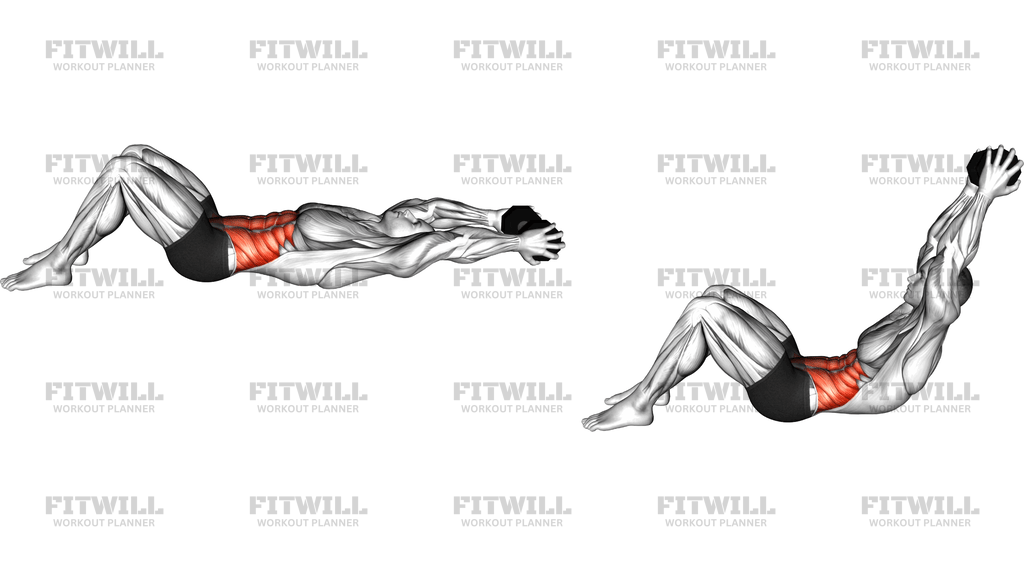
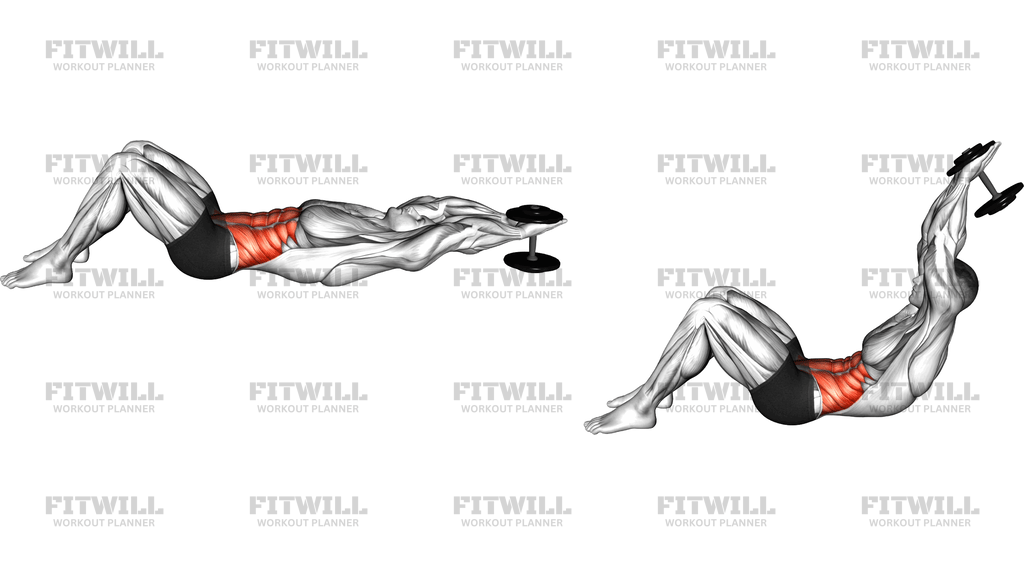
The Weighted Dumbbell Crunch (Hands Overhead) is a floor-based abdominal exercise where you lie on your back with your knees bent and hold a single dumbbell in both hands, arms extended straight overhead behind or above your head. From that lengthened position, you curl your shoulder blades off the floor while keeping the dumbbell traveling overhead toward the ceiling, then lower back down under control. The hands-overhead setup is what separates this from a standard crunch: the weight sits far from your torso, which increases the leverage the abs must overcome and places the rectus abdominis in a stretched position before every rep.
This movement is useful for lifters who find bodyweight crunches too easy and want to load the abs directly without turning the exercise into a hip-flexor-driven sit-up. Because the dumbbell is held in both hands with the arms extended, the load stays centered and the shoulders and lats work to keep the arm position stable while the trunk does the flexing. It suits intermediate trainees building ab strength, anyone programming weighted core work in low-rep sets, and people who want a measurable way to progress their crunches by simply adding a small plate or moving to a heavier dumbbell.
The main muscles worked are the abs, particularly the rectus abdominis running from the ribcage to the pelvis. The obliques assist with stabilizing the trunk as you curl up, and the hip flexors help control the pelvis even though the hips stay bent with feet flat on the floor. Holding the weight overhead also asks the lats and shoulder extensors to keep the arms from drifting, so you get a small amount of upper-body static work for free.
Setup matters more here than in most crunch variations. Your lower back should stay flat against the mat, your knees bent with feet planted, and the dumbbell held by one end or by the inner head with both hands cupped around it. If you start with the arms vertical over the chest instead of overhead, you lose the stretch and make the movement easier; if your back arches off the floor when the weight goes behind your head, the load is too heavy or your hips are too far away, and the stress shifts to the lumbar spine.
To execute it well, think about peeling your shoulder blades off the floor one segment at a time, exhaling as you curl, and reaching the dumbbell toward a point above and beyond your knees. Stop when your upper back is off the floor and your abs are fully contracted; there is no need to sit all the way up, and pulling the weight past vertical hands the work to momentum and hip flexors. Lower slowly until the shoulder blades touch down, let the arms return overhead, and reset your brace before the next rep.
Common use cases include finishing a strength session with weighted ab work, progressing from bodyweight crunches, and training the abs in a lengthened range that most floor exercises miss. Practical safety points: keep the load modest at first, never let the dumbbell hover directly over your face or head with a loose grip, and stop the set if your lower back starts lifting or your neck takes over the pulling.
[ Workout Log & Planner ]
Put your next workout in Fitwill
Keep your plan and training log ready when you are.


Instructions
- Lie on your back on an exercise mat with your knees bent and your feet flat on the floor, about hip-width apart.
- Hold one dumbbell in both hands, cupping one end or the inner head of the dumbbell, and extend your arms straight so the dumbbell is positioned overhead behind your head.
- Gently draw your ribs down and press your lower back into the mat so your spine is neutral before you start moving.
- Inhale, then brace your abs as if preparing for a light punch to the stomach.
- Curl your upper body off the floor by flexing the spine, raising the dumbbell in an arc overhead toward the ceiling and slightly beyond your knees, keeping the arms straight the whole way.
- Continue curling until your shoulder blades are clearly off the floor and your abs are fully shortened; exhale through the top of the rep.
- Pause for a beat at the top with the abs squeezed, and resist the urge to yank the weight forward with the arms.
- Lower slowly in the same arc, keeping the arms extended, until your shoulder blades touch the mat and the dumbbell is back overhead.
- Let your breathing settle, re-press your lower back into the floor, and reset the dumbbell overhead before starting the next repetition.
- Keep your head in line with your arms throughout; the dumbbell travels because your trunk flexes, not because you pull with your hands.
Tips & Tricks
- A common mistake is bending the elbows and pressing the dumbbell forward like a pullover press; this turns an ab exercise into a shoulder exercise. Lock the elbows out and let the arc come from spinal flexion.
- If your lower back arches or lifts off the mat when the dumbbell is overhead, the weight is pulling you into extension. Drop to a lighter dumbbell or move your feet closer to your hips.
- Keep the dumbbell on a wide arc around your head, not directly over your face. If you lose your grip mid-set, a weight falling from overhead toward your face is the real hazard here.
- Do not chase extra height by pulling your head forward with your chin. The curl comes from the ribcage rolling toward the pelvis; your neck stays relaxed and in line with the arms.
- Because the arms are extended overhead, the abs start in a stretched position, so the first inch of the rep should be deliberate and slow. Yanking off the floor is where momentum replaces tension.
- Stop at the top once your shoulder blades clear the floor. Rising into a full sit-up shifts the load to the hip flexors and removes tension from the abs at the top.
- Progress by adding weight in small jumps, such as 1 to 2.5 kg increments, rather than adding lots of reps. This movement responds well to low-rep weighted sets of 8 to 12.
- If your shoulders feel pinched when the weight goes overhead, bend your knees more and tilt the pelvis slightly toward you before starting, or shorten the arm angle by starting with the dumbbell slightly less far behind your head.
- Exhale forcefully on the way up and inhale on the way down; holding your breath through the whole set makes the brace stiff and reduces how far you can curl.
Frequently Asked Questions
What muscles does the Weighted Dumbbell Crunch (Hands Overhead) work?
The primary muscle is the rectus abdominis, the front wall of the abs. The obliques stabilize the trunk, the hip flexors assist in controlling the pelvis, and the lats and shoulders work statically to keep the extended dumbbell in position overhead.
Why hold the dumbbell overhead instead of on the chest?
Holding the weight overhead places the abs in a lengthened position and puts the load farther from the hip joint, which increases the lever arm the abs must work against. This makes the crunch substantially harder than holding the weight on your chest.
Is the Weighted Dumbbell Crunch (Hands Overhead) suitable for beginners?
It can be, but most beginners should start with a very light dumbbell or no weight at all until they can keep their lower back flat on the floor with the arms extended overhead. If the back arches or the neck strains, master the bodyweight version first.
How heavy should the dumbbell be for this exercise?
Choose a weight you can control for 8 to 15 reps while keeping the arms straight and the lower back glued to the mat. Most people need far less weight than they expect, because the long lever arm makes even a light dumbbell demanding.
Should I sit all the way up at the top of the rep?
No. Once your shoulder blades are off the floor and your abs are fully contracted, the rep is complete. Rising into a full sit-up shifts the effort to the hip flexors and lets momentum take over.
My lower back hurts when the dumbbell goes behind my head. What should I change?
That usually means the weight is pulling your spine into extension. Use a lighter dumbbell, bring your feet closer to your hips, and consciously press your lower back into the mat before each rep. If discomfort persists, shorten the overhead arm angle or switch to a chest-held variation.
Can I substitute the Weighted Dumbbell Crunch (Hands Overhead) with another exercise?
Yes. A dumbbell pullover crunch on a stability ball, a weighted crunch with the plate held on the chest, or cable crunches kneeling at a high pulley all train the abs through a similar flexion pattern with added load.
How do I avoid pulling the dumbbell up with my arms instead of using my abs?
Keep your elbows locked straight and think of the arms as a fixed lever attached to your ribcage. The dumbbell should rise because your trunk curls toward your thighs, not because your hands reach forward.
How many sets and reps should I do?
Two to four sets of 8 to 15 controlled reps works well as weighted ab training at the end of a session. Rest about 60 to 90 seconds between sets, and stop the set as soon as your form breaks down.