Weighted Dumbbell Crunch (Hands Overhead)
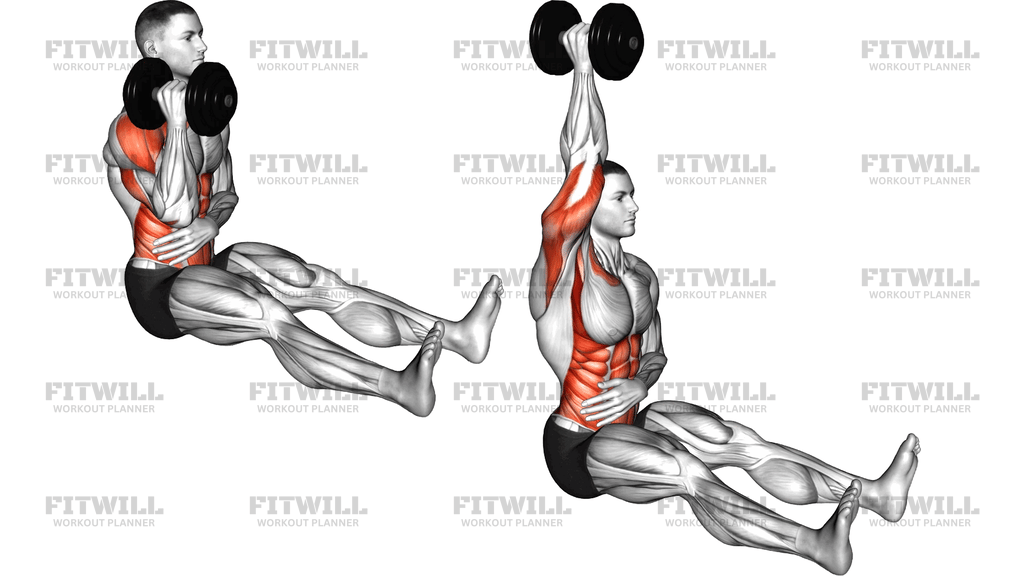
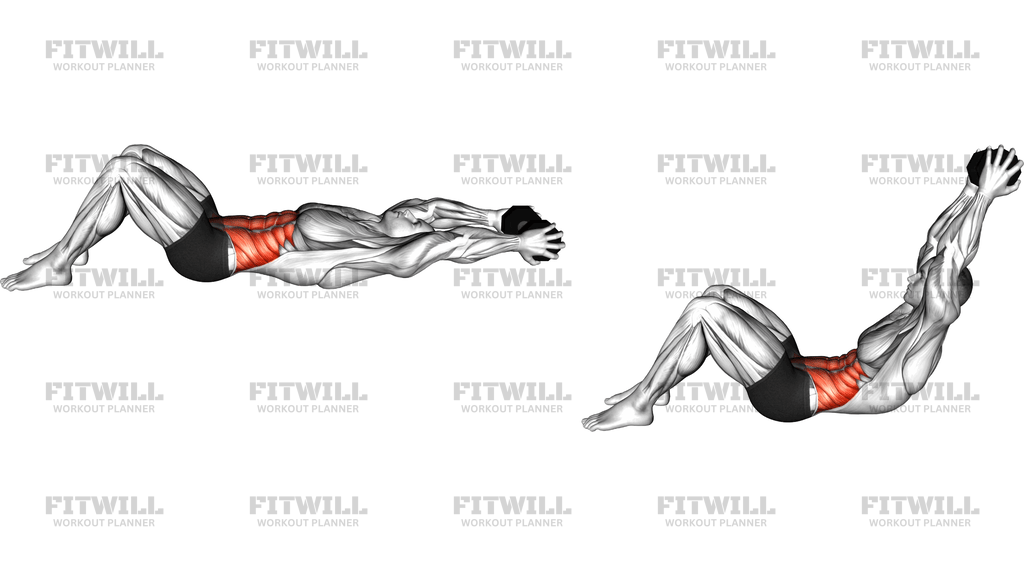
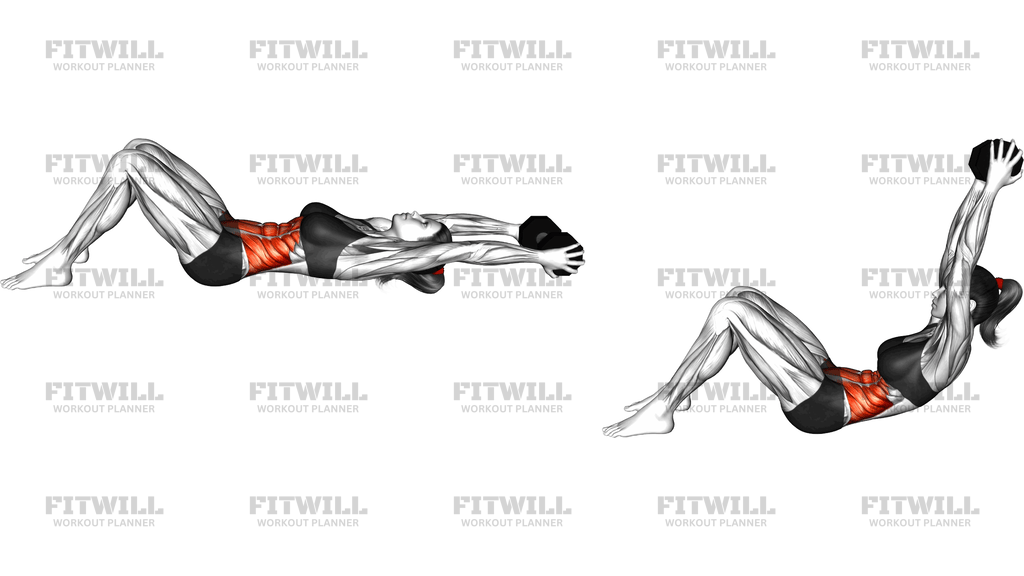
The Weighted Dumbbell Crunch (Hands Overhead) is a floor-based abdominal exercise where you hold a single dumbbell in both hands and keep your arms extended straight overhead throughout the entire crunch. You start lying on your back with the weight resting on the floor behind your head, then curl your ribcage toward your hips while the dumbbell travels in a long arc until your arms point at the ceiling above you. Because the weight sits far from your torso, every inch of the crunch is loaded, which makes this a much more demanding version of a standard bodyweight crunch.
This movement is useful for anyone who has outgrown unweighted crunches and wants progressive overload for the rectus abdominis without needing a cable station or a dedicated ab machine. It is a favorite in home workouts because it needs only one dumbbell and a clear patch of floor. It also suits lifters who want a focused finisher after squats, deadlifts, or presses, since the setup and teardown take seconds.
The primary muscle worked is the rectus abdominis, the sheet of muscle running down the front of your belly that flexes the spine. The obliques assist by stabilizing your ribcage and preventing rotation as the weight moves overhead, and the hip flexors help slightly as your torso rises, although the goal is to drive the motion from the abs rather than yanking with the hips. Holding the arms overhead also lightly engages the shoulders and lats as they control the dumbbell's path, but the abs remain the star of the show.
Setup matters a lot here. Your knees should be bent with feet flat on the floor, and your lower back should start in a neutral position before you grip the dumbbell. The arms stay locked out and roughly shoulder-width apart for the whole rep; if you let the elbows bend, the exercise turns into a dumbbell pullover or triceps movement and the abdominal tension drops. Choosing a moderate dumbbell lets you keep that long lever arm under control, which is where the difficulty actually comes from.
To perform it well, exhale as you curl up, peeling your shoulder blades off the floor and reaching the dumbbell toward the ceiling until it lines up over your chest or slightly past it. Pause briefly at the top, then lower slowly and let the weight travel back overhead under control until it touches down behind you. The eccentric portion, when the dumbbell swings back overhead, is easy to rush and is exactly where most people lose tension or strain their lower back.
A few practical points keep this exercise safe and effective. Start lighter than you think you need, because a weight overhead behind your head changes your balance noticeably. Keep your ribs pulled down and your belly braced as you lower, and stop the set when your arms begin to drift or your lower back arches off the floor. Anyone with shoulder mobility restrictions can shorten the arc by starting with the dumbbell held above the chest instead of on the floor behind the head, though the full overhead start is the version shown here.
[ Workout Log & Planner ]
Put your next workout in Fitwill
Keep your plan and training log ready when you are.


Instructions
- Sit on the floor with your knees bent and feet flat, then lie back and plant your heels about a foot from your hips.
- Grip one dumbbell with both hands, wrapping your fingers around the handle from opposite sides so the weight is secure.
- Extend your arms straight overhead and lower the dumbbell behind your head until it lightly touches the floor, keeping a slight bend-free lockout at the elbows and your lower back in a neutral position.
- Take a breath and brace your abdominals as if bracing for a light poke to the belly.
- Exhale and curl your ribcage toward your pelvis, lifting your shoulder blades off the floor while the dumbbell travels in a smooth arc overhead.
- Continue the crunch until your arms point straight up toward the ceiling, roughly over your chest, and squeeze your abs hard at the top for a beat.
- Lower with control, letting the dumbbell arc back overhead while you resist the pull of the weight and keep your ribs down.
- Inhale as the dumbbell touches down behind your head, reset your brace, and begin the next rep.
- When finished, guide the dumbbell down behind you first, then release your grip only once it is resting on the floor.
Tips & Tricks
- Pick a dumbbell you could hold overhead while lying down without your wrists wobbling; a weight that is too heavy usually shows up as bent elbows rather than an obvious struggle.
- If your lower back arches as the dumbbell swings overhead, press your feet into the floor more firmly and tilt your pelvis slightly back before each rep.
- A common mistake is pulling the weight up with the arms and shoulders; think about curling your chest toward your hips and let the dumbbell simply ride along.
- Do not let the dumbbell drift off to one side. If it keeps angling, check that both hands are evenly spaced on the handle and that your grip pressure is equal.
- Squeezing the dumbbell hard for the entire set keeps the shoulders stable and stops the arms from flaring outward mid-rep.
- Shortening the range on the way down, stopping the dumbbell just above the floor instead of touching it, keeps constant tension on the abs if control is slipping.
- If you feel the movement mostly in your hip flexors at the front of your hips, reduce the height you crunch to and focus purely on rolling the ribcage up rather than sitting toward your knees.
- Slow the lowering phase to two or three seconds; most people get more out of this exercise from the overhead return than from the crunch itself.
- Place the dumbbell down behind your head at the end of the set before letting go. Releasing it mid-air with tired arms is an easy way to ding a floor or a foot.
Frequently Asked Questions
Which muscles does the Weighted Dumbbell Crunch (Hands Overhead) work?
The rectus abdominis across the front of your belly does most of the work, with the obliques stabilizing your torso. The hip flexors contribute as your torso rises, and your shoulders and lats help control the dumbbell's overhead path.
Why are the hands held overhead instead of at the chest?
Holding the dumbbell overhead places the weight farther from your hips, which lengthens the lever arm and makes the abs work harder through a longer arc. It also means the weight cannot rest on your chest, so the tension stays on your midsection.
How heavy should the dumbbell be for this crunch?
Start with a light dumbbell, often in the 5 to 15 pound range, and only add weight when you can complete your set with straight arms and a stable lower back. The long lever arm makes even modest weights feel challenging.
Is the Weighted Dumbbell Crunch (Hands Overhead) suitable for beginners?
Yes, provided you begin with a very light weight and prioritize control over range. Beginners with limited shoulder mobility can start with the dumbbell held above the chest rather than touching the floor behind the head.
Why do I feel this more in my hips than my abs?
That usually means your hip flexors are driving the lift and your ribcage is not actually curling. Reduce the range, exhale hard as you rise, and focus on pulling your ribs toward your pelvis instead of sitting up toward your knees.
Can I do this exercise without a mat?
Yes, the movement works on any firm floor. A mat or carpet simply makes the shoulder blades and tailbone more comfortable, and it stops the dumbbell from sliding if the floor is slick.
What should I do if my shoulders feel pinched when the weight is overhead?
Shorten the arc so the dumbbell starts above your head rather than on the floor behind it, and make sure you are not shrugging your shoulders toward your ears. If discomfort continues, switch to a regular weighted crunch with the dumbbell at your chest.
How does this differ from a dumbbell pullover crunch where the weight moves separately?
In this version the arms stay locked out and the dumbbell travels with your torso as one fixed unit, so the abs do all the flexing. Variations that move the weight independently of the torso shift more work to the lats and shoulders.
How many reps and sets should I use?
Two to four sets of 8 to 15 controlled reps works well for most people. Because the overhead lever arm loads the abs heavily, stop the set as soon as your form slips rather than pushing to complete failure.
Is it safe to hold a weight behind my head while lying down?
It is safe as long as you use a manageable weight, keep both hands wrapped around the handle, and lower the dumbbell to the floor before releasing your grip. Choose a load you can control even when your arms are tired.