Weighted Plate Crunch (Hands Overhead) (Version 2)
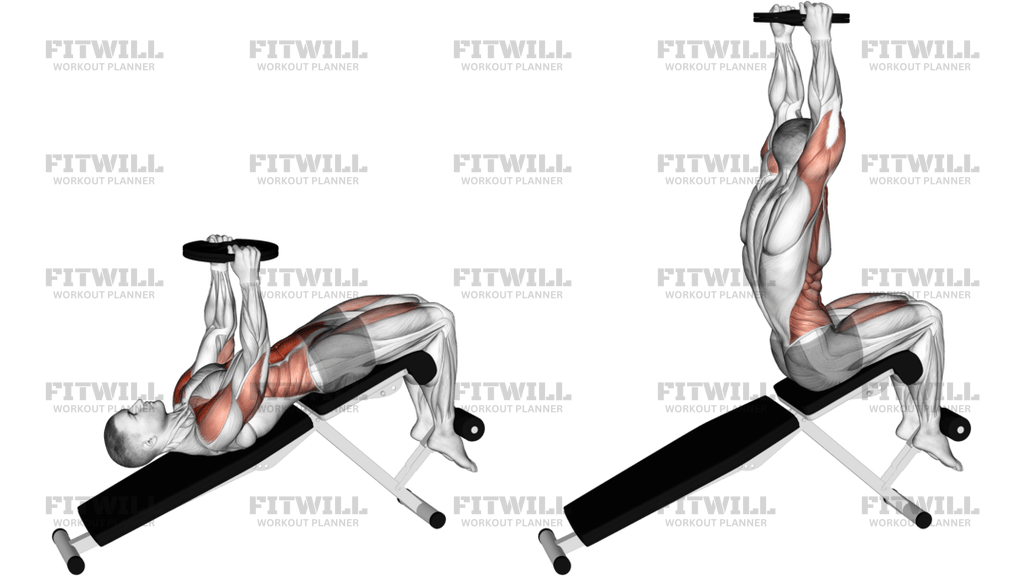
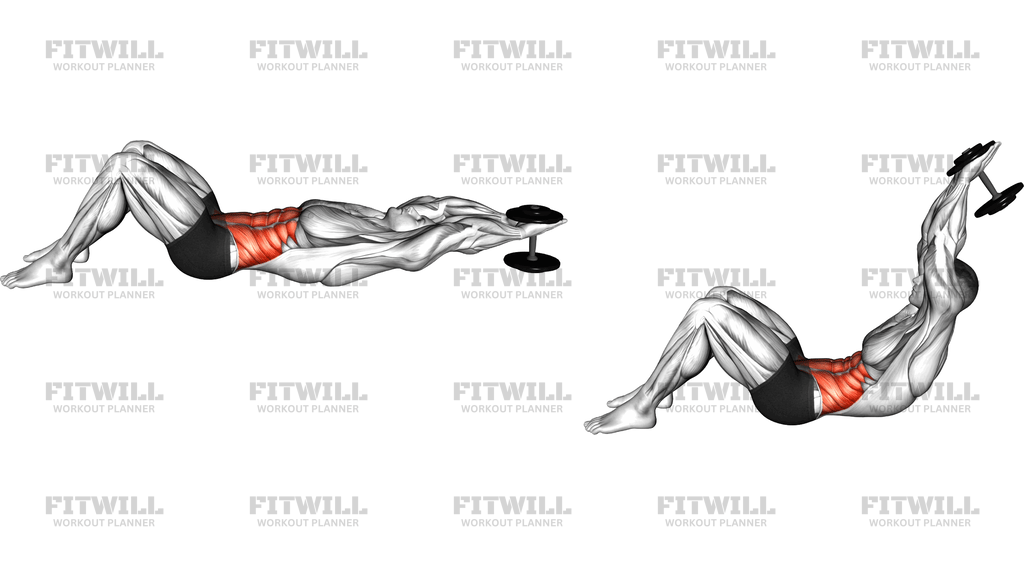
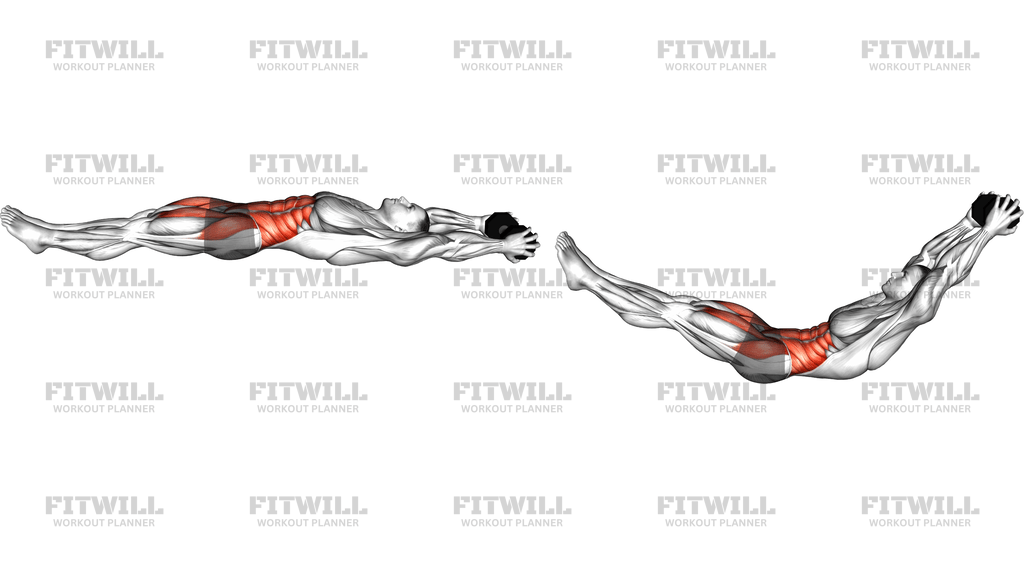
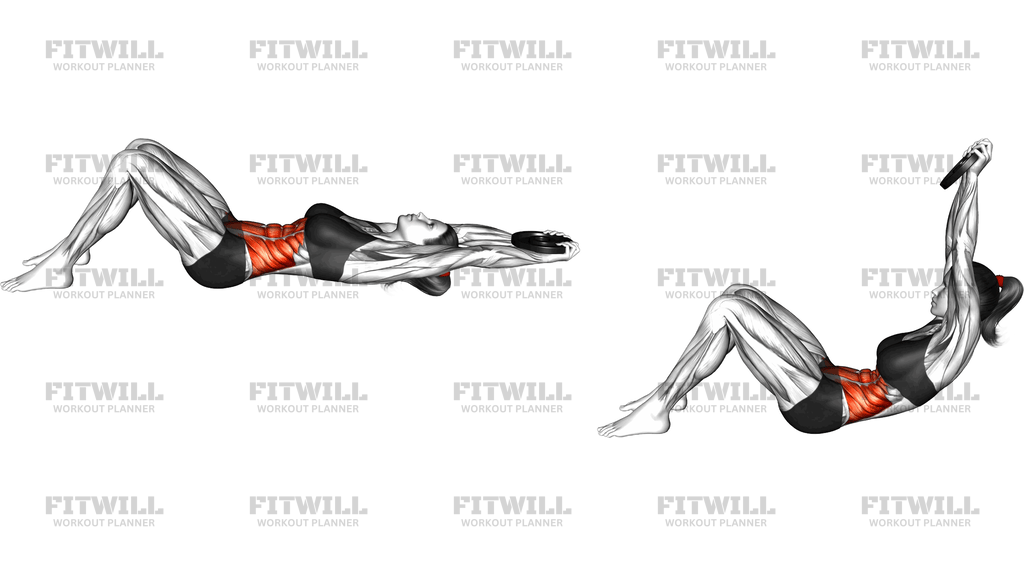
The Weighted Plate Crunch (Hands Overhead) is a floor-based abdominal exercise where you lie on your back with knees bent, hold a weight plate in both hands, and extend your arms straight overhead past your ears. From that stretched position, you curl your upper body off the floor while the plate travels in an arc toward the ceiling, keeping the arms locked in extension throughout. Because the weight sits far from your torso, every inch of the crunch is loaded harder than in a standard bodyweight crunch.
The overhead arm position is what separates this from a plate crunch held at the chest. With the arms extended behind the head, the rectus abdominis is pre-stretched at the bottom, which increases the range the abs work through and makes the top of the movement much more demanding. The long lever also challenges the deeper trunk muscles to keep your lower back from arching off the floor before you even start curling.
This movement suits lifters who have outgrown bodyweight crunches and want to load the abs directly without a cable station or decline bench. It is common in home and garage gym setups, where a single plate is the most convenient piece of load available, and it works well as a finisher at the end of a push, pull, or lower body day.
To execute it well, think of it as a spinal flexion exercise, not a sit-up. Your lower back stays in contact with the floor and only your shoulder blades lift. The plate moves because your ribcage curls toward your pelvis, not because your arms swing it upward. If the weight ever feels like it is pulling your shoulders off the floor or dragging your lumbar spine into an arch, the plate is too heavy.
The knees are bent with feet flat on the floor, which shortens the hip flexors and reduces their contribution, keeping the emphasis on the abdominal wall. Move slowly, exhale hard as you curl up, pause briefly at the top where the abs are fully shortened, and lower under control until the plate returns overhead without clanging down behind you.
Practical safety points are simple: use a plate you can hold securely with both hands, keep your fingers laced or hands cupped around the edge so it cannot slip, and avoid jerking your head or neck forward to finish a rep. Fatigue in this position tends to show up as arms bending and the plate drifting forward, which converts a crunch into a plate pullover, so reset your arm position whenever you feel it change.
[ Workout Log & Planner ]
Put your next workout in Fitwill
Keep your plan and training log ready when you are.


Instructions
- Lie on your back on an exercise mat with your knees bent about 90 degrees and both feet flat on the floor.
- Hold a weight plate with both hands, cupping its edges or lacing your fingers around it, and extend your arms straight overhead so the plate rests on the floor just behind or above your head.
- Press your lower back gently toward the floor and take a breath in to set your trunk before the first rep.
- Exhale and curl your shoulder blades off the floor, keeping your arms fully extended and letting the plate travel in an arc up toward the ceiling.
- Continue curling until your upper back is clearly lifted and the plate is positioned above or slightly past your head, with your abs fully shortened.
- Pause for one second at the top and squeeze your abdominal wall rather than pulling with your arms or neck.
- Lower slowly and in reverse, letting the ribcage flatten back down segment by segment until the plate returns to the floor overhead with your arms still straight.
- Breathe in at the bottom, re-establish contact between your lower back and the floor, and reset your arm position before the next rep.
- Keep your feet planted and knees still throughout so your legs do not assist the crunch.
Tips & Tricks
- Choose a plate light enough that your arms stay straight for every rep; once your elbows start bending, the set becomes a pullover and the load on the abs drops off.
- If the plate's weight pulls your lumbar spine into an arch before you curl, place it a little closer to your head at the start or drop to a lighter plate until your trunk control improves.
- Curl up one vertebra at a time instead of hinging at the hips; the top of the rep should come from your ribcage rotating toward your pelvis.
- Keep your chin about a fist's width from your chest; jamming the chin down hides weak crunch strength and strains the neck.
- On the way down, resist the plate for two to three seconds; the eccentric portion under the long overhead lever is where much of the difficulty lives.
- If your feet keep lifting off the floor, wedge them under something stable or shift them slightly farther from your hips so you can stop the hip flexors from dominating.
- A bumper or rubber-coated plate is more comfortable overhead than a rough iron plate, especially when your arms are extended and tired.
- Stop the set when your arm position drifts forward; exhausted overhead holding turns the last reps into a shoulder exercise rather than an abdominal one.
- Angle your gaze at the ceiling or slightly toward your knees rather than following the plate with your eyes to keep your neck in a neutral line.
Frequently Asked Questions
What muscles does the Weighted Plate Crunch (Hands Overhead) work?
The rectus abdominis is the main mover, curling the ribcage toward the pelvis. The obliques and deep trunk muscles stabilize and assist the flexion, while the hip flexors contribute lightly in a supporting role.
Why hold the plate overhead instead of at the chest?
The overhead position pre-stretches the abs and creates a longer lever, so the same plate loads the crunch far more heavily. It also forces your trunk to control the weight before the rep even starts.
Is the Weighted Plate Crunch (Hands Overhead) suitable for beginners?
Beginners should start with an unweighted version or a very light plate, because the long lever makes the bottom position challenging. Once you can control the plate through the full arc without your lower back arching, add load gradually.
How heavy should the plate be?
Pick a plate you can hold with straight arms for all planned reps without it pulling your shoulders or lower back off the floor. For most people, 2.5 to 10 kg covers a productive working range.
Should my arms bend during the crunch?
No. Bent elbows turn the movement into a plate pullover and reduce the demand on the abs. If your arms keep bending, the plate is too heavy or your abs are too fatigued to finish the set with good position.
How high should I curl up at the top?
Lift until your shoulder blades are clearly off the floor and your abs feel fully shortened, usually when the plate is above or slightly past your head. Rising into a full sit-up shifts work toward the hip flexors and reduces abdominal emphasis.
Why does my lower back arch when I lower the plate?
The weight extended behind your head pulls your ribcage up as you fatigue, tipping the pelvis and arching the lumbar spine. Use a lighter plate, lower only partway down, or brace harder before each rep to keep your lower back in contact with the mat.
What can I use instead of a weight plate?
A dumbbell held in both hands under the top head, a kettlebell held by the horns, or a medicine ball all work with the same overhead arm position. Any object you can grip securely with two hands is acceptable.
How many reps and sets should I do?
Because the movement is loaded, 8 to 15 controlled reps for 2 to 4 sets works well. Aim for a slow tempo and a brief pause at the top rather than chasing high rep numbers with a heavy plate.
Is it safe to hold weight behind my head while lying down?
It is safe when the plate is light enough to control, gripped with both hands around its edge, and lowered slowly rather than dropped. Keep the plate clear of your face and head by maintaining straight arms throughout the entire rep.