Weighted Dumbbell Crunch (Hands Overhead)
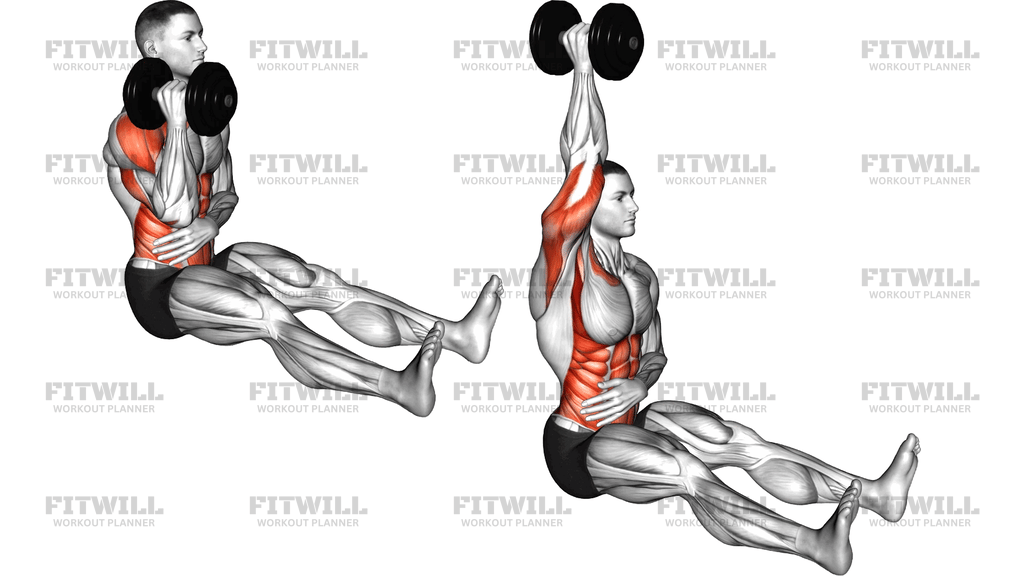
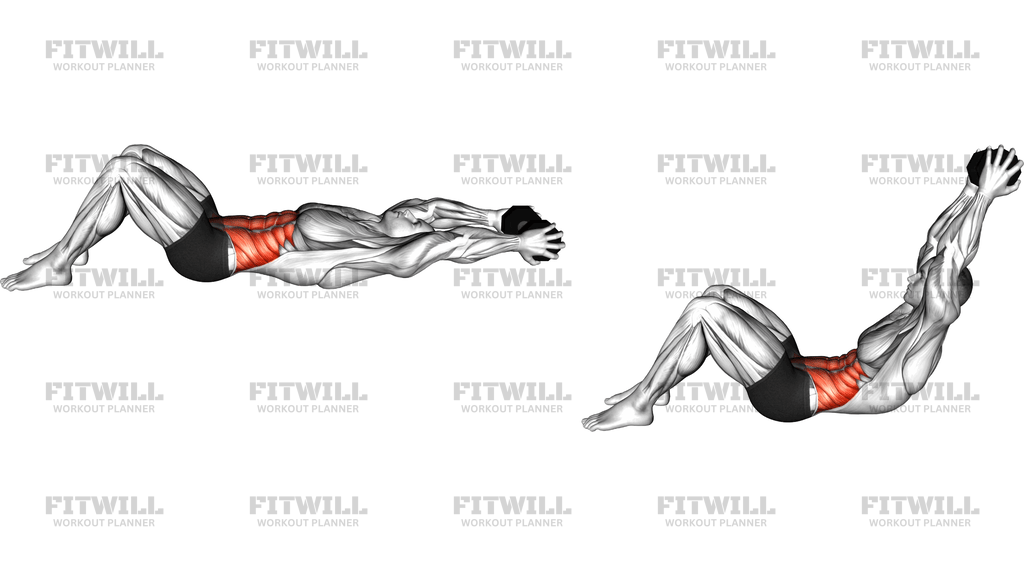
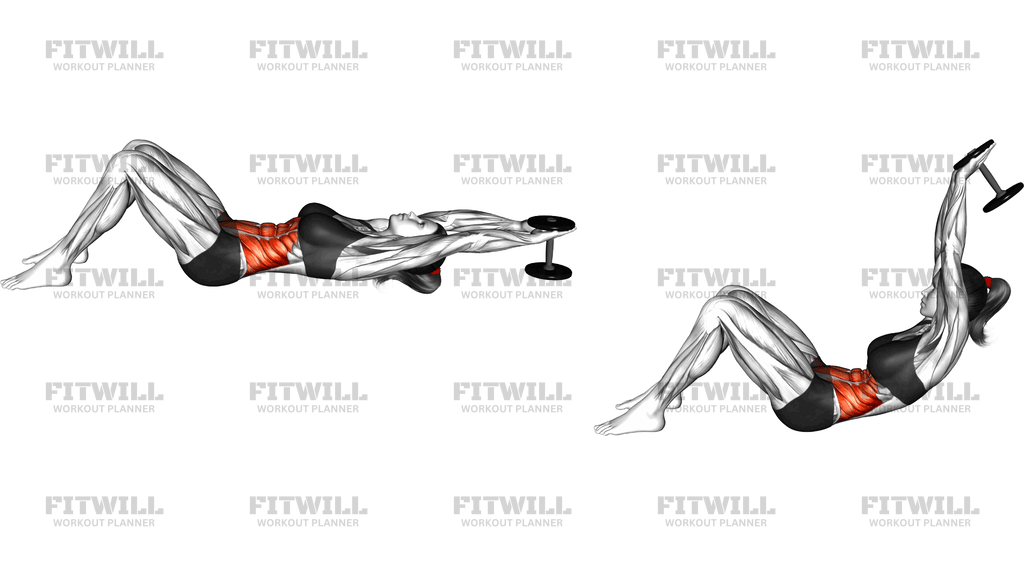
The Weighted Dumbbell Crunch (Hands Overhead) is a floor-based abdominal exercise where you lie on your back with your knees bent, hold a single dumbbell in both hands, and start with your arms extended straight back overhead. From there, you crunch your ribcage toward your hips while the dumbbell travels in a long arc over your head toward your knees. Because the weight sits far from your torso at the start, your abs must work against a longer lever, which makes the movement noticeably harder than a bodyweight crunch with the same range.
This exercise suits lifters who already find unweighted crunches easy and want extra resistance without needing a cable station, decline bench, or partner. It is a common choice in home gym programs and ab finishers, since one dumbbell and a mat are all you need. It also teaches you to keep your arms stable and controlled while your trunk does the moving, which carries over to movements like weighted sit-ups and overhead carries.
The main muscle at work is the rectus abdominis, the sheet of muscle running down the front of your belly that flexes the spine. Your obliques assist as you curl and stabilize, and your hip flexors help control the angle between thighs and torso. Holding the dumbbell overhead also asks your shoulders and lats to keep the arm path steady, though they act as guides rather than prime movers.
Setup matters more here than in most ab work. Your lower back position, the bend in your knees, and how far behind your head you lower the dumbbell all change the difficulty. A wider knee bend and a shorter arc keep the load friendlier; letting the dumbbell drift closer to the floor behind you stretches the abs under load and raises the demand on your core and shoulders. Choose a weight you can control through the whole arc, not just the easiest part.
To execute well, think of peeling your shoulder blades off the floor and curling your ribs toward your pelvis, rather than swinging the dumbbell forward with your arms. Exhale as you crunch up, reach the dumbbell toward or past your knees without letting it drop, then lower with the same control until your arms are extended overhead again and your shoulders touch down. Two to four sets of eight to fifteen reps works well, and stopping before your form breaks down matters more than chasing extra reps.
Because the weight passes over your face, check that your collars are secure and your grip is solid before every set. If your lower back arches off the floor or your neck takes over near the end of a set, lighten the load or shorten the arc. This is a controlled, deliberate exercise, and treating it that way is what makes the added weight worthwhile.
[ Workout Log & Planner ]
Put your next workout in Fitwill
Keep your plan and training log ready when you are.


Instructions
- Lie flat on your back on an exercise mat with your knees bent and your feet flat on the floor, about hip-width apart.
- Grip one dumbbell with both hands, cupping the inner head of the weight with overlapping palms, and press it directly above your chest with straight arms.
- Slowly lower the dumbbell in an arc back over your head until your arms are extended behind you, roughly in line with your ears or just above the floor, and let your upper back and shoulders settle onto the mat.
- Brace your abs lightly and press your lower back toward the floor so your ribs are not flared before you start the rep.
- Exhale and curl your shoulder blades off the mat, driving the dumbbell in a smooth arc up over your head toward your knees while your arms stay locked out.
- Continue curling until your upper back is well off the floor and the dumbbell is reaching toward or beyond your knees, with the movement coming from your trunk, not your arms.
- Pause briefly at the top and squeeze your abs, keeping the dumbbell stacked over your shoulders rather than letting it hang behind you.
- Inhale and reverse the path slowly, lowering your torso and arcing the dumbbell back overhead under control until your shoulders touch the mat.
- Reset your brace and lower back position, confirm your grip on the dumbbell, then begin the next rep.
- Keep the dumbbell out of your face at all times; if your arms shake or the arc drifts, set the weight down and rest before continuing.
Tips & Tricks
- Most people swing the dumbbell with their arms instead of curling the trunk. Cue yourself to move your ribs toward your hips and let the arms simply follow the same arc.
- If your lower back arches as the dumbbell goes overhead, stop the descent a little earlier — arms at a higher angle — and work on that shorter range before lowering all the way to the floor.
- Choose a much lighter dumbbell than you expect. A weight that is fine at chest level becomes demanding the moment your arms extend behind your head.
- Keep your knees bent and feet planted through every rep; letting the legs rise or the feet lift turns this into a hip-flexor-driven movement and reduces ab tension.
- Do not crane your chin toward your chest. Keep a fist-sized gap between chin and sternum and look at the dumbbell as it arcs, which keeps your neck out of the work.
- Exhale sharply on the way up. This helps your abs shorten fully and prevents the breath-holding that leaves many people gassed after only a few reps.
- Check the collars on the dumbbell before each set — the weight travels directly over your face, so a loose plate is a real hazard here.
- If your shoulders complain as the arms go behind your head, narrow the arc slightly or hold the dumbbell with a neutral, palms-facing grip instead of forcing a deep stretch.
- Lower slower than you lift. Rushing the eccentric lets momentum do the work on the next rep and is the most common reason the exercise stops feeling like an ab exercise.
Frequently Asked Questions
What muscles does the Weighted Dumbbell Crunch (Hands Overhead) work?
The rectus abdominis on the front of your torso is the primary mover. Your obliques assist the curl, your hip flexors help control the trunk-to-thigh angle, and your shoulders and lats stabilize the dumbbell as it arcs overhead.
Why hold the dumbbell with hands overhead instead of at the chest?
Starting with the arms extended behind your head lengthens the lever arm, so the same dumbbell creates far more load on the abs than holding it against your chest. It also adds a light stretch to the abs before each contraction.
Is the Weighted Dumbbell Crunch (Hands Overhead) suitable for beginners?
Beginners should first master bodyweight crunches and dumbbell crunches with the weight held at the chest. Once you can control those cleanly, start with a very light dumbbell and a shortened overhead arc.
How heavy should the dumbbell be for this exercise?
Pick a weight you can lower behind your head and curl back up without your arms shaking or your lower back arching. For most people that is far lighter than what they would use for dumbbell presses — often a single dumbbell of 2 to 10 kilograms.
Should my arms stay straight during the Weighted Dumbbell Crunch (Hands Overhead)?
Yes, keep your elbows nearly locked so the dumbbell travels a consistent arc and the trunk, not the arms, does the lifting. Softly bent elbows are fine, but bending them mid-rep to toss the weight forward is a common cheat.
What is the most common mistake with this movement?
Swinging the dumbbell forward with momentum instead of curling the spine. If the dumbbell is moving fast but your shoulder blades barely leave the floor, the exercise has become an arm movement — slow down and reduce the weight.
Can I do the Weighted Dumbbell Crunch (Hands Overhead) without a bench?
Yes, that is the point of the exercise — it is performed on the floor with just a mat and one dumbbell. Your bent knees and flat feet give you all the support you need.
How many reps and sets should I do?
Two to four sets of eight to fifteen controlled reps works well as a weighted ab movement. If you cannot keep the dumbbell path smooth past about ten reps, end the set rather than grinding out sloppy reps.
What can I substitute if I do not have a dumbbell?
A single weight plate held the same way, a medicine ball with arms extended overhead, or a light kettlebell gripped by the horns all work. If you have no weight at all, extending your arms overhead during a bodyweight crunch mimics the same longer lever.
Is it safe for my lower back and shoulders?
It is generally fine when the weight is light and the arc is controlled, but stop the descent before your lower back pulls off the floor, and skip the deep overhead position if your shoulders pinch. Anyone with a history of back issues should keep the range short and progress gradually.