Skin The Cat
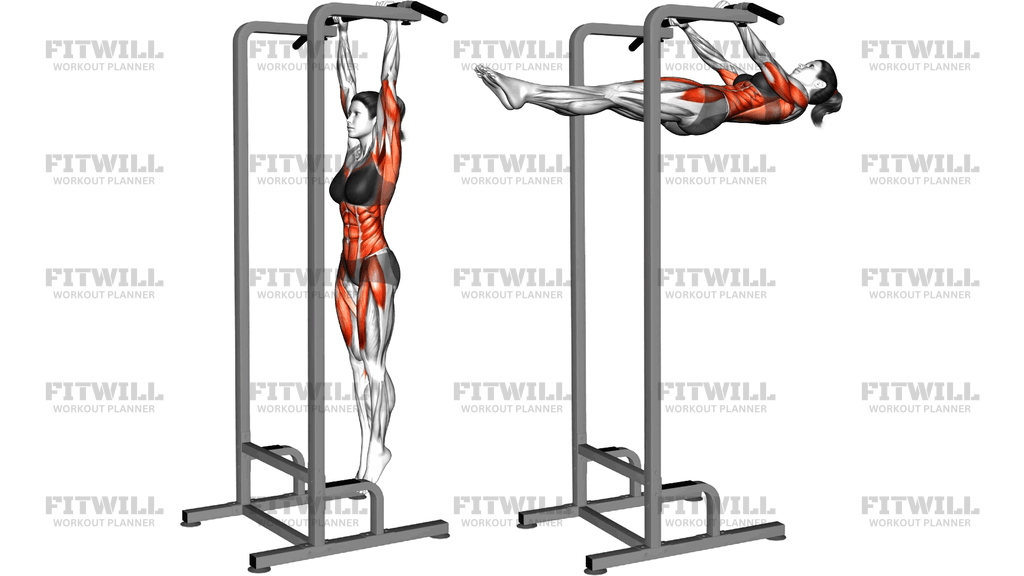
Skin The Cat is a bar-based rotational movement where you start from a dead hang on a pull-up bar, lift your legs up and through the space between your arms, and rotate your whole body over into an inverted hang before lowering back through and returning to the start. It is one of the classic introductory movements from gymnastics ring and bar work, and it teaches you to control your own body through a full overhead rotation rather than just moving in one plane.
The main physical demands are shoulder mobility and control through end-range extension, plus serious lat and core engagement to lift the hips and steer the legs through the gap. The moment where your hips pass over your head requires the lats and shoulders to handle your full bodyweight in a stretched position, which is exactly why the movement is so valued by gymnasts, calisthenics athletes, and people rebuilding shoulder confidence after years of desk work.
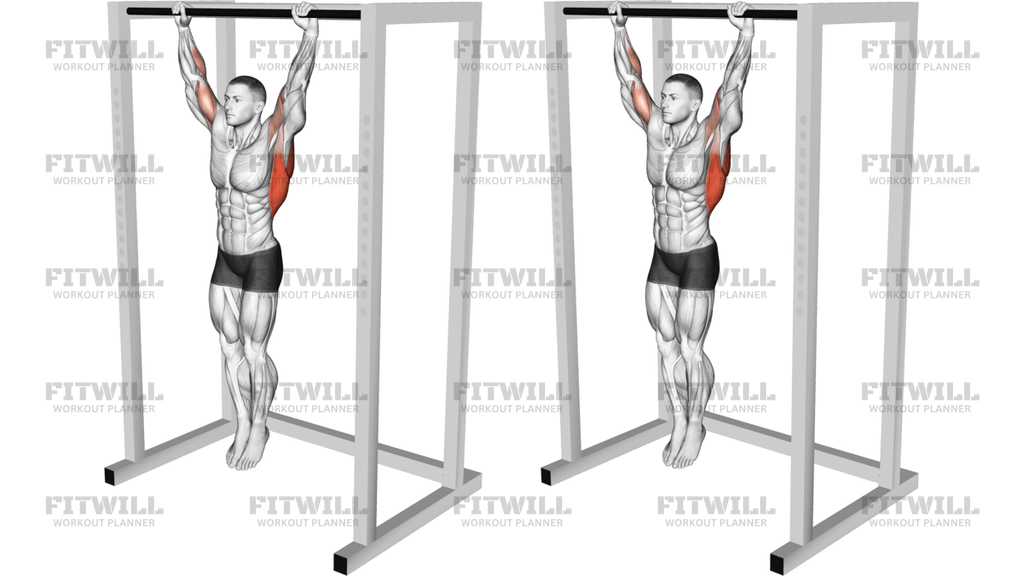
Setup matters more than most people expect. You need a stable pull-up bar with clearance below and behind you, a full overhand grip roughly shoulder-width apart, and an active hang with your shoulders pulled slightly down rather than hanging loose by your ear. Starting with an active hang keeps the shoulder joint supported before rotation begins, which is the single biggest safety factor in this exercise.
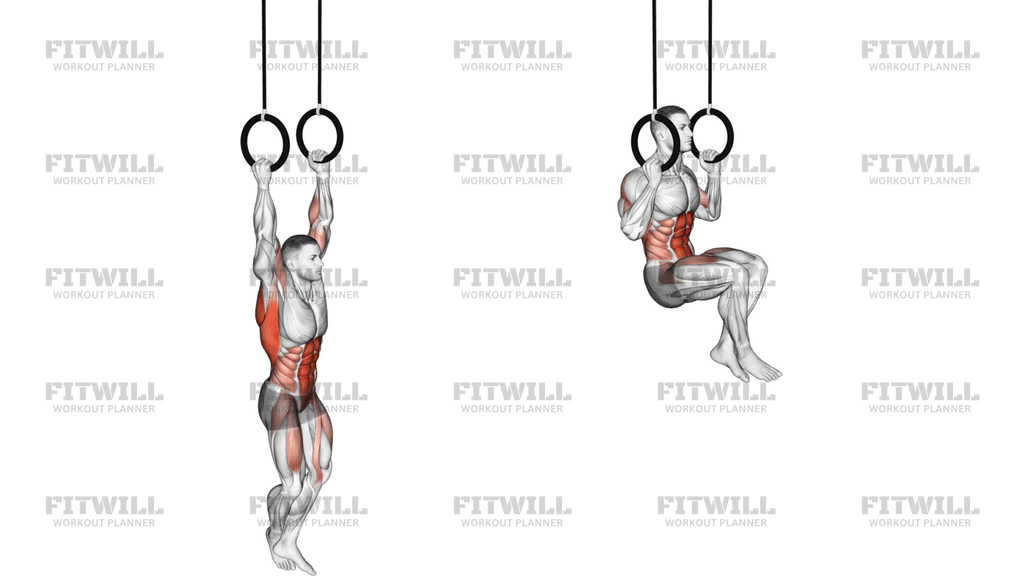
To execute it well, the legs do the steering. Lift your legs into a pike, aim your feet up toward the bar between your arms, and keep pulling your hips upward as your body tips over the bar. Once your legs pass through, continue the rotation smoothly until you reach the inverted hang, then reverse the path under control rather than dropping back through. Rushing the return is where most people lose position and jolt their shoulders.
Skin The Cat is commonly used as a preparatory drill for more advanced elements like back levers and German hangs, as a mobility tool for overhead shoulder extension, and as a grip and core conditioner in its own right. Because the difficulty scales directly with how far you extend at the inverted position, you can progress gradually by working partial rotations before committing to the full hang.
[ Workout Log & Planner ]
Put your next workout in Fitwill
Keep your plan and training log ready when you are.


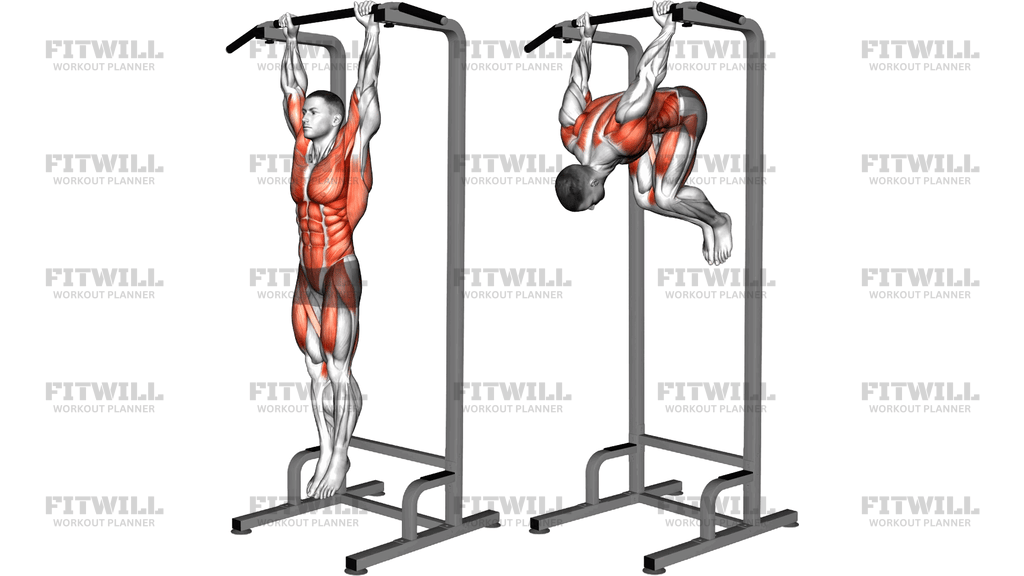
Instructions
- Stand under a secure pull-up bar and take a full overhand grip, hands about shoulder-width apart.
- Lower into a dead hang with your arms straight, then pull your shoulder blades down slightly to create an active hang before moving.
- Brace your midsection and squeeze your legs together so your body moves as one controlled unit.
- Lift your legs forward and up into a tight pike, aiming your feet through the gap between your arms and the bar.
- Keep pulling your hips toward the bar as your legs pass through, letting your body rotate over the top of the bar.
- Continue the rotation until you reach the inverted hang, with your body upside down behind the bar and arms extended.
- Pause briefly in the inverted position, keeping your shoulders engaged rather than collapsing into a loose stretch.
- Reverse the path by lowering your legs back down through the gap between your arms with slow control.
- Breathe steadily throughout, exhaling as you lift your legs and inhaling as you return, and finish each rep back in the active dead hang before starting the next.
Tips & Tricks
- Do not start from a completely relaxed hang. If your shoulders are loose when the rotation begins, the joint takes the load in its weakest position. Set the active hang first.
- Keep the knees tucked in the pike during the lift-through. Straight legs swing wide and miss the gap between your arms, forcing a jerky correction mid-rep.
- A common mistake is pulling with the arms only and letting the hips lag. Drive the hips up toward the bar instead; the arms should steer, not lift everything.
- If your hips stall before passing over the bar, you likely need more hip flexor and core strength. Work German hangs and hanging pike raises first.
- Control the descent out of the inverted hang. Dropping back through turns a controlled rotation into a sudden shoulder stretch, which is where most strain happens.
- Grip failure is a real limit here. Chalk your hands and reset your grip fully at the bottom of every rep rather than sliding your hands while loaded.
- Keep your head neutral as you rotate. Craning your neck to look for the bar throws off your balance right when your hips cross over.
- If the full rotation is too demanding, practice lifting into the pike and passing only partway through, gradually extending your range over sessions.
Frequently Asked Questions
What muscles does Skin The Cat work?
The lats and front shoulders do most of the pulling and rotational control, while the abs and hip flexors lift the legs and hips through the gap. Your grip and biceps work isometrically to hold the bar throughout.
Is Skin The Cat safe for beginners?
It can be, but only with an active hang, full control, and a bar low enough that your feet can reach the floor if needed. Beginners should start with partial rotations and hanging pike raises before attempting the full pass-through.
Why do my shoulders feel pinched during Skin The Cat?
That usually means you are rotating from a relaxed hang or forcing a range of motion your shoulders do not have yet. Reset into an active hang with your shoulder blades pulled down, and reduce how far you extend at the inverted position until mobility improves.
How is Skin The Cat different from a German hang?
Skin The Cat is the full dynamic movement of rotating through and back, while the German hang is the static hold at the inverted, extended position. The German hang is often trained first to build the shoulder extension flexibility the rotation demands.
What grip should I use for Skin The Cat?
A full overhand grip at roughly shoulder-width works best. A wider grip shrinks the gap your legs must pass through, and an underhand grip puts your elbows in an awkward position as you rotate.
How high should the pull-up bar be?
Ideally the bar should be low enough that you can hang with your feet near the floor or hop off safely mid-rep. A high bar with no easy exit adds risk if you lose grip or control during the rotation.
What can I substitute if I cannot do Skin The Cat yet?
Hanging pike raises, German hang holds with feet supported, and band-assisted rotations build the required hip and shoulder control. Toe-assisted pass-throughs, where your feet lightly touch the floor during rotation, are another good stepping stone.
Does Skin The Cat build muscle or is it mainly mobility?
It does both, though its biggest value is control and mobility. The lats, shoulders, and core work hard against your bodyweight through a long range, but most people use it as a foundation drill for back lever progressions rather than a primary strength builder.
How many reps of Skin The Cat should I do?
Because the end position heavily loads stretched shoulders, keep sets low and controlled, typically 3 to 5 quality reps. Stop the set as soon as your rotation becomes sloppy or your grip starts to slip.