Suspender Pull Up
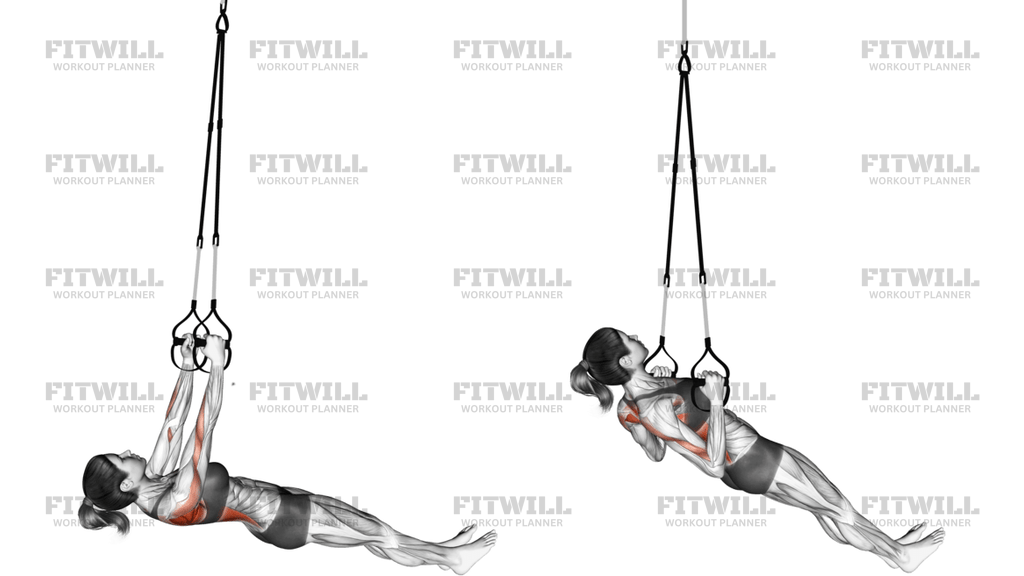
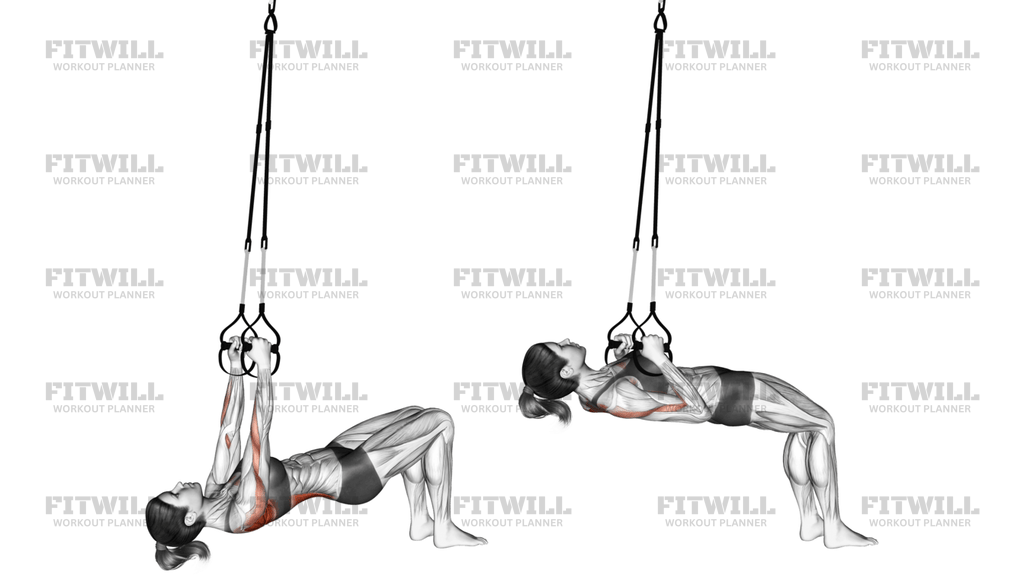
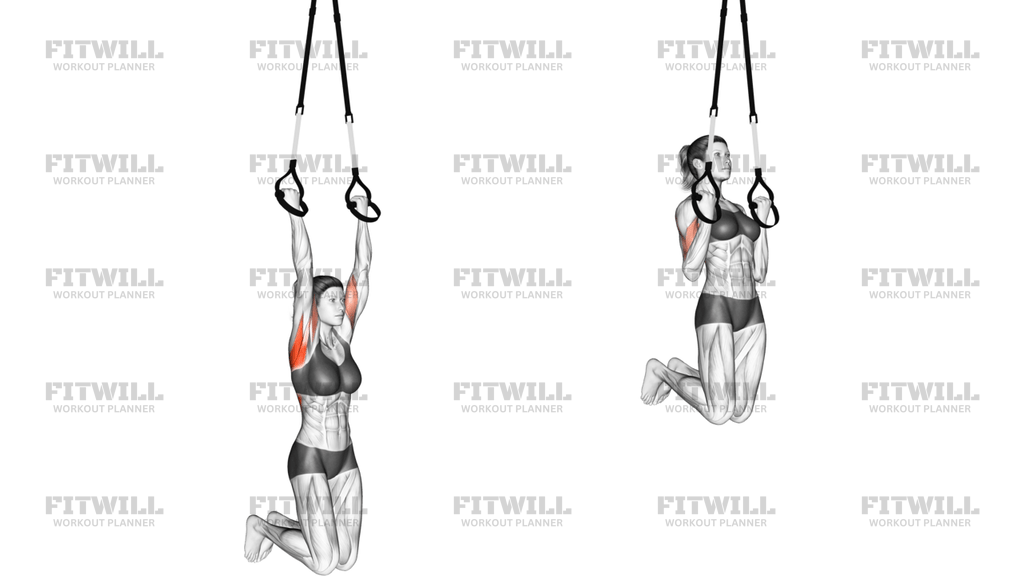
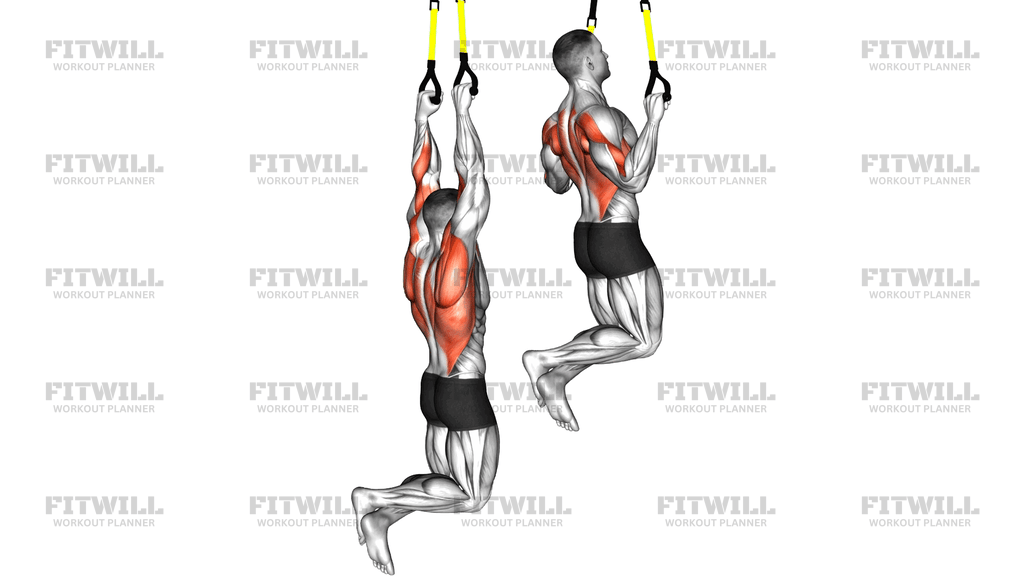
The Suspender Pull Up is a bodyweight pulling exercise performed while hanging from a pair of suspension straps, gripping the handles with a neutral palms-facing grip. Because the straps hang freely and can shift or sway, your body has to stabilize itself through the entire pull, which makes this version noticeably different from a fixed pull-up bar even though the basic movement pattern is the same.
This exercise is a strong choice for anyone working on upper-body pulling strength, especially lifters who find a fully pronated pull-up uncomfortable on the wrists or elbows. The neutral grip puts the shoulder in a more natural position and the moving handles let your wrists track freely, so it often feels smoother through the joints than a bar pull-up. It is also excellent for people who already do pull-ups and want a version that demands more from the stabilizing muscles of the shoulders, upper back, and core.
The primary work comes from the lats, which drive the elbows down and back, with heavy involvement from the biceps, rear delts, rhomboids, and mid traps as the shoulder blades retract at the top. The forearms and grip work continuously to control the handles, and the abs and hip flexors hold your legs still so your body does not swing. Because the straps are unstable, even the smaller muscles around the shoulder joint contribute to keeping the movement path clean.
Setup matters more here than on a fixed bar. Set the straps so the handles sit at a height that lets you hang with full arm extension and your feet clear the floor, and check that the anchors are rated for your bodyweight. The straps should be adjusted to equal length so you pull evenly from both sides. Once you are hanging, creating a small amount of tension through the shoulders and bracing the core before the first pull prevents the swinging that otherwise robs the lats of work.
To execute well, start from a dead hang with arms extended, pull the shoulder blades down first, then drive the elbows down toward your ribs until your chin clears hand level or your chest approaches the handles. Lower under control all the way back to straight arms rather than stopping halfway, since the lowering phase builds just as much strength as the pull. Keep your legs fairly still, either knees bent behind you or together, and avoid kicking to generate momentum.
You will see this movement used in back-focused bodyweight sessions, as a joint-friendly pull-up variation, and as a stepping stone toward stricter bar work. If you are new to it, expect your grip and midline stability to give out before your lats do. Spot the common faults early, such as half reps, shrugging into the ears, and letting the feet swing forward, and correct them by reducing reps and slowing the tempo rather than adding assistance.
[ Workout Log & Planner ]
Put your next workout in Fitwill
Keep your plan and training log ready when you are.


Instructions
- Anchor a pair of suspension straps overhead to a secure bar or mount, adjust both straps to equal length, and position the handles so you can hang with your arms fully extended and your feet just off the floor.
- Grip the handles with a neutral grip, palms facing each other, and hang from straight arms with your shoulders relaxed down away from your ears.
- Bend your knees and cross your ankles behind you or hold your legs together and slightly back to shift your weight behind your hips and reduce swinging.
- Brace your abs and squeeze your glutes lightly to create a stable line from shoulders to knees before you start the pull.
- Initiate the pull by depressing your shoulder blades, then drive your elbows down and slightly back toward your ribs, keeping the straps close to your body.
- Continue pulling until your chin clears hand level and your chest is within a few inches of the handles, holding the top briefly with your shoulder blades pulled down and together.
- Lower yourself under control over two to three seconds until your arms are fully straight again, letting the shoulder blades rise slightly at the bottom to reset.
- Exhale as you pull up and inhale as you lower down, keeping your breathing steady instead of holding your breath through the rep.
- Reset your leg position and core tension at the bottom of each rep, and stop the set before your form breaks into swinging or half-range pulls.
Tips & Tricks
- Think about pulling the handles down to your chest rather than pulling your chin up over them; this keeps the emphasis on the lats instead of turning the rep into a biceps curl.
- If the straps sway or twist, your hands are drifting apart or inward. Press your wrists slightly outward against the handles as you pull to keep them tracking straight.
- A common fault is shrugging at the start, which pulls the handles toward your ears. Push your shoulders down away from your head before the elbows begin to bend.
- Avoid stopping short of full extension at the bottom. Half reps from a bent arm shorten the range the lats work through and hide weak spots at the stretched position.
- If your hips drift forward and your feet swing, your core has disengaged. Reset the hanging leg position between reps rather than fighting the swing mid-rep.
- Chalk your hands or use a firm closed grip on the handles, since sweaty palms on smooth suspension handles often end a set before the back is fatigued.
- Tempo is your friend here. A controlled three-second lowering phase does more for strength on this unstable setup than extra reps performed quickly.
- If one side pulls harder than the other, the straps are uneven or you are favoring your dominant arm. Check strap length before every set and slow down to feel both sides working.
Frequently Asked Questions
What muscles does the Suspender Pull Up work?
The lats are the primary mover, supported heavily by the biceps, rear delts, rhomboids, and mid traps. The forearms and grip work throughout, and the abs stabilize your torso against the movement of the straps.
Is the Suspender Pull Up harder than a regular pull-up?
For most people it feels harder on stability but slightly easier on the joints, because the neutral grip and freely moving handles let the shoulders and wrists find a comfortable path. The total pulling demand is similar, but the extra stabilization makes it feel less smooth.
Why use a neutral grip on the suspension handles?
The neutral, palms-facing grip places the upper arm in a more shoulder-friendly position than a wide overhand grip and lets the wrists stay straight. This makes it a good option for lifters who get wrist or elbow discomfort from bar pull-ups.
How high should I set the suspension straps?
Set the handles so that when you hang from straight arms, your arms are fully extended and your feet clear the floor by a few inches. If your feet touch down at the bottom, shorten the straps or bend your knees more.
Can beginners do the Suspender Pull Up?
Beginners can, but most will need to reduce the load first, either by keeping one or both feet on the floor for partial assistance or by lowering the straps and performing the pull at a steeper body angle. Build up to full hangs before attempting full reps.
How do I stop my body from swinging during the Suspender Pull Up?
Brace your abs and glutes before the first rep, hold your legs still with knees bent behind you, and start every pull from a controlled dead hang. If you still swing, you are likely starting the rep by yanking with the arms instead of pulling the shoulder blades down first.
What can I use if I don't have suspension straps?
A neutral-grip pull-up handles station is the closest substitute for the arm position. You could also loop sturdy towels over a pull-up bar to mimic the unstable handles, though check the fabric and anchor carefully before loading your bodyweight.
How many reps should I do?
Work in the range where you can complete every rep through full extension to chin over the handles without swinging, which for most people means sets of 3 to 8. When form degrades, end the set rather than cutting the range shorter.
Is it safe to hang from suspension straps for pull-ups?
Yes, provided the anchor point and straps are rated for your bodyweight and you test the setup before committing to a full hang. Check the strap webbing for wear, confirm the mount is secure, and keep the straps parallel and equal in length.