Seated Single Leg Foot Side To Side
Seated Single Leg Foot Side To Side is a simple body-weight drill performed sitting on the floor with one leg extended and the hands resting on the floor behind you for support. From that position, you sweep the foot of the extended leg from side to side, turning the sole of the foot inward and outward in a slow, deliberate arc. The movement looks small, but it isolates something most training ignores entirely: the muscles that control ankle eversion and inversion, especially the peroneus longus running down the outside of the lower leg, which is highlighted as the working muscle here.
This exercise is most useful for people who spend long hours in shoes, runners and jumpers who want more resilient ankles, and anyone rehabilitating or prehabilitating after an ankle roll or sprain. Peroneal strength and control are what stop your foot from collapsing inward when you land, cut, or step off a curb unexpectedly. Because the leg stays relaxed and the foot moves freely through the air, you can train this precise range without any load on the joint.
The seated setup matters more than it appears. Supporting yourself on your hands behind you takes the weight off the leg so the foot can move without the hip or knee compensating. The extended leg should stay long and relatively still while only the ankle joints produce the motion. If the whole leg swings, you lose the isolation that makes this drill valuable.
Execution is about control, not speed. Sweep the foot toward the midline of the body so the sole turns inward, then sweep it away from the midline so the sole turns outward, feeling the muscles along the outer shin work on the outward sweep. Keep the knee pointing at the ceiling and the movement coming from the ankle itself. Breathing stays relaxed and even throughout.
A common use case is as part of a lower-body warm-up before running, jumping, or squatting, or as a standalone ankle-care block alongside calf raises and tibialis work. Because it requires no equipment and only a floor to sit on, it also works well as a daily desk-break or travel routine. Ten to twenty controlled sweeps per side is usually enough to feel the outer lower leg working.
From a safety standpoint, this is a very low-risk movement as long as you stay inside a pain-free arc. Work slowly enough that you could stop the foot at any point in the sweep, and reduce the range if you feel pinching at the front or outside of the ankle. Consistency matters far more than intensity here.
Fitwill
Log Workouts, Track Progress & Build Strength.
Achieve more with Fitwill: explore over 9600 exercises with images and videos, access built-in and custom workouts, perfect for both gym and home sessions, and see real results.
Start your journey. Download today!




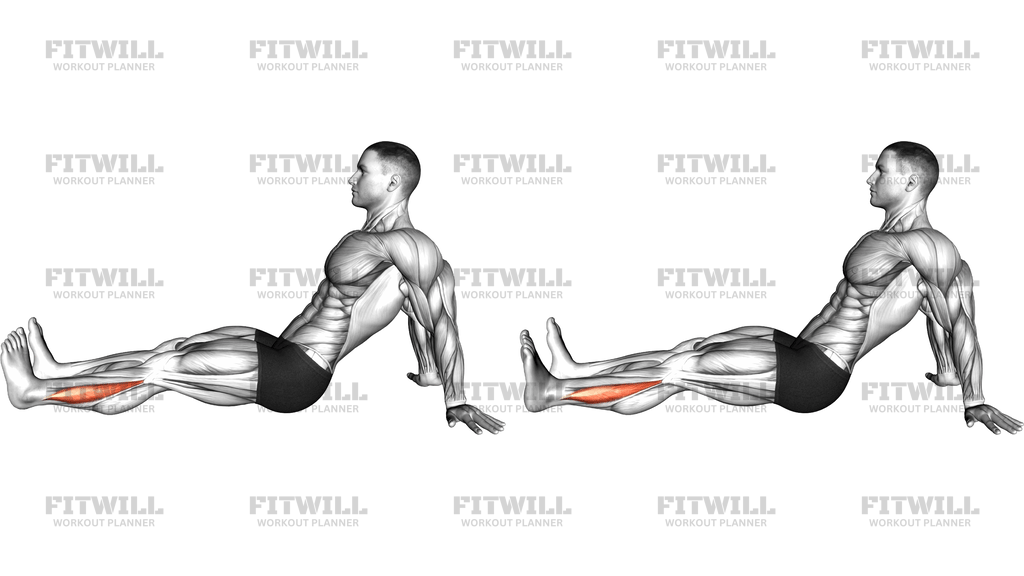
Instructions
- Sit on the floor with one leg extended straight in front of you and the other leg bent comfortably to the side or with the foot planted.
- Place your hands flat on the floor slightly behind your hips, fingers pointing forward or slightly out, and let them carry part of your upper-body weight so the working leg stays light.
- Sit tall through the chest and keep the extended leg long, with the knee pointing up toward the ceiling.
- Keep the foot relaxed and lifted just clear of the floor so it can swing freely.
- Sweep the foot inward, across the midline of your body, so the sole of the foot turns to face the other foot.
- Reverse the arc and sweep the foot outward, away from the midline, so the sole turns to face the ceiling and the outer lower leg does the work.
- Move in a smooth, continuous side-to-side path, letting only the ankle produce the motion while the thigh and knee stay still.
- Exhale and inhale steadily through the sweep rather than holding your breath.
- Complete the desired number of sweeps, then switch legs and repeat on the other side, repositioning your hands for comfortable support.
Tips & Tricks
- The most common error is letting the whole leg swing from the hip. Pin the thigh in place and imagine the ankle is the only hinge in the working leg.
- If your lower back rounds when you sit on the floor, prop yourself up on a small step, block, or folded mat under the hips so you can keep the chest tall without straining.
- Do not force the outward sweep. The peroneus longus sits along the outside of the shin, and pushing past your natural range only creates pressure at the outside of the ankle.
- Keep the toes soft rather than scrunching them. Tensing the foot turns the drill into a toe exercise instead of an ankle exercise.
- Slower is better here. If you cannot stop the foot at any point mid-sweep, you are moving too fast to challenge the ankle stabilizers.
- Work the weaker or previously rolled ankle first, and match the number of repetitions on the stronger side rather than doing more.
- If your hands tire from supporting you, shift more weight onto your hips and bend the support-side knee more, rather than dropping the chest forward.
- A light warmth in the outer lower leg is the goal; sharp pain, clicking with discomfort, or numbness in the foot means you should shorten the range or stop.
Frequently Asked Questions
Which muscles does Seated Single Leg Foot Side To Side work?
The primary work comes from the ankle stabilizers on the outside of the lower leg, particularly the peroneus longus, which controls the outward sweep of the foot. The tibialis muscles on the front and inner lower leg assist on the inward sweep, and the calves help steady the ankle.
Is Seated Single Leg Foot Side To Side suitable for beginners?
Yes, it is one of the most accessible ankle exercises because it uses only body weight and requires no load on the joint. Beginners should simply start with a smaller arc and build range gradually.
Why do I support myself on my hands behind me during this exercise?
Supporting on your hands unweights the extended leg so the foot can sweep freely without the hip or knee taking over the movement. It also lets you sit tall, which keeps the leg in a consistent position from rep to rep.
Should my knee move while my foot sweeps side to side?
No, the knee should stay pointing up and the thigh should stay still. If the leg is swinging, the hip is doing the work instead of the ankle, so reduce the arc and slow down.
How many repetitions should I do per side?
Ten to twenty smooth sweeps per side is a practical starting dose, once daily or before lower-body training. Because the demand is low, consistency over weeks matters more than high volume in one session.
Can I use this exercise after an ankle sprain?
It is often used in ankle rehab settings, but you should get clearance from a healthcare professional or physical therapist first. If it is approved, start with a short, pain-free arc and progress the range only as symptoms allow.
What can I substitute if sitting on the floor is uncomfortable?
You can perform the same foot sweep sitting on a bench or the edge of a chair with the leg extended and the foot clear of the floor. The key details stay the same: a still knee and a side-to-side arc coming only from the ankle.
How is Seated Single Leg Foot Side To Side different from ankle circles?
Ankle circles rotate through the full range in a loop, while this exercise works specifically across the side-to-side plane that targets the peroneal muscles. Doing both gives more complete ankle coverage, but the side-to-side version hones the outer lower leg directly.
Should I feel this in my calf or higher up my leg?
The sensation should sit along the outer side of the lower leg near the shin, not in the thigh or hip. If you feel it higher up, the leg is swinging from the hip and you need to pin the thigh still.