Walking On Spot Side Punch
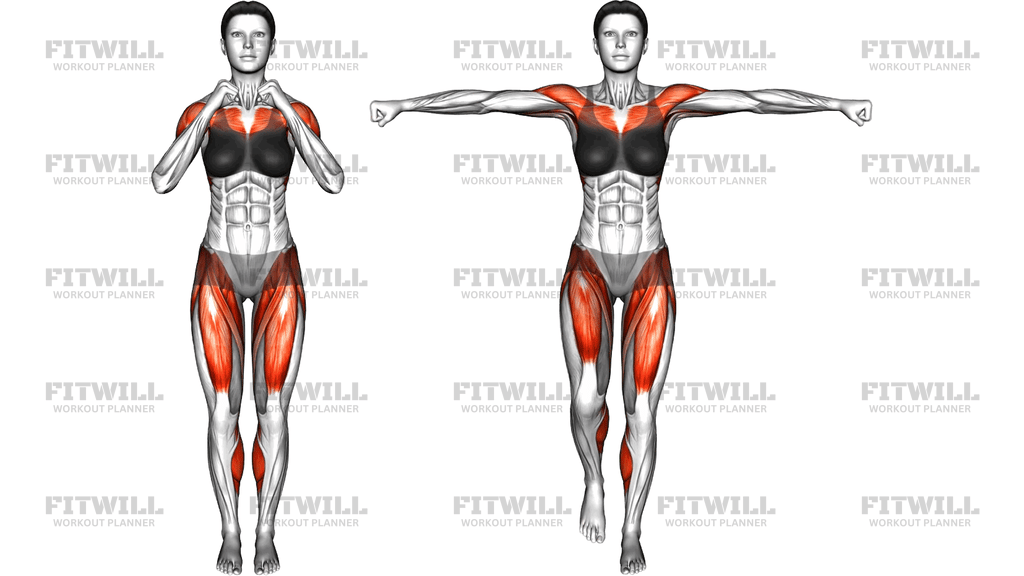
Walking On Spot Side Punch is a standing, body-weight rhythm drill that combines marching in place with straight punches delivered out to the sides at shoulder height. You stay on the spot, lifting each knee in a natural walking rhythm while the arms snap from a guard position at the chest out to full extension, so the lower body drives the tempo and the upper body follows. It looks simple, but coordinating opposite arm and leg timing is exactly what makes it valuable.
This movement earns its place in warm-ups, low-impact cardio circuits, and active recovery days. Because there is no jumping and no equipment, it suits beginners, people returning from a layoff, and anyone training in a small space such as a hotel room or living room. Boxers and martial artists use the same pattern as light footwork work, but for general training it functions as a full-body conditioner that raises the heart rate without pounding the joints.
The marching leg action works the quads, hip flexors, and calves through repeated knee lifts, while the side punches bring the shoulders, especially the middle delts, and the triceps into play. Holding the fists up and extending them under control also asks the core to stay braced so the torso does not sway with each punch. The calves and ankle stabilizers handle the constant, gentle weight shifts from foot to foot.
Setup matters more than people expect. Stand tall with feet hip-width apart, soft knees, and fists raised lightly to the sides of the chest. If you start hunched or let the fists drop, the punches lose their range and the shoulders round forward, which is the most common fault in this drill. A tall spine and relaxed shoulders give the arms a clean track out to the side at shoulder height.
To execute well, march on the spot with controlled knee lifts while punching one arm out to the side on each step or every second step, depending on the rhythm you choose. Extend fully but do not lock the elbow hard, then retract the fist to the guard position as the other arm goes out. Breathe steadily, exhaling with each punch, and keep the pace one you could hold while still speaking in short sentences.
Practically, this drill slots into circuit training as a cardio station, into a warm-up to raise body temperature, or as a standalone three to five minute interval. If balance is a challenge, slow the march down before adding punch speed. Stop or reduce the range if you feel any sharp discomfort in the shoulders, knees, or hips, and build duration gradually rather than chasing speed on day one.
[ Workout Log & Planner ]
Put your next workout in Fitwill
Keep your plan and training log ready when you are.


Instructions
- Stand tall with your feet hip-width apart, knees soft, and your weight spread evenly across both feet.
- Raise both fists to the sides of your chest in a loose guard position, elbows tucked in and shoulders relaxed and down.
- Brace your abdominals lightly and keep your gaze forward with your chin level.
- Begin marching on the spot, lifting each knee to roughly hip height or a comfortable level below it.
- As one knee lifts, extend the opposite arm straight out to the side at shoulder height, fist leading with the knuckles forward.
- Retract that fist back to your chest as the leg lowers, and punch out with the other arm as the opposite knee lifts.
- Alternate punches with each step, keeping the extension at shoulder height and stopping just short of locking the elbow.
- Exhale sharply with each punch and inhale as the arm returns to guard.
- Maintain a steady walking rhythm on the spot, avoiding sideways lean or bouncing through the lower back.
- To finish, slow the march, bring both fists back to your chest, then lower your arms and stand still to settle your breathing.
Tips & Tricks
- The most common mistake is punching diagonally forward instead of straight out to the side; aim your fist at a point level with your shoulder, directly out from your body.
- If your shoulders creep up toward your ears as you fatigue, drop your arms for a few seconds, reset them low, and restart the punches with looser fists.
- Keep the punches light and quick rather than forcing power; this is a rhythm drill, and muscling each punch usually twists the torso and pulls the knee lift off track.
- If your knee lifts shrink as the arms speed up, cut your pace in half; a shorter but consistent knee lift beats a fast, sloppy march.
- Land each marching step with the ball of the foot first and stay quiet; heavy flat-footed stomping signals you are rushing the tempo.
- Clenching the fists hard for minutes at a time fatigues the forearms early; hold them loosely as if gripping a fragile object.
- If you wobble on the single-leg moments, shorten the knee lift and slightly widen your base; balance improves quickly with practice.
- Count in blocks of twenty punches and check your posture at each block so form drift does not accumulate over a long set.
Frequently Asked Questions
What muscles does Walking On Spot Side Punch work?
The marching knee lifts primarily use the quads and hip flexors, with the calves handling the constant footwork. The side punches engage the shoulders, particularly the middle delts, along with the triceps and the core for stability.
Is Walking On Spot Side Punch suitable for beginners?
Yes. It is low impact, requires no equipment, and can be scaled by lowering the knee lift, slowing the punch rhythm, or working in short intervals of twenty to thirty seconds.
Should the punches in Walking On Spot Side Punch go forward or out to the side?
Out to the side, at shoulder height, with the arm extending away from your body. Punching forward turns it into a different drill and changes which shoulder muscles are doing the work.
Do I need to lift my knee to hip height?
Hip height is a good target, but any controlled lift that lets you keep a tall posture works. Lower lifts are a smart starting point if you have tight hip flexors or balance concerns.
How long should I perform Walking On Spot Side Punch for?
For a warm-up, thirty to sixty seconds is enough. As a cardio station, aim for one to three minutes per round, adjusting pace so you can keep clean arm and leg timing throughout.
Why do I lose my balance during the knee lifts?
Most people either rush the tempo or lean their torso sideways with each punch. Slow the march, widen your stance slightly, and keep your eyes fixed on a point ahead to steady yourself.
Can I substitute Walking On Spot Side Punch in a cardio circuit?
Yes, it pairs well alongside moves like high knees, jumping jacks, or shadow boxing. If you need a lower-impact option, march in place with the punches but skip the knee lift and simply tap your toes.
Is it safe for my shoulders and knees?
For most people, yes, as long as the punches stay at shoulder height without forcing range and the knees stay soft on each landing. If you have an existing shoulder or knee issue, use a smaller range and stop if you feel sharp pain.
How do I make Walking On Spot Side Punch more challenging?
Increase the pace, raise the knee lift toward hip height or above, or extend the work interval to two or three minutes. You can also hold very light hand weights, though most people get enough challenge from speed and duration first.