Seated Single Leg Squeezing Toes
Seated Single Leg Squeezing Toes is a small, deliberate foot exercise performed on the floor with no equipment. You sit with one leg extended in front of you, support yourself on your hands behind your hips, and repeatedly curl or scrunch the toes of the working foot down toward the sole, then spread and relax them. Because the leg stays straight and still, the entire action comes from the muscles inside the foot itself, which is exactly what makes this drill useful.
This movement targets the small intrinsic muscles of the foot along with the deep flexors that run from the lower leg into the toes. The highlighted working area sits along the sole and heel, where these muscles grip and stabilize the arch. Training them helps build a more responsive, supported base for walking, running, squatting, and any activity where force travels through the foot.
The setup matters more than it looks. Sitting tall with the hands behind you keeps your weight off the working foot and lets the toes move freely through their full range. Working one leg at a time gives you a clear picture of how each foot behaves, since most people discover one side curls and grips more smoothly than the other. If your foot cramps early, that is a normal sign the muscles are being asked to do something new.
To execute it well, keep the knee straight but soft, the ankle neutral, and focus on pulling the tips of the toes toward the heel of the foot as if trying to scrunch up a towel placed under them. Pause briefly in the squeezed position, then slowly lengthen the toes back out. The tempo should be unhurried; this is a control exercise, not a speed or force exercise.
People commonly use this drill in warm-ups before lower body training, in rehabilitation or prehabilitation programs for foot and ankle issues, and as part of barefoot or arch-strengthening routines. Runners, lifters recovering from ankle sprains, and anyone who spends long hours in stiff shoes tend to benefit the most. It also pairs well with calf raises and balance work as a complete lower leg and foot session.
Keep the effort comfortable. A mild squeeze or slight ache along the sole is expected, but sharp cramping means you should ease off, shake the foot out, and use fewer reps. Move within a pain-free range, and stop if you feel any joint pain in the toes or the ball of the foot.
[ Workout Log & Planner ]
Put your next workout in Fitwill
Keep your plan and training log ready when you are.


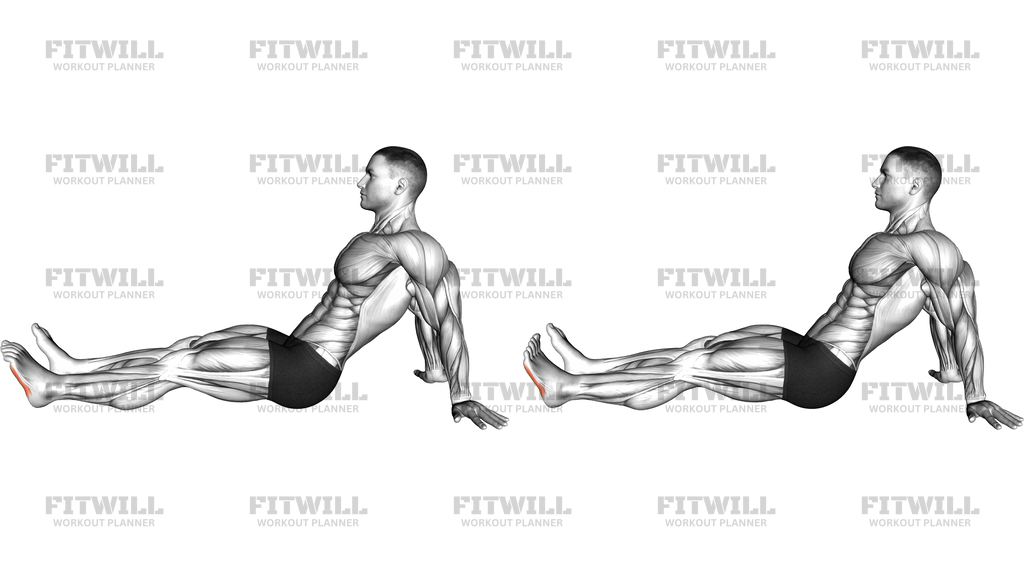
Instructions
- Sit on the floor with your legs extended straight in front of you and your hands planted on the floor just behind your hips to support your upper body.
- Keep the working knee straight and let the foot hang relaxed at the end of the leg, with the non-working leg resting alongside in the same position.
- Sit tall through your spine and gently brace your core so you are not slumping into your supporting shoulders.
- Starting with the toes relaxed and slightly lifted, curl them down toward the sole as if trying to grip the floor or scrunch a towel underneath them.
- Squeeze the toes fully toward the heel and hold the contraction for one to two seconds, feeling the muscles along the arch of the foot work.
- Slowly release and lengthen the toes back out to the relaxed starting position without letting the whole foot or ankle flop around.
- Breathe steadily throughout, exhaling as you squeeze the toes and inhaling as you release.
- Complete all repetitions on one foot, then shake the foot out briefly before switching to the other side.
- Keep the heel resting on the floor and the knee pointing at the ceiling so the movement stays isolated in the toes and foot.
Tips & Tricks
- Imagine picking up or scrunching a small towel with your toes; this mental picture produces a cleaner contraction than simply curling the foot.
- Cramping along the sole in the first few sessions is common. Reduce the squeeze intensity to about half effort and build up over a couple of weeks.
- Keep the ankle still while the toes move. If you notice the whole foot flexing up and down, you are borrowing from the calf muscles instead of isolating the foot.
- Do not let your hips collapse behind you. Staying tall on your hands keeps the leg relaxed and the toes free to move through their full range.
- If sitting on the floor bothers your lower back, sit on a low cushion or fold a mat under your hips so your pelvis can stay neutral.
- Watch the big toe specifically. It should curl in line with the other toes rather than jamming sideways, which suggests you are over-gripping.
- Quality beats quantity here. Ten slow, deliberate squeezes per foot do more for foot control than fifty fast ones.
- Perform the drill barefoot or in thin socks so you can see and feel the toes working; stiff training shoes defeat the purpose entirely.
- If one foot cramps or grips noticeably worse than the other, spend one extra set on that side to bring it up to level.
Frequently Asked Questions
What muscles does Seated Single Leg Squeezing Toes work?
It primarily works the small intrinsic muscles of the sole of the foot that control the arch and toe flexion, with support from the deep toe flexors in the lower leg. The calf muscles stay mostly quiet when you keep the ankle still.
Is Seated Single Leg Squeezing Toes suitable for beginners?
Yes, it is one of the gentlest foot exercises available since it uses no load and no standing balance demands. Beginners should simply start with fewer repetitions and a lighter squeeze while their feet adapt.
Why is only one leg worked at a time in Seated Single Leg Squeezing Toes?
Working one leg at a time lets you feel and compare each foot independently, which quickly reveals differences in control or arch strength between sides. It also makes it easier to keep the attention fully on the working toes.
Should my heel stay on the floor during the movement?
Yes, the heel stays planted and the knee stays extended so the action stays in the toes and the arch. If the heel lifts or the whole foot flexes, the calf muscles are taking over the movement.
My foot cramps when I squeeze my toes. What should I do?
Cramping is common when these muscles are untrained. Reduce the squeeze to a light effort, shorten the hold, do fewer reps, and gently stretch and massage the sole between sets until tolerance improves.
Can I do Seated Single Leg Squeezing Toes with a towel under my foot?
Yes, placing a small towel under the toes and scrunching it toward the heel is a classic variation that gives you a visible target. It does not change the muscles worked, just the feedback.
How many repetitions of Seated Single Leg Squeezing Toes should I do?
Start with ten to fifteen slow squeezes per foot for one or two sets, holding each squeeze for a second or two. You can add sets gradually as the movement feels smoother and cramping fades.
When is the best time to include this exercise in my routine?
It works well as a warm-up before leg days, running, or balance training, and also as a standalone foot-strengthening drill on rest days. Doing it barefoot on the floor is the most practical setup.
Is Seated Single Leg Squeezing Toes safe after an ankle sprain?
Foot and arch exercises are often used during ankle rehabilitation, but you should get clearance from a physiotherapist or doctor first. Start with very light squeezes and stop if you feel pain rather than muscular effort.