Suspension Self Assisted Triceps Dip
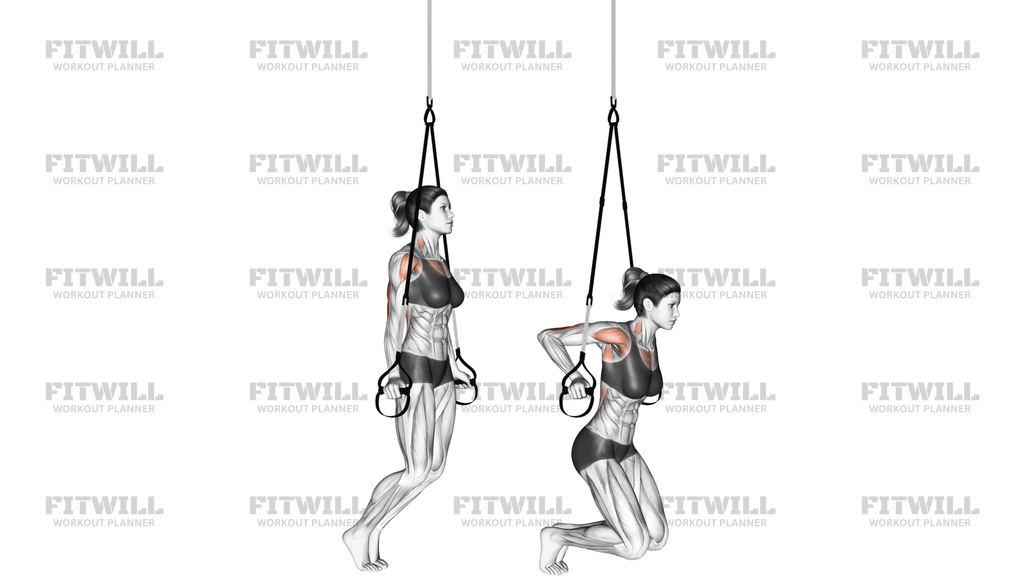
Suspension Self Assisted Triceps Dip is a kneeling suspension-trainer pressing drill that lets you train the triceps without the full bodyweight demand of a standard dip. The straps support part of your load, so the movement stays focused on elbow extension while still challenging shoulder stability, upper-back position, and core control. It is a useful option when you want triceps work that is easier to scale than parallel bar dips and less likely to overload the shoulders when the setup is correct.
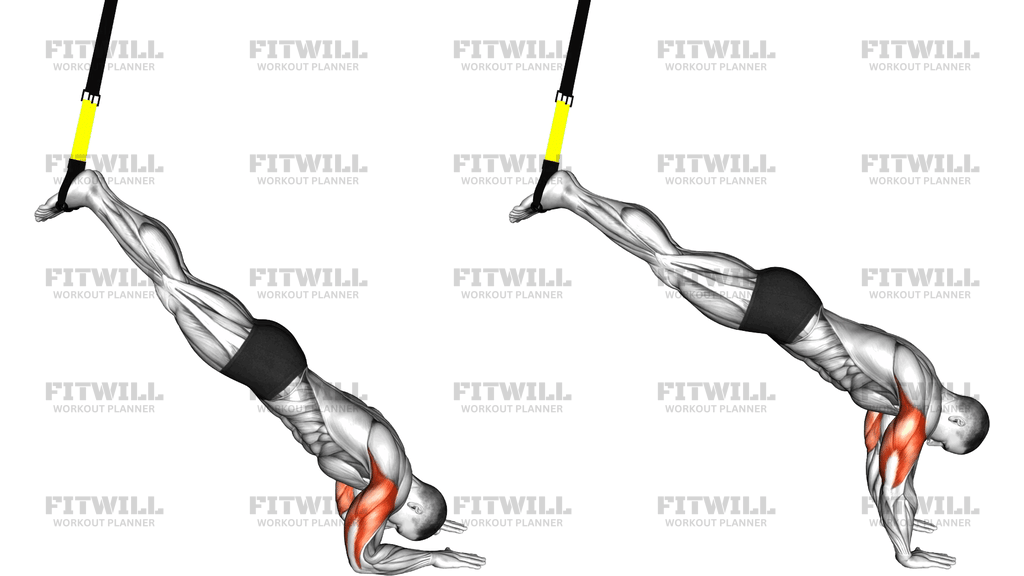
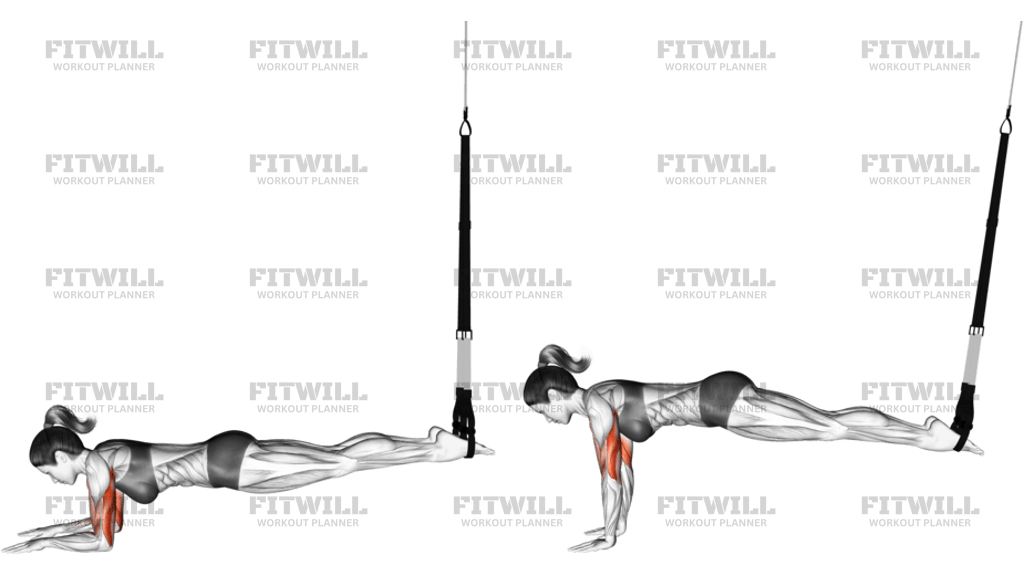
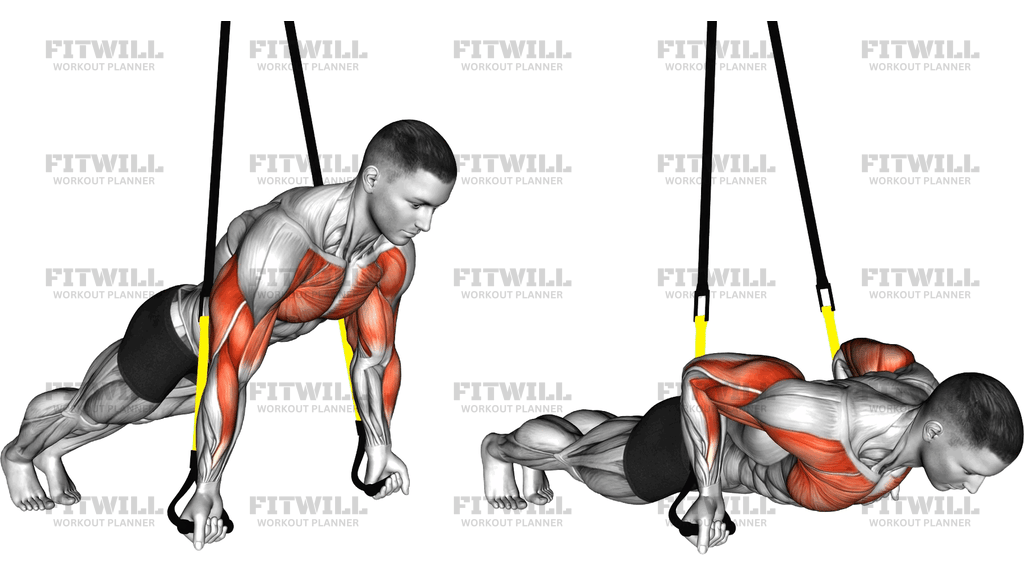
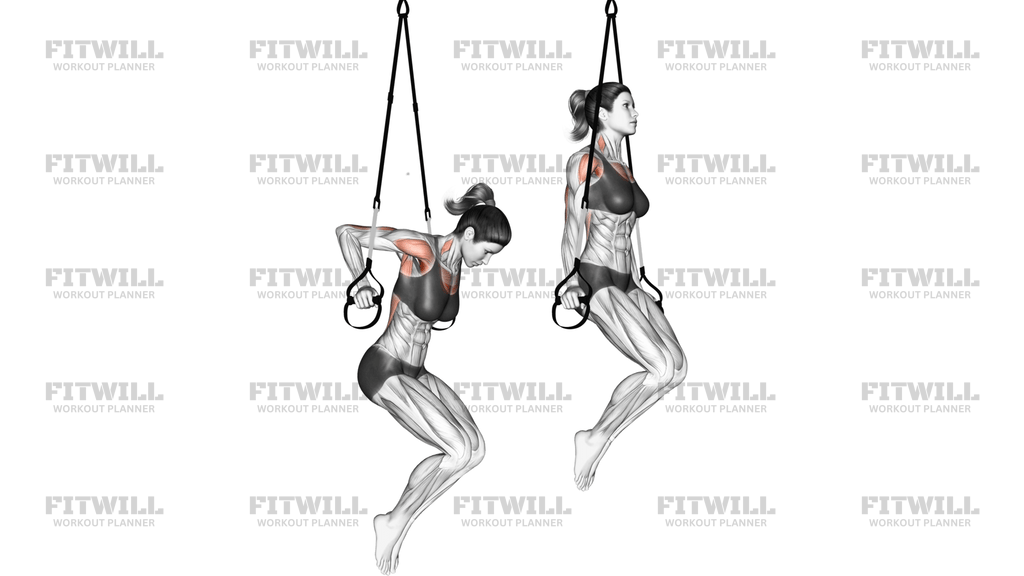
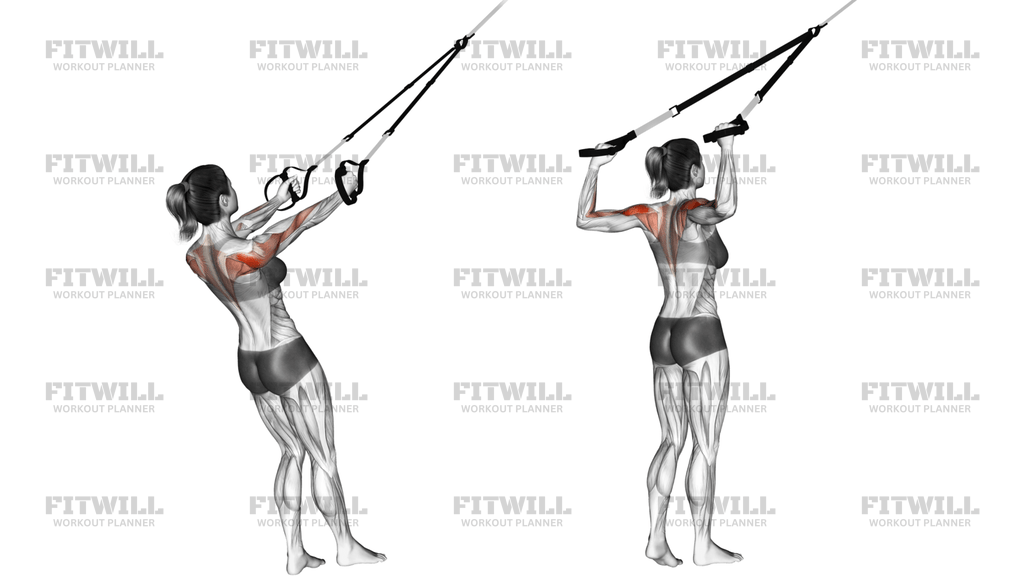
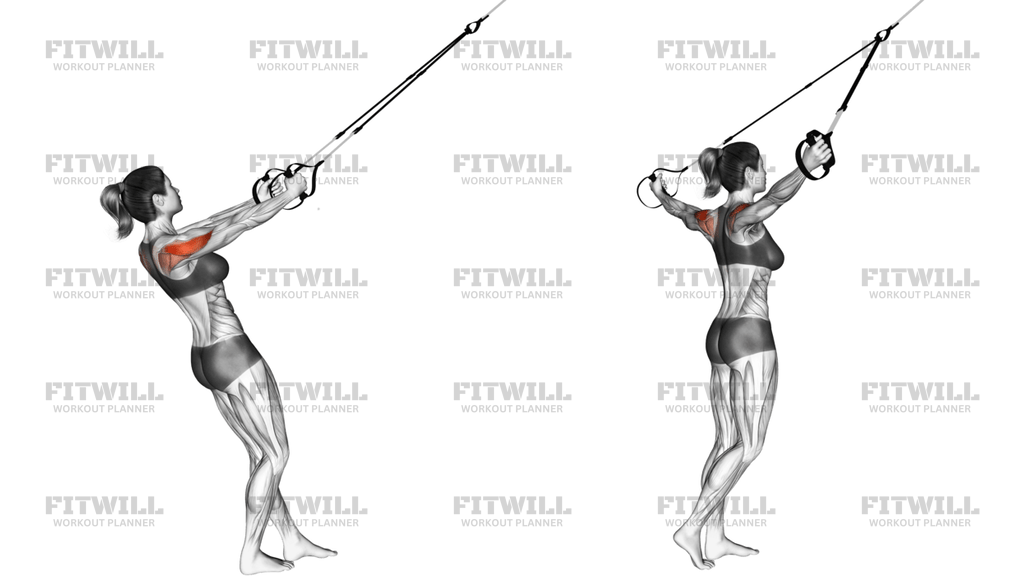
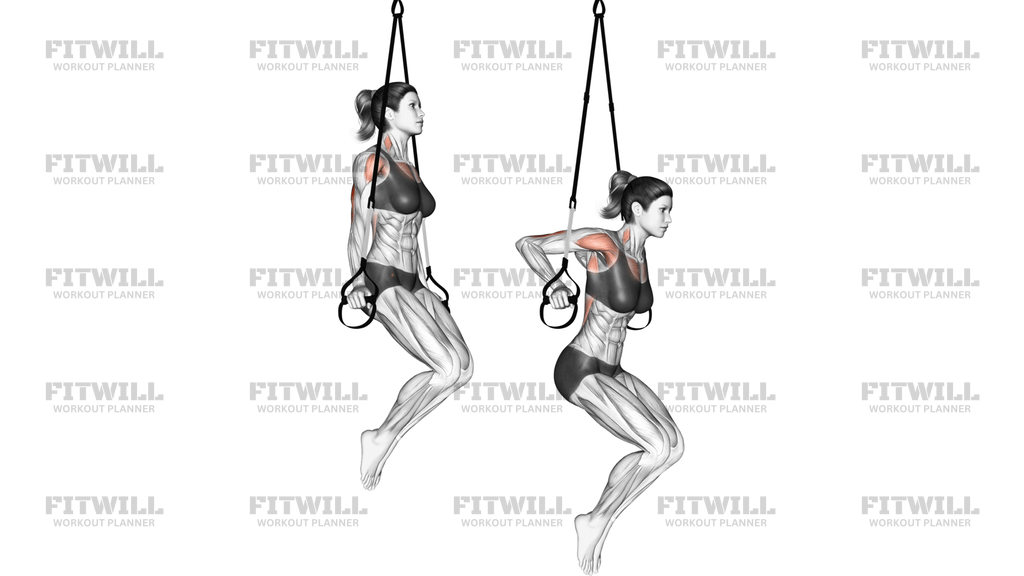
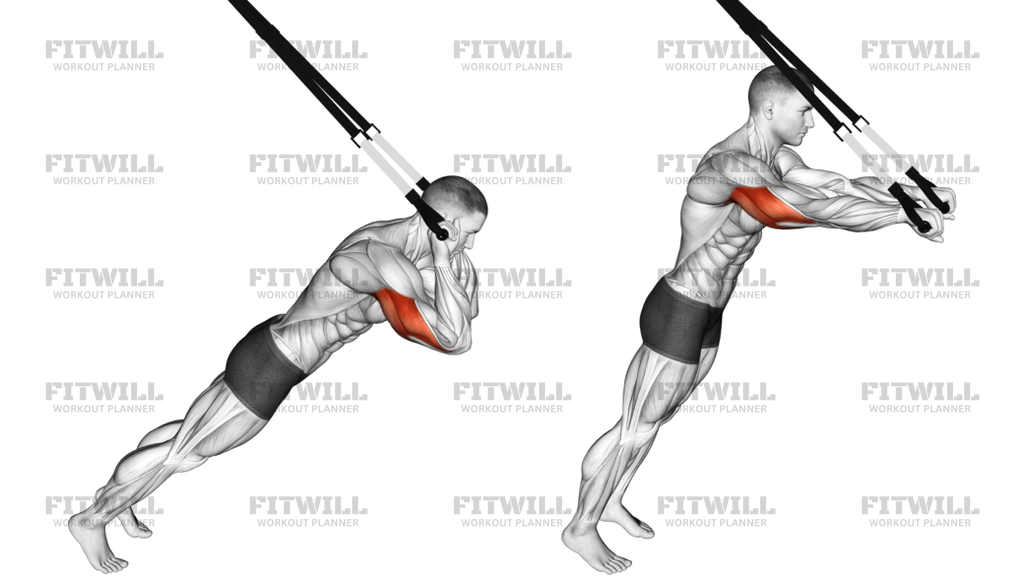
The image shows a tall kneeling variation with the straps beside the torso and the hands fixed to the handles. That setup matters: the more the knees and hips stay anchored, the more the exercise becomes a controlled triceps press instead of a swinging full-body dip. The torso should stay long, ribs stacked over the pelvis, and the elbows should track back close to the body as you lower and press. The goal is not depth for its own sake, but a repeatable path that keeps tension in the triceps and keeps the shoulders from rolling forward.
Because the straps reduce the effective load, this exercise works well for beginners, deload weeks, warm-ups, or accessory work after heavier pressing. It also fits well when you want to groove clean elbow extension without having to balance a barbell or manage a machine. The forearms and shoulders will assist, but they should remain support muscles rather than taking over the motion. If the handles drift forward, the torso collapses, or the elbows flare out, the exercise usually becomes more shoulder-dominant and less useful for triceps emphasis.
Use a range of motion you can control from top to bottom, then finish each rep by driving the handles down and back to the same stacked position. The best repetitions look smooth and deliberate, with a brief pause at the bottom or top only if you can keep shoulder position and trunk tension intact. Keep the neck neutral, breathe steadily, and stop the set when the straps start to pull you forward or you can no longer resist the return phase. That is the point where the triceps stimulus drops and the shoulder stress rises.
Fitwill
Log Workouts, Track Progress & Build Strength.
Achieve more with Fitwill: explore over 9600 exercises with images and videos, access built-in and custom workouts, perfect for both gym and home sessions, and see real results.
Start your journey. Download today!




Instructions
- Adjust the suspension straps so the handles hang at about waist to lower-rib height, then kneel under them with your shins on the floor and your torso tall.
- Grip each handle with a neutral wrist and let your elbows bend naturally so the handles sit close to your sides.
- Stack your ribs over your pelvis, keep your neck long, and set your shoulders down away from your ears before you start.
- Press the handles down and slightly back by extending your elbows, letting the straps support some of your bodyweight.
- Lower under control until the elbows are comfortably bent and the shoulders stay organized, not dumped forward.
- Pause briefly if you can hold the strap tension without losing the tall kneeling position.
- Drive back up by straightening the elbows and finishing with the handles beside your torso.
- Keep the knees planted and the trunk quiet while you breathe out on the press and in on the return.
- Stop the set if the straps start pulling you forward, the elbows flare, or the lower back takes over the motion.
Tips & Tricks
- Keep the handles close to your ribcage; if they drift forward, the shoulders will take over and the triceps tension drops.
- Think of the rep as an elbow-extension press, not a chest dip. The upper arm should stay relatively pinned to your sides.
- Set the strap height before you fatigue. Too high and the bottom position gets sloppy; too low and the setup turns into a balance fight.
- Use your knees as the anchor. If the hips wander or the shins lift, you lose the self-assisted advantage and start swinging.
- Keep the wrists neutral inside the handles instead of crushing them back, which helps keep pressure out of the forearms and elbows.
- Lower only as far as you can keep the shoulders from rolling forward. Depth is useful only when the torso stays stacked.
- Exhale as you press the handles down and back, then inhale while resisting the return under the straps.
- Choose a stride or kneeling position that lets you repeat clean reps. If you have to arch the lower back to finish, the load is too high.
- A brief pause in the bottom can make the set more honest, but only if the shoulder blades stay stable and the neck stays relaxed.
- If the elbows start flaring wide, reduce the range or lighten the support angle instead of forcing a bigger rep.
Frequently Asked Questions
What muscle does Suspension Self Assisted Triceps Dip target most?
The triceps are the main target, especially during the elbow-extension portion of the press.
Why is this version called self assisted?
Because the suspension straps reduce part of your bodyweight, making the dip easier to control than a full unsupported dip.
What should the kneeling setup look like?
Your shins stay on the floor, your torso stays tall, and the handles sit close to your sides so the press stays triceps-focused.
Should my elbows flare out on the way down?
No. Keep them tracking back near the torso so the shoulders stay organized and the triceps keep most of the work.
Can beginners use this exercise?
Yes. The straps make it a good entry point for learning dip mechanics without having to support full bodyweight.
What if I feel it mostly in my shoulders?
Shorten the range, keep the handles closer to your ribs, and reduce how far you lean forward so the press stays more triceps-dominant.
How deep should I lower?
Lower only until you can still keep the shoulders down and the torso stacked; extra depth is not worth losing position.
How do I make it harder over time?
Reduce the assistance angle, work through a slower lowering phase, or move your feet so the straps support less of your bodyweight.