Suspension Triceps Extension Push-Up
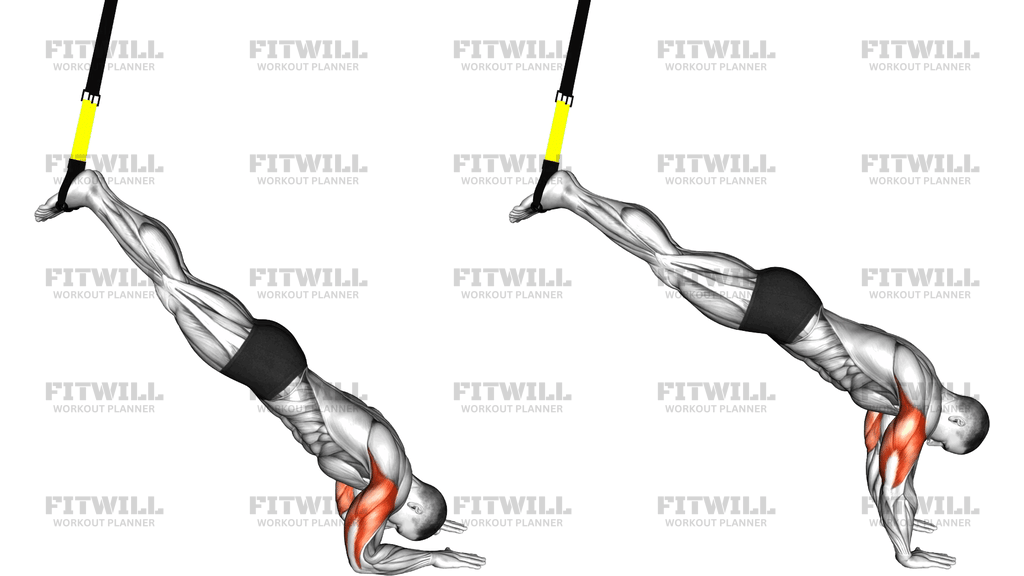
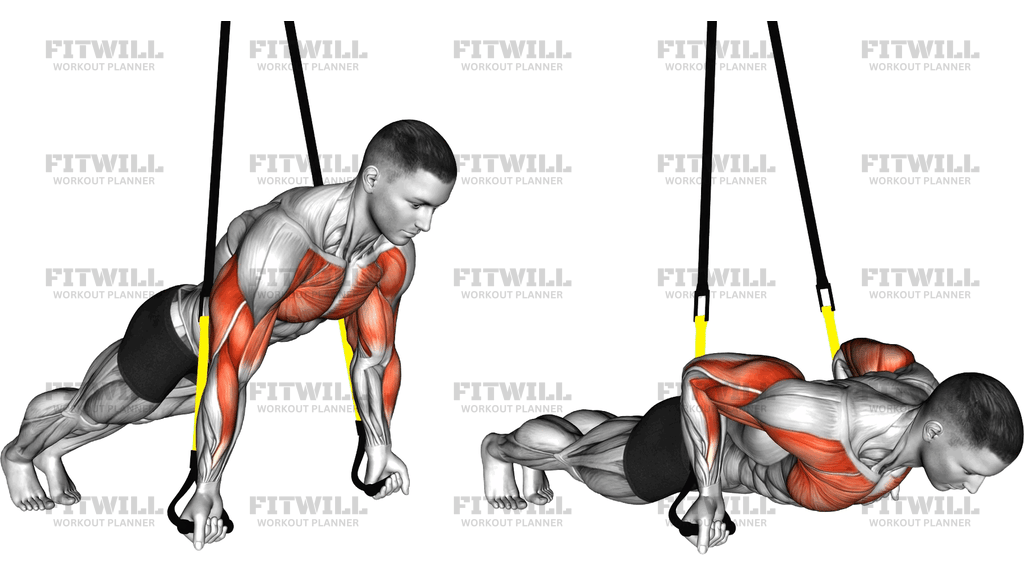
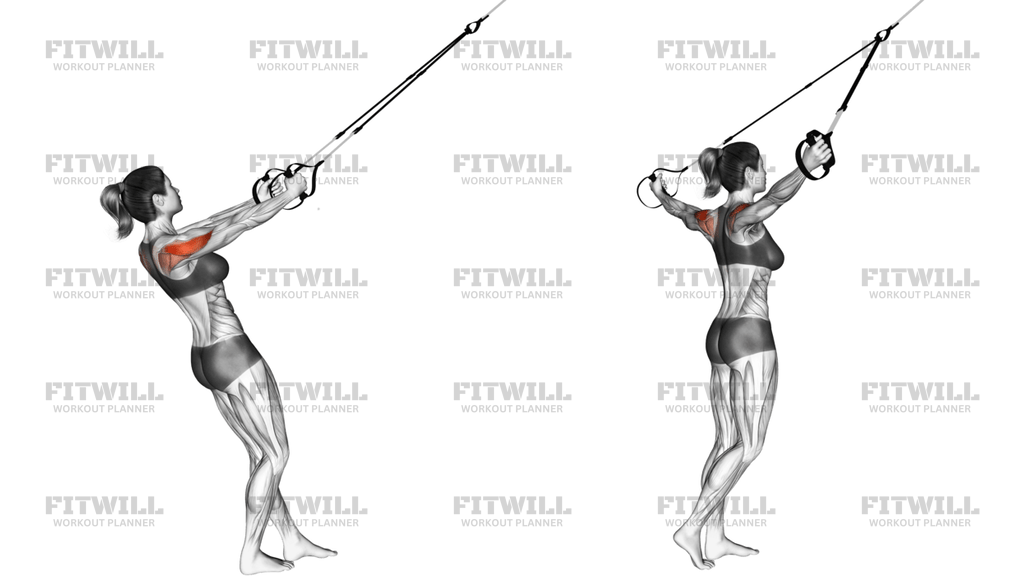
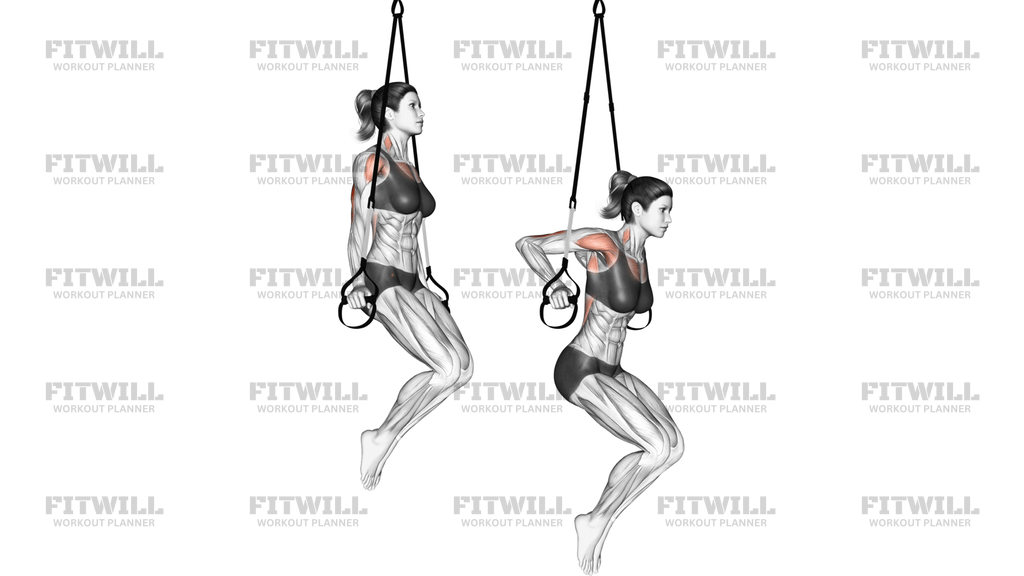
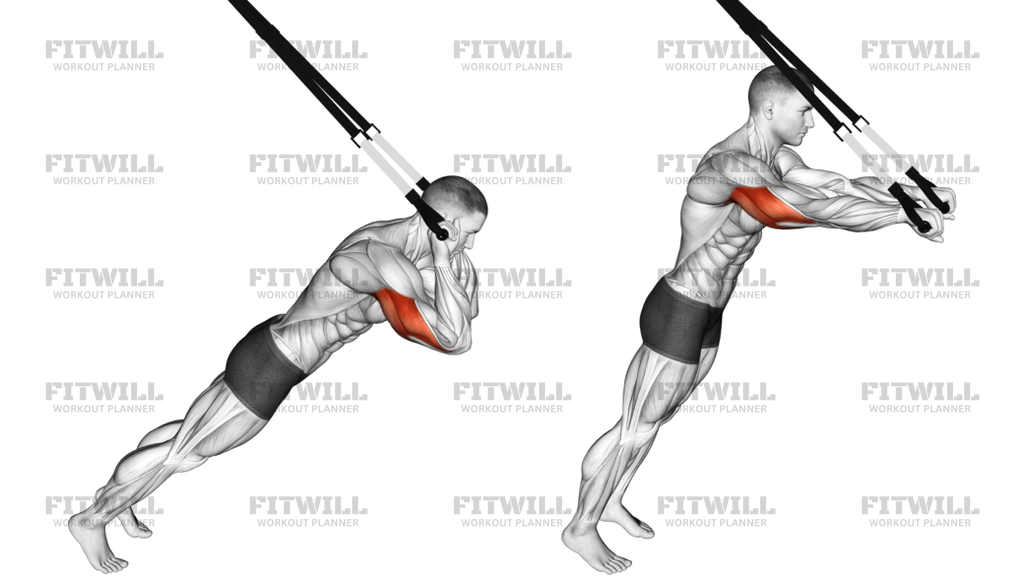
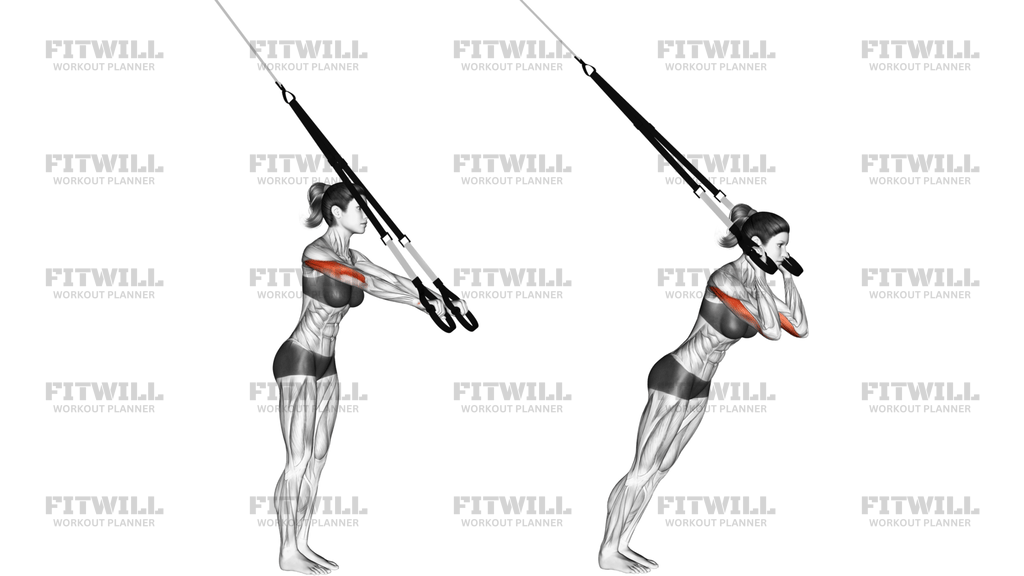
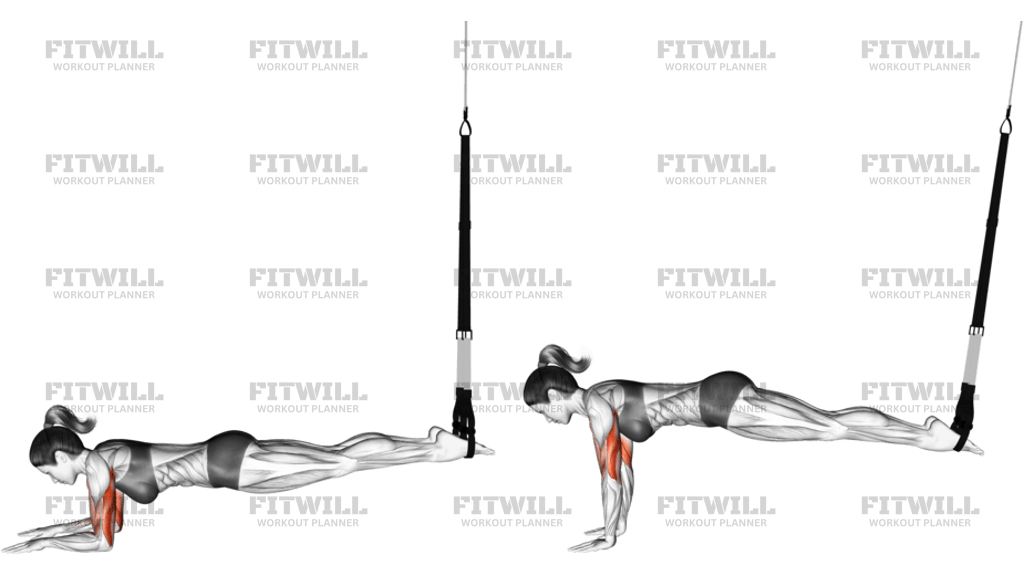
Suspension Triceps Extension Push-Up is a bodyweight pressing drill performed from a straight-body plank with the feet supported in suspension straps and the hands planted on the floor. The setup changes the demand of a standard push-up by shifting more of the work toward elbow extension and shoulder stability, so the triceps have to control both the lowering phase and the drive back to lockout.
The main target is the triceps, especially the triceps brachii, with the shoulders, forearms, and deep core helping you keep the torso rigid while the suspension straps add instability at the feet. That instability is the point of the exercise: every rep asks you to resist sway, keep the ribs from flaring, and keep the hips from sagging while the elbows do the work.
Good reps start with a precise plank. Set the hands slightly wider than shoulder width, keep the shoulders stacked over the wrists, and line the body from head to heels before bending the elbows. As you lower, let the elbows bend under control and keep the upper arms tracking in a path that lets the triceps stay loaded rather than dumping the work into the shoulders or lower back. The return should feel like a strong press away from the floor, not a bounce or a hip-driven swing.
This exercise is useful when you want triceps-focused pressing without loading a barbell or machine, or when you want a challenging accessory movement that also trains trunk stiffness. It fits well in upper-body strength sessions, push days, and core-heavy circuits, but it only works well when the body stays organized. If the suspension angle gets too aggressive, the feet drift, or the low back starts arching, shorten the range or reduce the lever before adding more reps.
The best versions of this movement look calm and deliberate. The straps should support the feet without pulling the body out of line, the neck should stay long, and each repetition should finish with the elbows fully extended and the shoulders still controlled. Use it to build triceps strength, pressing coordination, and anti-rotation control at the same time.
[ Workout Log & Planner ]
Put your next workout in Fitwill
Keep your plan and training log ready when you are.


Instructions
- Place your hands on the floor slightly wider than shoulder width and set your feet in the suspension straps so your body is in a long straight plank.
- Stack your shoulders over your wrists, tuck your chin slightly, and tighten your glutes so your ribs and pelvis stay aligned.
- Before each rep, brace your midsection and keep the straps quiet so the feet do not swing as you start the descent.
- Bend your elbows under control and let your chest travel forward and down while keeping the body rigid from head to heels.
- Keep the elbows pointing back rather than flaring wide so the triceps stay loaded through the lowering phase.
- Lower until you reach your chosen depth without losing the line of the body or collapsing through the lower back.
- Press the floor away and extend the elbows until the arms are straight again, finishing with the shoulders still stacked and the core tight.
- Exhale through the press, inhale on the way down, and reset the plank before the next repetition.
- Stop the set if the straps start swinging, the hips sag, or the shoulders drift far ahead of the hands.
Tips & Tricks
- Set the suspension angle conservatively at first; a shorter, less aggressive body angle makes it easier to keep the triceps in control.
- If the feet sway, slow the lowering phase and shorten the range instead of forcing more depth.
- Keep the elbows close enough to load extension work, but do not pin them so tightly that the shoulders lose space.
- Think about pressing the floor away with the whole hand so the wrists stay stacked and the rep finishes cleanly.
- A locked rib cage matters here; if your lower back arches, the core has stopped supporting the pressing pattern.
- Use a steady tempo and avoid dropping into the bottom, because the suspension setup magnifies momentum.
- The hands should stay planted under a firm shoulder position; reaching too far forward turns the movement into a sloppy plank drill.
- Choose a range that lets you keep the straps quiet. If the straps start to bounce, the set is too hard for the current load or angle.
Frequently Asked Questions
What is the main muscle worked in Suspension Triceps Extension Push-Up?
The triceps are the primary movers, especially the triceps brachii, with the shoulders and core helping keep the plank steady.
Why are the feet in suspension straps instead of the hands?
Suspending the feet adds instability to the plank and makes the triceps work while the core resists swinging and torso rotation.
How should my hands be positioned on the floor?
Place them slightly wider than shoulder width and keep the wrists under control so the press feels stable from rep to rep.
Should my elbows flare out during the lowering phase?
No. Let the elbows bend in a controlled path back from the shoulders so the triceps stay loaded and the shoulders do not take over.
What does a bad rep usually look like?
The most common problems are swinging feet, sagging hips, and a low back arch that turns the movement into a loose plank hold.
Is this exercise appropriate for beginners?
Yes, but only with a conservative suspension angle and a short, controlled range of motion until the plank and elbow path are solid.
Can I feel this in my shoulders and core too?
Yes. The shoulders stabilize the press and the core keeps the body from folding or twisting while the triceps extend the elbows.
How can I make the exercise easier or harder?
Make it easier by reducing the body angle and range of motion; make it harder by lengthening the lever, slowing the eccentric, or adding a pause near the bottom.