Suspension Chest Press
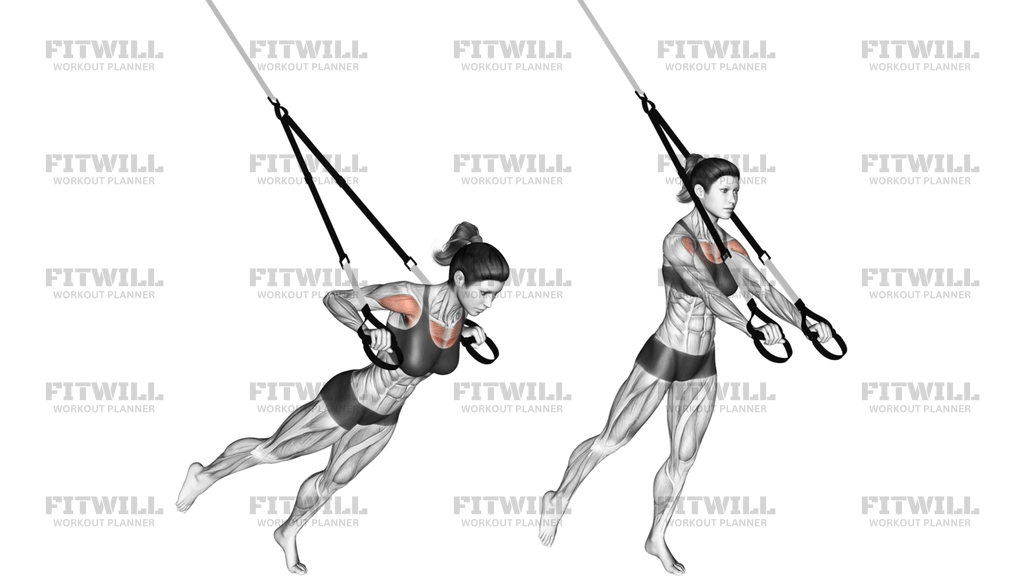
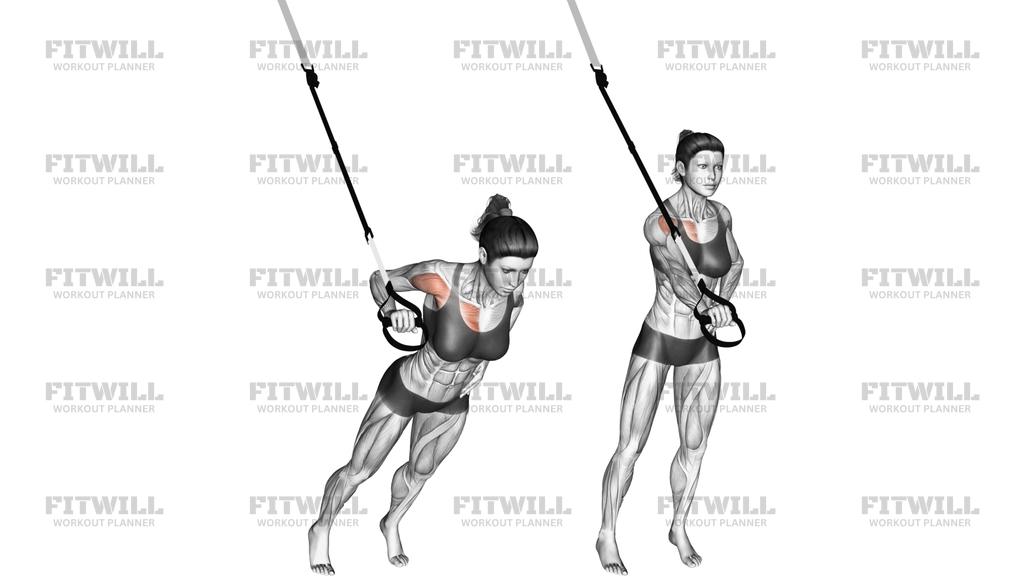
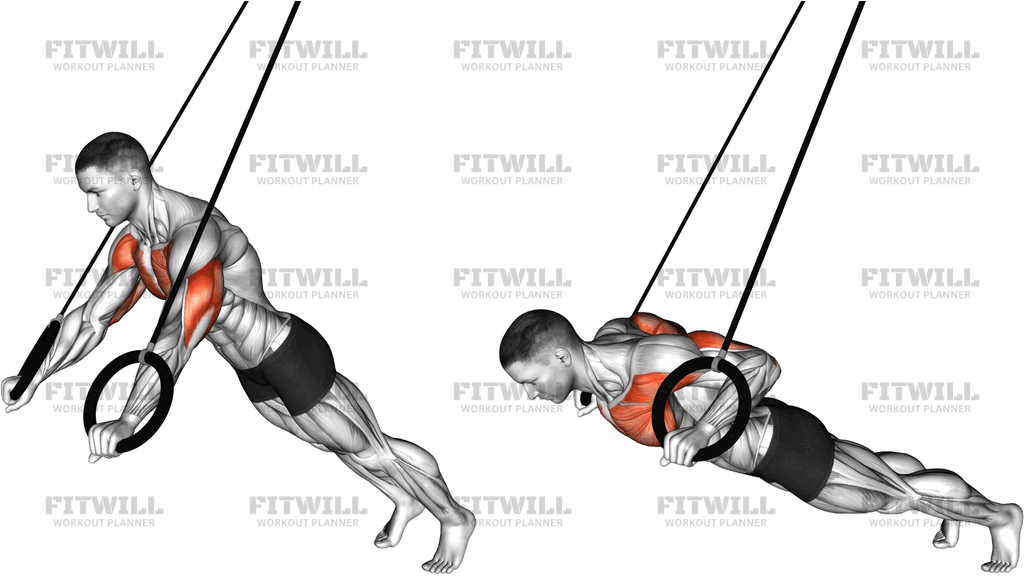
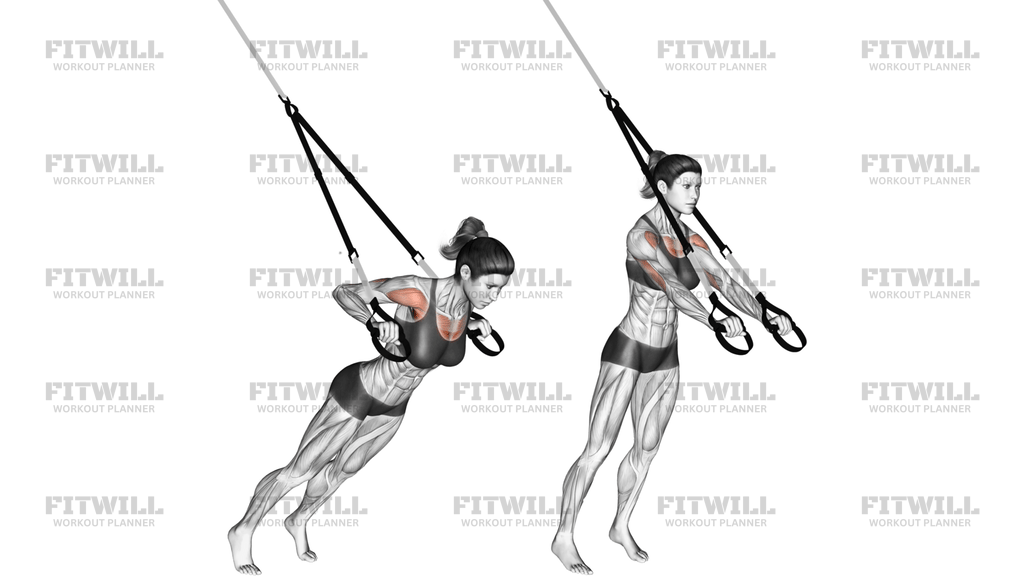
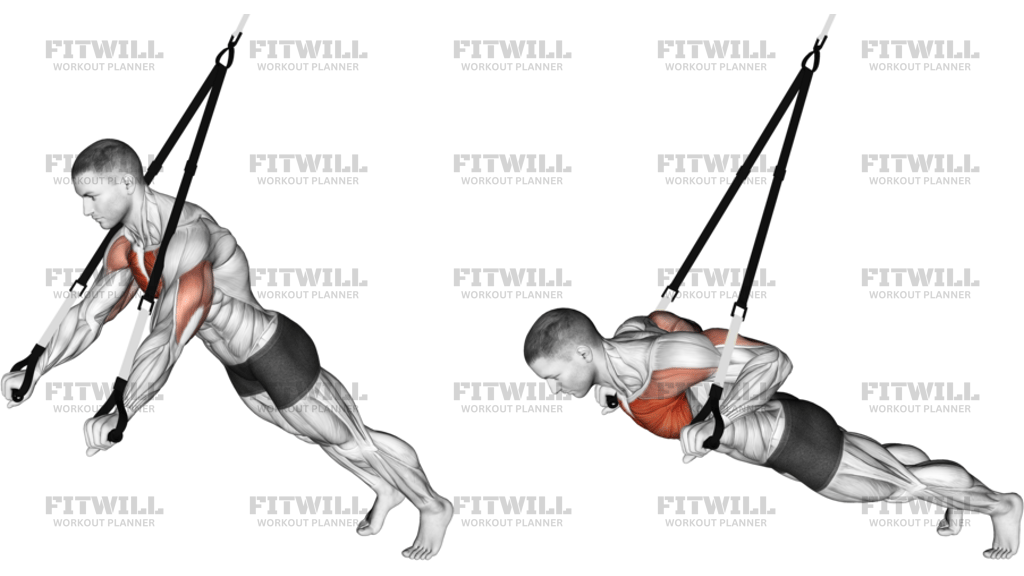
Suspension Chest Press is a suspended pressing exercise that trains the chest through a long, controlled body line. With your feet on the floor and your hands in the handles, your body acts like a moving plank while you press the straps away from your chest and then lower back under tension. Because the resistance changes with body angle, it can be scaled from a very manageable incline press to a demanding bodyweight press by simply walking the feet closer to or farther from the anchor.
The exercise is most useful when you want chest work that also demands shoulder stability, trunk control, and clean scapular position. The chest, triceps, and front shoulders drive the press, while the core, glutes, and upper-back stabilizers keep the torso from sagging or twisting. That makes the movement valuable for general strength, accessory pressing volume, and conditioning blocks where you want tension without the fixed path of a machine.
Setup matters more here than in a flat bench press. The straps should hang evenly, the handles should sit in line with the chest, and the feet should be planted so the body forms one straight line from head to heels. A steeper body angle makes the press easier and keeps the load more upright. A more horizontal body angle makes it harder and increases the demand on the chest and shoulder stabilizers. If the hands drift too high, the shoulders take over; if the hips drop, the core stops doing its job.
On each repetition, start with the arms extended and the wrists neutral, then bend the elbows to lower the chest slightly between the handles without collapsing the shoulders forward. Press the handles forward in a smooth arc until the elbows straighten and the chest is fully engaged, then return with control instead of letting the straps pull you back. Keep the ribs down, the neck long, and the elbows from flaring aggressively. Breathe out during the press and inhale as you lower.
Use Suspension Chest Press as a scalable pressing option when you want cleaner reps, more trunk involvement, or a joint-friendly alternative to a heavy barbell press. It works well for beginners in a more upright position and becomes much more demanding as the body angle gets lower. Stop the set if the straps start wobbling, the shoulders roll forward, or the hips start to sag, because those are the signs that the press has turned into a compensation pattern instead of a chest-focused movement.
[ Workout Log & Planner ]
Put your next workout in Fitwill
Keep your plan and training log ready when you are.


Instructions
- Set the suspension straps to equal length and grip the handles with a neutral wrist position.
- Walk your feet back until your body forms a straight line from head to heels with a slight forward lean.
- Plant both feet firmly, brace your abs and glutes, and keep your ribs from flaring upward.
- Start with your hands in front of the lower chest and your elbows soft rather than locked out hard.
- Lower your chest by bending the elbows and letting the body travel between the straps under control.
- Keep the elbows about 30 to 45 degrees from your sides as you lower and press.
- Press the handles forward until the arms are straight and the chest is fully engaged without shrugging.
- Return slowly to the start while keeping tension in the straps and the torso rigid.
- Inhale on the way down, exhale as you press, and finish each rep without losing the plank line.
Tips & Tricks
- Move your feet closer to the anchor to make the press harder and farther away to make it easier.
- Keep both handles at the same height so one arm does not dominate the rep.
- If your shoulders pinch, shorten the range and stop the descent before the straps pull you too deep.
- Think about moving your chest away from the handles, not just pushing with the arms.
- Keep your wrists stacked and neutral so the handles do not bend the hands backward.
- Let the elbows travel naturally, but do not flare them wide enough to turn the press into a shoulder-dominant movement.
- Squeeze the glutes and thighs to prevent the hips from sagging when fatigue builds.
- Use a slower lowering phase to keep tension on the chest instead of dropping into the bottom position.
- Choose a body angle that lets you control every rep; if you have to twist or wobble, step forward and reduce the load.
Frequently Asked Questions
What muscle does Suspension Chest Press target most?
The chest is the main target, with the triceps and front shoulders helping to finish each press.
How do I make the suspension chest press easier?
Stand more upright by walking your feet closer to the anchor. A taller body angle reduces how much of your bodyweight you have to press.
How low should I lower my chest between the handles?
Lower until the chest comes comfortably between the straps and the shoulders stay packed. Do not chase depth if it makes the hips drop or the shoulders roll forward.
Should my body stay straight during the press?
Yes. Your body should stay in one line from head to heels so the core and glutes help support the press instead of letting the lower back arch.
Why do the straps feel much harder when I walk my feet back?
The farther your feet are from the anchor, the more bodyweight you have to move. That lower body angle increases the pressing demand.
Can I use a neutral grip on the handles?
Yes. A neutral grip is usually the most comfortable option because it keeps the wrists and shoulders in a more natural pressing position.
What should I do if one shoulder feels more stressed than the other?
Check that both straps are equal, both feet are planted evenly, and the handles are not drifting to one side. Uneven setup usually causes the imbalance.
Is this a good alternative to push-ups?
Yes. It fills a similar horizontal pressing role, but the suspension straps add more stability demand and make it easier to scale the load.