Dumbbell Lateral Raise (Back Supported)
The Dumbbell Lateral Raise (Back Supported) is a shoulder isolation exercise performed standing with your back and heels braced against a wall while you raise a pair of dumbbells out to your sides to shoulder height. The wall contact is the defining feature of this variation: it locks your torso in place, making it nearly impossible to swing, lean back, or use body English to move the weight. Every rep you complete has to come from your shoulder muscles working through their true range of motion.
This setup is especially valuable for anyone whose standing lateral raises have drifted into half-rep momentum swings. Lifters often cheat this movement without realizing it, using a small hip thrust or torso rock to get the dumbbells moving. With your shoulders, upper back, glutes, and heels pinned to the wall, that escape route disappears, so the side delts do the work they are supposed to do.
The primary muscles trained are the lateral deltoids, which give the shoulders their width and rounded silhouette. The anterior deltoids assist during the first part of the lift, and the upper traps contribute as your arms approach and pass shoulder height. Because the torso is fully supported, grip and forearm demands stay modest, letting you concentrate purely on shoulder position and tempo.
Execution is straightforward but unforgiving. Stand with your back flat against a wall, heels a few inches away so your shoulders and hips can maintain contact, and hold a dumbbell in each hand at your sides with a neutral grip. Raise both arms out to the sides in a wide arc, leading slightly with your elbows, until your upper arms reach shoulder level, then lower under control. The wall keeps your spine honest, so the honest arc is the only option available.
This variation fits well early in a shoulder session when you are fresh enough to hold posture against the wall, or as a strictness reset after weeks of looser reps. It is also a useful teaching tool for beginners learning what a lateral raise should feel like, since the fixed torso makes the mind-muscle connection to the side delts much easier to find. Use lighter dumbbells than you would for free-standing raises, focus on a smooth two-to-three-second lowering phase, and expect the weight to feel noticeably heavier at the same load.
[ Workout Log & Planner ]
Put your next workout in Fitwill
Keep your plan and training log ready when you are.


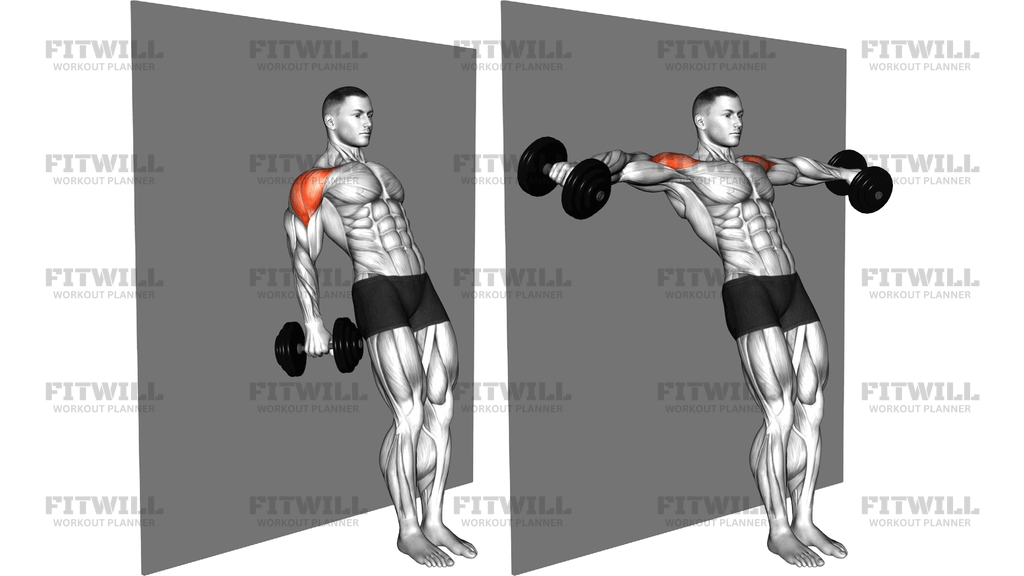
Instructions
- Stand with your back flat against a clear section of wall, feet about hip-width apart and heels roughly three to six inches from the baseboard so your shoulders, upper back, and glutes can all maintain contact.
- Hold a dumbbell in each hand at your sides with a neutral grip, palms facing your thighs, and let your arms hang fully extended with a soft, not locked, elbow.
- Draw your shoulder blades down and back against the wall and brace your abdominals so your lower back does not arch away from the surface.
- Raise both dumbbells out to your sides in a wide arc, leading with your elbows and keeping a slight bend in each arm throughout.
- Continue lifting until your upper arms reach shoulder height and the dumbbells are roughly level with your shoulders, keeping your wrists neutral rather than letting them tilt up.
- Pause briefly at the top with your arms forming a straight line across your shoulders, without shrugging the dumbbells higher with your traps.
- Lower the dumbbells slowly along the same wide arc, taking two to three seconds, until your arms are back at your sides.
- Exhale as you raise the weights and inhale as you lower them, keeping your breathing steady and your ribcage quiet against the wall.
- Complete your set, then step away from the wall and set the dumbbells down on the floor or a rack rather than dropping them.
Tips & Tricks
- If your shoulders or head peel off the wall as the dumbbells rise, the weight is too heavy or you are shrugging; drop the load and focus on leading with the elbows instead of the hands.
- Do not let the dumbbells drift forward in front of your body; the wall gives you instant feedback, because forward drift usually comes with the torso sliding out of contact.
- Keep the slight elbow bend constant from bottom to top; straightening the arm at the top to squeeze out extra height shifts tension to the elbow and traps.
- Stop at shoulder height rather than raising the dumbbells to your ears, since going higher converts the movement into an upper-trap shrug with little added benefit for the side delts.
- Expect to use significantly lighter dumbbells than in your regular standing lateral raise; the wall removes momentum, so matching your usual weight almost guarantees cheating.
- Check your heel position before the first rep: if your heels are flush against the wall your pelvis will tilt and your lower back will arch, so keep them a few inches out.
- If you feel the work in the front of your shoulders, rotate your palms slightly toward neutral and think of pushing the dumbbells out sideways rather than up.
- Use a slow, controlled lowering phase every rep; the wall makes swinging obvious, so the eccentric is where this variation builds most of its quality.
Frequently Asked Questions
Which muscles does the Dumbbell Lateral Raise (Back Supported) target?
The lateral deltoids are the prime movers, giving the shoulders their width. The anterior deltoids assist early in the lift and the upper traps come in near the top, but the wall setup keeps the emphasis squarely on the side delts.
Why do this exercise with my back against a wall instead of standing freely?
The wall prevents leaning back, swinging, and using hip drive to move the dumbbells, which are the three most common ways lifters cheat a lateral raise. It turns a loose movement into a strict, honest rep that the side delts must earn.
How far should my heels be from the wall?
A few inches is ideal. If your heels press into the wall, your pelvis tilts and your lower back arches away from the surface; keeping a small gap lets your shoulders, upper back, and glutes stay in contact comfortably.
Is the Dumbbell Lateral Raise (Back Supported) suitable for beginners?
Yes, and it is arguably one of the best teaching versions because the fixed torso makes poor form immediately noticeable. Beginners should start with very light dumbbells and prioritize the feeling of the arms moving out sideways from the shoulder.
How heavy should the dumbbells be for this variation?
Use noticeably lighter weights than you would for a free-standing lateral raise, often 30 to 50 percent less. Because momentum is eliminated, your usual load will force your torso off the wall or turn the rep into a shrug.
Should I raise the dumbbells above shoulder height?
No, shoulder height is the productive range for the side delts. Lifting higher mainly recruits the upper traps and can pull your shoulders and head away from the wall, which defeats the purpose of the setup.
What should I do if I cannot keep my back against the wall during the set?
That is a clear sign the load is too heavy. Reduce the weight until you can complete all reps with your shoulders, upper back, and glutes maintaining contact, then progress gradually from there.
What can I use instead if I do not have a clear wall space?
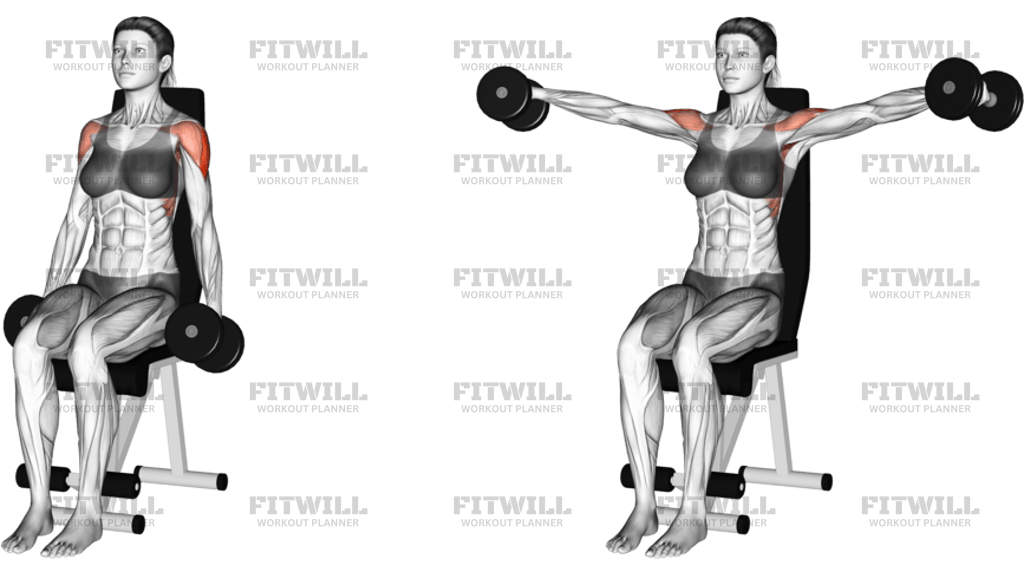
A seated dumbbell lateral raise on a flat bench or an upright bench back support offers similar torso stabilization, and cable lateral raises provide constant tension as an alternative strict variation.
Is this exercise safe for the shoulder joints?
When performed with moderate weights and a controlled tempo, the wall-supported setup is joint-friendly because it discourages the momentum and body swing that typically stress the shoulder. Keep the elbow bend slight but present, and stop if you feel pinching at the top of the movement.