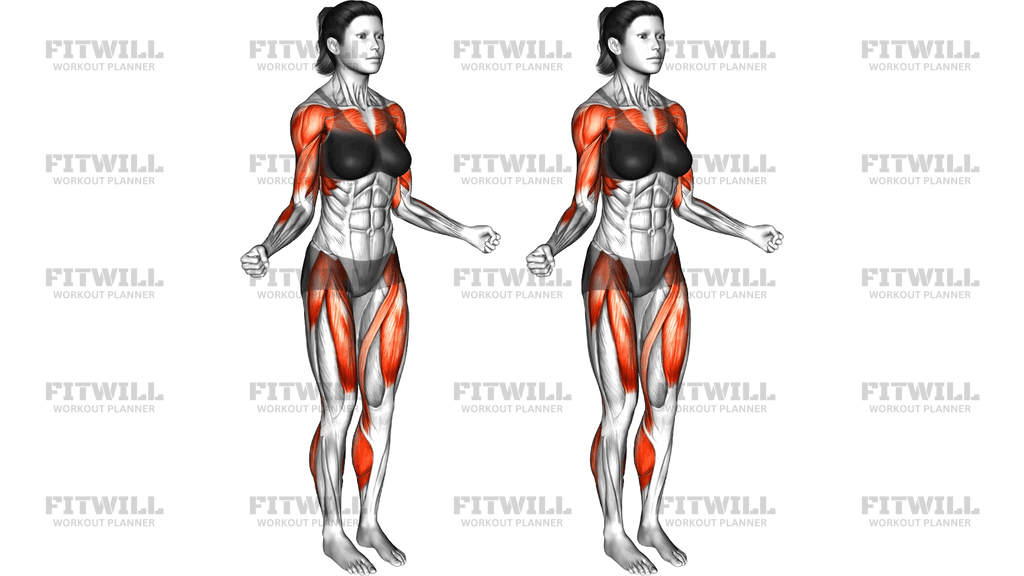
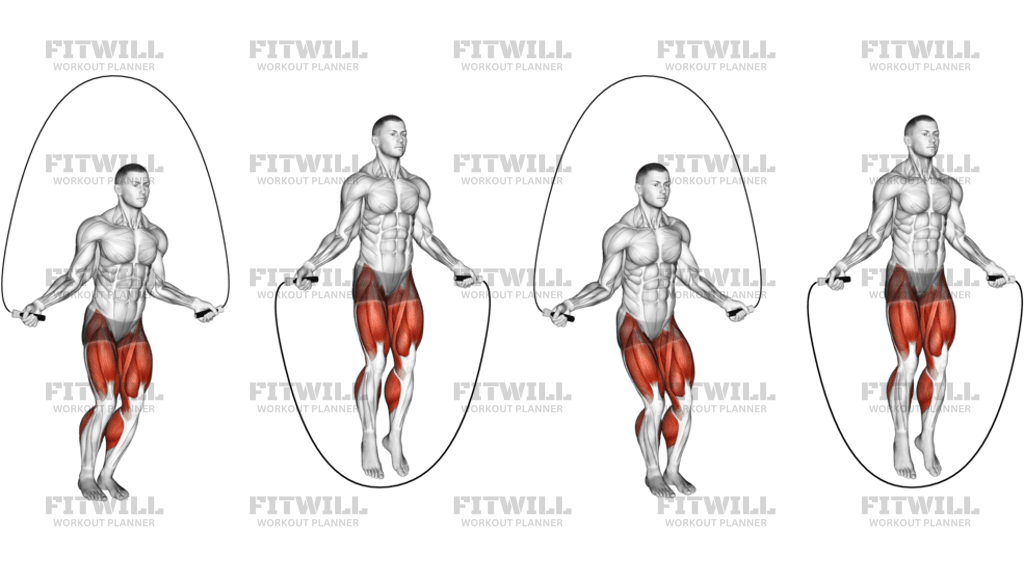
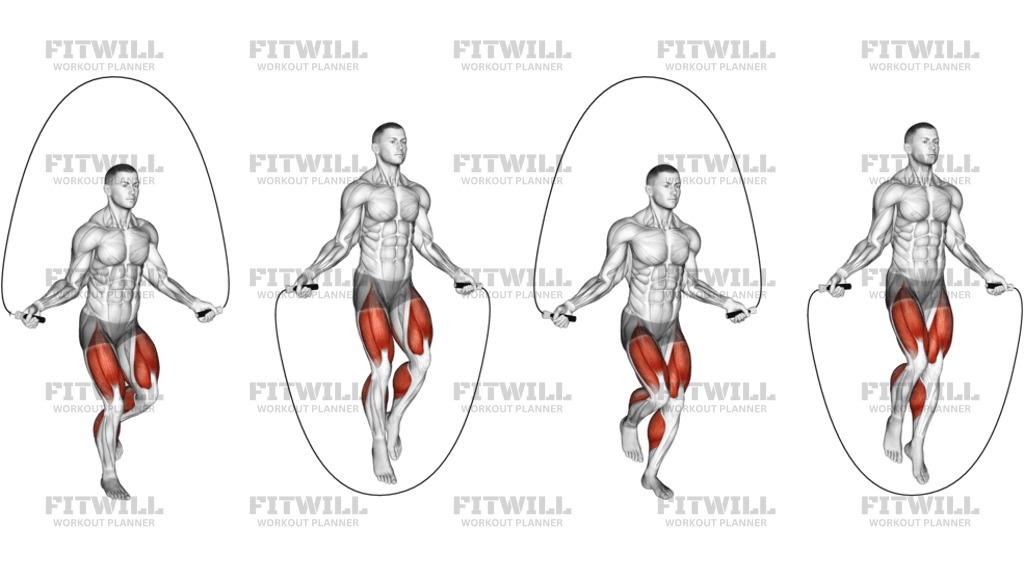
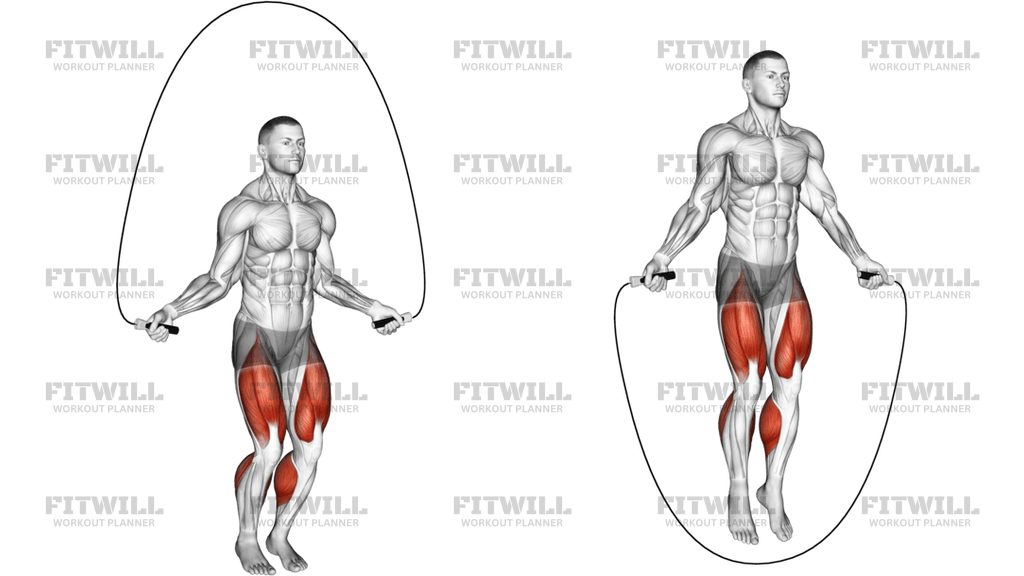
Double Under Jump Rope
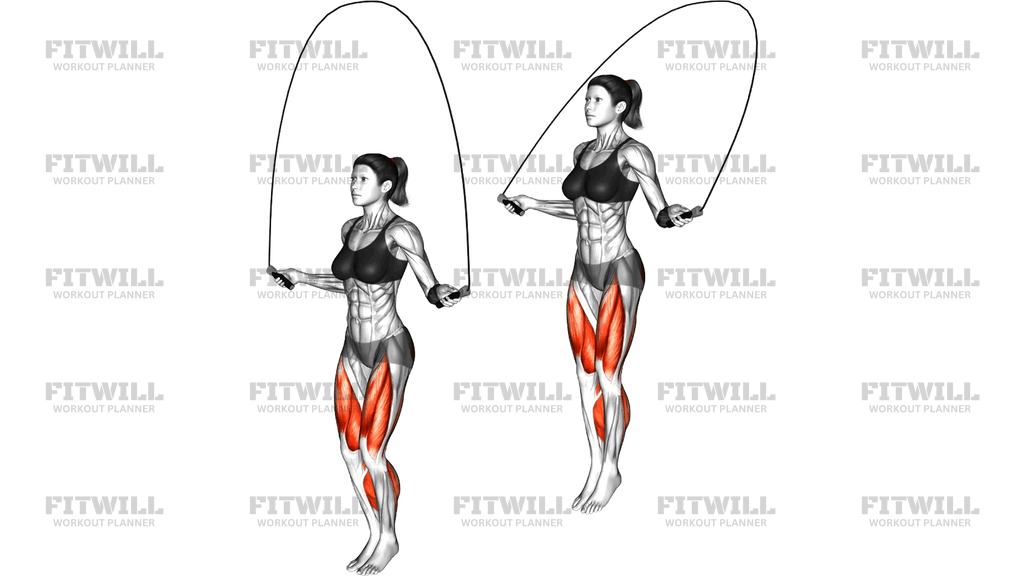
Double Under Jump Rope is a jump rope variation where the rope spins twice under your feet for every single jump. Instead of the one turn per hop you use in basic skipping, you jump higher, snap the rope around faster with your wrists, and land once while the rope completes two full rotations. It is one of the most recognizable conditioning skills in boxing gyms and CrossFit workouts, and it turns a simple rope into a serious test of timing, rhythm, and conditioning.
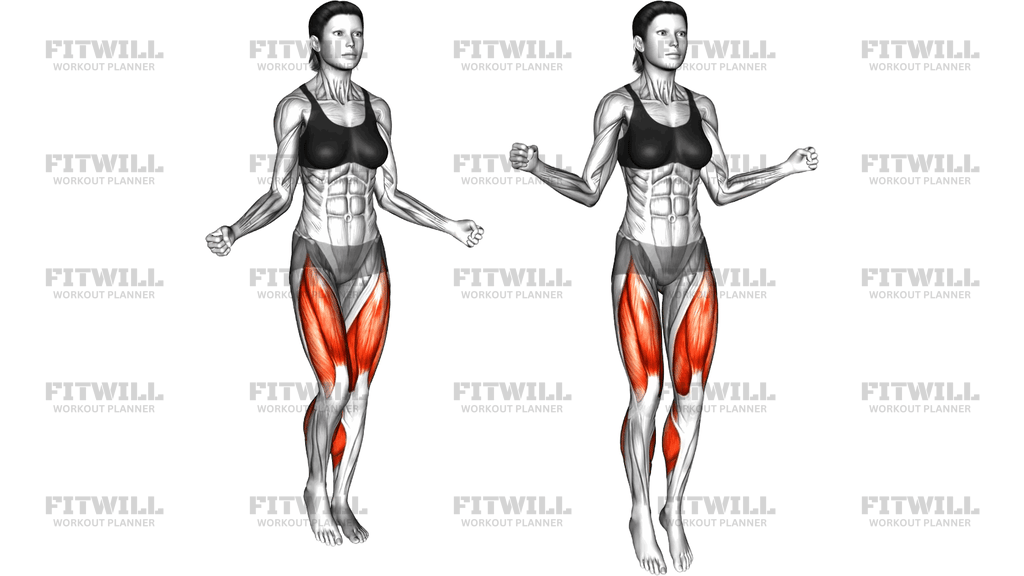
This movement demands far more from your body than regular skipping. Each jump is higher and more forceful, so your calves, quads, and glutes work hard to launch and absorb the landing, while your ankles stabilise every touchdown. Your forearms and shoulders drive the accelerated rope speed, and your core keeps your torso quiet and upright so the rope path stays clean. Because the pace is intense, your heart and lungs are challenged as much as your muscles.
Setup matters more than most people expect. Rope length is the first thing to get right: stand on the middle of the rope and the handles should reach roughly your armpits or lower chest. A rope that is too long drags on the floor and forces sloppy arm positions; too short and you will catch your feet on the second rotation. Jump on a surface with some give, such as a rubber gym floor or wooden surface, rather than concrete, and wear cushioned shoes.
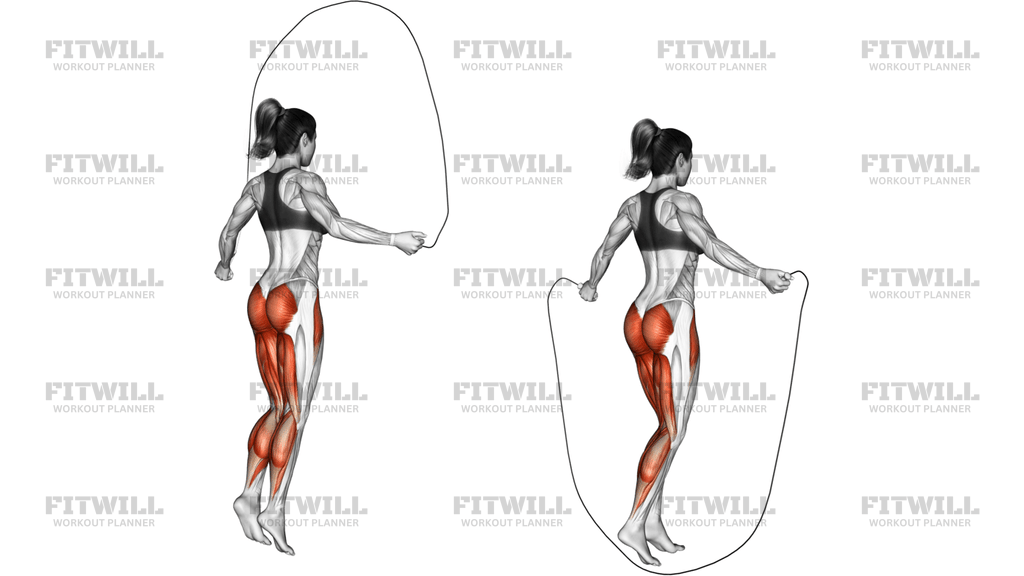
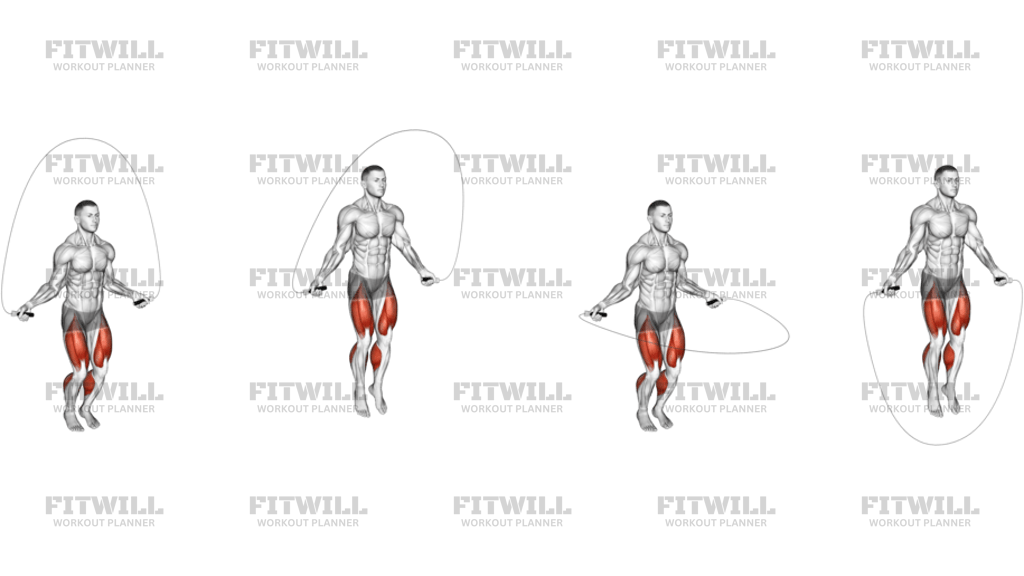
To execute the Double Under Jump Rope well, keep your elbows close to your ribs and let your wrists do the spinning rather than your whole arms. Jump a little higher than a normal skip, but stay relaxed and tall rather than tucking your knees. The timing comes from a fast, forceful wrist snap as you leave the floor, so the rope completes both rotations while you are airborne. Land softly on the balls of your feet with your knees slightly bent, ready to rebound straight into the next jump.
A common use case is interval conditioning: sets of 20 to 50 double unders alternated with rest or single unders, repeated for several rounds. Boxers use them to build foot speed and endurance, and general trainees use them as a compact, high-output warm-up or finisher. Beginners should build a solid base of single unders first, then mix in one or two double unders at a time rather than chasing long unbroken sets immediately.
From a safety standpoint, the main risks are cumulative impact and frustration-driven form breakdown. Keep sessions on forgiving surfaces, stop when your rhythm collapses and your jumps start turning into stiff-legged hops, and treat misses as part of learning rather than a reason to flail harder. Consistent, relaxed practice for a few minutes at a time builds the skill far faster than long, exhausted attempts.
[ Workout Log & Planner ]
Put your next workout in Fitwill
Keep your plan and training log ready when you are.


Instructions
- Stand on the middle of the jump rope and pull the handles up along your body; adjust the rope so the ends reach your armpits or lower chest.
- Take one handle in each hand with a relaxed grip, stand tall with your feet together or hip-width apart, and let your elbows sit just in front of your ribs.
- Start with a few single unders to set your rhythm, turning the rope with small wrist circles while staying on the balls of your feet.
- Brace your core lightly and keep your chest up and gaze forward, avoiding the urge to look down at your feet.
- For the double under, jump about two to three inches higher than a normal skip, keeping your legs mostly straight and toes pointed slightly down.
- As you leave the floor, snap the rope around twice with a fast, forceful wrist turn, keeping your elbows pinned at your sides so the rope path stays tight.
- Land softly on the balls of both feet with knees slightly bent, letting your calves and hips absorb the impact quietly.
- Exhale sharply on the jump and breathe in a steady rhythm as you continue; do not hold your breath during long sets.
- If you miss, stop the rope, reset your stance and grip, and restart with two or three single unders before attempting the next double under.
- Finish your set by slowing to single unders, then stop the rope completely and stretch your calves and wrists.
Tips & Tricks
- The most common mistake is making big circles with the whole arm to spin faster. Double unders are won at the wrists, so keep your elbows glued to your ribs and make the second rotation come from an extra wrist snap, not bigger shoulders movement.
- Tucking your knees toward your chest on the jump feels like it buys time, but it throws off your landing and slows your rebound. Jump higher through the ankles and calves instead while keeping your legs long.
- If you keep catching the rope on the second pass, your rope is probably too long or your hands are drifting forward. Shorten the rope and check that your hands stay slightly in front of your hip bones.
- A stiff-legged landing on your heels is a fast track to sore shins. Cue yourself to land on the balls of your feet and make your landings nearly silent.
- Do not jump early for the second rotation. The rope and your body must share one jump; if you find yourself double-hopping, slow your single under rhythm and make one higher jump with one faster wrist turn.
- Count in small chunks when learning: one single under, one double under, one single under. Long unbroken attempts early on just ingrain panic jumping.
- Wear shoes with some forefoot cushioning and avoid bare concrete sessions. The repeated higher jumps in the Double Under Jump Rope load your calves and shins more than regular skipping.
- If your shoulders burn before your legs do, your arms are doing the work. Drop to single unders, reset your elbow position, and rebuild the wrist-driven turn.
- A lightweight speed rope with ball-bearing handles makes double unders dramatically easier than a heavy beaded rope, especially while you are learning the timing.
Frequently Asked Questions
What muscles does the Double Under Jump Rope work?
Your calves, quads, and glutes power the jumps and absorb the landings, while your forearms, wrists, and shoulders spin the rope. Your core stays engaged throughout to keep your torso stable and the rope path clean.
How is a Double Under Jump Rope different from regular jump rope?
In regular skipping, the rope passes under your feet once per jump; in a double under, it passes twice. That means you jump higher and spin the rope much faster, which raises the intensity and the impact on your calves and ankles significantly.
Can beginners learn the Double Under Jump Rope?
Yes, but build a base first. Get comfortable with 50 or more consecutive single unders, then practice mixing single double unders between singles rather than attempting long unbroken sets on day one.
Why do I keep catching the rope on the second rotation?
The usual culprits are hands drifting away from your body, a rope that is too long, or turning with your arms instead of your wrists. Keep your elbows at your ribs, check the rope reaches armpit height, and make the spin a sharp wrist snap.
How high should I jump for the Double Under Jump Rope?
Only about two to three inches higher than a normal skip. Taller jumps waste energy and lead to heavy landings; the extra clearance comes from rope speed, not air time.
What can I use instead of double unders if I cannot do them yet?
Fast-paced single unders, high-knee skipping, or a mix of single unders with short sprint intervals give a similar conditioning effect while you develop the timing.
How long should my jump rope be for double unders?
Stand on the middle of the rope and pull the handles up your body; they should reach your armpits or slightly below. Slightly shorter ropes actually spin faster, so trim excess length once you are consistent.
Is the Double Under Jump Rope bad for my knees or shins?
Done with soft landings on the balls of your feet and a forgiving surface, it is generally well tolerated, though the impact is higher than regular skipping. If your shins or knees complain, reduce volume, check your landing mechanics, and progress gradually.
How many double unders should I aim for in a workout?
A practical target is short sets of 10 to 20 reps repeated across several rounds, building toward sets of 30 to 50 unbroken. Quality and rhythm matter more than total volume, especially early on.