Dynamic Wall Plank
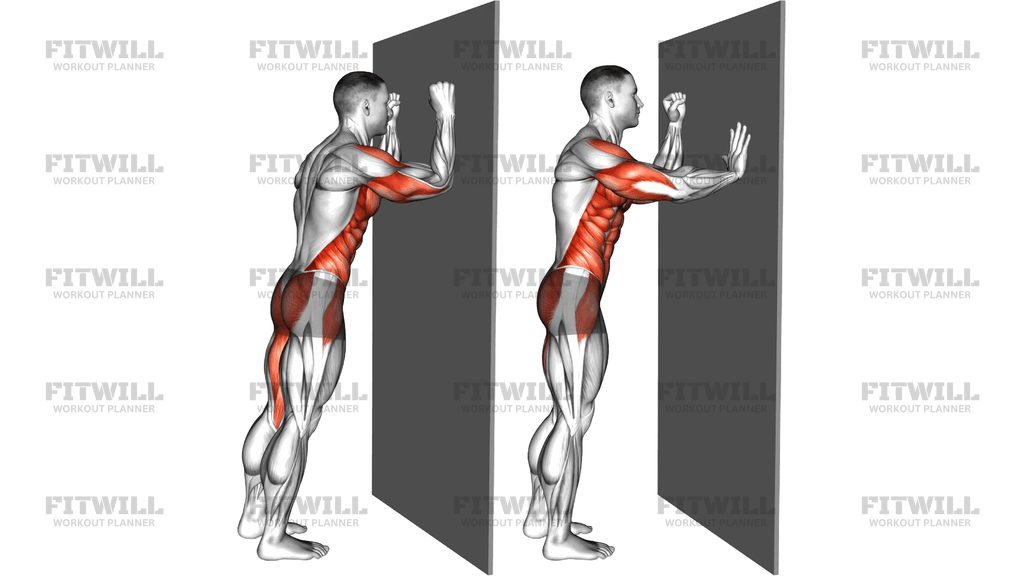
The Dynamic Wall Plank is a standing push movement performed against a flat wall. You place your hands on the wall at roughly chest to face height, walk your feet back until your body forms a straight, inclined line, and then repeatedly bend and straighten your elbows so your torso glides toward and away from the wall. Unlike a static wall hold, the dynamic version keeps you moving through the full range, turning a simple plank-style support into a controlled pressing motion.
This is one of the most approachable upper-body pushing exercises you can do. Because the wall takes a large share of your body weight, the load is far lighter than a floor push-up, which makes it a natural starting point if you are new to training, returning after a layoff, or working back from an injury and need to reintroduce pressing without excessive strain on the wrists, elbows, or shoulders. It is also a useful warm-up for heavier pressing days and a practical option when you have no equipment and only a clear patch of wall available.
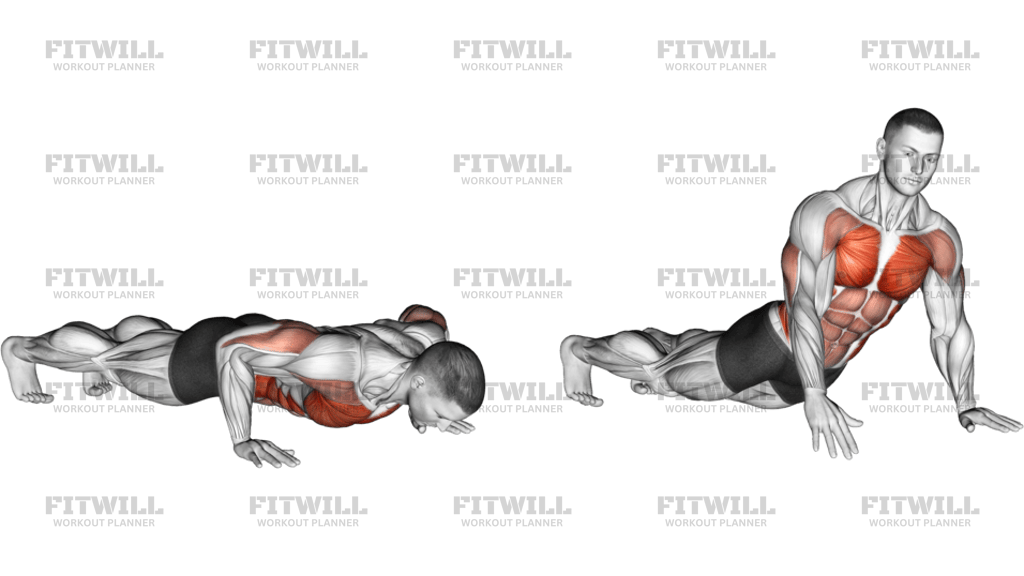
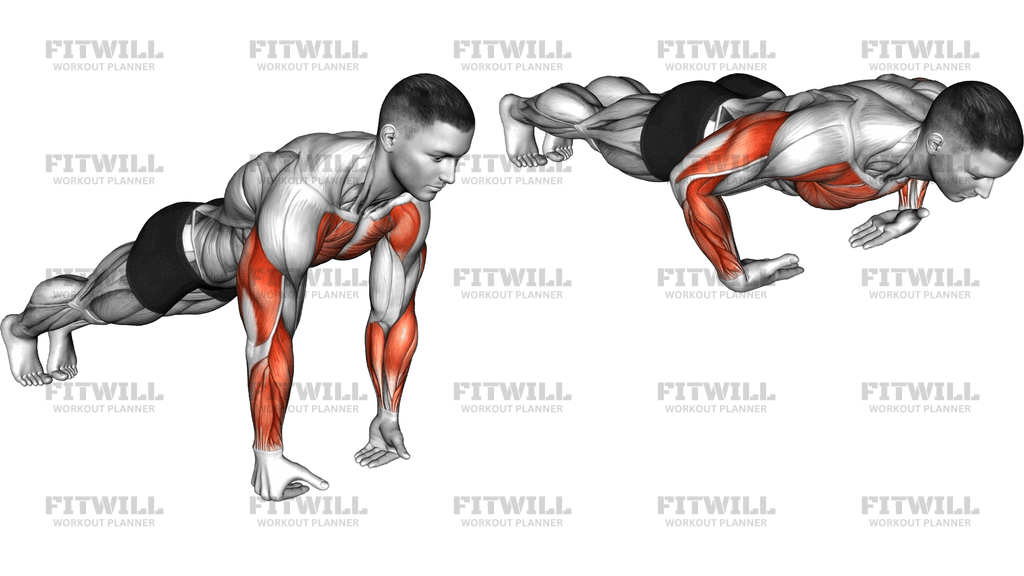
The movement primarily works the chest, with strong assistance from the triceps as they straighten the elbows and the front shoulders as they drive the arms forward. Your core, glutes, and legs work isometrically the entire time to keep your body in one rigid line from head to heels, which is where the plank character of the exercise comes in. The further you walk your feet from the wall and the lower you place your hands, the more demanding the press becomes.
Setup matters more than it looks. If your feet are too close to the wall, the movement becomes trivially easy and your torso stays too upright; if your body sags at the hips or your heels lift, you lose the straight-line plank position and shift stress into your lower back. Hands should be placed at chest height and about shoulder-width apart, with fingers spread so the press feels stable through the palms.
To execute it well, think of the wall version of a push-up rather than a casual lean. Lower with control until your face and chest approach the wall, keep the elbows tracking somewhat inward rather than flaring wide, then press the wall away until the arms are fully extended without locking them harshly. Breathe in as you come in toward the wall and exhale as you press out. The torso should travel as one unit, meaning your head, chest, and hips arrive together rather than the neck leading the way.
In practice, the Dynamic Wall Plank fits well into beginner full-body routines, rehab-friendly pressing progressions, desk-break mobility and activation sessions, and as high-rep finisher work for the arms and shoulders. Start with two to three sets of ten to fifteen controlled repetitions, and progress by stepping slightly further from the wall once the current distance feels smooth and comfortable.
[ Workout Log & Planner ]
Put your next workout in Fitwill
Keep your plan and training log ready when you are.


Instructions
- Stand facing a clear, flat wall and place both palms on it at chest height, slightly wider than shoulder-width apart with fingers spread.
- Walk your feet backward until your arms are fully extended and your body forms one straight line from head to heels, angled toward the wall.
- Set your feet about hip-width apart, press the balls of your feet into the floor, and squeeze your glutes and abs so your hips do not sag.
- Look slightly down and keep your neck neutral, in line with the rest of your spine rather than poking forward toward the wall.
- Inhale, then bend your elbows slowly and let your whole torso lean in as one unit until your face and chest come close to the wall.
- Keep the elbows at roughly a 45-degree angle to your torso instead of flaring straight out to the sides.
- Exhale and press through your palms to straighten the arms, driving the wall away until the elbows are extended but not aggressively locked.
- Pause briefly at the top with the arms extended and the plank line intact, then repeat for the desired number of repetitions.
- Breathe in on the way in toward the wall and out on every press back to the extended position.
- When finished, step one foot forward toward the wall, bring your hands down, and stand upright before turning away.
Tips & Tricks
- The most common mistake is letting the hips fall backward or sag downward as you fatigue, which breaks the plank line and dumps stress into the lower back; reset your glutes and abs between reps if you feel your midsection give way.
- Do not let your head lead the movement. If your nose touches the wall while your chest is still inches away, your neck is doing the work; cue yourself to bring the sternum toward the wall.
- If your wrists complain during the press, spread your fingers wider and grip the wall actively, or lower your hands a few inches to shorten the lever slightly.
- Elbows flaring out to a straight line with the shoulders turns this into a shoulder-dominant grind; angle them toward your ribs at about 45 degrees to keep the chest involved.
- Chalk or a slightly textured wall helps if your palms slide, especially on smooth painted surfaces.
- To make the exercise harder, walk your feet one small step further back each session; the steeper the lean, the more body weight your arms have to handle.
- To make it easier, bring your feet closer and place your hands a little higher on the wall so the press happens through a shorter range.
- Move deliberately rather than quickly. Bouncing off the wall at the bottom hides weak points in the triceps and robs you of the control this exercise is meant to build.
- Check your heels before your first rep. Heels drifting off the floor usually means you stood too far from the wall for your current strength level.
Frequently Asked Questions
Which muscles does the Dynamic Wall Plank work?
The chest is the primary mover, supported heavily by the triceps and front shoulders. Your abs, glutes, and legs work continuously to hold the straight, inclined plank position against the wall.
Is the Dynamic Wall Plank good for beginners who cannot do push-ups yet?
Yes, it is one of the best entry points to pressing because the wall supports most of your body weight. Once you can complete sets comfortably, step your feet further back or progress toward incline and floor push-ups.
How far should my feet be from the wall during the Dynamic Wall Plank?
Far enough that your arms are fully extended at the start and your body forms a straight diagonal line. The greater the distance and the steeper the lean, the harder the exercise becomes.
Why do my lower back and hips ache after doing the Dynamic Wall Plank?
This usually means your hips are sagging or your torso is breaking at the waist as you press. Brace your abs, squeeze your glutes, and shorten the distance to the wall until you can hold a rigid line for every rep.
How many repetitions of the Dynamic Wall Plank should I do?
Start with two to three sets of ten to fifteen controlled repetitions. As that becomes easy, add reps first, then increase difficulty by stepping further from the wall rather than adding endless volume.
Can I use the Dynamic Wall Plank as a warm-up before bench pressing?
Yes, it gently loads the chest, triceps, and shoulders and activates the stabilizers of the shoulder blade without fatiguing you. One or two easy sets of ten make a useful primer before heavier pressing.
What can I substitute if I do not have a suitable wall?
The same movement pattern works with hands on a sturdy countertop, table edge, or high bench. Any stable, waist-to-chest-height surface lets you perform the identical inclined press.
Should my head touch the wall at the bottom of the Dynamic Wall Plank?
Your face and chest should approach the wall together, but your nose should not be the first thing to arrive. If your head leads, you are craning the neck; focus on bringing your sternum toward the wall instead.
Is the Dynamic Wall Plank safe if I have wrist pain with push-ups?
It is often tolerated better than floor push-ups because the load is lighter and the wrist angle is more neutral. Spread your fingers, press actively through the palm, and stop if sharp discomfort appears.