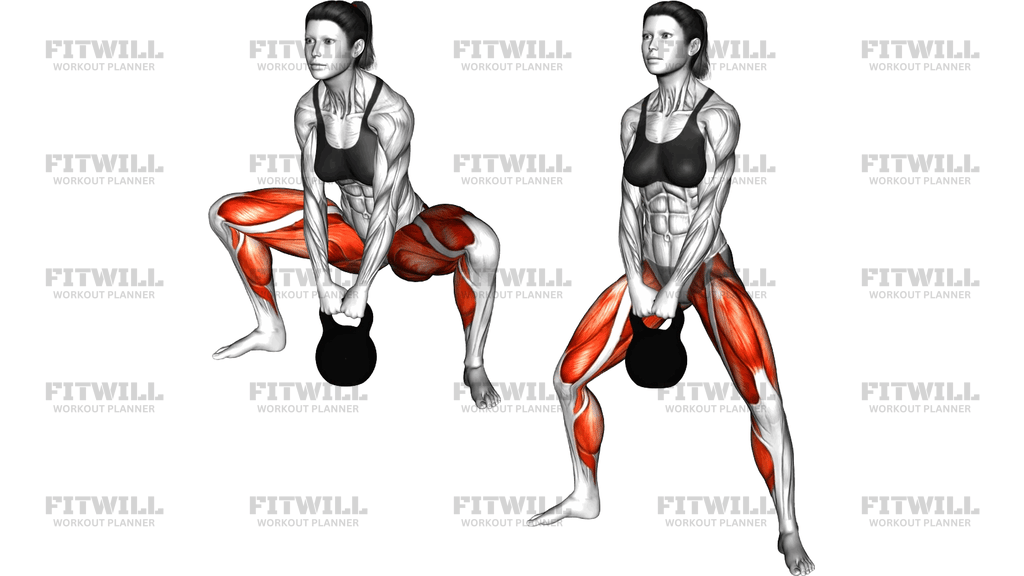
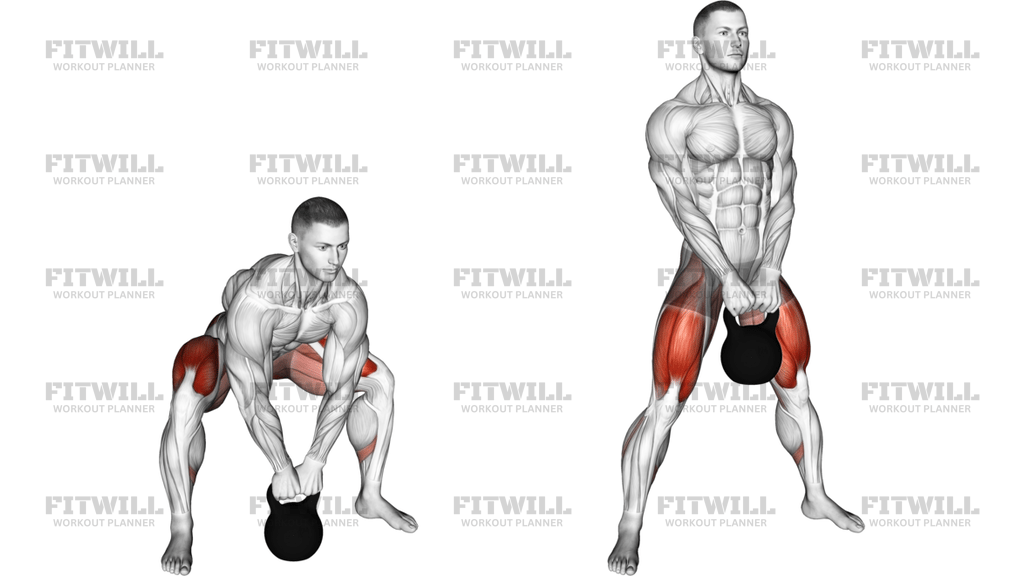
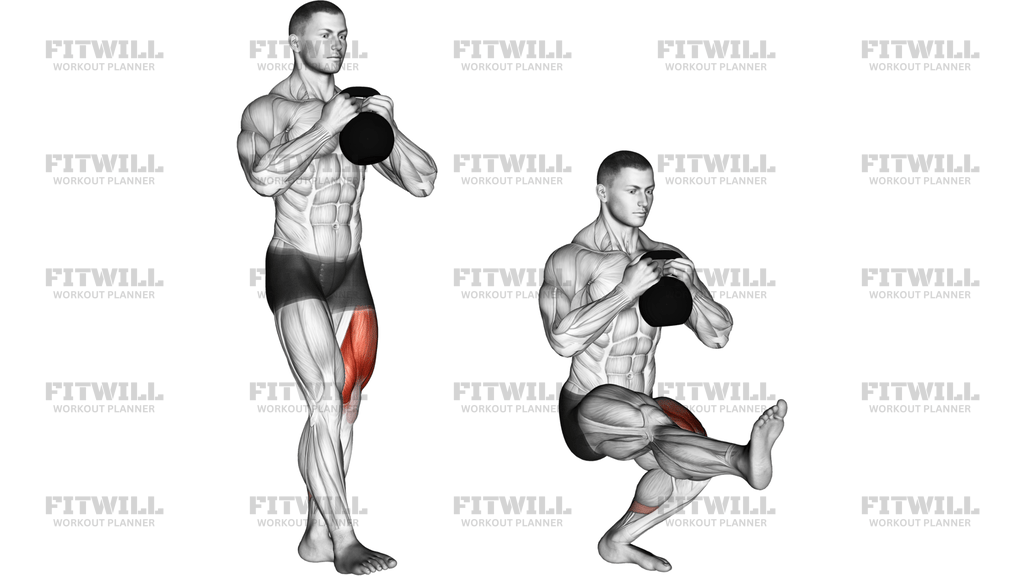
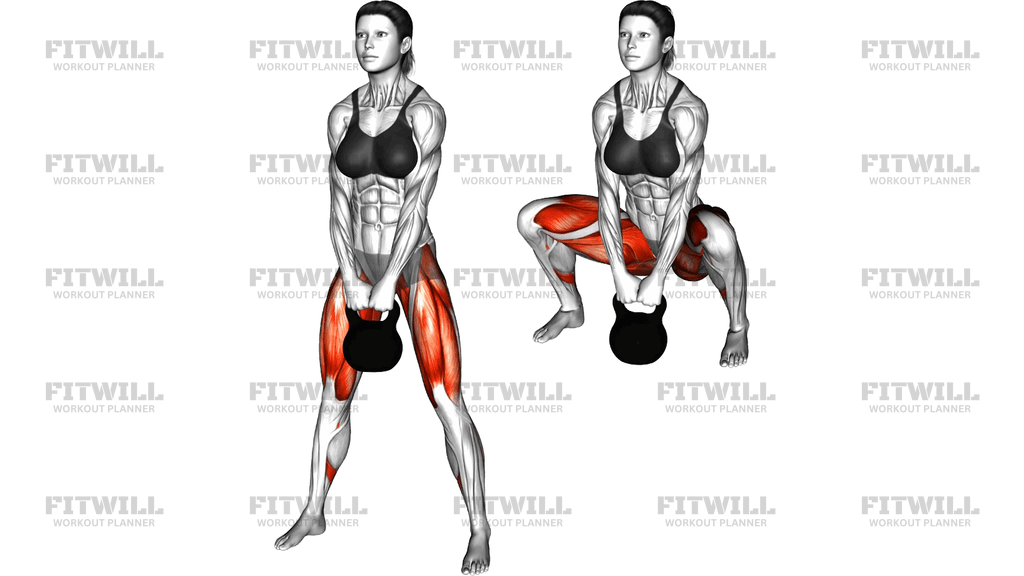
Kettlebell Split Squat Front Foot Elevanted
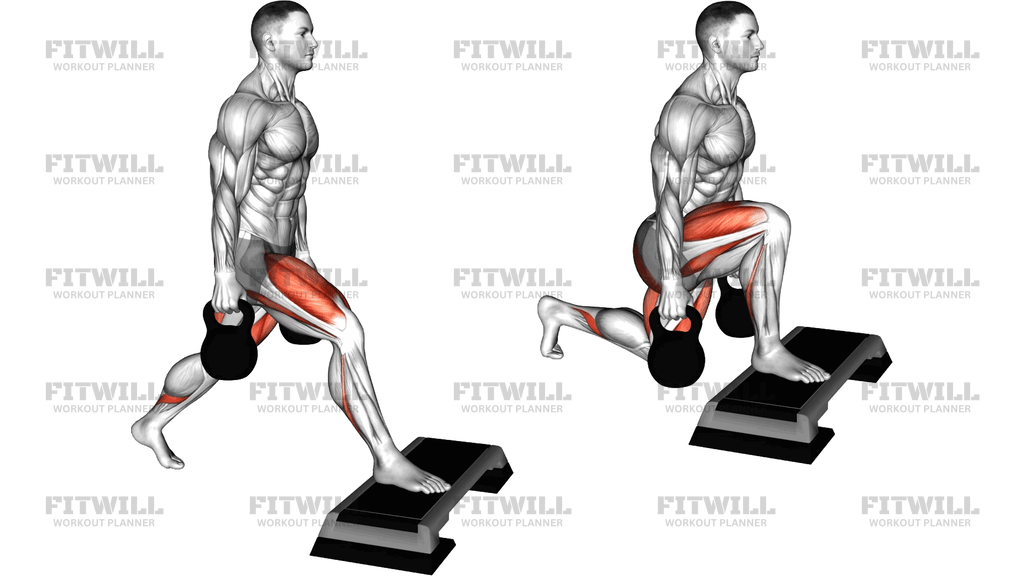
The Kettlebell Split Squat Front Foot Elevated is a single-leg strength exercise where you hold a kettlebell in each hand at your sides, place your front foot on a low step platform, and lower your rear knee straight down toward the floor. Elevating the front foot increases the range of motion at the front knee and hip, which shifts more work into the quadriceps and demands greater mobility through the ankle and hip than a standard split squat.
This variation suits lifters who want to build leg strength and size without heavy barbell loading, as well as anyone addressing side-to-side imbalances. Because each leg works independently, the weaker side cannot hide behind the stronger one. It is a common choice in lower-body hypertrophy programs, in rehab-informed strength work for the knee, and for athletes who need unilateral strength for sprinting, lunging, and changing direction.
The main targets are the quadriceps of the front leg, especially as you descend into the deeper range the elevation creates. The glutes and hamstrings of the front leg drive you back up, while the hip flexors and glute stabilizers of the rear leg control the back-side position. Holding kettlebells in both hands keeps the load low and stable, so your trunk has to stay braced without support and your grip and upper back work quietly the whole time.
Setup matters more here than in most squat variations. The height of the step, the length of your split stance, and the position of your torso all determine where the stress lands. A step of roughly 3 to 5 inches suits most people; going higher demands more ankle mobility and can pull you forward onto the ball of the front foot. Your stance should be long enough that the front shin stays roughly vertical at the bottom and the rear knee lands slightly behind your hip.
To perform it well, keep your torso tall, hinge forward only a few degrees, and lower under control until the rear knee touches or nearly touches the floor. Push through the whole front foot, with a slight bias toward the heel and midfoot, and drive up without letting the front knee cave inward. If your torso pitches forward or your front heel lifts, shorten the range or lower the step before adding load.
In practice, this exercise sits well as a secondary lower-body lift after your main squat or hinge work, typically for 2 to 4 sets of 6 to 12 reps per leg. Start with light kettlebells or even body weight while you learn the path, and progress the load only when you can keep the front knee tracking over the foot and your balance steady on every rep.
[ Workout Log & Planner ]
Put your next workout in Fitwill
Keep your plan and training log ready when you are.


Instructions
- Place a low step platform on the floor and stand facing it, holding a kettlebell in each hand with your arms fully extended at your sides.
- Place one foot flat on the center of the step and step the other foot back into a split stance, roughly two to three feet behind the platform, with the rear leg resting on the ball of the foot.
- Square your hips to the front, lift your chest, and set your eyes on a fixed point ahead of you.
- Brace your core and squeeze the handles so the kettlebells hang still at arm's length without swinging.
- Bend the front knee and lower your hips straight down until the rear knee is just above or lightly touching the floor, keeping the front shin close to vertical.
- Pause briefly at the bottom without bouncing the rear knee off the floor.
- Drive through the front foot and push back up until the front leg is nearly straight, keeping the rear foot where it is.
- Exhale as you rise and inhale as you lower, keeping the breathing rhythm steady throughout the set.
- Complete all reps on one side, then set the kettlebells down, reset your stance, and repeat on the other leg.
Tips & Tricks
- If the front heel lifts off the step at the bottom, the elevation is too high or your stance is too short; drop to a lower step or lengthen the split stance before adding weight.
- Watch that the front knee tracks in line with the second toe. If it drifts inward as you fatigue, cue yourself to spread the floor with the front foot and reduce the load.
- Keep the kettlebells from pulling you forward or backward by squeezing your shoulder blades gently down and back; a swinging bell on one side twists the torso and unloads the front leg unevenly.
- The most common mistake is making this a lunge by stepping through on each rep. The front foot stays planted on the platform for the entire set, so resist the urge to re-step between reps.
- Do not let the rear knee slam into the floor. Lightly tapping it reinforces control, while crashing down means the descent is too fast and the front leg is being skipped over.
- If your balance wobbles on the elevated front foot, widen your base slightly by moving the rear foot a little to the side rather than straight back.
- Choose a kettlebell weight you can hold for your entire working set with a secure grip. If your grip gives out before your legs, switch to one bell held goblet-style or reduce the weight.
- Slightly leaning the torso over the front leg is acceptable and biases the glutes more, but if you find yourself folding well past a small hinge, lighten the load and rebuild the tall-torso position.
Frequently Asked Questions
Which muscles does the Kettlebell Split Squat Front Foot Elevated work the most?
The quadriceps of the front leg do most of the work, since the elevated front foot deepens the knee bend. The glutes and hamstrings of the front leg assist on the way up, and the rear-leg hip flexors plus your core stabilize throughout.
How high should the front foot be elevated for this exercise?
A step of about 3 to 5 inches works for most lifters. The right height is one where your whole front foot stays flat on the platform at the bottom; if the heel lifts, the step is too high for your current ankle mobility.
Is the Kettlebell Split Squat Front Foot Elevated suitable for beginners?
Yes, as long as beginners start with body weight or very light kettlebells to learn the movement path. The elevated front foot adds a balance and mobility demand, so it is usually better to master the floor-level split squat first.
Why hold a kettlebell in each hand instead of one?
Two bells, one on each side, keep the load balanced and let your torso stay square to the front. A single bell creates uneven loading, which can be a useful core challenge but makes the leg work harder to judge.
How far back should my rear foot be positioned?
Far enough that your front shin stays close to vertical and your rear knee can descend just behind your hip. A stance that is too short forces the front knee past the toes and reduces glute involvement.
What is the most common mistake with this exercise?
Rushing the descent and bouncing the rear knee off the floor, which lets momentum replace muscular control. Lower slowly, pause briefly at the bottom, and drive up through the front foot.
Can I substitute dumbbells for the kettlebells?
Yes, dumbbells held at the sides are a straightforward swap. The kettlebell handles simply concentrate the weight below the hands, which many people find comfortable, but the leg mechanics are identical.
How many sets and reps should I do?
Two to four sets of 6 to 12 reps per leg is a practical range. Because balance is a limiting factor early on, slightly higher reps with moderate weight often produce better control than maximal loading.
Is it safe if I have knee discomfort during the movement?
Sharp pain is a signal to stop, while mild effort-based discomfort often improves when you reduce the step height, shorten the range, and slow the tempo. Warm up thoroughly and progress load gradually, and consult a professional if discomfort persists.
Should I do both legs in the same set or one leg at a time?
Finish all reps on one leg, then rest briefly and switch. Working one side to completion makes it easier to match volume between legs and keeps you from rushing the weaker side.