Weighted Plate Lying Reach Over
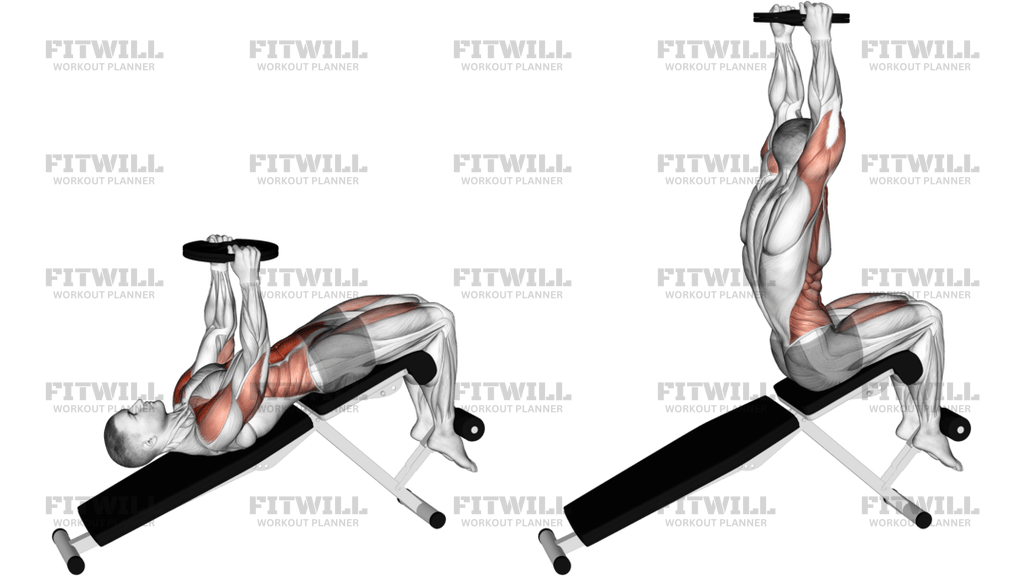
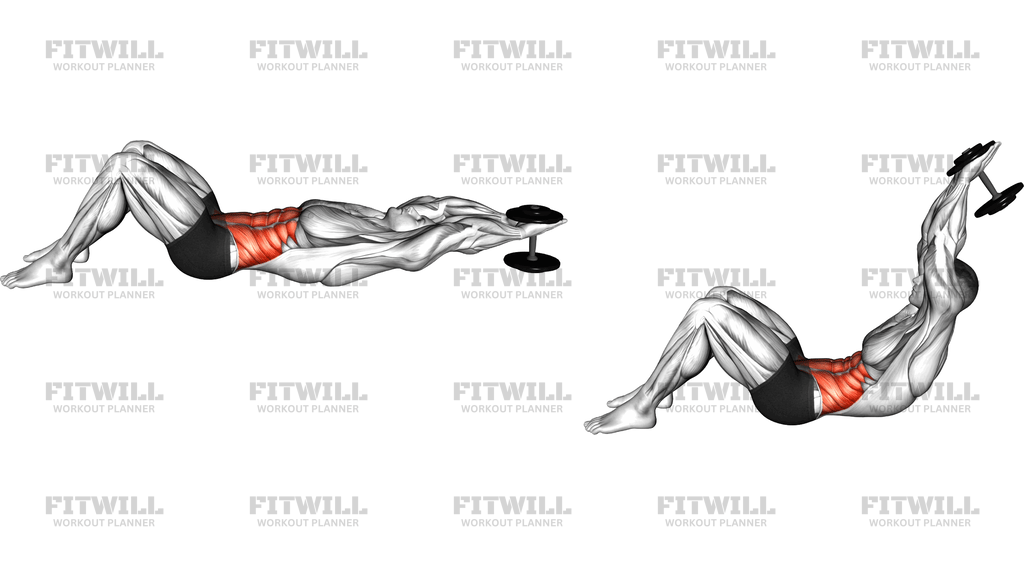
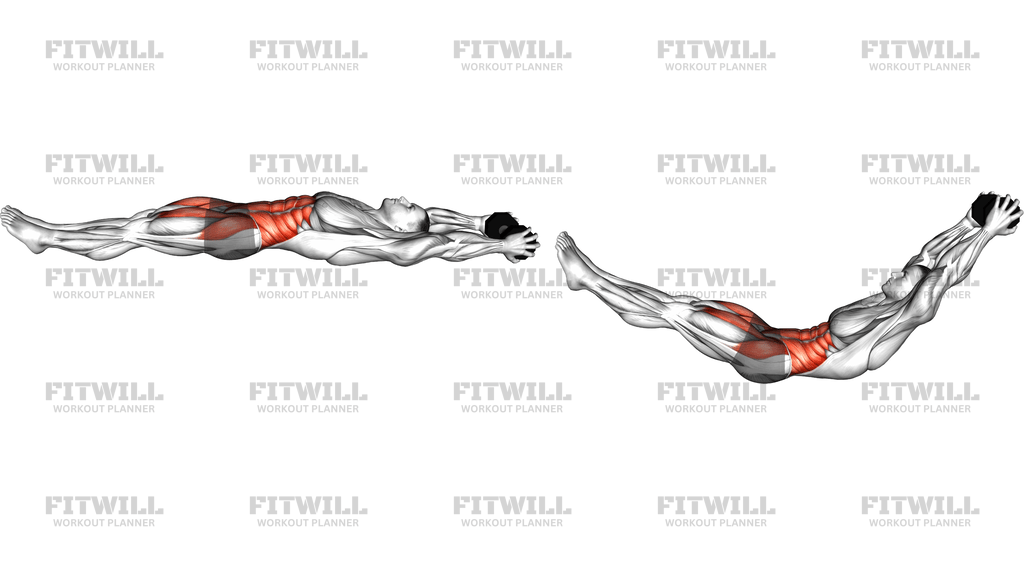
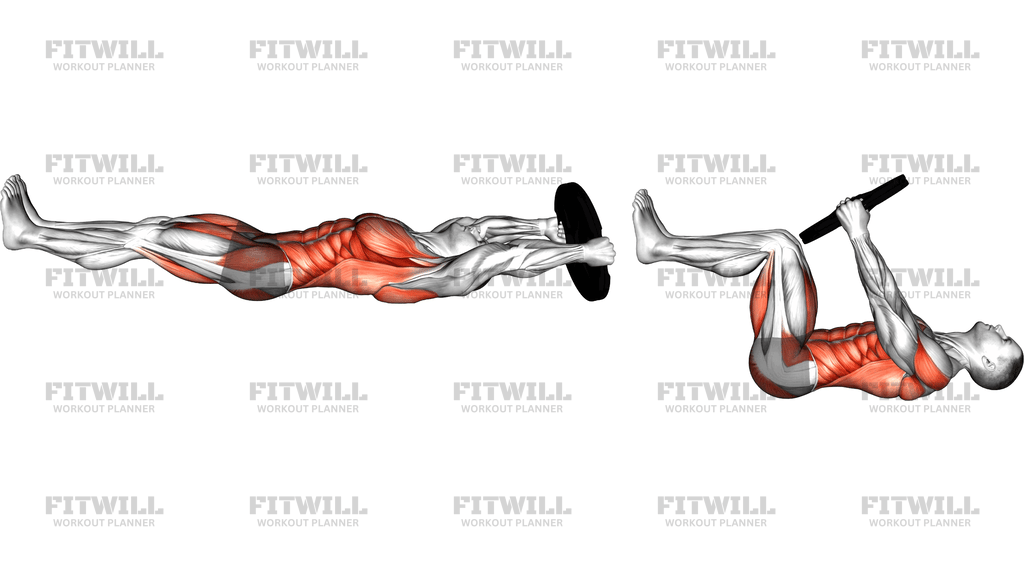
The Weighted Plate Lying Reach Over is a floor-based core exercise where you lie flat on your back, hold a weight plate in both hands, and pass it from behind your head to a position over your knees while drawing your legs in. The start position has your arms extended overhead and legs straight along the floor; the finish brings your ribs toward your hips as the plate travels in a long arc over your face. It is essentially a full-body crunch with an added load at the longest possible lever arm, which is exactly what makes it harder than a standard crunch.
This movement trains the rectus abdominis and lower abs through a large range of motion, while the lats and front shoulders work to control the plate overhead. Bending the knees toward the chest also recruits the hip flexors, and keeping your lower back pressed into the floor forces the deep core to stay engaged the whole time. Because the weight sits far from your torso at the start, the abs have to resist extension before they ever curl you up, so you get an anti-extension challenge and a spinal flexion challenge in one rep.
Setup matters a lot here. Lying fully on the floor rather than a bench gives you a clear reference point: if your lower back arches and lifts off the ground, you know the load has beaten your core. Choose a plate you can press overhead with straight arms without shrugging, usually a 5 to 15 kg plate depending on experience. If your arms drop or your back arches as you reach the plate behind your head, the plate is too heavy and the exercise stops training your abs.
This drill suits lifters who already handle bodyweight crunches and leg raises comfortably and want a loaded option, as well as anyone building strength for movements that require strong hollow-body positions. Move slowly, exhale as the plate passes over your face, and keep the rep quality high rather than chasing speed. Anyone with lower back discomfort should start with a lighter plate or a reduced overhead range and stop if pain, not effort, is the limiting factor.
[ Workout Log & Planner ]
Put your next workout in Fitwill
Keep your plan and training log ready when you are.


Instructions
- Lie flat on your back on an exercise mat with your legs straight and your feet together.
- Hold a weight plate by its edges with both hands at your chest, then press it straight up so your arms are vertical and your elbows are fully extended.
- Keeping your arms locked out, slowly lower the plate behind your head until your upper arms are beside your ears and the plate is just above the floor.
- Brace your abs and press your lower back firmly into the floor before starting the rep.
- Exhale and curl your ribcage toward your hips while simultaneously bending your knees in toward your chest.
- Let the plate travel in a smooth arc over your face and finish with your arms reaching toward or past your knees, upper back slightly lifted off the floor.
- Pause briefly at the top with your abs fully shortened and your shins pulled in.
- Inhale and reverse the path with control: extend your legs back to the floor as the plate returns overhead to the start position behind your head.
- Reset your lower back contact and brace again before performing the next repetition.
- Keep your neck relaxed and your gaze roughly toward your knees or the ceiling rather than jamming your chin to your chest.
Tips & Tricks
- The most common failure point is the lower back lifting off the floor when the legs return and the plate goes overhead. Slow that return phase down or move to a lighter plate.
- Keep your elbows locked throughout. Bending them as the plate passes over your face turns it into a triceps and shoulder exercise and shortens the lever your abs need to handle.
- Do not let the plate crash down behind your head. Lower it until it hovers just above the floor so your lats and abs stay under tension the entire set.
- If you feel it mostly in your hip flexors or the front of your thighs, focus on curling your ribs toward your pelvis rather than just pulling your knees in.
- Start with the plate overhead only as far as you can keep your ribs down. Shortening the overhead reach is a better fix than arching your back to get extra range.
- Breathe out sharply as the plate passes over your face; this naturally helps your abs shorten and protects against holding your breath through the hardest part.
- Keep your feet and knees together through the tuck. Letting the legs drift apart usually means the core is fatiguing and the hip flexors are taking over.
- If your shoulders feel pinched in the overhead position, rotate the plate to a comfortable angle or use a slightly smaller plate so your wrists can stay neutral.
Frequently Asked Questions
What muscles does the Weighted Plate Lying Reach Over work?
The primary muscle is the rectus abdominis, with strong involvement of the lower abs as you tuck your knees. The lats and front shoulders move and control the plate, and the hip flexors assist as your legs come in.
How heavy should the weight plate be for the Weighted Plate Lying Reach Over?
Pick a plate you can press to lockout and hold overhead without your lower back arching, often 5 to 15 kg. If your back lifts off the floor during the reach or return, drop the weight before adding reps.
Can beginners do the Weighted Plate Lying Reach Over?
Beginners can, but most should first master an unweighted version or use a very light plate. If you cannot keep your lower back on the floor with arms overhead and legs straight, build that base before adding load.
Why do my lower hips and back lift off the floor during this exercise?
That happens when the combined lever of the plate behind your head and your straight legs exceeds what your core can brace against. Reduce the plate weight, shorten the overhead reach, or bend your knees sooner until you can keep contact.
What can I use instead of a weight plate for the Weighted Plate Lying Reach Over?
A single dumbbell held by one end, a small medicine ball, or a kettlebell held by the horns works with the same overhead-to-knees path. Choose something you can grip securely as it passes over your face.
Should my upper back leave the floor during the reach over?
Yes, a modest lift as you curl the plate toward your knees is normal and shows the abs are shortening. The only part that must stay down is your lower back and pelvis.
How is the Weighted Plate Lying Reach Over different from a regular crunch?
A regular crunch only flexes the spine from a fixed arm and leg position. This version adds a long overhead lever, a moving weight, and a simultaneous knee tuck, so your abs work through a much larger range under greater load.
Is it safe to pass a plate over my face during this exercise?
It is safe if your elbows stay locked, the plate is held firmly by both hands, and you keep the arc smooth and controlled. If your grip or arms fatigue, rack the plate before your form slips rather than pushing through.
How many reps and sets of the Weighted Plate Lying Reach Over should I do?
Two to four sets of 8 to 15 slow, controlled reps works well as a core finisher. Because form degrades quickly under fatigue, end the set as soon as your lower back starts to lift or your elbows bend.