Cable Upright Row (Sz Bar)
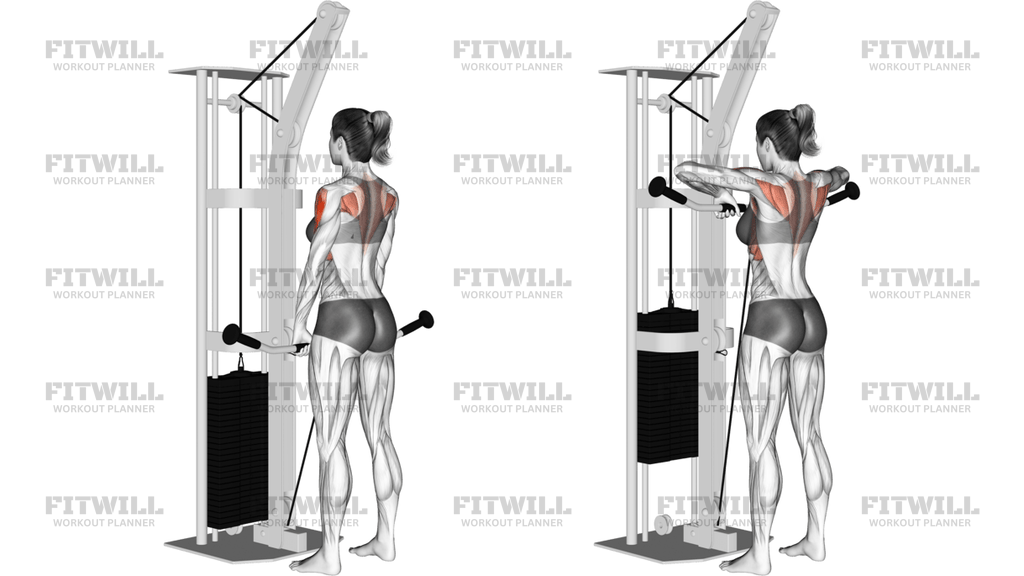
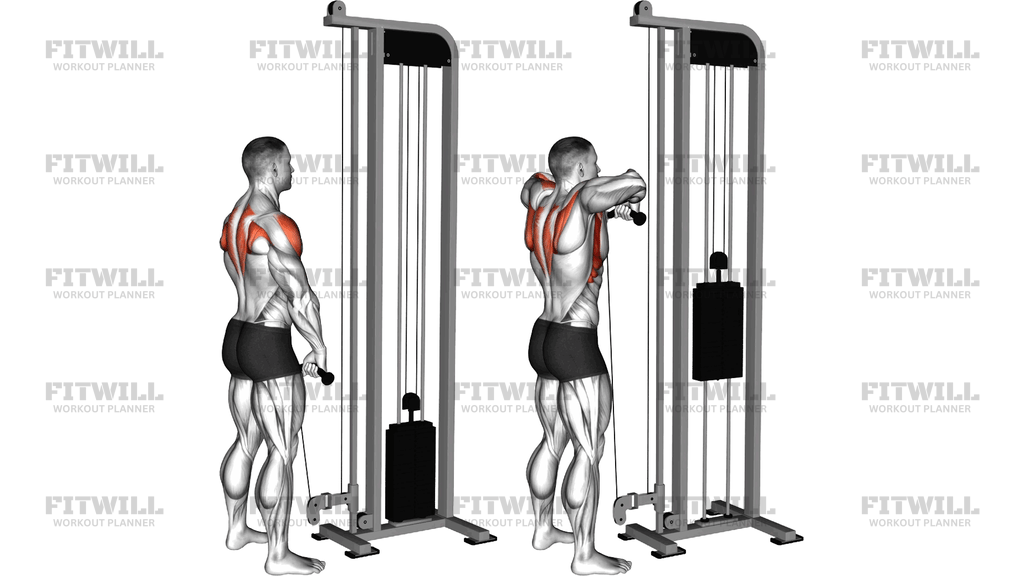
The Cable Upright Row (Sz Bar) is a standing pulling exercise performed on a low pulley cable machine using a short straight bar. You grip the bar with an overhand grip at roughly shoulder width, let the cable run down in front of your body, and pull the bar upward toward your upper chest while your elbows travel up and out to the sides. Because the cable provides smooth, continuous tension from the bottom of the rep to the top, this version feels noticeably different from a barbell upright row, where the resistance dips at certain points of the arc.
This movement primarily targets the upper trapezius and the side portion of the shoulders, with the rhomboids and middle traps assisting as the shoulder blades elevate and retract at the top. The biceps and forearms work hard as well, since you are gripping and flexing the elbows against steady cable resistance. For people who want to build thickness across the top of the shoulders and upper back without hammering the lower back with heavy barbell work, it is a practical choice.
The cable setup matters more than it might seem. Standing facing a low pulley with the cable angled slightly forward changes the resistance curve compared to free weights: the pull is easiest at the very bottom and most demanding as the bar approaches your chest, which is exactly where the traps and side delts do their best work. The cable also pulls you slightly forward, so you need a braced torso and a stable stance to stay upright rather than leaning back to cheat the weight up.
Execution is simple but easy to get wrong. The bar should travel close to your body in a vertical line, and your elbows should stay above your wrists throughout the pull. The top position ends around upper-chest or clavicle height — pulling higher than that shifts most of the stress onto the upper traps and forces the wrists into heavy internal rotation, which is where most discomfort with upright rows comes from. A controlled two-count lowering phase keeps tension on the muscles and stops the weight stack from jerking.
You will see this exercise used in shoulder-focused hypertrophy programs, as a finisher after pressing work, and by lifters who find barbell upright rows irritating but tolerate the cable version better thanks to the smoother path and lighter, more manageable loads. Keep the weight moderate, own every rep, and treat it as a precision upper-body pull rather than an ego lift.
[ Workout Log & Planner ]
Put your next workout in Fitwill
Keep your plan and training log ready when you are.


Instructions
- Attach a short straight bar to the low pulley of a cable machine and set the pulley to its lowest position.
- Stand facing the machine with your feet about hip-width apart, and take an overhand grip on the bar with your hands roughly shoulder-width apart.
- Step back a few inches so the bar hangs just in front of your thighs and the plates lift off the stack, keeping your back tall and your eyes forward.
- Brace your core lightly and pull your shoulder blades down and together so you are not starting from a slouched position.
- Pull the bar straight up along the front of your body, leading with your elbows so they stay wide and higher than your wrists.
- Stop the pull when the bar reaches around upper-chest or clavicle height and your elbows are near ear level at their highest point.
- Pause briefly at the top, feeling the squeeze across your upper traps and the outer edges of your shoulders.
- Lower the bar under control over about two seconds, resisting the cable on the way down until your arms are fully extended.
- Exhale as you pull the bar up and inhale as you lower it back down.
- Complete your set, then set the bar down safely and let the stack settle before walking away.
Tips & Tricks
- If your wrists feel pinched at the top, take a slightly wider grip on the bar — a narrower hold forces more internal shoulder rotation and less comfortable wrist angles.
- Do not pull the bar past your clavicle. Raising it to chin or eye level turns this into almost pure upper-trap shrugging and loads the shoulder joint awkwardly.
- A common mistake is using body English — swinging the hips and leaning back to heave the stack up. If you have to rock the weight, the load is too heavy for this movement.
- Keep the bar within a few inches of your torso the entire way up. Letting it drift forward turns the vertical pull into a front raise and robs the traps of work.
- Think 'elbows up and out' rather than 'hands up.' Your hands are just holding the bar; the elbows drive the path and keep the shoulders and traps doing the work.
- The cable pulls you toward the machine, so keep your weight balanced over your whole foot instead of rocking onto your toes as you pull.
- Grip the bar with your fingers hooked over it rather than squeezing it to death — a white-knuckle grip fatigues your forearms before your traps get enough work.
- Because the cable keeps tension even at the bottom, avoid resting between reps by hanging on the stack; keep slight tension in the shoulders through the whole set.
Frequently Asked Questions
Which muscles does the Cable Upright Row (Sz Bar) work the most?
The upper trapezius and the side delts do the bulk of the work, with the middle traps and rhomboids assisting as the shoulder blades rise at the top. The biceps and forearms contribute throughout since they flex the elbows and hold the bar against constant cable tension.
How high should I pull the bar on the Cable Upright Row (Sz Bar)?
Pull to roughly upper-chest or clavicle height and no higher. Going up to chin level forces your wrists into a sharply rotated position at the top of a narrow grip and shifts the exercise almost entirely onto the upper traps.
Is the Cable Upright Row (Sz Bar) suitable for beginners?
Yes, as long as the weight stays light and the range stays reasonable. The cable's fixed path is actually easier for beginners to learn than a free barbell, but the elbow-above-wrist cue still needs attention from the first session.
Why does the cable version feel smoother than a barbell upright row?
The low pulley keeps steady tension and lets the resistance increase as the bar rises, matching where the traps and delts are strongest. A barbell also locks your hands at a fixed width and forces more internal shoulder rotation at the top, which some lifters find uncomfortable.
What is the most common mistake with the Cable Upright Row (Sz Bar)?
Using too much weight and yanking the stack up with a hip swing or lower-back arch. The second most common is letting the elbows drop below the wrists, which turns the pull into a weak biceps curl with the bar drifting away from the body.
How wide should my grip be on the straight bar?
About shoulder width is a good default. A narrower grip increases the range of motion but rotates the shoulders internally more, while a wider grip shortens the trap involvement slightly but is easier on the wrists for most people.
Can I substitute the Cable Upright Row (Sz Bar) if my cable machine is busy?
An upright row with an EZ barbell or a resistance band standing on the middle of the band works similarly. You can also use dumbbells, though you lose the continuous tension and the backward-angled resistance that the cable provides.
Should my feet stay flat and still during this exercise?
Yes. Stand with feet hip-width apart and your weight balanced over your whole foot. Rising onto your toes or shifting stance usually means you are using momentum instead of pulling with the shoulders and traps.
How many sets and reps work well for this exercise?
Two to four sets of 10 to 15 reps is a sensible range, since the muscles involved respond well to controlled, moderate loads. Going heavier than that tends to break down the elbow path long before the target muscles are fully challenged.