Cable 45 Degrees Single Arm Reverse Fly
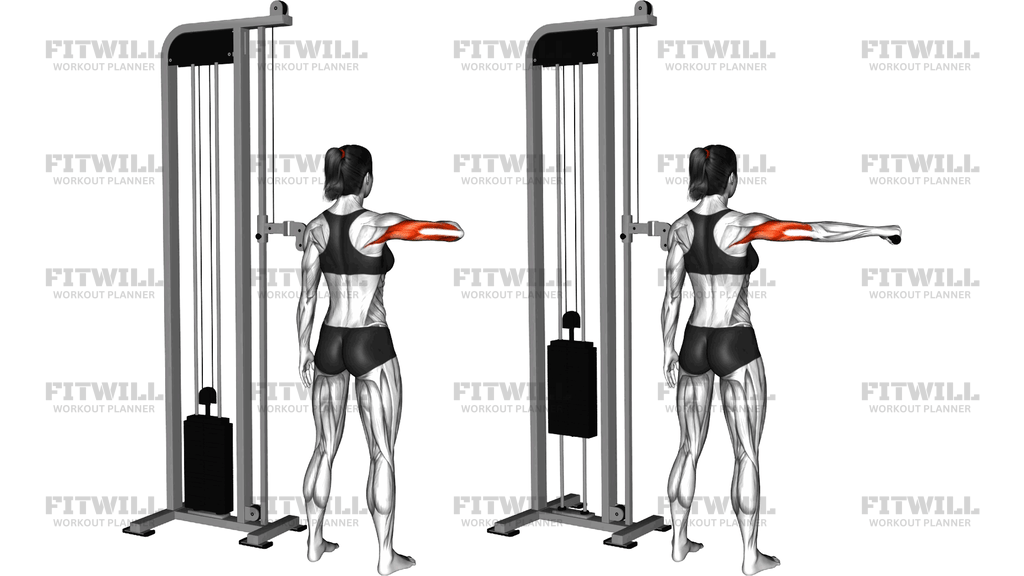
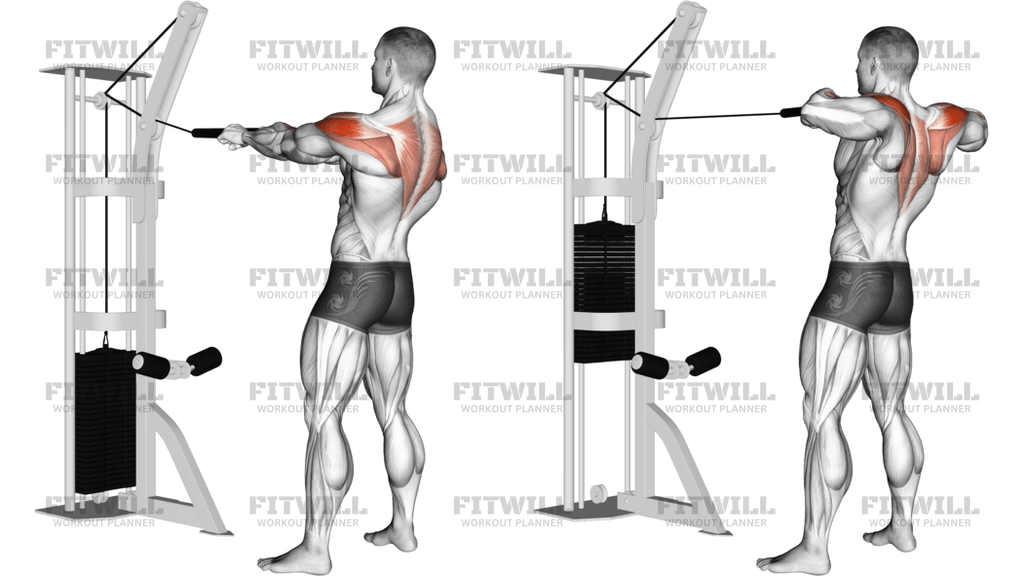
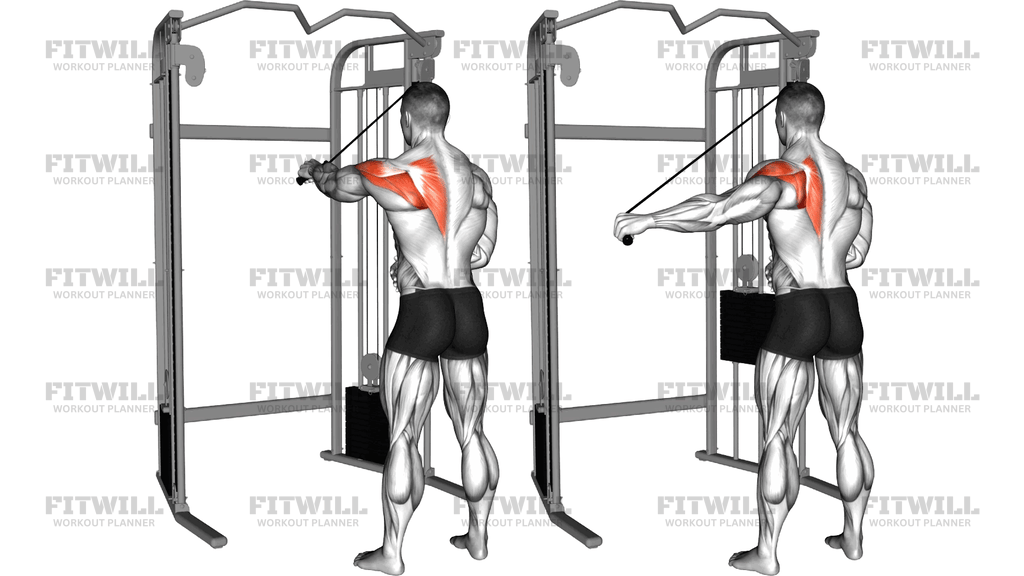
The Cable 45 Degrees Single Arm Reverse Fly is a unilateral rear-deltoid isolation exercise performed on a cable machine with a single handle attached to a high pulley. You stand with your side toward the stack, reach the working arm across your body to grip the handle, and sweep it out and back in a wide 45-degree arc until it finishes at roughly shoulder height beside you. The opposite hand can rest on your hip or the machine frame to keep your torso steady.
This movement targets the rear shoulders as the primary working muscle, with the rhomboids and mid traps assisting as the shoulder blade retracts at the end of the pull. Because the cable provides constant tension through the entire arc rather than resistance that fades as you raise your arm, the rear delt stays loaded even at the point where the muscle is at its shortest. Working one arm at a time also makes it easier to feel each side and address left-to-right differences in strength and control.
The 45-degree sweeping path is what separates this version from a straight-across rear delt fly. As the arm travels diagonally from the high pulley down and outward, the shoulder rotates through a natural arc that many lifters find smoother on the joint than a flat horizontal pull. That makes it a useful option for people who feel pinching with dumbbell rear flys or machine reverse pec deck work.
Setup matters more than load here. The pulley needs to sit above shoulder height so the cable angle points down toward your working hand, and your stance needs enough distance from the stack that the weight cannot rest between reps. If you stand too close, tension drops off at the start; too far, and the cable drags your torso forward before the set even begins.
Execution should stay deliberate. The movement comes from the shoulder joint sweeping the arm back, not from twisting your spine or swinging the weight with momentum. A controlled one-to-two second return is just as important as the pull itself, since the eccentric is where most of the rear delt tension actually accumulates.
This exercise fits well as a secondary shoulder movement placed after pressing work, or as part of a back and shoulders day where rear delt volume needs a boost. Most lifters do well with two to four sets of ten to fifteen reps per arm, keeping the weight light enough that the last few reps are earned by muscle work rather than body sway.
[ Workout Log & Planner ]
Put your next workout in Fitwill
Keep your plan and training log ready when you are.


Instructions
- Set the pulley of the cable machine to its highest position and attach a single handle.
- Stand with your working side facing away from the stack so the cable runs diagonally down from the pulley in front of your body, and grip the handle with the arm farther from the machine.
- Take one or two steps out from the stack so the weight plates are fully lifted at the start, and place your non-working hand on your hip or the machine frame.
- Stand tall with feet about hip-width apart, brace your core, and soften the elbow of the working arm to a slightly bent position.
- Pull the handle in a wide 45-degree arc out and back, leading with the elbow, until your arm finishes out to the side at roughly shoulder height.
- Pause briefly at the end position and squeeze the shoulder blade back toward your spine.
- Lower the handle slowly back across your body along the same arc until your arm reaches forward again, keeping tension on the cable.
- Exhale as you sweep the arm back, and inhale as you return it forward under control.
- Complete all reps on one arm, then switch sides by repositioning your stance and gripping the handle with the other hand.
Tips & Tricks
- Start with a surprisingly light weight. The rear delt is a small muscle, and the long cable lever arm makes even modest loads feel heavy by mid-rep.
- If you feel the pull in your traps and upper back instead of the rear shoulder, reduce the weight and focus on sweeping the arm rather than pulling the shoulder up toward your ear.
- Keep the elbow angle fixed throughout the set. Bending the arm more as you fatigue turns the movement into a row and takes work away from the rear delt.
- Resist the urge to rotate your torso toward the working arm as you pull. If your chest twists, drop the load until only the arm moves.
- The non-working hand braced on your hip or the frame is not decorative; press into it to lock your ribcage and stop sway.
- Keep tension at the start of each rep. If the plates clank down between reps, you are standing too close to the stack or rushing the return.
- A brief pause at the fully swept-back position does more for rear delt development than extra reps performed with a swinging tempo.
- If your shoulder complains during the arc, try shifting your stance slightly or reducing the sweep height a few degrees before abandoning the exercise.
Frequently Asked Questions
Which muscles does the Cable 45 Degrees Single Arm Reverse Fly work?
The rear deltoid is the primary mover, with the rhomboids and mid traps assisting as the shoulder blade retracts. Side shoulder and upper back stabilizers also work to keep the arm on its arc.
Why is the pulley set high for this exercise?
A high pulley creates the downward diagonal cable angle that defines the 45-degree sweep, letting the arm travel from a forward-across-the-body position out to shoulder height. This path keeps tension constant and often feels smoother on the shoulder joint than flat horizontal pulls.
Is the Cable 45 Degrees Single Arm Reverse Fly good for beginners?
Yes, as long as beginners start light. The single-arm setup is actually helpful for learning because you can focus on one side and immediately feel whether the rear delt, not momentum, is doing the work.
How is this different from a dumbbell reverse fly?
A dumbbell reverse fly is heaviest at the top of the arc and requires a bent-over torso, while the cable version keeps tension through the entire range and lets you stand upright. The diagonal cable path also changes the exact line of pull through the rear delt.
Should my elbow be straight or bent?
Keep a soft, slightly bent elbow and hold that angle for the whole set. Straightening it fully stresses the elbow joint, and bending it further mid-rep turns the sweep into a row.
Why do I feel this more in my traps than my rear shoulders?
That usually means the weight is too heavy, so your upper traps are shrugging to lift it. Lower the load, keep your shoulder pulled away from your ear, and lead the movement with the elbow instead of the hand.
How many sets and reps should I do?
Two to four sets of ten to fifteen reps per arm works well for most people. Because the rear delt responds to controlled tempo and volume, lighter weight with a deliberate return usually beats heavy weight with swinging.
Can I substitute this if my gym has no cable machine?
A bent-over single-arm dumbbell reverse fly or a resistance band pull-apart with the band anchored high are the closest substitutes. Neither matches the constant tension exactly, but both train the same rear delt pattern.
Is it safe for my shoulder?
For most people the sweeping arc is joint-friendly because the cable guides the arm through a smooth path with no ballistic loading. Stop if you feel sharp pain, and make sure the arm stays at or slightly below shoulder height rather than forced higher.
Should I do both arms in the same set or one arm at a time?
One arm at a time, finishing all reps on the first side before switching. The unilateral stance means your body position changes when you swap sides, so each arm needs its own setup.