Cable Face Pull With External Rotation
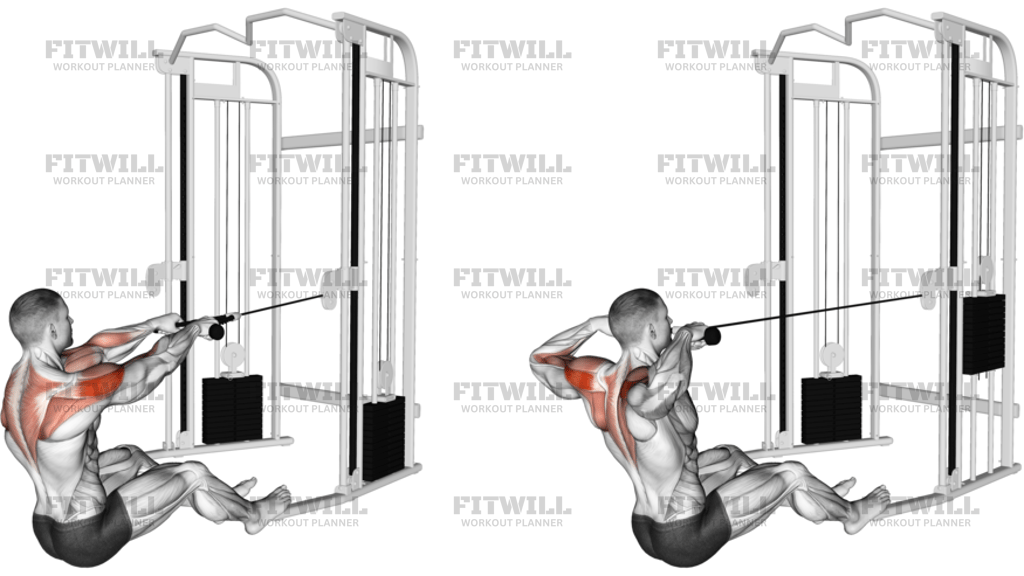
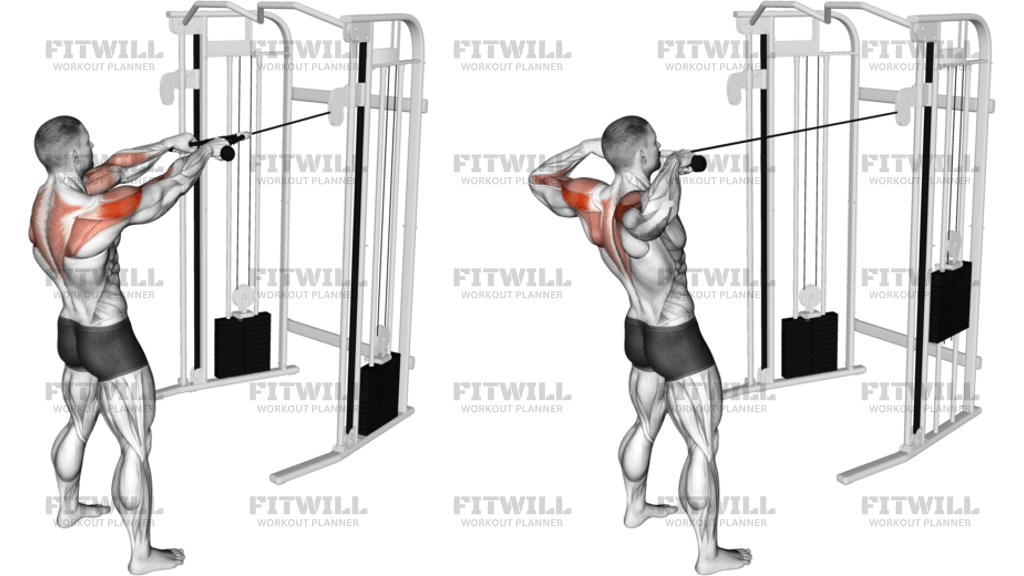
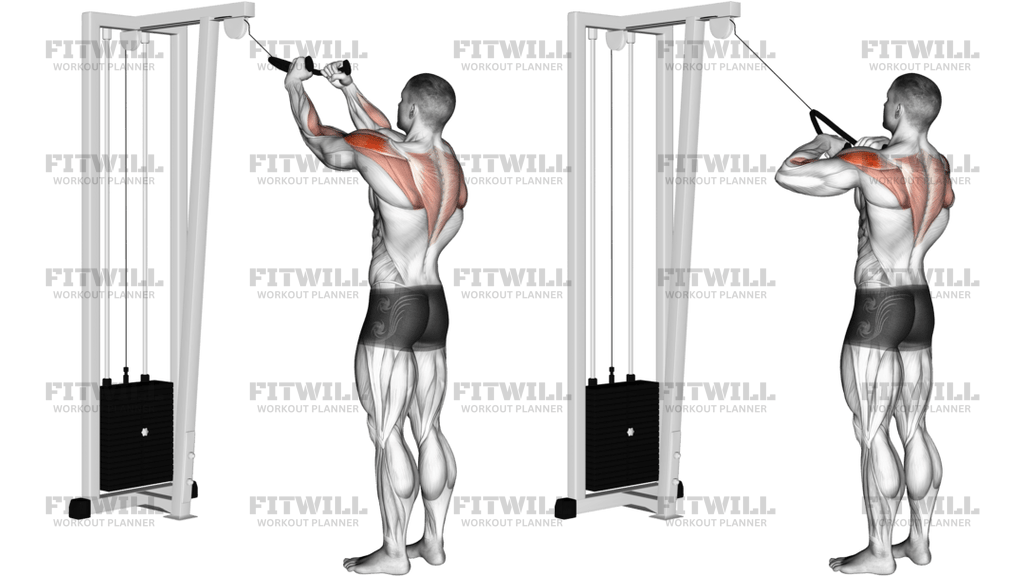
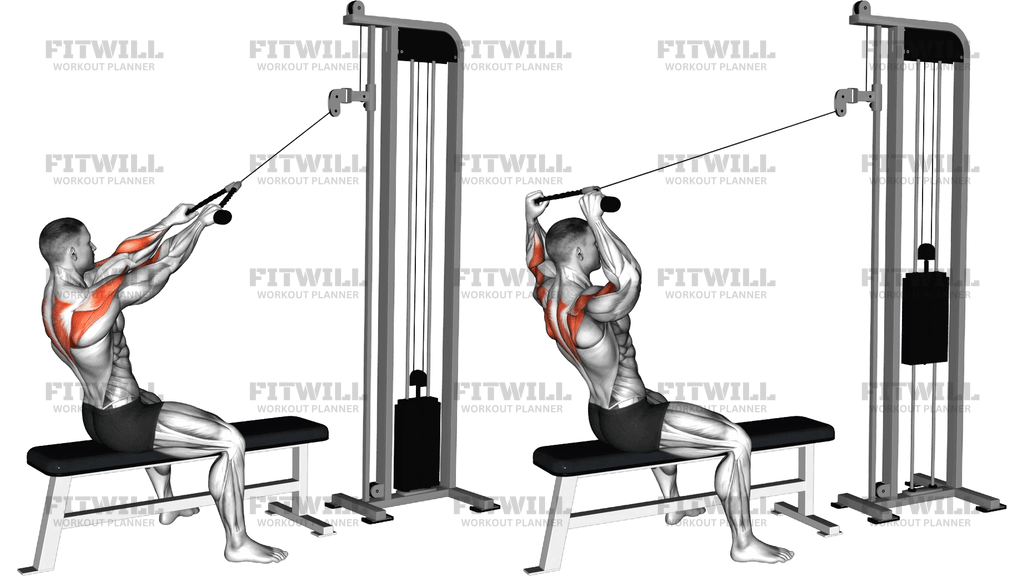
The Cable Face Pull With External Rotation is a seated cable exercise that combines a horizontal pull toward the face with a deliberate outward rotation of the upper arms at the end of each rep. You sit on a flat bench facing a cable machine with the rope attachment set at or near the top pulley, grip the rope with a neutral palms-inward grip, and pull the handles back toward either side of your head before rotating your shoulders open so the knuckles point up and the elbows stay wide. This finishing rotation is what separates it from a standard face pull and makes it one of the more complete upper-body pulling movements you can do on a single cable station.
The exercise works the rear delts heavily, but the external rotation phase places direct demand on the rotator cuff muscles, particularly the infraspinatus and teres minor. The mid and lower traps and rhomboids handle the scapular retraction as the rope travels back, so you are training shoulder health and upper-back strength in the same motion. Because the cable provides constant tension through the entire arc, the muscles stay loaded even when the arms are extended overhead at the start of each rep.
This movement is especially valuable for people who press a lot, sit at a desk with rounded shoulders, or feel their front delts taking over on most pulling work. Offset posture patterns and pressing-dominant programs tend to leave the rear delts and external rotators undertrained, and this exercise targets exactly those areas with a controlled, joint-friendly resistance. It is common in warm-ups, shoulder rehab-style programming, and as a finisher on upper-body or pull days.
Setup matters more here than with most pulls because the cable angle dictates the resistance curve. With the pulley at head height or slightly above and the bench positioned a meter or so back from the machine, the rope pulls slightly downward toward your face, which lets the elbows drive back at or just above shoulder level. Sit too close and the cable angle flattens; sit too far and the weight stack pulls you forward out of your set position before the rep begins.
Execution should feel like a pull-and-spread rather than a yank. Draw the rope toward your face by driving the elbows back and out, then rotate the shoulders externally so the hands finish above the elbows with the arms forming a goalpost shape. Pause briefly in that open position, then let the rope feed back out under control until the arms are long and the shoulder blades protract slightly forward. That full excursion, from protraction at the start to external rotation at the end, is where most of the benefit lives.
Keep the load honest. This is not an ego exercise; the rotator cuff and rear delts respond better to moderate weight, strict tempo, and higher repetitions than to heavy, bouncy sets. If you find yourself leaning back hard or shrugging the weight toward your ears, reduce the load and let the intended muscles do the work.
[ Workout Log & Planner ]
Put your next workout in Fitwill
Keep your plan and training log ready when you are.


Instructions
- Set the pulley of the cable machine to head height or slightly above and attach the rope handle.
- Place a flat bench roughly a meter back from the machine and sit facing it with feet flat on the floor and a tall, upright torso.
- Grip the rope ends with a neutral grip, palms facing each other, and walk your hands slightly down the rope so your thumbs point back toward your body.
- Extend your arms overhead and slightly forward so the cable is taut and you feel a mild stretch across the back of the shoulders.
- Brace your core, keep your ribs stacked over your hips, and avoid arching the lower back as tension comes on.
- Pull the rope toward your face by driving the elbows back and out wide, letting the hands travel along the rope's split as you go.
- At the end of the pull, externally rotate the shoulders so your knuckles point up and the elbows stay at or just above shoulder height, forming a goalpost shape; hold for a beat.
- Reverse the rotation slowly, then extend the arms back overhead under control until the shoulder blades spread apart at the start position.
- Exhale as you pull and rotate, inhale as the rope returns; keep the breathing steady and never hold it.
- Complete the set, then stand and let the weight stack return gently rather than letting it crash down.
Tips & Tricks
- The most common mistake is turning this into a heavy row: if the torso rocks backward with each rep, drop the weight until only the arms and shoulder blades move.
- Do not let the elbows drop below shoulder height on the pull; low elbows shift work away from the rear delts and turn it into a lat-dominant motion.
- If the weight stack drags you forward at arm extension, you are sitting too far back; slide the bench closer until you can hold the start position without strain.
- Shrugging toward the ears means the upper traps are hijacking the movement; think about pulling the shoulder blades down and together as the elbows travel back.
- The external rotation should come from the shoulder itself, not from flipping the wrists; if only your hands rotate while the elbows stay fixed, the rotator cuff is not doing the work.
- A brief one-second pause in the rotated goalpost position is worth more than extra weight; the rotator cuff responds to time under tension at end range.
- Keep the neck relaxed and the chin level; craning the head forward to meet the rope shortens the range the shoulders actually travel.
- Start with lighter resistance and higher reps, in the twelve to twenty range, and only add load when every rep still finishes in a full external rotation.
- If the rope handles slip out of a neutral grip mid-set, re-grip lower on the rope so your thumbs trail back and your wrists stay stacked over the elbows.
Frequently Asked Questions
What muscles does the Cable Face Pull With External Rotation work?
The rear delts are the primary movers, supported by the mid and lower traps and rhomboids during the pull. The external rotation finish specifically recruits the rotator cuff muscles, mainly the infraspinatus and teres minor.
How is the Cable Face Pull With External Rotation different from a regular face pull?
A regular face pull ends when the rope reaches your face with the elbows wide. This version adds an active external rotation at the end, turning the knuckles upward, which places direct work on the rotator cuff on top of the rear delt and upper-back effort.
Can beginners do the Cable Face Pull With External Rotation?
Yes, and it is actually a good early exercise because the cable path guides the movement and the load is easily adjustable. Beginners should start with light weight, focus on the elbow-out path, and master the rotation before adding resistance.
How high should I set the pulley for this exercise?
Set the pulley at head height or slightly above while seated. This creates the slight downward angle that lets the elbows travel back at shoulder level, which is where the rear delts and external rotators work best.
Why do I keep shrugging my shoulders during face pulls?
The upper traps take over when the load is too heavy or the elbows drop during the pull. Cue the shoulder blades down and back as the elbows drive outward, and reduce the weight if the shrug persists.
What can I substitute if my gym has no cable machine?
A resistance band anchored at head height works well; you sit or kneel facing the anchor and perform the same pull-and-rotate pattern. Rear delt flyes and band external rotations cover parts of the movement but not the combined arc.
How many sets and reps should I use for the Cable Face Pull With External Rotation?
Two to four sets of twelve to twenty reps is a practical range, since the rear delts and rotator cuff favor controlled, moderate loading. It fits well as a warm-up before pressing or as a finisher on pull days.
Should I feel this in my neck or lower back?
No, tension should stay in the back of the shoulders and between the shoulder blades. Neck strain usually means the head is jutting forward to meet the rope, and lower back arching means the torso is leaning back to cheat the pull; sit tall, brace lightly, and reduce the load.
Is the Cable Face Pull With External Rotation safe for shoulder issues?
It is often used in shoulder-friendly programming because the external rotation trains the rotator cuff through a controlled range with light resistance. If you have a current or past shoulder injury, check with a qualified professional before adding it to your routine.