Cable Seated Scapular Retraction
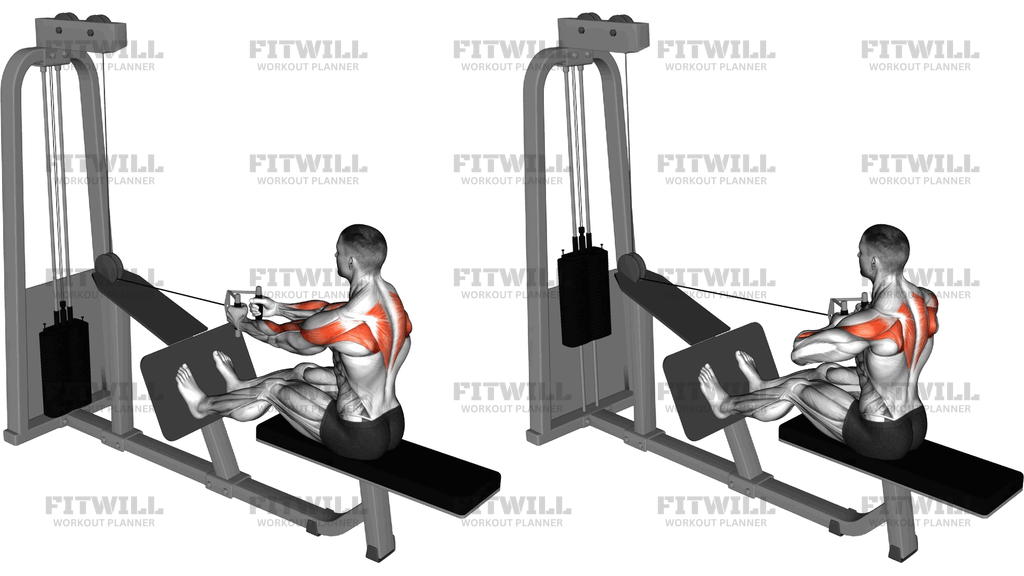
Cable Seated Scapular Retraction is a targeted upper-back exercise performed at a lat pulldown station. You sit on the seat with your thighs secured under the pads, grip the wide bar with an overhand grip, and keep your arms extended straight overhead for the entire set. Instead of pulling the bar down like a lat pulldown, the movement comes purely from your shoulder blades: you squeeze them down and together toward your spine, let the cable lift slightly, then lower your shoulders back to a full stretch under the tension of the stack.
The highlight of this exercise is that it isolates scapular movement by removing elbow action entirely. Because the arms stay locked out, the rhomboids and the middle and lower fibers of the trapezius have to do the work rather than borrowing from the biceps or lats. This makes it a superb tool for anyone learning what proper shoulder-blade control actually feels like before progressing to heavier rows and pulldowns, and for lifters whose upper arms tend to take over during pulling exercises.
It is especially valuable for people who spend long hours sitting at a desk. Rounded, forward-tilted shoulders usually come with weak, lengthened rhomboids and mid-traps, and this movement trains exactly those muscles in the overhead position where most people are weakest. It is also commonly used in warm-ups for heavy pulling days and in shoulder-health programming, since controlled scapular retraction and depression under light cable load builds endurance in the muscles that stabilize the shoulder girdle.
Setup matters more here than in most cable exercises because the weight must be light enough that your elbows stay straight. If the load is too heavy, the elbows inevitably bend and the set quietly turns into a lat pulldown with a tiny range. Choose a modest weight, sit tall, and set the thigh pads snugly so your torso stays put as your shoulder blades travel.
Execution should feel small and precise. From the fully stretched hang, think about pulling your collarbones up and apart while your shoulder blades slide down your ribcage and toward each other. Pause briefly at the top of the retraction, then release slowly, letting the cable draw your shoulders upward into a deliberate stretch. The range of motion is short, often only a few inches of bar travel, and that is perfectly normal. Keep the tempo slow on both ends so the target muscles, not momentum, control the cable throughout.
[ Workout Log & Planner ]
Put your next workout in Fitwill
Keep your plan and training log ready when you are.


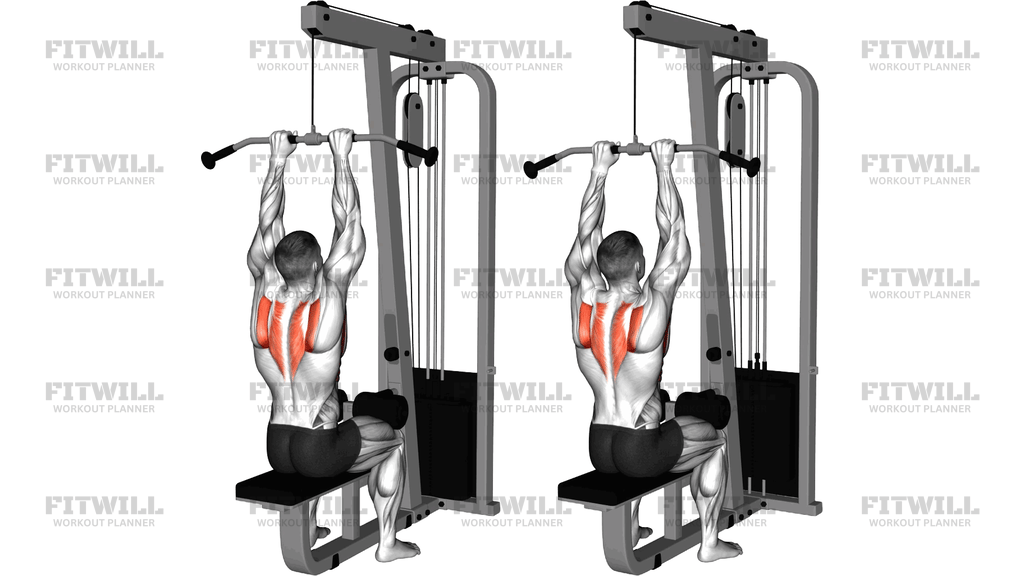
Instructions
- Set a light weight on the cable stack of a lat pulldown machine and attach or use the wide lat pulldown bar.
- Sit on the seat facing the machine and slide your thighs firmly under the thigh pads so your torso cannot lift off the bench.
- Reach up and take an overhand grip on the bar, hands set wider than shoulder width, with your arms fully straight overhead.
- Lean your torso back only slightly, or keep it upright, and brace your core so your lower back does not arch excessively.
- Keeping your elbows locked straight, pull your shoulder blades down and together toward your spine, letting the cable rise a short distance as your shoulders drop.
- Squeeze the retracted position for one to two seconds at the top of the movement.
- Slowly release, allowing your shoulder blades to rise and spread apart until you feel a full stretch across your upper back as the cable draws your shoulders upward.
- Exhale as you retract your shoulder blades, and inhale as you let them return to the stretched position.
- Complete your repetitions with the same short, controlled range, then stand up carefully and let the stack settle before letting go of the bar.
Tips & Tricks
- The most common mistake is bending the elbows and turning the set into a light lat pulldown. If you catch your elbows flexing, reduce the weight until your arms can stay straight for every rep.
- Think of the movement as shoulder blades sliding down your ribcage, not as pulling with your hands. Your grip should stay relaxed and your arms should feel like passive straps connecting you to the cable.
- Shrug your shoulders up deliberately at the bottom of each rep to get a full stretch of the rhomboids and lower traps before initiating the pull.
- Do not lean far back and use your body weight to move the cable. The thigh pads are there to hold you still, so let them do their job and keep your torso quiet.
- Because the range is short, tempo is your main tool. Use a one-to-two-second squeeze at the top and a slow three-second return instead of adding load.
- Avoid holding your breath through the squeeze. Exhaling as the blades come together helps many lifters feel the mid-back contraction more clearly.
- If your upper traps bunch up and cramp near your neck, you are shrugging instead of retracting. Cue pulling the shoulder blades toward the opposite back pocket rather than toward your ears.
- This exercise works best as one of the first pulling movements in a session or as a warm-up, priming scapular control before heavier rows or pulldowns.
Frequently Asked Questions
What muscles does the Cable Seated Scapular Retraction work?
The primary muscles are the rhomboids and the middle and lower fibers of the trapezius, which pull the shoulder blades together and down. The rear deltoids assist, and the lats and forearms work lightly to hold the overhead position.
How is this different from a regular lat pulldown?
In a lat pulldown you bend your elbows and pull the bar toward your chest. In the Cable Seated Scapular Retraction your arms stay completely straight, and only your shoulder blades move, which shifts the work from the lats to the mid-back muscles that control the scapulae.
Why do my elbows keep bending during the exercise?
The weight is almost certainly too heavy, so your arms are trying to treat it like a pulldown. Drop the load to something you can move purely with your shoulder blades while keeping the elbows locked out.
How much weight should I use for the Cable Seated Scapular Retraction?
Use a light weight, often far less than what you would use for a lat pulldown or seated row. The movement travels only a few inches, so a small load with a slow tempo and a clear squeeze beats a heavier stack moved by the arms.
Is this a good exercise for beginners?
Yes, and it is one of the best first steps for learning scapular control. Because the cable guides the resistance and the elbow action is removed, beginners can feel their rhomboids and mid-traps working before attempting heavier rows.
Should I keep my torso upright or lean back?
Stay upright or lean back only slightly. Leaning back turns the set into a body-english pulldown and takes work away from the shoulder blades, which defeats the purpose of the exercise.
Can I substitute this with banded scapular pulls or other exercises?
Yes. Straight-arm banded scapular retractions, prone Y-T-W raises, and face pulls with a deliberate scapular squeeze train similar muscles. The cable version is simply convenient and gives smooth, consistent tension through the short range.
Where should this exercise fit into my workout?
It works well as a warm-up before rows, pulldowns, or pressing, or as a higher-rep finisher for the mid-back. Keep the sets in the twelve to twenty repetition range with strict form.
Is it safe for my shoulders?
With a light load and a controlled range, the movement is generally shoulder-friendly because it strengthens the muscles that stabilize the shoulder girdle. Stop if you feel sharp pain, and keep the range within what feels comfortable at the stretched position.