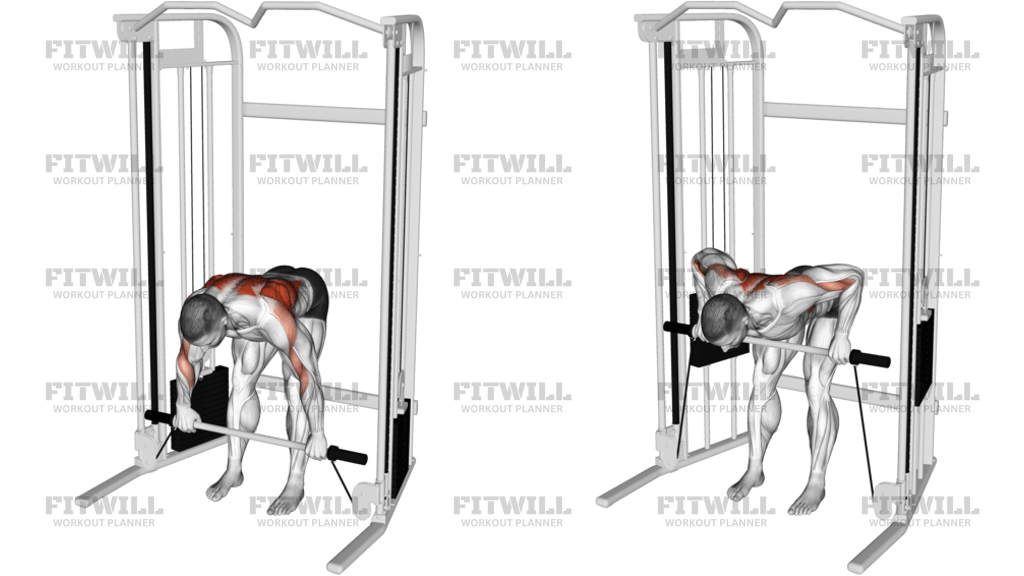
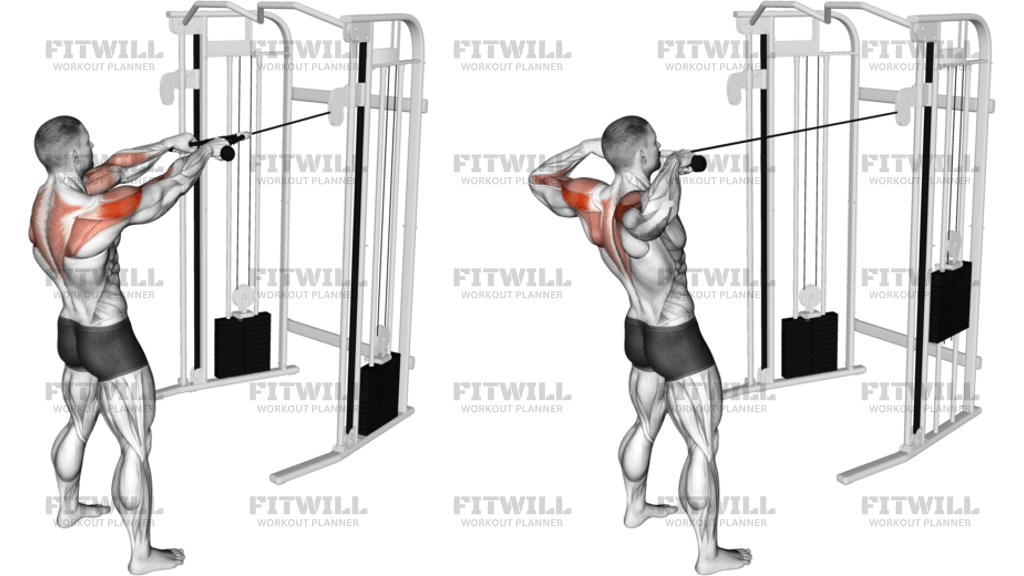
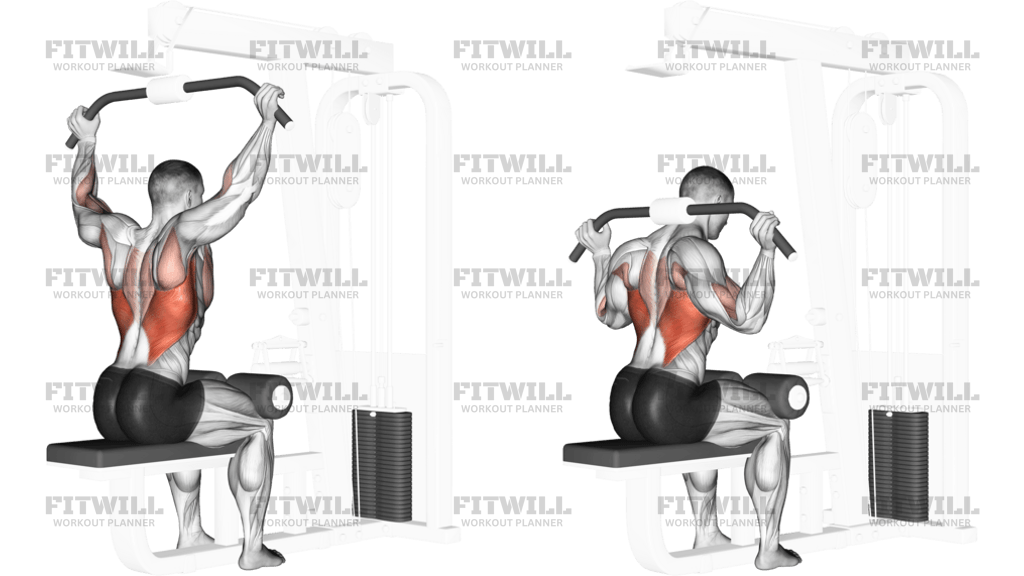
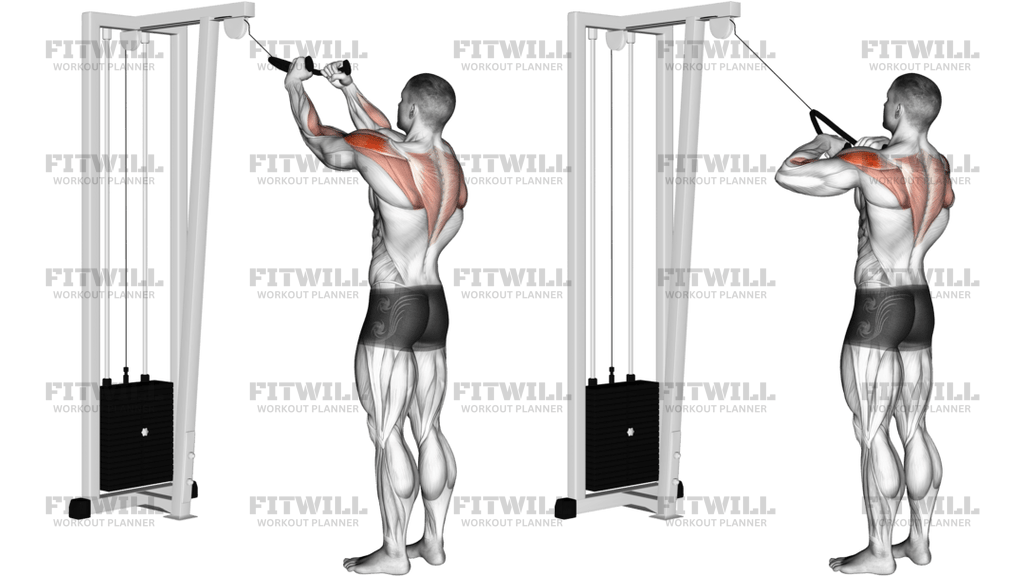
Cable Seated Reverse Fly
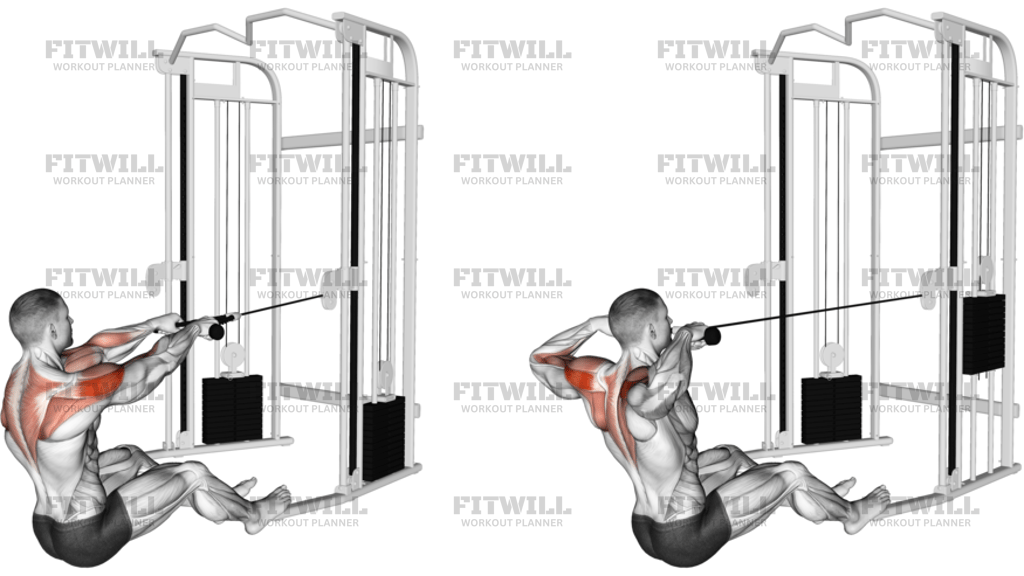
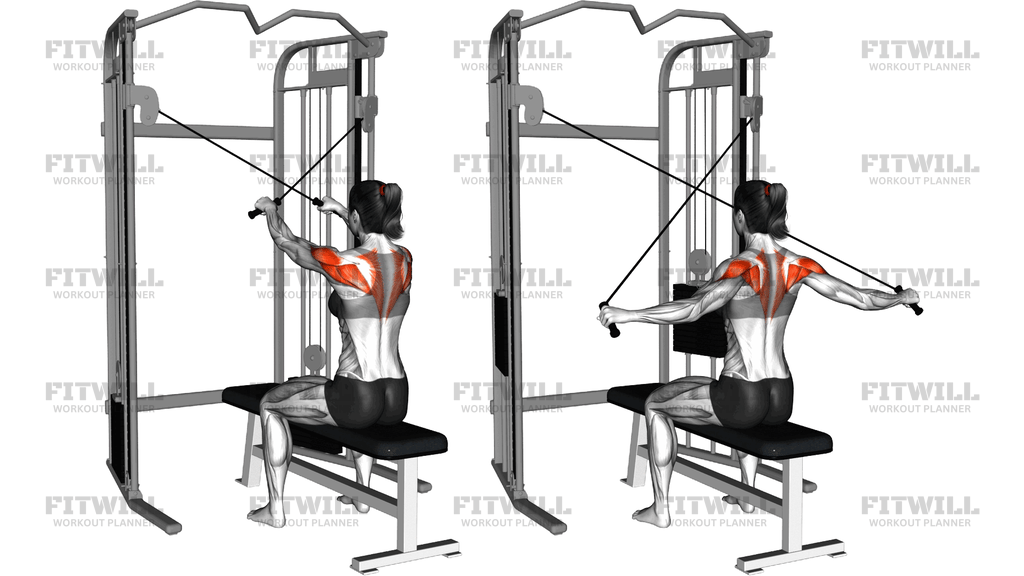
The Cable Seated Reverse Fly is a rear-delt and upper-back isolation exercise performed on a dual-cable station. You sit on a flat bench facing the machine, take one handle in each hand with the cables crossed in front of you, and sweep your arms out and back until they form a wide line at shoulder height. Because the resistance comes from cables that pull forward and slightly inward, your rear delts stay under tension through the entire range, including the fully stretched position at the front where dumbbells would normally give you a break.
This movement is one of the most direct ways to load the rear deltoids, a muscle area that pressing and pulling routines often leave undertrained. Alongside the rear delts, the rhomboids and mid and lower traps work to pull the shoulder blades together, and the small rotator cuff muscles assist in controlling the arm as it rotates outward. If your shoulders roll forward when you press or you struggle to feel your back during rows, this exercise helps you build the awareness and strength to fix that.
The seated setup is what makes this version worth learning. Sitting on a bench facing the machine removes the hip drive and body swing that creep into standing cable reverse flies, so the work stays in the shoulders and upper back. The crossed-cable position also means each arm is loaded slightly across the midline, which lengthens the rear delt at the start and keeps the pull path clean and symmetrical.
Execution is simple but demanding on control. Grip the handles lightly, keep a soft bend in the elbows, and think about opening your arms wide rather than pulling the handles toward you. The end position is arms roughly in line with the shoulders, slightly behind the torso, with the chest tall. Pause briefly there, then let the arms travel back forward under control until your hands nearly meet in front of you.
This exercise fits well as an accessory after rows or pulls, typically for moderate to higher reps, since the rear delts respond best to quality repetitions rather than maximum load. It is equally useful for general lifters balancing out pressing volume and for anyone who wants stronger, more stable shoulders without heavy axial loading. Keep the weight honest: if you have to lean back or shrug to move the stack, the set is no longer a reverse fly.
[ Workout Log & Planner ]
Put your next workout in Fitwill
Keep your plan and training log ready when you are.


Instructions
- Set both pulleys of the cable machine to the highest position on each side and attach a single handle to each cable.
- Place a flat bench facing the machine, roughly an arm's length plus the cable travel away, so the cables cross in front of you when you sit down.
- Sit upright on the bench with feet flat on the floor, reach forward, and grab the left cable with your right hand and the right cable with your left hand so the cables form an X in front of your chest.
- Sit tall with your chest lifted and brace your trunk lightly; keep a soft, fixed bend of about 10 to 20 degrees in both elbows.
- Start with your hands together or nearly crossing in front of your chest, arms extended, and let the cables pull your shoulder blades slightly forward.
- Exhale and open your arms out to the sides in a wide arc, leading with your elbows and keeping them at or slightly above shoulder height.
- Finish with arms out in line with the shoulders and slightly behind the torso, shoulder blades drawn together, and hold that position for a moment.
- Inhale and slowly bring your arms back forward along the same wide arc until the cables draw your hands together in front of your chest.
- Complete your reps with the same tempo both ways, then set the handles down before standing up from the bench.
Tips & Tricks
- The most common fault is turning this into a row: if your elbows bend more as you open your arms, the weight is too heavy and your biceps and lats take over. Drop the load until your elbow angle stays constant.
- Keep the arcs low and wide. Pulling the hands up toward your head shifts work to the upper traps, so aim for a path that finishes at shoulder height, not above your ears.
- Do not shrug. If your shoulders climb toward your ears during the pull, consciously press them down before each rep and reduce the weight if needed.
- Let the cables stretch your shoulder blades forward at the start of each rep instead of starting every repetition from a partly retracted position; this trains the rear delts through a fuller range.
- Use a slow return. The cables will yank your arms forward if you rush the eccentric, and that momentum is where most shoulder strain in this exercise happens.
- If your lower back tires before your shoulders, you are leaning back to help the pull. Brace lightly and keep your torso vertical throughout the set.
- A slight lean forward of just a few degrees is fine, but a big forward fold changes the angle into more of a bent-over fly and reduces the crossed-cable tension you set up for.
- Think of reaching your fists out to the sides and slightly back, not pulling the handles into your body. This cue keeps the rear delts, not the arms, driving the movement.
- Because both arms work against crossed cables, keep the movement symmetrical; if one side lags, check that your bench is centered between the pulleys before assuming a strength imbalance.
Frequently Asked Questions
Which muscles does the Cable Seated Reverse Fly work?
The rear deltoids are the primary movers, with the rhomboids and mid and lower traps assisting as the shoulder blades draw together. The rotator cuff muscles help control the outward rotation of the arms.
Why are the cables crossed in this exercise?
Crossing the cables means each arm is pulled across the midline, which lengthens the rear delt at the start and keeps tension pulling forward and slightly inward throughout. This gives a deeper stretch than a same-side cable setup.
Can beginners do the Cable Seated Reverse Fly?
Yes, and the seated position actually makes it beginner-friendly because it removes balance and body-swing issues. Start with a light weight and focus on keeping the elbows bent at the same angle for every rep.
How heavy should I go on the Cable Seated Reverse Fly?
Choose a weight you can control for 10 to 15 reps without shrugging, bending the elbows further, or leaning back. The rear delts are a small muscle, and this exercise rewards strict form over load.
What is the difference between this and a dumbbell reverse fly?
Dumbbells give no resistance at the top of the movement when your arms are together in front, while the crossed cables keep constant tension in that stretched position. The cable version also prevents cheating with body English because you are seated.
How should I breathe during the Cable Seated Reverse Fly?
Exhale as you open your arms out to the sides and inhale as you return them forward. Keeping a light brace in your trunk helps you stay upright without holding your breath.
My shoulders click or feel pinched at the top of the movement. What should I change?
Lower the cable tension by reducing the weight, slightly reduce your range so your hands stop at shoulder height rather than behind you, and make sure you are not shrugging. If discomfort continues, stop and get the shoulder assessed before continuing.
What can I use if my gym only has one adjustable cable and no flat bench?
A single-cable standing or seated reverse fly with a stirrup handle works one arm at a time, and a sturdy bench or box can replace the flat bench. Dumbbell bent-over reverse flies are a reasonable substitute, though the tension profile differs.
Where should this exercise go in my workout?
Treat it as an accessory after your main rows or presses, when the larger pulling muscles are already warmed up. Two to four sets of moderate to higher reps works well for most programs.