Lever Seated Row (Plate Loaded) (Version 3)
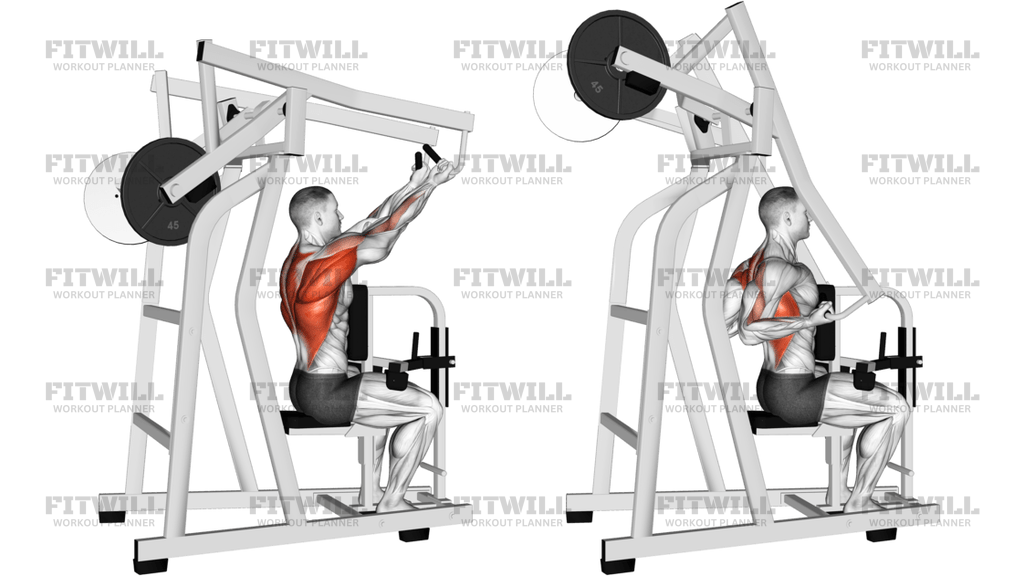
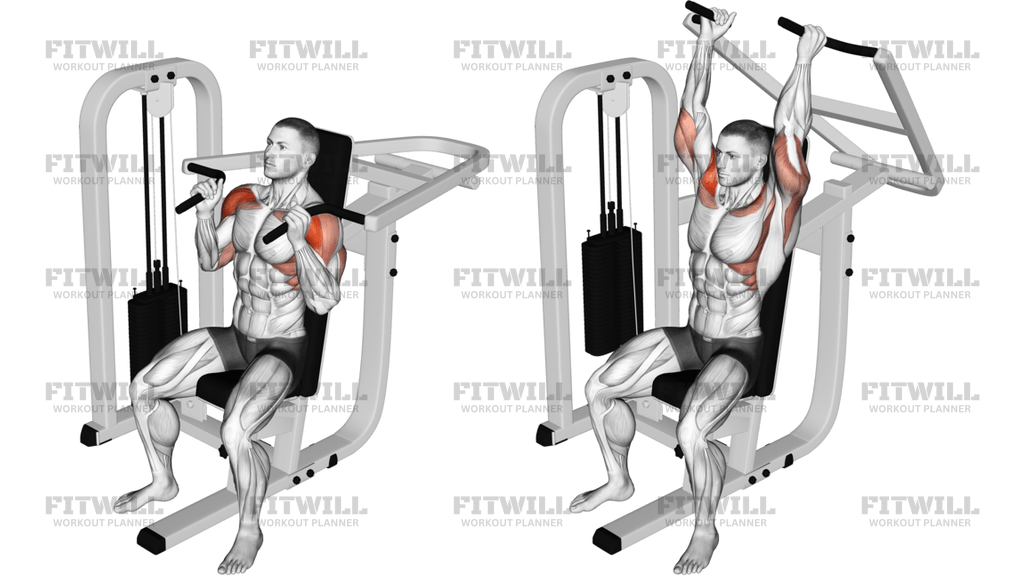
The Lever Seated Row (Plate Loaded) (Version 3) is a plate-loaded machine row performed from an upright seated position with your chest supported against a pad and your arms pulling a pair of lever arms toward your torso. Because the weight moves on a fixed lever path, the machine takes balance out of the equation and lets you focus entirely on driving your elbows back and squeezing your shoulder blades together. Plates are loaded onto the upper pegs of the lever arms, so resistance can be changed quickly between sets.
This movement is a strong choice for anyone who wants to build the muscles of the upper and mid back without the lower-back fatigue that comes from free-weight rows. The chest pad holds your torso upright and stable, which makes it easier to keep momentum out of the rep. Lifters recovering from heavy deadlift or barbell row sessions, beginners learning what a row should feel like, and experienced trainees chasing extra back volume all get good use from it.
The primary work is done by the rhomboids, mid traps, and lats as they pull the handles in toward your ribs, with the rear delts assisting at the shoulder and the biceps and forearms working as the flexing and gripping link in the chain. Your legs stay braced with feet flat on the floor, but they contribute little beyond keeping you seated firmly against the pad.
Setup matters more on this machine than most people realize. Adjust the seat height so the pad sits squarely against your chest rather than your stomach or throat, and check that the handles start roughly at shoulder height with your arms extended. If the seat is too low the pull turns into a shrug; too high and your shoulders roll forward awkwardly at the start. Take a minute to get this right and every rep that follows will track better.
To execute well, grip the handles firmly, pull them back toward your lower ribs by driving your elbows behind you, and pause briefly with your shoulder blades pulled together. Let the handles return under control until your arms are extended, but keep tension in your back rather than letting the weight stack yank your shoulders forward. A steady two-count pull, a brief squeeze, and a slow release is a rhythm that works well here.
In practice, you will see this machine used as a primary mid-back builder on back days, as a safer rowing option during lower-back flare-ups, and as a finisher where the fixed path lets you push close to fatigue without a spotter. Because each arm rides its own lever, you can also spot and correct side-to-side strength differences by watching how the handles travel together.
[ Workout Log & Planner ]
Put your next workout in Fitwill
Keep your plan and training log ready when you are.


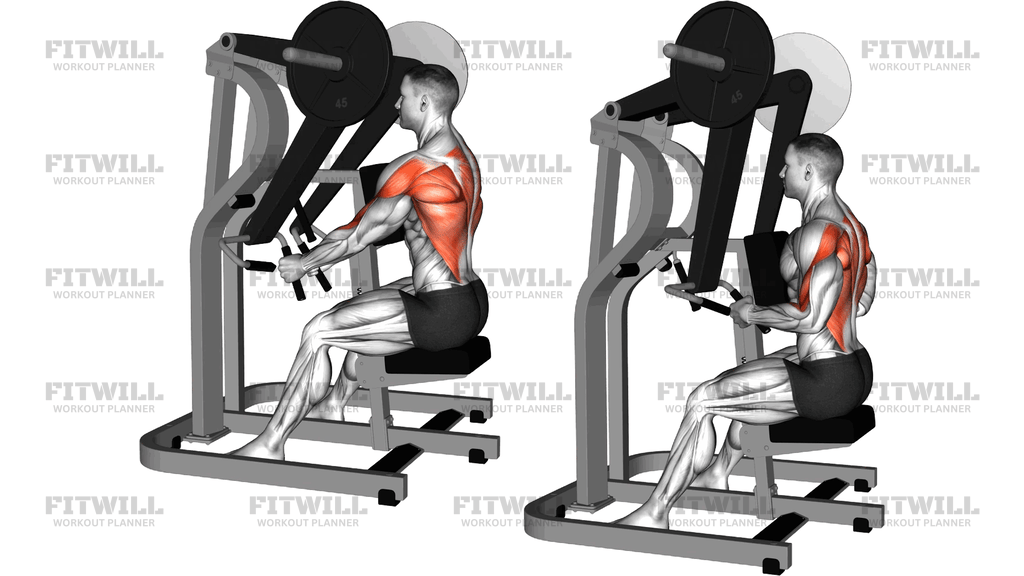
Instructions
- Load weight plates onto the pegs at the top of the lever arms and slide the seat up or down so the chest pad rests firmly against your sternum when you sit upright.
- Sit facing the machine with your feet flat on the floor, knees bent to roughly 90 degrees, and your hips pressed back against the seat.
- Take a neutral or slightly pronated grip on the two handles with your arms extended forward and shoulders relaxed, not shrugged.
- Brace your core lightly and pull your chest into the pad so your torso stays upright throughout the set.
- Pull the handles back toward your lower ribs by driving your elbows behind your body, keeping them close to your sides rather than flaring them wide.
- Squeeze your shoulder blades together at the fully pulled position and hold it for a beat before releasing.
- Let the handles travel forward under control until your arms are extended and your shoulder blades have spread apart, without collapsing your chest off the pad.
- Exhale as you pull the handles back and inhale as they return forward.
- Complete all repetitions in this steady rhythm, then release the handles fully and let the levers settle before standing up or unloading plates.
Tips & Tricks
- If your shoulders shrug toward your ears at the start of each pull, the seat is usually set too low or you are starting with too much weight; raise the seat or reduce the load so the elbows can lead the movement.
- Do not let your chest peel away from the pad as the weight gets heavy. If your torso leans back to finish the rep, the lever arm has beaten your mid-back, and leaning only transfers work away from the muscles you are targeting.
- Keep the pull aimed at your lower ribs, not your upper chest. Pulling too high turns the exercise into a rear-delt and trap shrug and shortens the range on your lats.
- On machines with independent levers, watch the handles in your peripheral vision and make sure they arrive back at the same time. A lagging side is an early sign of an imbalance worth addressing with lighter weight.
- The seat height and chest pad do the stabilizing here, so resist the urge to jerk your head forward at the finish. Keep your neck in line with your spine and let the shoulder blades do the squeezing.
- Stop each rep about one inch short of full lockout at the bottom if your shoulders feel pinched when the arms stretch fully forward. A slightly shortened stretch keeps tension on the back muscles instead of stressing the shoulder capsule.
- Use a full thumbs-around grip rather than a hook of the fingers. Loose gripping on a loaded lever machine often causes the wrists to bend back as the elbows drive past the torso.
- Because the plates are loaded high on the lever arms, small plate jumps change the feel noticeably. Add load in modest increments and keep the rep quality consistent before adding another plate.
Frequently Asked Questions
Which muscles does the Lever Seated Row (Plate Loaded) (Version 3) work hardest?
The rhomboids and mid traps of the upper back do most of the work as the shoulder blades pull together, with the lats assisting as the elbows drive back. The rear delts, biceps, and forearms contribute as supporting muscles.
Is the chest pad on this machine just for comfort?
No, it is a key part of the setup. It pins your torso upright so your lower back and hips cannot swing the weight forward, which keeps the effort on the mid-back muscles and makes the exercise easier on the spine than free-weight rows.
How high should the seat be set for this row?
Set it so the pad contacts your sternum and the handles start at about shoulder height with your arms extended. Too low forces a shrug-heavy pull; too high pushes your shoulders into a rounded start position.
Can beginners use the Lever Seated Row (Plate Loaded) (Version 3) before trying barbell or dumbbell rows?
Yes, and it is often a good order to learn in. The fixed lever path removes the balance demands of a free-weight row, so a beginner can focus on feeling the shoulder blades retract before adding stabilization challenges.
Should I pull the handles to my chest or my stomach?
Aim for your lower ribs, roughly stomach to bottom-of-chest height. Pulling to the upper chest shrugs the traps into the movement and reduces lat and rhomboid involvement.
What is the most common mistake on this machine?
Leaning back off the chest pad to move heavier weight. If your torso rocks backward during the pull, drop the load until the pad stays in contact with your chest for every rep.
How is this different from a cable seated row?
The lever arms follow a fixed arc and the resistance comes from loaded plates rather than a cable stack, so there is no line-pulling angle to adjust. That makes it more consistent rep to rep, while a cable row offers more freedom in pull angle and grip variety.
Can I use this exercise if my lower back gets sore from barbell rows?
Many lifters use exactly this machine for that reason, since the chest support removes most of the lower-back load. Move within a comfortable range and stop if any position produces pain rather than muscle effort.
What can I substitute if this plate-loaded row machine is taken?
A cable seated row with a neutral-grip handle is the closest match, followed by a chest-supported dumbbell row on an incline bench. Both keep the torso supported and hit the same mid-back muscles.
How should I breathe during each repetition?
Exhale as you pull the handles toward your body and inhale as you let them return forward. Keep the breathing steady and avoid holding your breath through a hard rep.