Smith Stiff Legged Deadlift
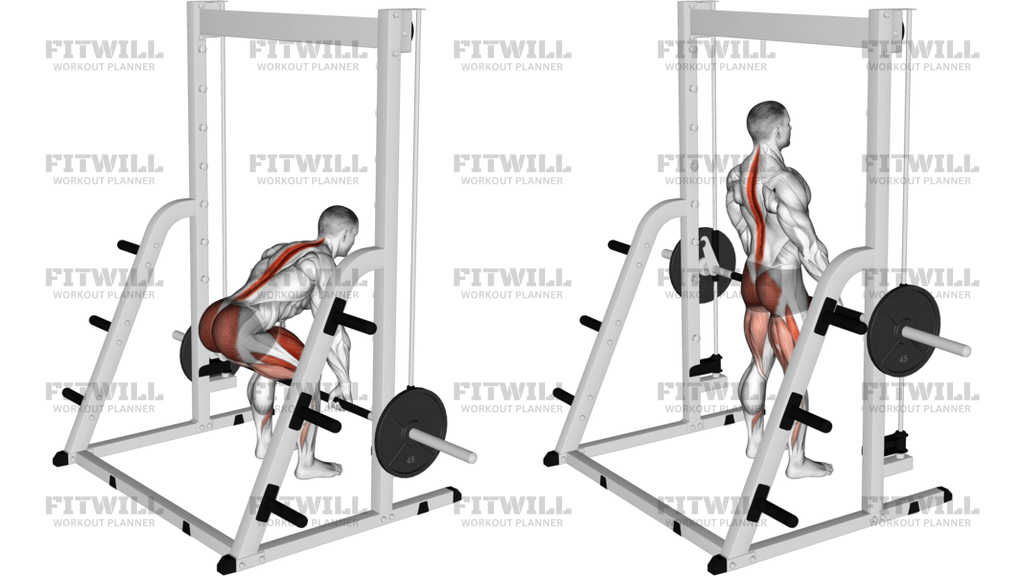
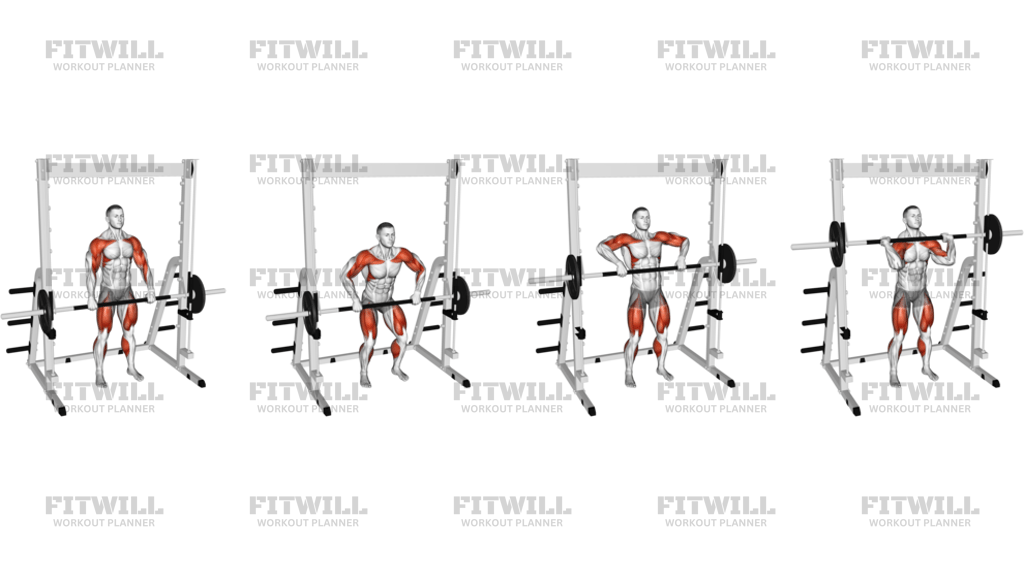
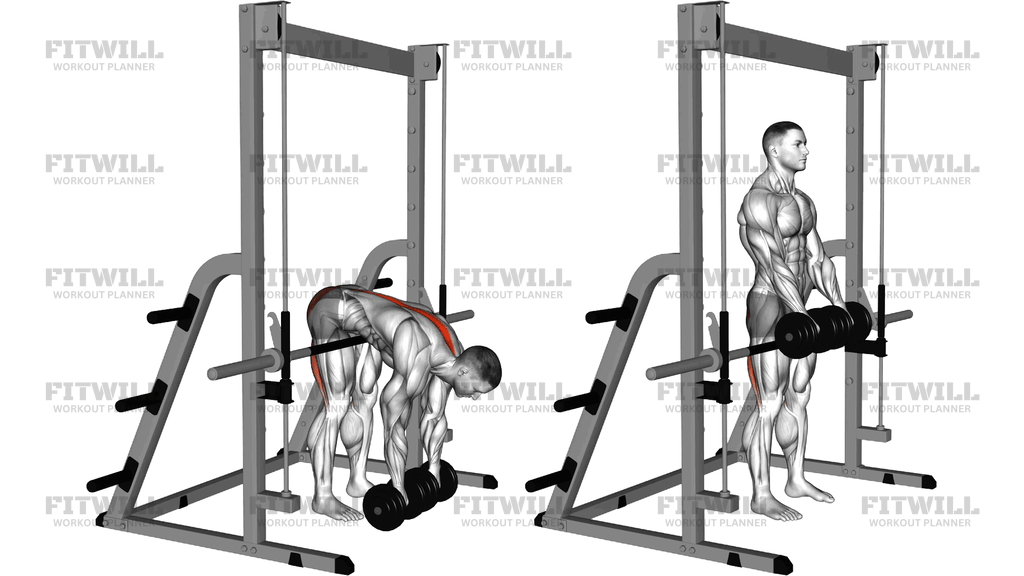
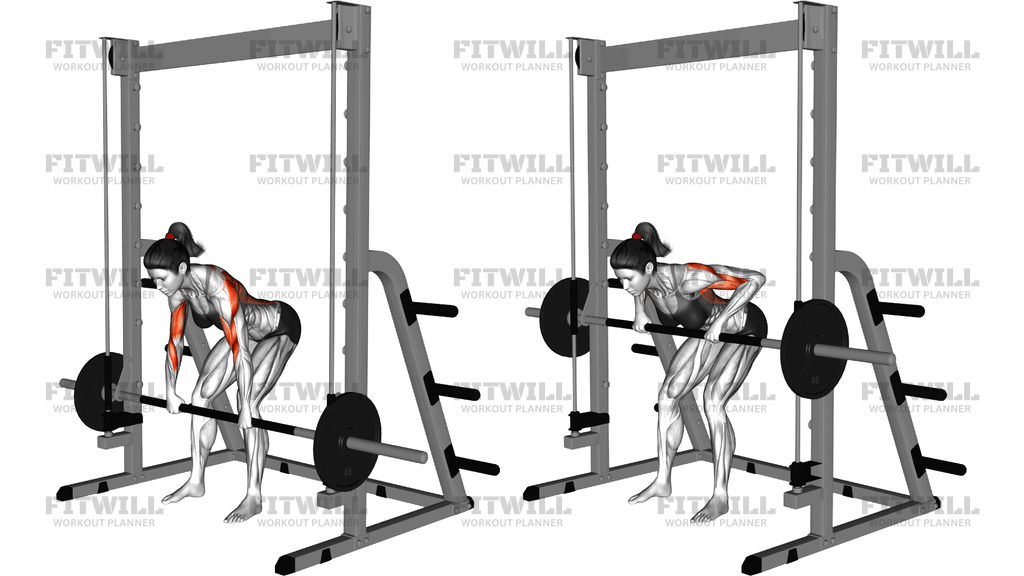
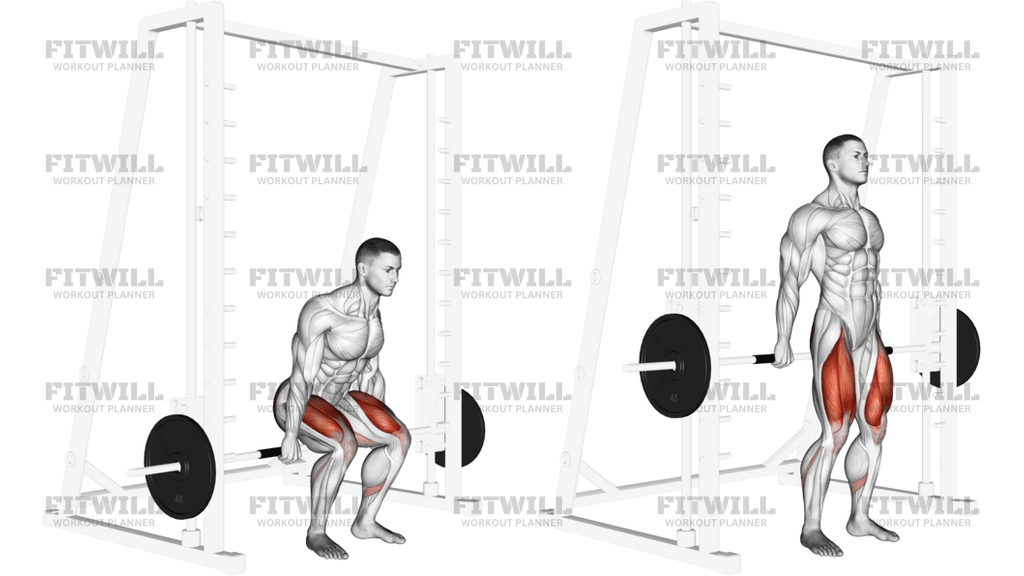
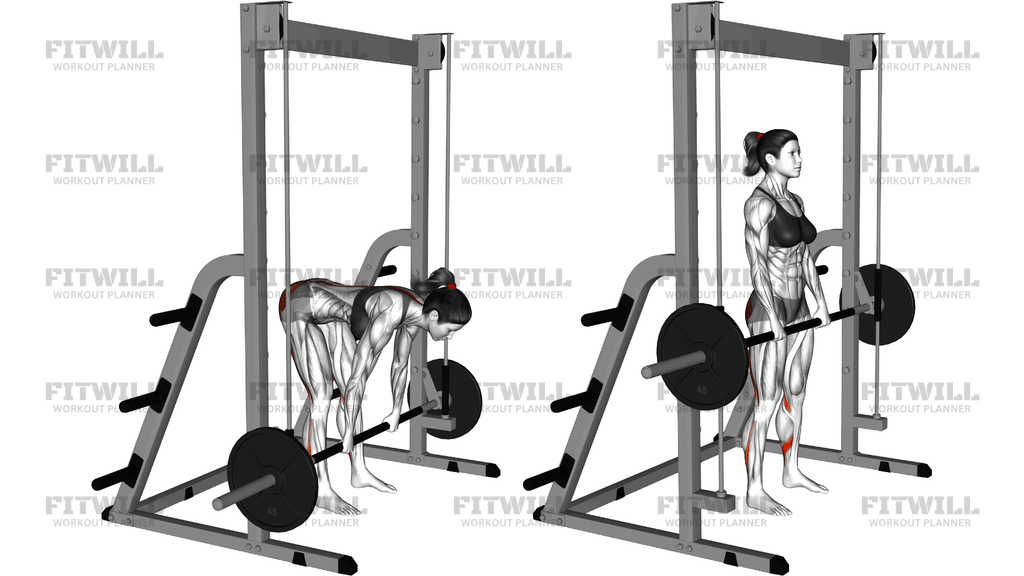
The Smith Stiff Legged Deadlift is a hip hinge performed with the bar of a Smith machine instead of a free-weight barbell. You stand facing the machine or with the bar in front of your thighs, hold it with an overhand grip, and hinge forward at the hips with only a soft bend in the knees until you feel a strong stretch through the hamstrings, then drive the hips forward to stand tall. Because the bar travels on fixed vertical rails, the movement removes the balance demands of a free-bar deadlift while keeping the same hip-dominant pattern.
This exercise targets the hamstrings as the primary mover, with strong involvement from the glutes at the top of each rep and steady work from the lower back muscles, which hold your spine in a neutral position as you lean forward. The forearms and grip also stay busy supporting the weight of the bar throughout the set.
The Smith machine setup is what makes this version appealing for many lifters. The fixed bar path means you can focus entirely on hinging at the hips rather than controlling a bar that wants to drift away from your legs. It also makes it easy to bail out safely, since rotating the bar to hook the rails ends the set instantly, which is useful when training close to muscular failure without a spotter.
Setup matters here for one main reason: the bar must sit directly over the middle of your feet so the rails do not pull you forward or backward. Position yourself so the bar rests against the front of your thighs at the start, keep the knees softly bent and stay planted, and let the hips travel backward as the bar slides down the legs. If your shins drift or your heels lift, the fixed path will expose it immediately, so take a moment to align yourself before unracking.
The Smith Stiff Legged Deadlift works well as a main hamstring builder on leg days, as a teaching tool for lifters still learning to hinge, or as a heavier hinge option for anyone whose balance limits their free-weight stiff legged deadlift. It pairs naturally with quad-focused work such as squats or leg presses to round out a lower body session.
Keep the working range honest. Descend only as far as you can maintain a flat back and feel the hamstrings stretching, usually to about mid-shin level, and never bounce out of the bottom. Progress the weight gradually, since the reduced stability demand can tempt you to load more than your lower back is ready to handle.
[ Workout Log & Planner ]
Put your next workout in Fitwill
Keep your plan and training log ready when you are.


Instructions
- Set the Smith machine bar at roughly hip height and load the weight plates you plan to use on both sides.
- Stand in front of the bar with your feet about hip-width apart, positioned so the bar lines up over the middle of your feet and touches the front of your thighs.
- Grip the bar with an overhand hold slightly wider than shoulder-width and rotate it to unlock it from the rails.
- Stand tall with your chest open and shoulders pulled back, then brace your core as if preparing for a light push to the stomach.
- Keep a soft bend in your knees and push your hips straight back, letting the bar slide down the front of your legs as your torso lowers.
- Descend until you feel a deep stretch in your hamstrings, usually when the bar reaches mid-shin, while keeping your back flat and your head in line with your spine.
- Drive your hips forward and squeeze your glutes to return to a full standing position with the bar back against your thighs.
- Exhale as you rise and inhale as you lower into each rep, keeping your breathing steady throughout the set.
- After your final rep, stand fully upright, rotate the bar to re-rack it on the rails, and confirm the hooks are engaged before letting go.
Tips & Tricks
- Do not straighten your legs completely and lock the knees; the stiff legged position calls for soft, nearly straight knees so the hamstrings stay loaded and the joints are not stressed.
- If the bar drags you forward onto your toes, your stance is too far from the machine. Shift your feet so the rails sit directly over mid-foot before unracking.
- The most common mistake is turning this into a squat by bending the knees deeply. Watch that your hips travel backward, not downward.
- Check your bottom position in a side mirror: if your lower back rounds, stop the rep higher and work on hamstring flexibility before adding depth.
- Keep the bar in light contact with your legs on the way down. Letting it float forward shifts load onto the lower back and away from the hamstrings.
- Squeeze the glutes hard at the top but avoid leaning back or hyperextending the hips; standing tall is far enough.
- Start lighter than your free-weight stiff legged deadlift the first time, since the fixed path changes the leverage and your hamstrings may respond differently.
- Use a double-overhand grip and switch to lifting straps only if grip fails before your hamstrings do; otherwise keep training the grip.
- Set the safety stop or be ready to rotate the bar onto the rails if a rep goes wrong, and never drop the weight at the bottom of the movement.
Frequently Asked Questions
Which muscles does the Smith Stiff Legged Deadlift work?
The hamstrings do most of the work, with the glutes contributing strongly as you stand up. The lower back muscles work isometrically to keep your spine flat, and your grip supports the bar throughout.
Is the Smith Stiff Legged Deadlift good for beginners?
Yes, it is one of the friendlier ways to learn the hip hinge because the fixed bar path removes balance demands and the machine is easy to exit safely. Start with a light load and focus on the hip-back, flat-back pattern before adding weight.
How far down should I lower the bar in the Smith Stiff Legged Deadlift?
Lower until you feel a strong hamstring stretch while your back stays flat, which for most people is around mid-shin level. Going deeper usually forces the lower back to round, which is the point to avoid.
Why use a Smith machine instead of a barbell for stiff legged deadlifts?
The fixed vertical rails keep the bar from drifting away from your legs, so you can concentrate on the hinge itself and train close to failure without a spotter. The tradeoff is less stabilizer involvement and a slightly different feel than the free-weight version.
Should my knees be locked or bent during this exercise?
Keep a soft bend in the knees for the entire set. Fully locking the knees removes tension from the hamstrings at the top and places unnecessary stress on the joint.
What is the most common mistake in the Smith Stiff Legged Deadlift?
Bending the knees excessively and turning the hinge into a half squat, which shifts work to the quads. Another frequent error is letting the lower back round at the bottom; fix both by pushing the hips back and stopping the descent when the hamstrings stretch.
How should I position my feet relative to the Smith machine bar?
Stand close enough that the bar rests against the front of your thighs and tracks straight down over the middle of your feet. If the rails pull you forward or backward, your stance is misaligned and should be adjusted before you unrack.
Can I use lifting straps for the Smith Stiff Legged Deadlift?
You can if your grip gives out before your hamstrings on heavier sets. Since the machine stabilizes the bar for you, many lifters find their grip holds up better here than with a free barbell.
What can I substitute if my gym has no Smith machine?
A barbell or dumbbell stiff legged deadlift trains the same pattern, and a cable version using a straight bar attachment behind you also works. Expect to use lighter weights while you relearn the balance component.
Is it safe to train the Smith Stiff Legged Deadlift to failure?
It is safer than most free-weight hinge variations because you can rotate the bar onto the rails to end the set at any point. Still, stop when your form begins to break down rather than grinding reps with a rounded back.