V Sit Alternating Knee Tuck
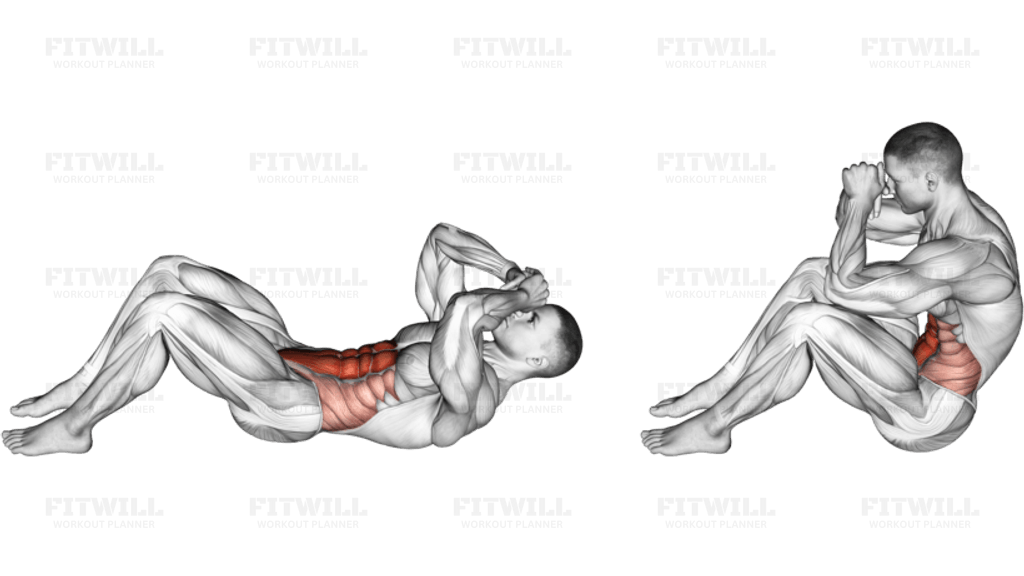
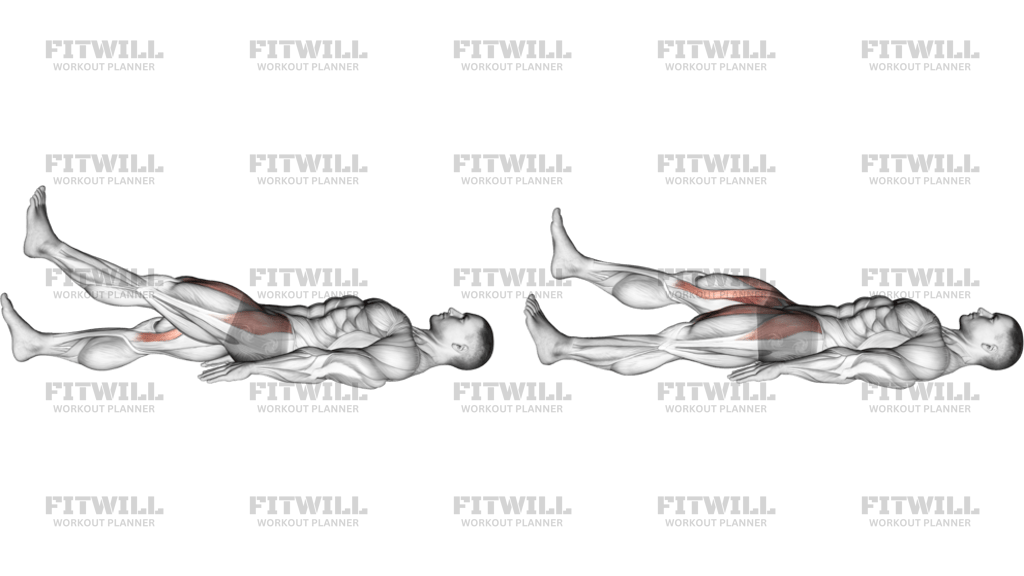
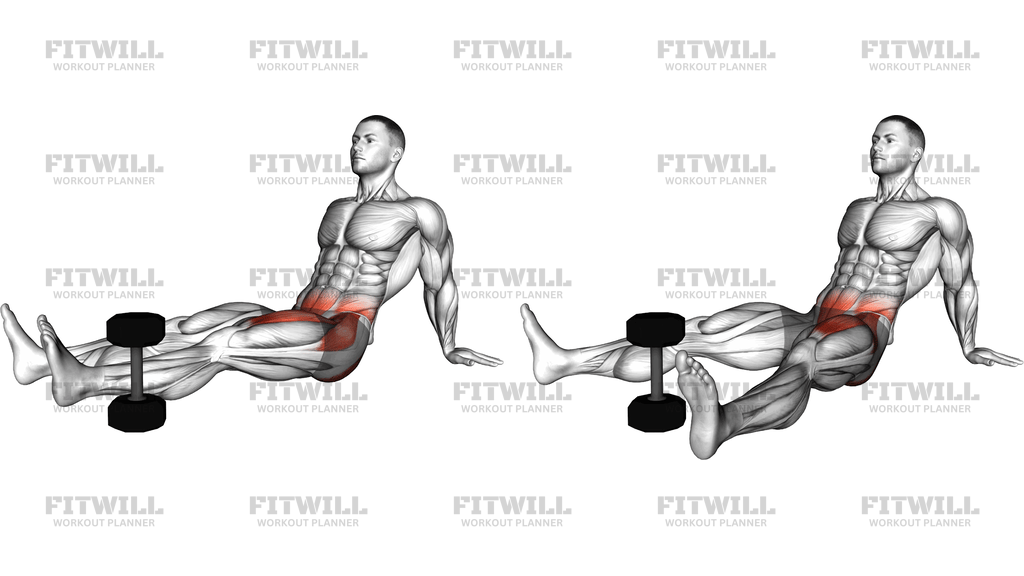
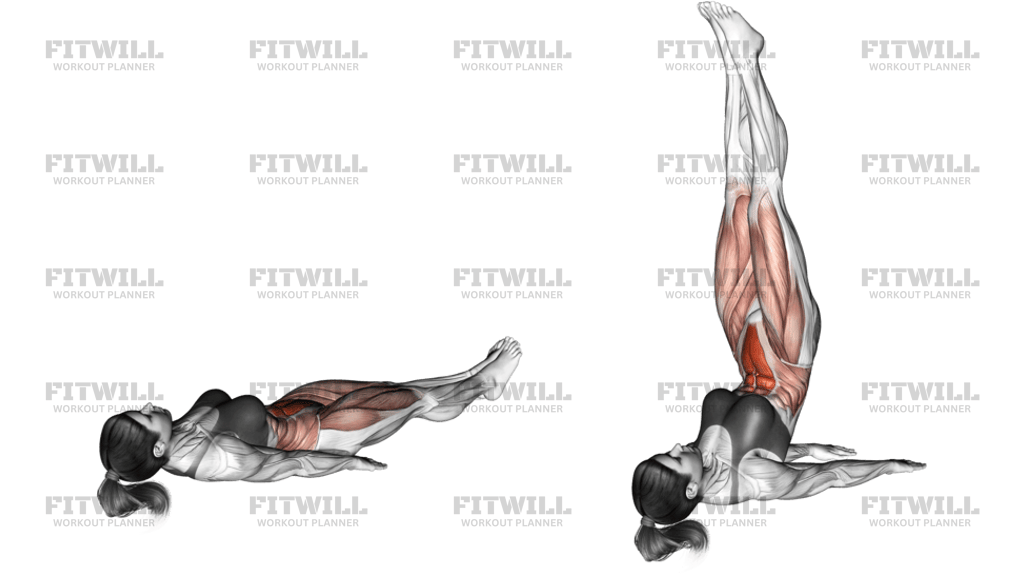
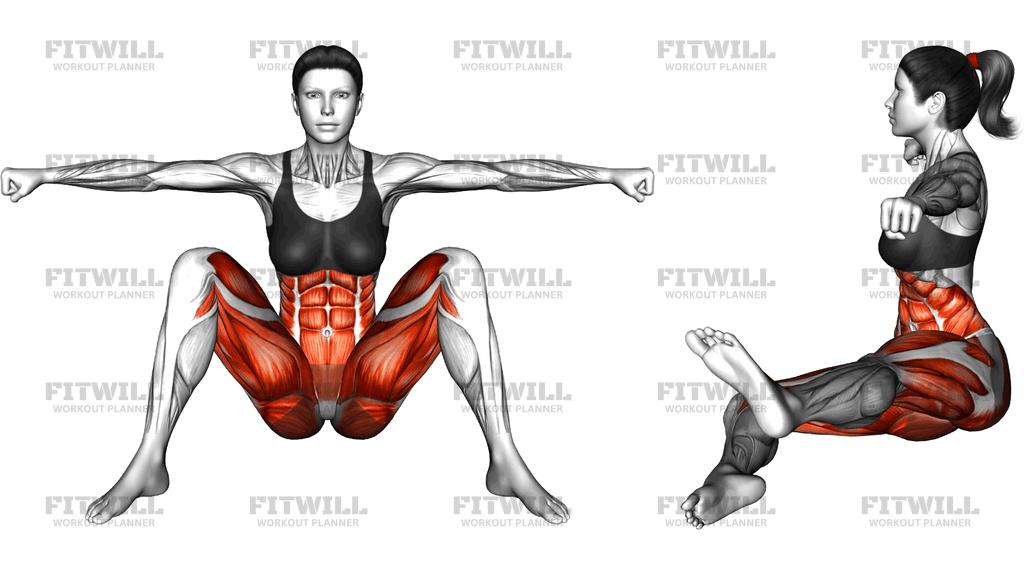
The V Sit Alternating Knee Tuck is a seated bodyweight core exercise that combines an isometric V-sit hold with a rhythmic, alternating knee drive. You balance on your sit bones with your torso leaned back and one leg extended off the floor, then repeatedly pull one knee in toward your chest while the other leg stays extended, switching legs with each rep. The arms move in a running-style rhythm, which gives the movement its characteristic look and adds a coordination challenge on top of the strength demand.
This exercise earns its place in a core routine because it trains two things at once: the deep brace needed to hold a V-sit position, and the dynamic control needed to move one leg without letting the rest of your posture collapse. The lower abs and hip flexors do most of the work as you tuck each knee, the obliques stabilize the slight rotation created by the arm drive, and the quads and hip flexors of the extended leg fight gravity the entire time. Because both legs are never on the floor at once, your trunk has to stay rigid or you will rock backward and lose the position.
Setup matters more here than in most floor ab exercises. If your hands are planted too far behind your hips, they take over the work and your abs get a free ride. If your torso is too upright, your lower back rounds and the hold becomes uncomfortable. The sweet spot is a long, proud chest leaned back roughly 45 degrees, hands hovering or lightly brushing the mat beside your hips, and weight balanced through the back of your pelvis rather than your tailbone.
To execute it well, think of your torso as the fixed part and your legs as the moving part. Tuck one knee in until it nearly touches your chest, keep the other leg straight and hovering at the height you can hold without your lower back dipping, then switch smoothly. The knee should travel toward the same-side shoulder area while the opposite arm drives up in a running motion, which keeps the movement symmetrical over a set. Breathing stays steady and continuous, since holding your breath makes the V-sit position much harder to maintain.
This movement suits people who already tolerate standard leg raises and seated holds and want a harder, more coordination-heavy option. It fits well at the end of an ab circuit, as a warm-up activator for calisthenics or martial arts training, or in home workouts where no equipment is available. Work in timed sets of 20 to 40 seconds or fixed rep counts like 10 to 16 alternating tucks, and stop the set when your extended leg starts dropping or your lower back begins to arch off the mat, since those are the clearest signs the position is no longer under control.
[ Workout Log & Planner ]
Put your next workout in Fitwill
Keep your plan and training log ready when you are.


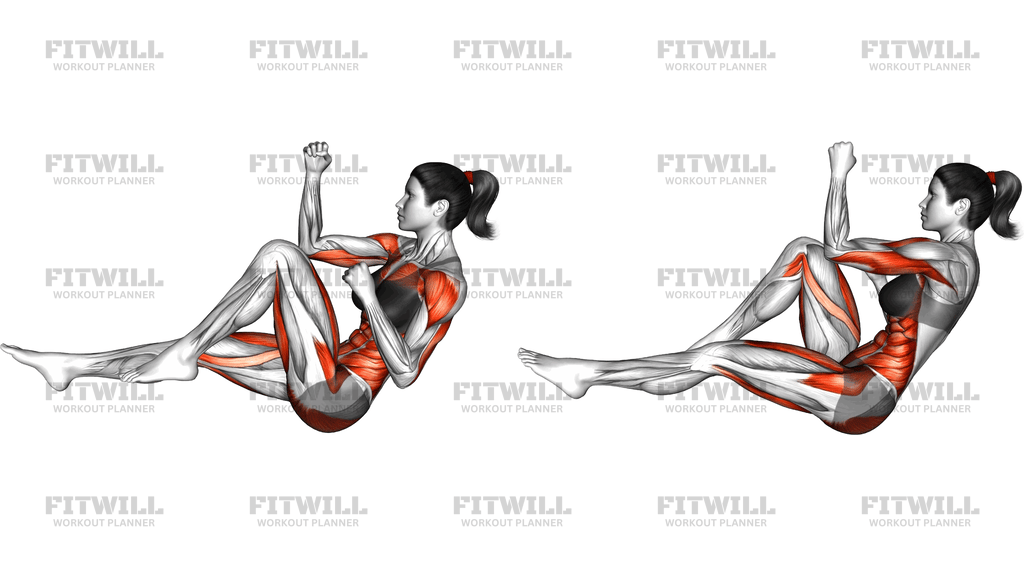
Instructions
- Sit on an exercise mat with your knees bent and feet flat, then lean your torso back to roughly a 45-degree angle with your chest tall and shoulders relaxed.
- Lift both feet off the floor and extend one leg straight so it hovers above the mat, keeping your weight balanced on the back of your sit bones with your hands held loosely beside your hips or slightly raised for balance.
- Brace your abs firmly and pull your belly button in so your lower back stays long and your torso does not slump or rock as the legs move.
- Exhale and drive one knee in toward your chest while the opposite arm bends and drives upward in a running motion, keeping the other leg extended and hovering.
- Pause briefly at the tucked position, feeling your lower abs and hip flexors pull the knee in rather than letting momentum do the work.
- Inhale as you switch: extend the tucked leg back out to hover and simultaneously pull the opposite knee in with the opposite arm driving up.
- Continue alternating in a smooth, controlled rhythm, keeping the extended leg at a consistent height the entire set.
- Keep your gaze forward and your neck relaxed so the arm drive does not pull your shoulders up toward your ears.
- When you finish the set, lower both feet to the mat first, then sit up slowly rather than collapsing back onto your tailbone.
- Rest briefly, reset your brace, and begin the next set with the opposite leg if you are counting reps per side.
Tips & Tricks
- If you keep rocking backward, your balance point is too far behind your sit bones — shift your weight slightly forward and shorten the lean of your torso until you can stay still.
- A dropping extended leg is the first sign of fatigue in this exercise; bending that knee slightly is a fair regression, but letting it sag toward the mat with a rounded lower back is not.
- Keep the knee tuck driven by your lower abs rather than by pulling with your hands; if you find yourself pressing hard into the floor with your arms, lighten the hand contact or lift them slightly.
- Match the arm drive to the knee drive on opposite sides — same-side arm and knee moving together usually means the coordination pattern has broken down, so slow the tempo until it corrects.
- Avoid letting your shoulders creep toward your ears during the arm swing; think of pushing your shoulder blades down as each arm drives up.
- Do not let your torso curl forward each time a knee comes in — the chest stays leaned back at the same angle, and only the legs and arms travel.
- If your tailbone feels pressure or soreness, place a folded towel or thin pad under your hips, or raise the extended leg slightly higher to reduce the load rather than tilting your pelvis.
- Breathe in a steady 2-in, 2-out rhythm instead of holding your breath; breath-holding makes the isometric hold fail long before your abs are actually tired.
- Start with a lower extended-leg height (closer to the mat) if your hip flexors cramp, and progress the leg height only when you can keep your lower back neutral.
Frequently Asked Questions
Which muscles does the V Sit Alternating Knee Tuck work the most?
The lower abs and hip flexors do the primary work of holding the V-sit and driving each knee in. The obliques stabilize the rotation from the arm drive, and the quads help keep the extended leg straight and hovering.
Is the V Sit Alternating Knee Tuck suitable for beginners?
It is best treated as an intermediate progression because balancing on the sit bones with both legs off the floor is demanding. Beginners can start by keeping one foot lightly touching the mat between tucks or by performing seated alternating knee tucks with a more upright torso.
Why does my lower back arch during the V Sit Alternating Knee Tuck?
An arched lower back usually means the extended leg is held lower than your hip flexors and abs can control, or your torso lean has become too deep. Raise the extended leg slightly, reduce the backward lean, and re-brace your abs before continuing.
Should my hands touch the floor during the V Sit Alternating Knee Tuck?
A light touch beside your hips is fine for balance, but pressing hard into the floor shifts work away from your abs. Once you can hold the position steadily, lift the hands slightly so the core does the stabilizing.
How is the V Sit Alternating Knee Tuck different from a regular V-sit hold?
A V-sit hold is a static position with both legs extended, while this version keeps one leg moving in an alternating knee drive with a running-style arm action. That makes it more dynamic and adds a coordination and oblique-stabilization element.
How many reps or how long should I perform the V Sit Alternating Knee Tuck?
Aim for 20 to 40 seconds of continuous alternating tucks, or 10 to 16 total tucks per set. End the set when your extended leg starts dropping or your form changes, and build volume gradually from there.
My hip flexors cramp when I do the V Sit Alternating Knee Tuck — what should I do?
Hip flexor cramping is common when the extended leg is held very low. Hold the leg slightly higher, slow the switching tempo, and shorten your sets; gentle hip flexor stretching between sessions also helps.
Can I substitute the V Sit Alternating Knee Tuck if I find it too hard?
Yes — seated alternating knee tucks with hands behind your hips and heels hovering close to the mat are a solid stepping stone. Bicycle crunches and single-leg raises also train similar muscles with less balance demand.
Is it safe for the lower back to do the V Sit Alternating Knee Tuck regularly?
When performed with a braced core and a controlled leg height, it is a standard core conditioning exercise. If you feel pinching or discomfort in your lower back rather than muscle effort, stop the set, raise the leg height, and reduce your lean before trying again.