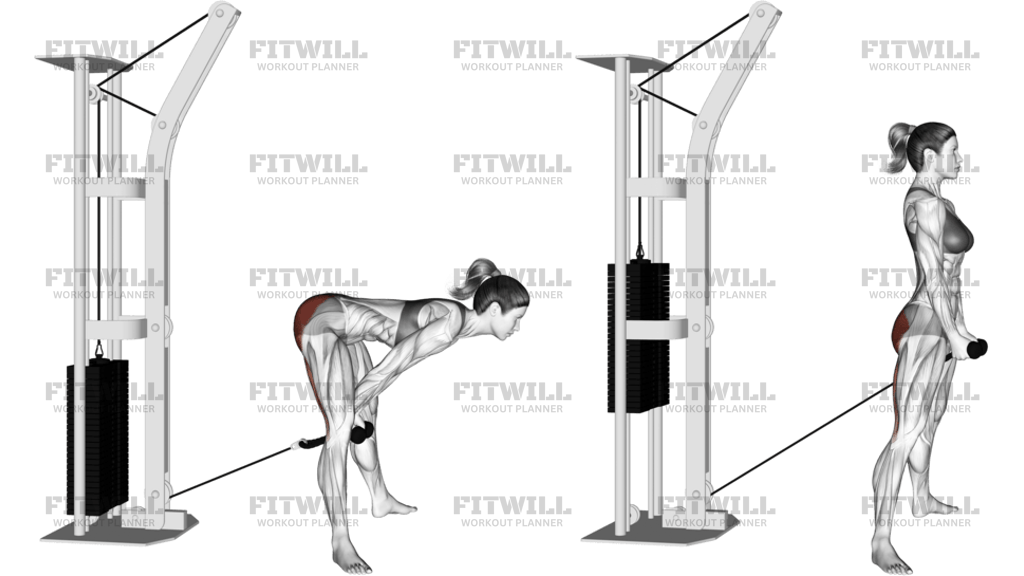
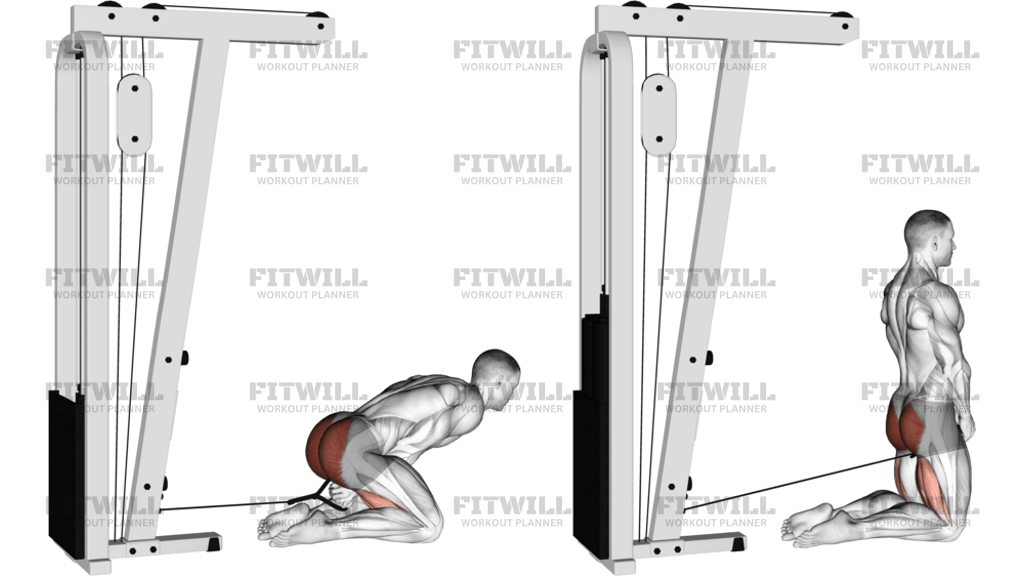
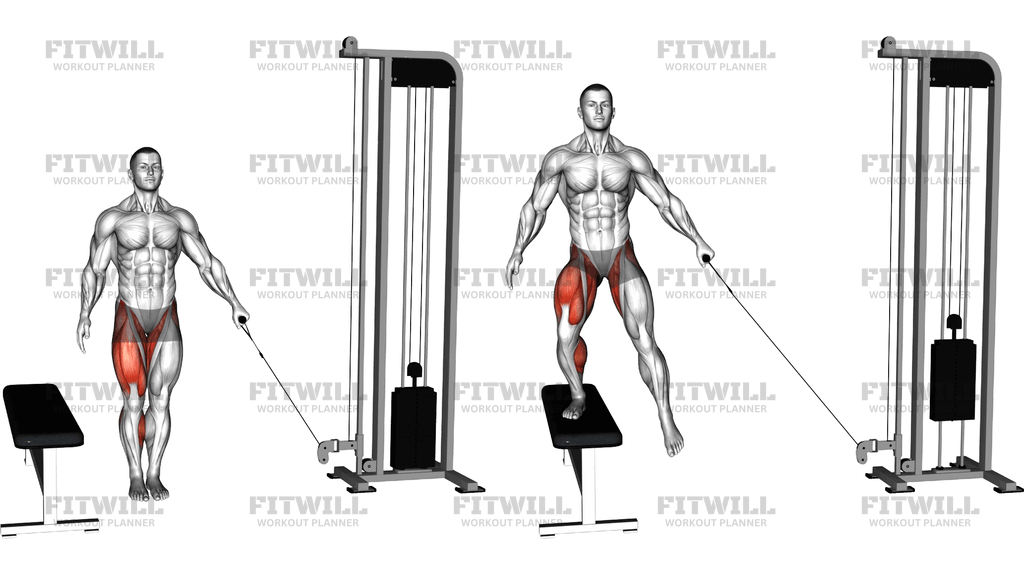
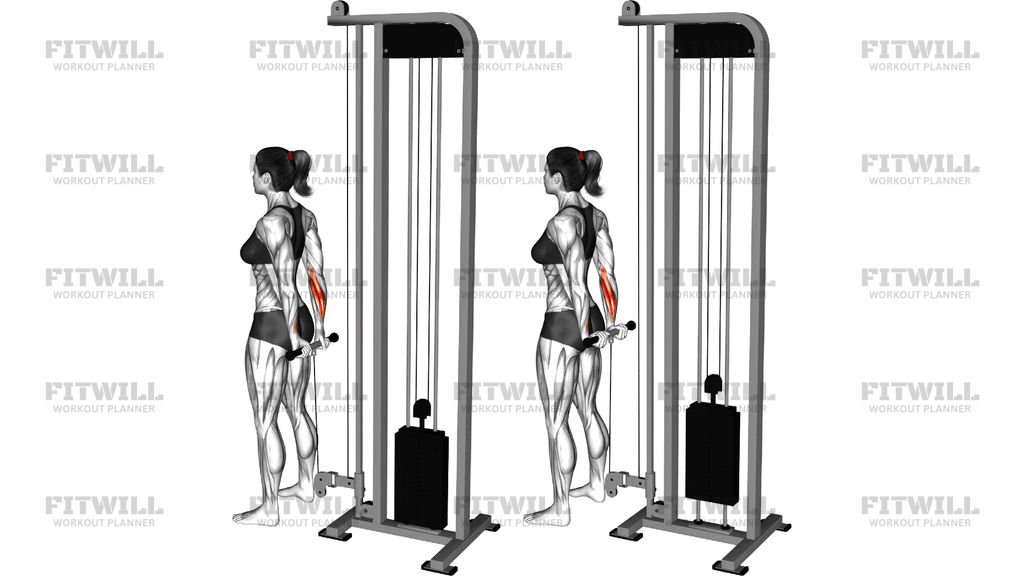
Cable Reverse Lunge
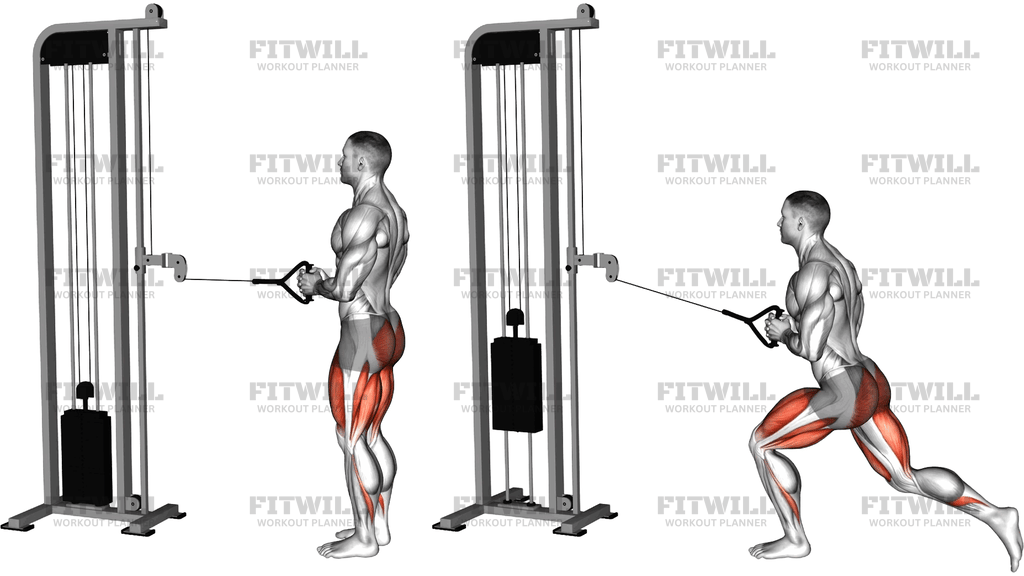
The Cable Reverse Lunge is a single-leg strength exercise performed facing a cable machine with a rope attachment held at chest height. Because the cable pulls you forward toward the stack, your body has to fight that pull by staying tall and slightly leaned back as you step backward into the lunge. This constant horizontal tension changes the feel of a regular reverse lunge: the glutes and quads of the front leg work harder through the whole rep, and your trunk muscles stay switched on to keep you from being dragged toward the machine.
The setup is simple but specific. Set a pulley at its lowest position, grip the rope with both hands, and bring it up to your chest with elbows tucked. Stand facing the machine a step or two away so the cable runs low and slightly upward toward your hands. From there, one leg steps straight back while the front knee bends and the rear knee lowers toward the floor, then you drive through the front foot to stand back up.
This version of the lunge suits lifters who want constant tension on the legs without loading a bar on their spine, as well as anyone who finds that the forward pull naturally cues an upright torso and an honest front-leg position. Because each rep loads one leg at a time, it is a useful tool for finding and fixing side-to-side strength differences that a squat or leg press can hide.
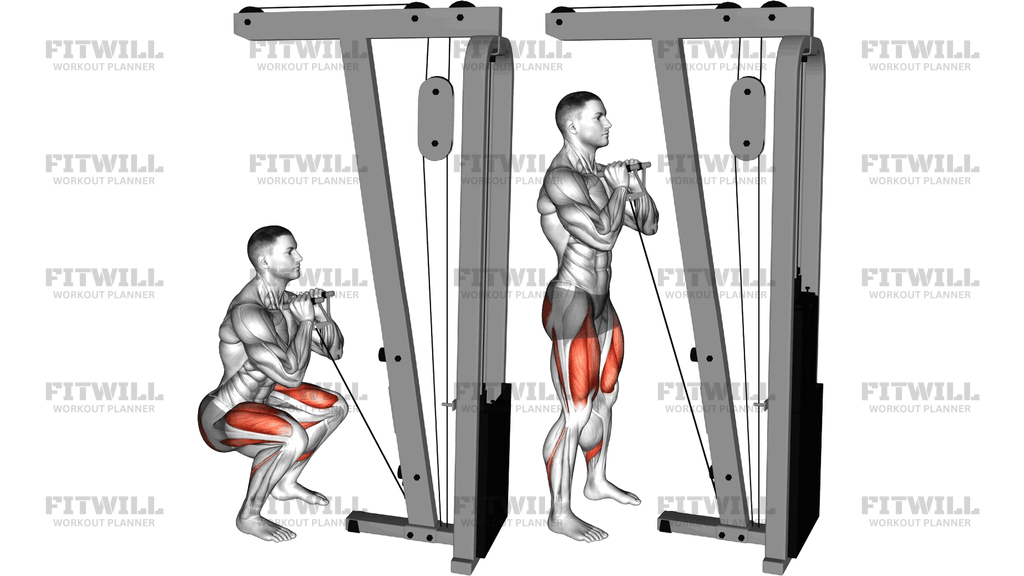
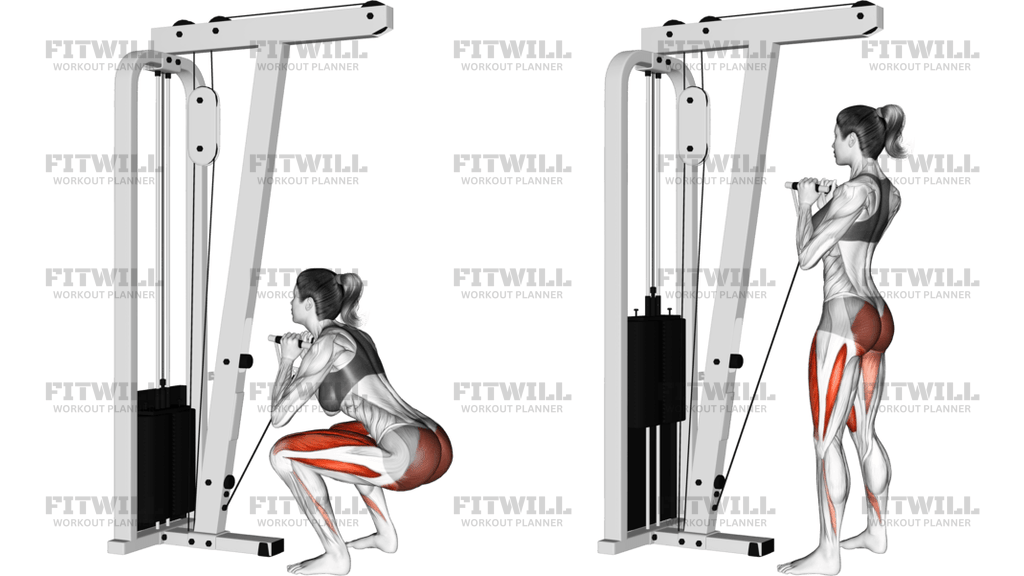
The main muscles working are the glutes and quadriceps of the front leg, with the hamstrings assisting on the way down and the calf of the front foot pushing you back to standing. The rear leg helps with balance and controls how deep you go, while your core, especially the deep trunk stabilizers, resists the forward drag of the cable for every second of the set.
Execution quality comes down to three things: keeping the rope anchored at your chest, stepping back far enough that the front shin stays close to vertical, and letting the rear knee travel down rather than letting the front knee collapse forward or inward. A controlled two-second descent with a firm drive back up will do more for your legs than rushing through reps with a short, shallow step.
Practically, this movement slots in well as a main lower-body lift on leg day or as an accessory after squats or deadlifts when you want targeted single-leg work with easy weight adjustments. Start light, since the cable's pull makes even modest loads feel demanding, and only add resistance once you can complete all reps without the rope drifting away from your chest or your balance breaking down.
[ Workout Log & Planner ]
Put your next workout in Fitwill
Keep your plan and training log ready when you are.


Instructions
- Attach a rope to the lowest pulley of a cable machine and set the pin to a light starting weight.
- Face the machine, grip the rope with both hands, and pull it up to your chest with your elbows tucked against your ribs, then take one or two steps back so your arms extend slightly and the cable pulls forward.
- Set your feet hip-width apart, brace your abdominal wall, and pull your shoulder blades back so your chest stays proud against the cable's pull.
- Inhale, then step one leg straight back behind you, landing on the ball of that foot with your torso staying tall and leaned just slightly away from the machine.
- Lower under control until the rear knee is just above the floor and the front thigh is near parallel, keeping the front shin roughly vertical and the knee tracking over the toes.
- Exhale and drive through the heel and midfoot of the front leg to push the floor away and return to standing.
- Bring the rear foot back in so both feet are side by side again, keeping the rope held at your chest the entire time.
- Complete all reps on one leg, then switch sides, re-bracing before each new set of reps.
- Reset your stance and grip between sets, and adjust the weight only when every rep looks identical from start to finish.
Tips & Tricks
- If the cable drags your shoulders forward, you are standing too close to the machine or holding the rope too low; take a half step back and anchor the rope at mid-chest.
- The most common fault is a short step, which forces the front knee past the toes and turns the rep into a knee-dominant grind; step back farther than feels natural until the front shin is close to vertical.
- Keep your weight over the front heel, not the toes, so the glutes do the lifting instead of the front knee taking the strain.
- Do not let the rear knee slam down at the bottom; lowering it under control for about two seconds keeps tension on the working leg and protects the knee.
- Avoid twisting the hips as you step back, since the forward cable pull makes rotation more likely than in a bodyweight lunge; imagine your hip bones pointing straight at the machine the whole time.
- Grip the rope firmly enough that it cannot slide, but keep your forearms and shoulders relaxed, since squeezing the handle too hard tightens your upper body and disturbs balance.
- If your balance wobbles, widen your stance slightly from front to back rather than shortening the step, and keep your eyes level on a fixed point instead of looking down at your feet.
- Start with a lighter load than you would use for dumbbell lunges; the horizontal cable tension makes the same weight feel substantially heavier on the working leg.
- Alternate which leg steps back first each workout so your stronger side does not always set the pace of the set.
Frequently Asked Questions
What muscles does the Cable Reverse Lunge work?
The glutes and quadriceps of the front leg do most of the work, with the hamstrings and calves assisting. Your core also stays engaged continuously because it has to resist the forward pull of the cable.
Why hold the rope at chest height instead of letting the arms hang?
Anchoring the rope at your chest keeps the cable's pull centered on your trunk, so resistance loads your legs and core evenly rather than yanking one shoulder or arm. It also encourages an upright torso, which places more demand on the front leg's glutes and quads.
Is the Cable Reverse Lunge good for beginners?
Yes, it is one of the more beginner-friendly lunge variations because the cable gives you a light, adjustable load and something to brace against while you learn the step-back pattern. Start with a very light pin setting and focus on the step length and knee position before adding weight.
How is this different from a regular bodyweight or dumbbell reverse lunge?
The cable applies horizontal resistance that pulls you toward the machine, so your legs and trunk work against that pull in addition to your body weight. This keeps tension on the muscles at the top of the rep, where a dumbbell lunge is easiest, and makes the standing position part of the work.
How far back should I step during the Cable Reverse Lunge?
Step back far enough that your front shin stays close to vertical at the bottom and your rear knee can lower toward the floor without crowding your front foot. A step that is too short pushes the front knee forward over the toes and shifts stress away from the glutes.
My shoulders keep getting pulled forward during the rep. What should I fix?
That usually means you are standing too close to the machine or letting the rope drift away from your chest. Take a half step back, re-anchor the rope at mid-chest with elbows tucked, and reset your brace before each rep.
Can I use a handle or straight bar instead of the rope attachment?
Yes, a single handle or straight bar held with both hands at chest height works the same way. The rope is often most comfortable because it lets your wrists sit in a neutral position against your chest.
Should the rear knee touch the floor?
It does not need to touch; lowering it to just above the floor is enough for a full range of motion. Letting it tap down lightly is fine if you control it, but slamming it into the ground means you are descending too fast.
How do I keep my balance when stepping back with the cable pulling me forward?
Keep the rope anchored at your chest, brace your abs before every rep, and pick a fixed point at eye level to look at. Widening your front-to-back stance slightly also gives you a more stable base than a narrow step.
Is the Cable Reverse Lunge safe for the knees?
When performed with a controlled descent and the front knee tracking over the toes, it is a knee-friendly way to train single-leg strength, since the backward step reduces forward knee travel compared with a forward lunge. If you have an existing knee issue, use a light load and a range of motion that stays comfortable.