Cable Kneeling Crunch (Version 3)
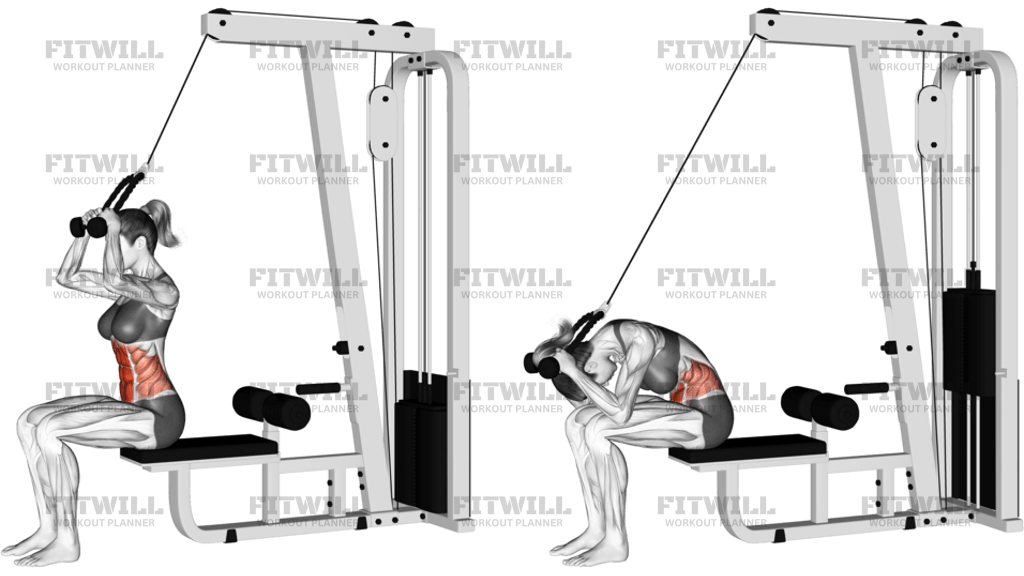
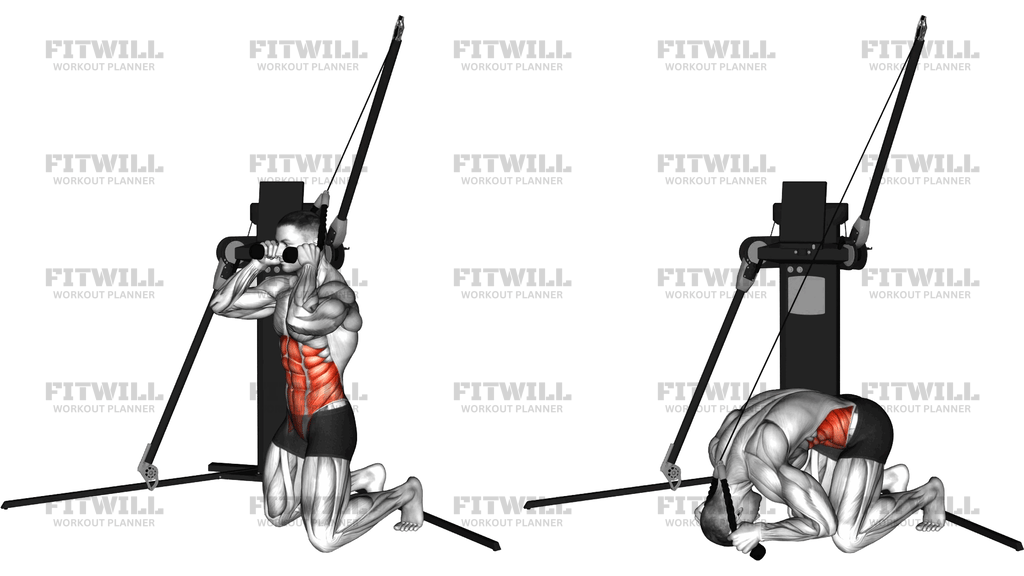
The Cable Kneeling Crunch is one of the most reliable ways to load the abdominal muscles directly, because the cable provides constant tension through the entire range of motion. You kneel facing away from a high pulley with a rope attachment held behind your head, then pull your elbows down toward your knees by curling your spine forward. Unlike sit-ups or leg raises, your hips stay mostly fixed, so the work comes from trunk flexion rather than hip flexion.
This movement suits almost any trainee who wants stronger, more defined abs with a progression you can adjust precisely by moving the pin on the weight stack. Beginners benefit because the kneeling position locks in the setup and teaches them to feel the rectus abdominis actually contracting. More advanced lifters use it to add heavy, controlled abdominal volume without stressing the lower back the way loaded floor sit-ups can.
The kneeling setup matters more than people expect. Kneeling on both knees with an upright torso gives the cable a consistent angle and removes the momentum you could generate while standing. Holding the rope ends beside your head, rather than pulling with your arms, keeps the arms and shoulders out of the movement so the abs do the flexing.
Execution is all about spinal curl, not pulling. Think about bringing your ribs toward your pelvis and driving your elbows toward your thighs, letting your upper back round as your abs shorten. At the bottom, pause briefly and squeeze hard. On the way back, resist the cable as your spine extends slightly and your hips travel backward, keeping tension on the abdominals at all times.
You will see this exercise in general strength programs, bodybuilding ab work, and conditioning circuits where the abs need direct loading. Keep the weight honest: if your hips rock backward or your arms start doing the pulling, the load is too heavy. Controlled reps with a real squeeze beat fast, bouncy reps every time, and avoiding jerky starts protects your neck and lower back from unnecessary strain.
[ Workout Log & Planner ]
Put your next workout in Fitwill
Keep your plan and training log ready when you are.


Instructions
- Set a rope attachment on the high pulley of a cable machine and select your starting weight on the stack.
- Kneel down facing the machine, grabbing one end of the rope in each hand, and position your body so the rope runs down behind your head on both sides.
- Walk your knees back slightly and sit tall with an upright torso, placing the rope ends beside your ears with your elbows bent and hands near your head.
- Brace your core lightly and keep your hips stacked directly over your knees before starting each rep.
- Exhale as you curl your spine forward, pulling the rope down and around your head so your elbows travel toward your knees.
- Continue until your upper body is folded toward your thighs and feel your abs fully shortened; pause for one second and squeeze.
- Inhale as you slowly extend back up, letting your spine lengthen and your hips drift back slightly while keeping the rope behind your head.
- Stop just short of letting the weight stack touch down so tension stays on the abs between reps.
- Complete your set, then release one end of the rope at a time carefully and stand up before changing the weight.
Tips & Tricks
- Curl your spine rather than hinging at the hips; if your torso is moving as one rigid piece, the hip flexors are doing the work and the abs are barely shortening.
- Chin stays near your chest and the rope stays behind your head. Pulling the rope forward with your hands turns it into an arm exercise and loads your neck.
- If your hips rock backward as you crunch, the weight is too heavy or you are rushing; drop the load a plate or two and re-establish the pause at the bottom.
- Exhale hard as you curl down. Emptying your lungs lets the abs contract into a tighter position and makes the squeeze noticeably stronger.
- A one-second squeeze at the bottom is worth more than two extra fast reps; the cable keeps tension when you are fully curled, so use it.
- Do not let the head lead the movement by jutting forward. Drive the elbows toward the knees and let the head simply follow the curl of the spine.
- Keep a small pad or folded towel under your knees if the kneeling position bothers them; comfort in the setup lets you focus on the contraction.
- Control the return for two to three seconds. Letting the cable yank you back up is the most common way people lose tension and strain their neck at the same time.
Frequently Asked Questions
Which muscles does the Cable Kneeling Crunch work?
The primary muscle is the rectus abdominis, the front wall of the abs that curls the spine. The obliques assist, especially if you add any slight rotation, while the hip flexors and arms only stabilize.
Why use a rope instead of a bar for the Cable Kneeling Crunch?
A rope lets you hold the ends beside your head and spread your hands apart as you crunch, which keeps the arms from pulling and gives your elbows room to travel toward the knees. A fixed bar tends to encourage pulling with the shoulders and arms.
Is the Cable Kneeling Crunch good for beginners?
Yes. The kneeling position fixes the setup, the weight is easy to adjust, and the movement teaches beginners to feel true spinal flexion instead of hip flexion. Start with a light weight and focus entirely on the curl.
How far back should my hips move during the return?
On the way up, let your hips drift back slightly as your spine extends, but keep your hips stacked over your knees and your shoulders over your hips. If your hips rock back every rep, momentum is replacing the ab work.
Should my elbows stop when they reach my knees?
That is a good target. The exact endpoint matters less than full spinal curl, so bring your ribs and pelvis as close together as you can with control, and do not add extra range by yanking with the arms.
Why does my neck hurt when doing the Cable Kneeling Crunch?
Usually the rope is being pulled forward with the hands or the head is being flung down instead of following the spine. Keep the rope ends beside your ears, tuck the chin gently, and let the elbows drive the movement.
What can I use if my gym has no cable machine?
Weighted floor crunches, decline bench crunches, or band-resisted crunches anchored overhead are the closest substitutes. None provide quite as constant a tension line as the cable, but they train the same spinal flexion pattern.
How heavy should I go on the Cable Kneeling Crunch?
Choose a weight you can curl for 10 to 15 reps with a clear pause at the bottom and no hip rocking. If the stack is slamming down or your arms are pulling, the load is beyond what your abs can control.
Can I twist at the top to hit my obliques more?
Yes, a small alternating rotation as you curl down shifts emphasis toward the obliques, but master the straight version first. Add rotation deliberately and keep the same controlled pace so the twist comes from the trunk, not the shoulders.