Cable Standing Torso Twist (Version 3)
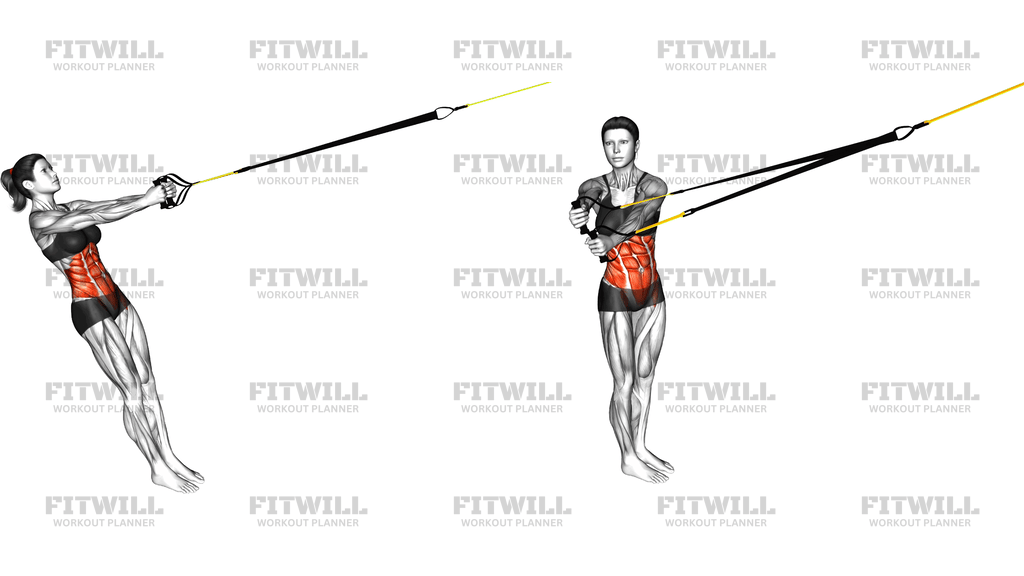
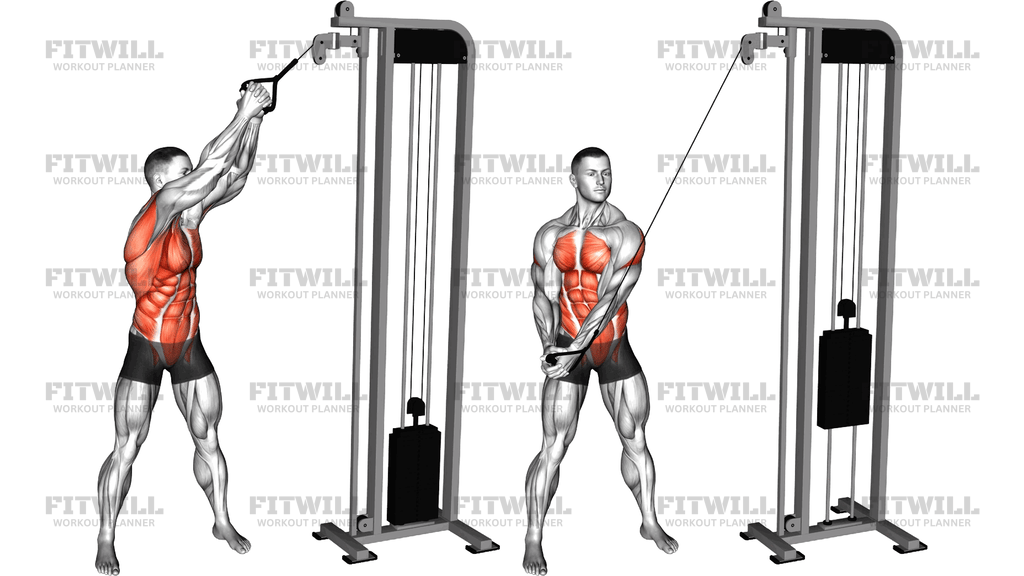
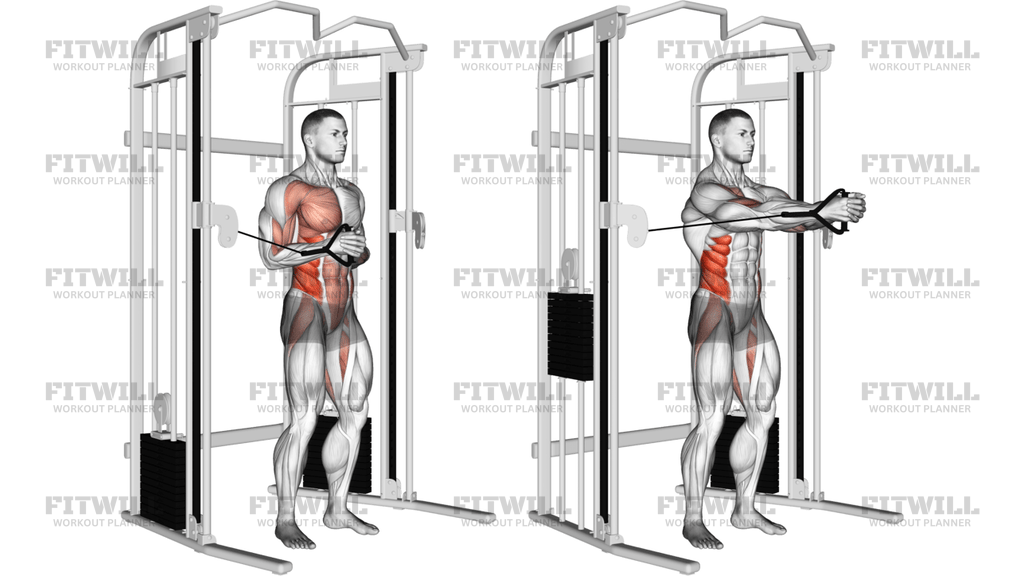
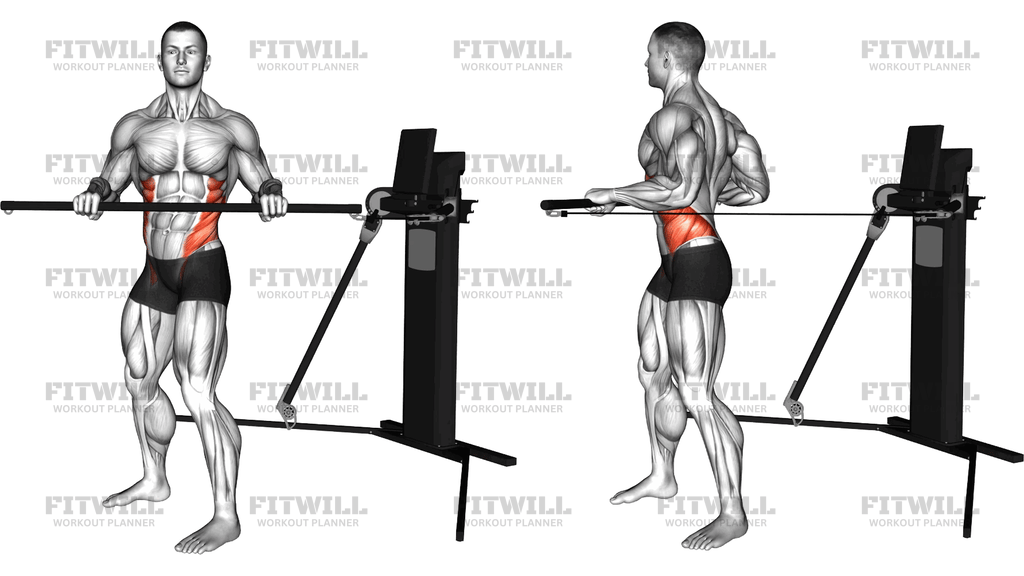
The Cable Standing Torso Twist is a rotational core exercise performed with a straight bar attached to a cable machine at roughly chest height. You stand sideways to the pulley, hold the bar with both hands at arm's length in front of your chest, and rotate your torso away from the machine while the cable pulls against your midsection. The constant tension from the weight stack makes this a clean way to load trunk rotation, something that is hard to do well with free weights.
The main muscles at work are the obliques on the side of your waist, which drive and control the twist. The rectus abdominis and deeper trunk muscles help keep your ribcage and pelvis connected, and the muscles of the lower back work to stabilize your spine as it rotates. Because you are standing, your legs and hips also contribute, staying braced while the movement happens above them.
This exercise suits lifters who want direct rotational strength, athletes in sports that involve swinging, throwing, or changing direction, and anyone whose core training has been limited to crunches and planks. Rotation is a normal part of everyday movement, and training it against modest, controlled resistance builds capacity that isolation work like crunches simply does not cover.
Setup matters here more than with most core exercises. The pulley height sets the angle of resistance, and your distance from the machine determines how much tension you start with. Stand far enough that the cable stays taut at the start, and keep the bar level with your sternum throughout. If you stand too close or drift toward the machine, the resistance fades exactly where you need it most.
To execute it well, keep your arms extended but not locked, and let the rotation come from your trunk rather than your shoulders. Your hips move with your torso through the twist, but your head and chest stay tall. Turn with intent to one side, pause briefly when you cannot rotate further without twisting your knee or ankle, then resist the cable on the way back rather than letting it spin you home. Work both sides evenly so one side does not take over the workload.
Keep the load conservative when you start. This is not an exercise where heavy weight helps; fast, sloppy twists under load are where people get into trouble. Smooth tempo, full but comfortable range, and steady breathing will do more for you than piling on plates, and anyone with a history of back issues should move carefully and stop short of any position that provokes discomfort.
[ Workout Log & Planner ]
Put your next workout in Fitwill
Keep your plan and training log ready when you are.


Instructions
- Set a straight bar attachment on a cable pulley at about chest height and select a light weight to start.
- Stand sideways to the machine and grip the bar with both hands using an overhand grip, hands roughly shoulder-width apart.
- Step away from the machine until the cable is taut with your arms extended in front of your chest and the bar held horizontally.
- Set your feet about shoulder-width apart with a slight bend in the knees and brace your abdominals.
- Keeping your arms extended, rotate your torso away from the machine, turning your chest and shoulders as one piece while your feet stay planted.
- Continue until you reach a comfortable end range, pausing for a moment with your waist muscles working against the pull.
- Slowly rotate back toward the starting position, resisting the cable's pull instead of letting it swing you back.
- Exhale as you twist away from the machine and inhale as you return under control.
- Complete all reps on one side, then reposition and repeat facing the opposite direction.
- Reset your stance and brace between sets rather than muscling through with a loose trunk.
Tips & Tricks
- The most common fault is pulling with the arms and shoulders. Your hands stay at a fixed distance from your chest so the obliques, not the arms, move the bar.
- Do not let your knees and feet twist with the rotation. Keep them pointing forward and drive the turn from your waist, or the tension leaks into your joints instead of your core.
- If the cable goes slack at the start of each rep, you are standing too close to the machine. Take a half step back until the bar pulls gently away from you before you begin.
- Keep the bar at sternum height the whole time. Letting it drift up toward your shoulders or down toward your hips changes the resistance angle and shifts work away from the waist.
- Move slower on the return than on the twist itself. The eccentric control against the cable is where much of the benefit lives.
- If your lower back arches or feels strained, reduce the weight and shorten the range slightly before resetting your form.
- Perform the same number of sets and reps on each side, starting with your weaker side, to keep rotation balanced left to right.
- Warm up with a few body-weight torso rotations before adding cable resistance so your trunk is ready to rotate under load.
Frequently Asked Questions
Which muscles does the Cable Standing Torso Twist work?
The obliques along the sides of your waist are the primary movers, supported by the rectus abdominis and deeper trunk muscles that stabilize the spine. The lower back and hip muscles work isometrically to keep you grounded during the twist.
Why hold the bar at chest height instead of lower?
Chest height lines the cable up with your trunk so the resistance rotates your torso directly. Holding the bar lower turns the movement into more of a hip and lower back exercise and reduces the work on the waist.
Is the Cable Standing Torso Twist suitable for beginners?
Yes, as long as beginners start with a light weight and focus on slow, controlled rotation. The standing position and light starting load make it more approachable than many loaded rotational exercises.
How far should I stand from the cable machine?
Stand at a distance where the cable is already taut with your arms extended and the bar at your sternum. If the cable goes slack at any point in the range, step back slightly so tension stays constant.
Can I substitute the Cable Standing Torso Twist if my gym has no cable machine?
A resistance band anchored at chest height is the closest substitute, since it also provides tension through the arc of rotation. Landmine rotational presses and controlled body-weight twists cover similar ground with less direct loading.
How heavy should I go on this exercise?
Choose a weight you can twist through a full range with a smooth tempo and no jerking. Rotational exercises reward control far more than load, and heavy fast twists are the most common way people strain their back on this movement.
Should my feet rotate during the twist?
Keep your feet planted and pointing forward throughout the set. If your knees and ankles twist with the bar, the rotation transfers into your leg joints instead of staying in the trunk where it belongs.
How many sets and reps should I do?
Two to three sets of 10 to 15 controlled twists per side works well for most people. Prioritize an even workload on both sides over adding total volume.
Is this exercise safe for people with lower back problems?
Anyone with a current or past back issue should check with a qualified professional before adding loaded rotation. If you do perform it, use a light weight, a shortened range, and stop immediately if the movement produces discomfort.