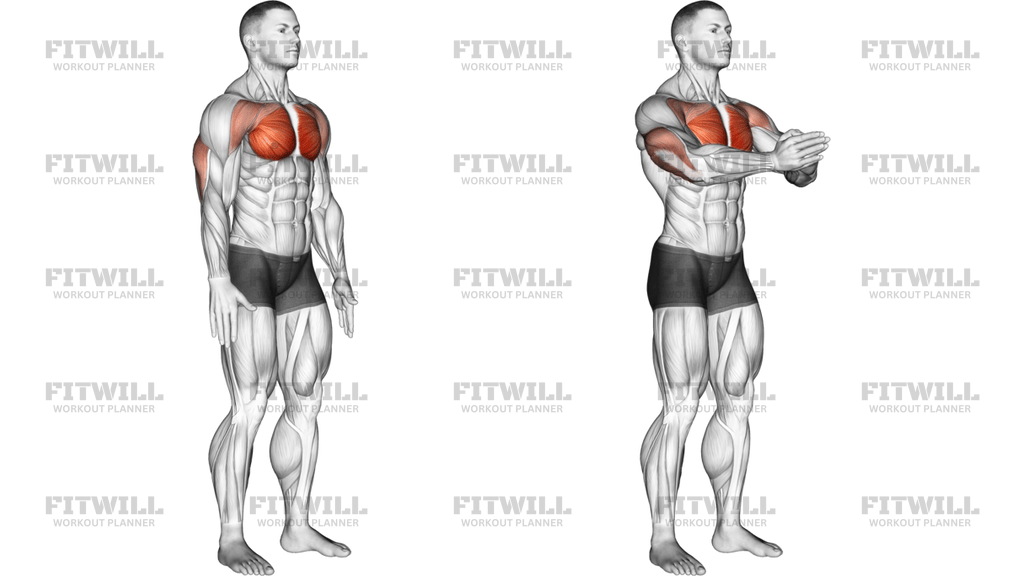
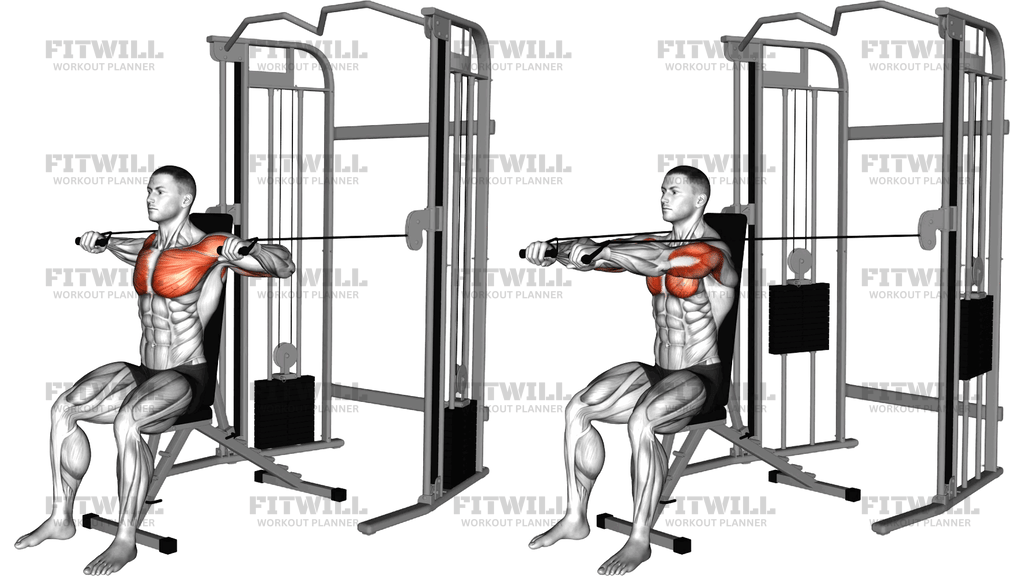
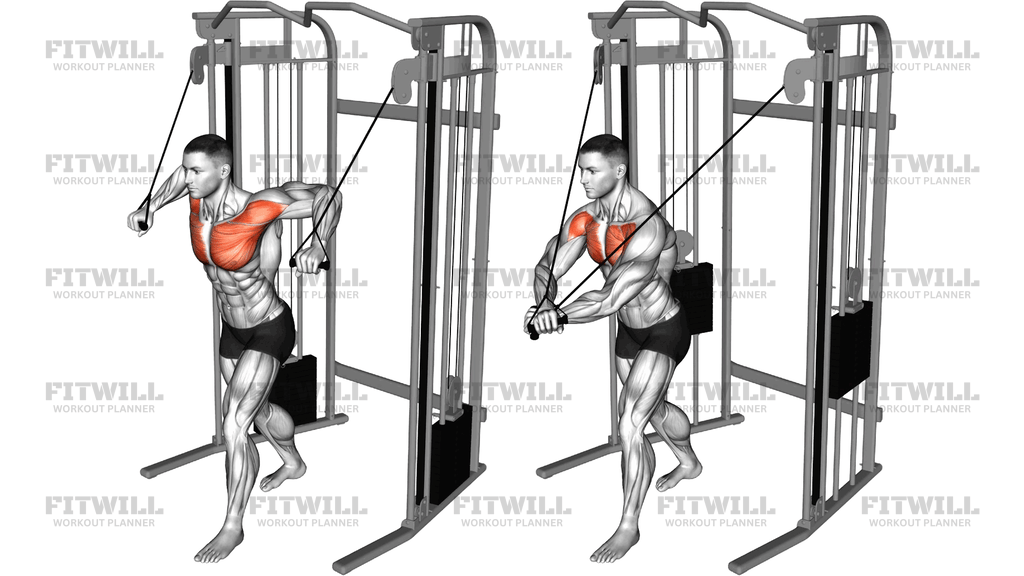
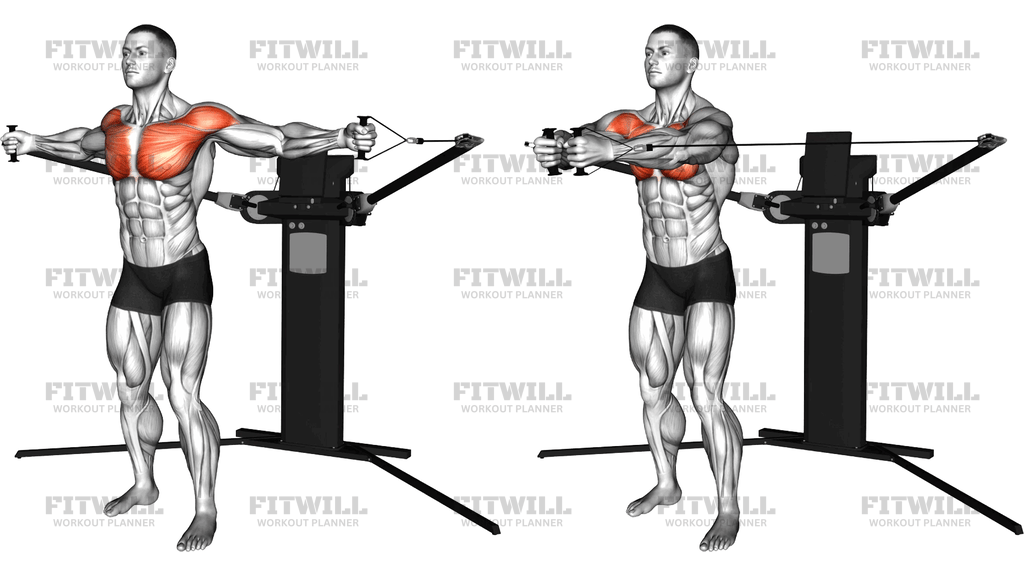
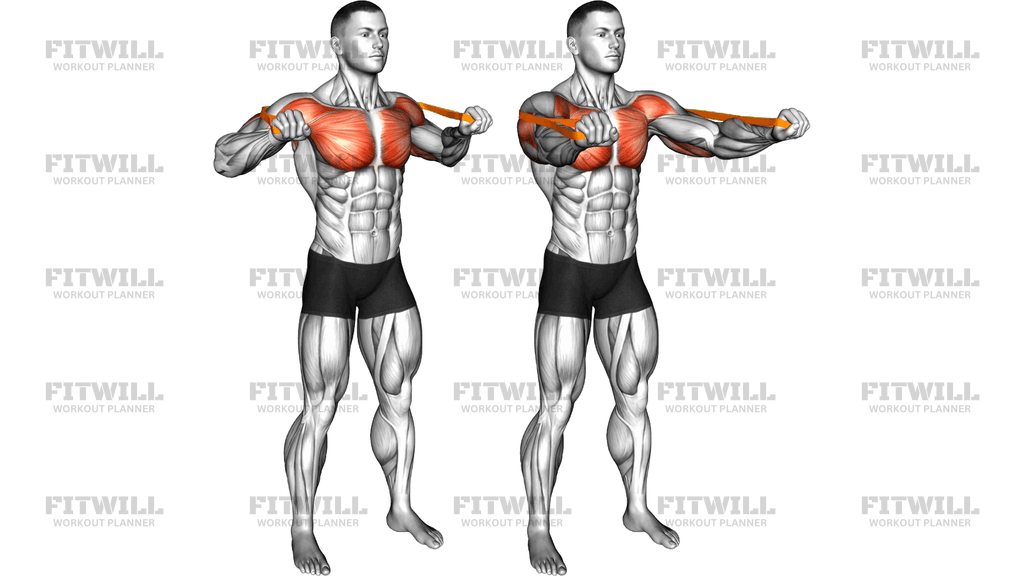
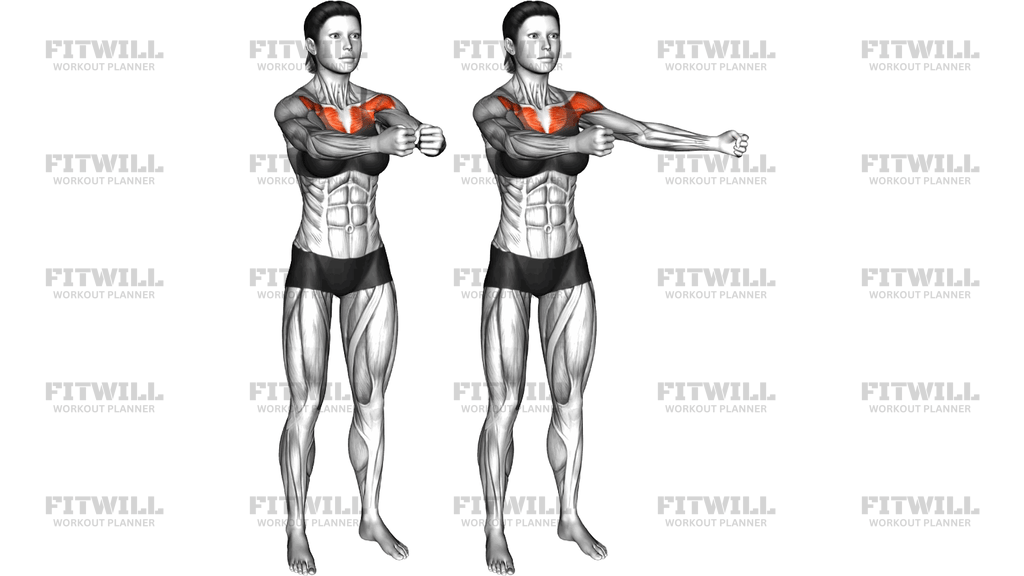
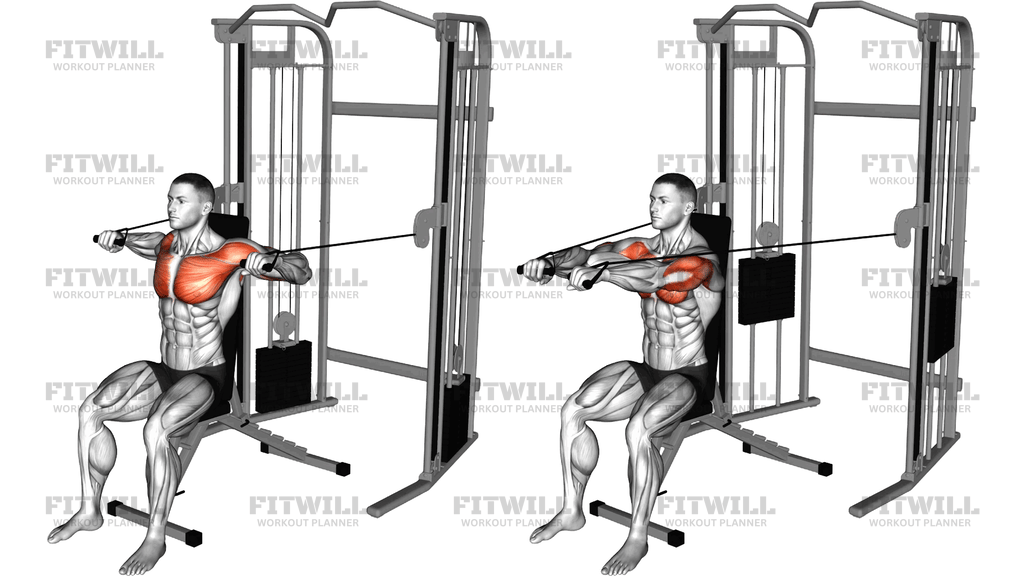
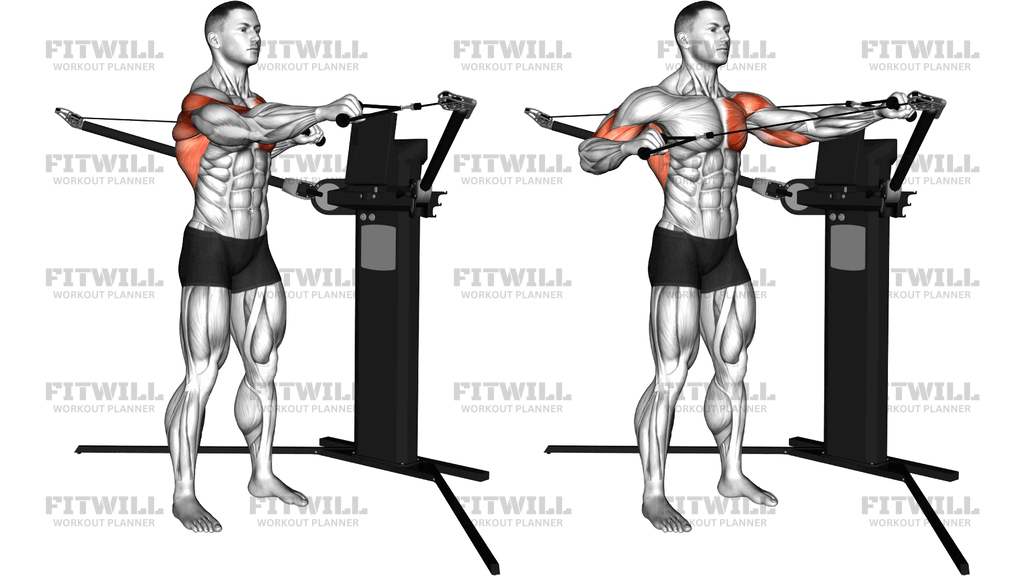
Cable Lying Fly (Version 3)
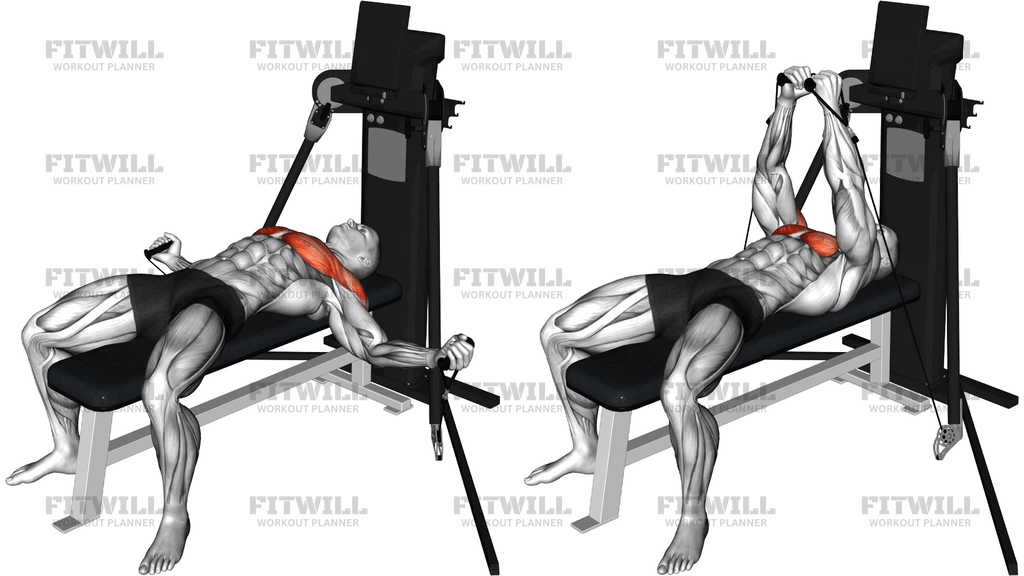
The Cable Lying Fly is a chest isolation exercise performed on your back on a flat bench, with the resistance coming from low pulley cables rather than dumbbells. You lie face up, hold one handle in each hand with your arms out wide to the sides, and sweep both arms up in a wide arc until your hands meet above your chest. Because the cables pull from behind and below the bench, the tension on the pecs does not disappear at the top the way it does with a dumbbell fly — it stays constant through the entire arc, including the point where your hands come together.
This movement suits lifters who already have some pressing experience and want to add focused chest volume without loading the shoulder joint with heavy freeweights. It is also a good fit for people who find dumbbell flies awkward at the stretched position, since the cable's line of pull supports the arms and makes the resistance feel smoother. Because you are lying down and the cables guide the path, it is easier to keep honest form than in a standing cable crossover, which makes it useful for learning how a true fly feels.
The primary work is done by the pectoralis major, with the front delts assisting and the biceps and forearms working statically just to hold the handles. Grip stays relaxed; you are not pulling with the arms, only keeping the hands connected to the cable while the shoulders do the sweeping. The setup matters because the bench position relative to the pulleys determines the resistance curve — too far forward and the stretch is exaggerated, too far back and the movement turns into more of a press.
To execute it well, keep a slight, fixed bend in the elbows throughout, as if the arms are two rigid paddles hinging only at the shoulders. Lead with the elbows rather than the hands, feel the chest widen at the bottom, and squeeze the pecs as the handles come together over the chest. Lower under control; the eccentric is where most of the benefit lives, and letting the cables yank the arms back down is the most common error on this exercise.
In a program, Cable Lying Fly usually sits after a compound press as a finisher, in the 10–15 rep range per set. Because the bench is between the pulleys, keep the weight moderate — heavy loads here compromise both the stretch and your ability to control the return. Stop the set when your hands start drifting forward or the elbows bend more than the small amount you started with; those are the first signs the chest is no longer doing the work.
Fitwill
Log Workouts, Track Progress & Build Strength.
Achieve more with Fitwill: explore over 9600 exercises with images and videos, access built-in and custom workouts, perfect for both gym and home sessions, and see real results.
Start your journey. Download today!




Instructions
- Place a flat bench lengthwise between two low pulleys of a cable machine, and clip a single handle to each low pulley.
- Set the weight light to moderate, then lie face up on the bench with your head toward the pulleys and take one handle in each hand using a neutral grip, palms facing in.
- Extend your arms out wide to the sides at roughly shoulder height, with a small bend locked into both elbows and your feet planted on the floor.
- Brace your core and press your head, upper back, and glutes into the bench so your torso stays stable for the whole set.
- Sweep both arms up and in a wide arc toward the ceiling, keeping the elbow bend unchanged, until your hands meet above your lower chest.
- Squeeze your pecs briefly at the top with the handles together, without letting the shoulders shrug up toward your ears.
- Lower the handles slowly back out to the wide starting position, resisting the pull of the cables rather than dropping into the stretch.
- Breathe out as you bring the handles together and breathe in as you open the arms back down.
- Complete all reps, then release one handle at a time and sit up carefully, since the cables pull the arms outward when you let go.
Tips & Tricks
- Fix the elbow angle before your first rep and check it on every rep — when the elbows start bending and straightening, the set has drifted into a hybrid fly-press and the pecs lose isolation.
- Do not let the handles travel back behind your shoulders at the bottom. The cables already pull from below, and chasing a deeper stretch with the arms behind the torso puts unnecessary strain on the shoulder capsule.
- Keep your wrists neutral and your grip loose. Clamping hard on the handles recruits the forearms and biceps and turns the fly into an arm exercise.
- Position the bench so the pulleys line up close to your chest level when your arms are open. If the cables drag against your body or the bench legs, slide the bench forward or backward until the path is clear.
- Lower the weight if your hands snap together with momentum at the top. A two-second squeeze with a light load builds more chest tension than a fast rep with a heavy one.
- If your lower back arches off the bench as the arms open, bend your knees more and push your feet firmly into the floor to stabilize your pelvis.
- Keep your head resting on the bench instead of lifting it to watch your hands — craning the neck tightens the front of the shoulders and shortens the arc.
- Choose a handle size you can hold comfortably with a neutral grip; oversized grips fatigue the hands before the chest on higher-rep sets.
Frequently Asked Questions
Which muscles does the Cable Lying Fly work?
The pectoralis major does the main work as the arms sweep together, with the front delts assisting. The biceps and forearms work only to hold the handles in place.
Why do the cables come from low pulleys behind the bench instead of overhead?
The low pulley line of pull creates constant tension through the whole arc, including when your hands meet at the top, which is exactly where a dumbbell fly loses resistance. It also lets you start from a comfortable wide position at your sides.
Is the Cable Lying Fly suitable for beginners?
Yes, with a light weight. The bench supports the torso and the cables guide the path, so it is one of the more forgiving ways to learn what a proper chest fly feels like before progressing to dumbbell or standing cable variations.
How is this different from a dumbbell fly on a flat bench?
A dumbbell fly loses most of its tension at the top because gravity pulls straight down, while the cable keeps pulling toward the pulleys the entire time. The cable version also makes the eccentric slightly easier to control, since the cable supports the arms at the stretch.
Should my elbows be bent during the Cable Lying Fly?
Yes, but only slightly, and that bend should stay identical from start to finish. Bending and straightening the elbows mid-rep turns the fly into a press and takes work away from the chest.
What is the most common mistake on this exercise?
Using too much weight and letting the cables snap the arms back into the stretch. That bounce at the bottom stresses the shoulders and removes the controlled tension the movement exists to provide.
How high should my hands finish at the top of the rep?
Bring the handles together directly above your lower to mid chest. Finishing them over your face or behind your head means the shoulders took over the path.
What can I use instead if both pulleys are occupied?
A single-arm version using one low pulley works well, just keep your torso braced against the rotational pull. A flat-bench dumbbell fly is the closest non-cable substitute, though the tension curve will differ.
How many sets and reps should I do?
Two to four sets of 10 to 15 reps works well, usually after your main pressing movements. Keep the load moderate so the last few reps are still smooth and controlled.
Is it safe to let my arms drop below the bench at the bottom?
Keep the arms at or slightly above shoulder level at the widest point. Because the cables pull from below, letting the hands drift too far back behind the torso puts the shoulder in a vulnerable stretched position under load.