Isometric Chest Squeeze
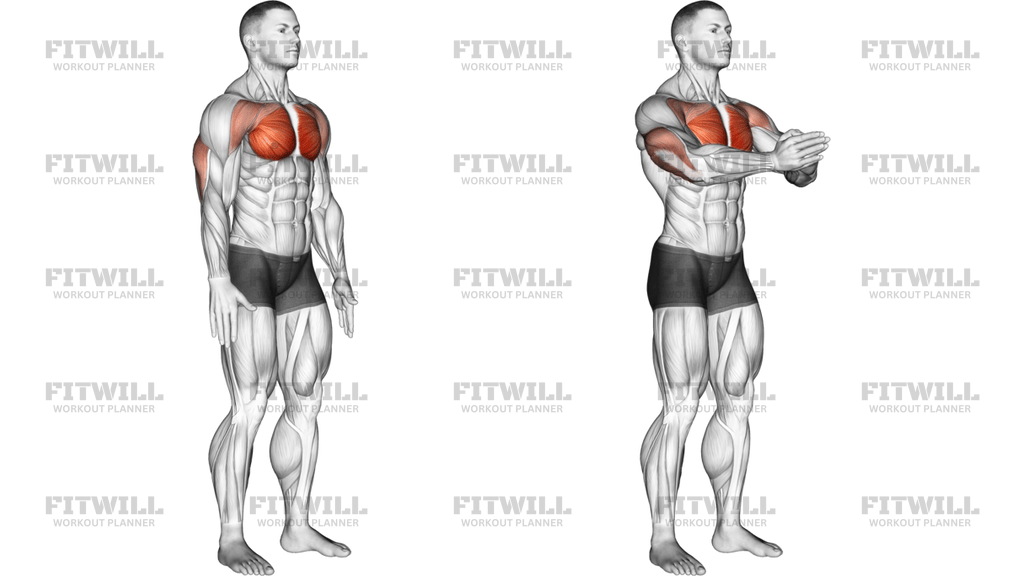
Isometric Chest Squeeze is a simple standing chest drill built around pressing the hands together and holding that squeeze. It is useful when you want a body-weight movement that teaches you how to create tension through the pecs without needing a bench, machine, or cable stack. Because the effort comes from the squeeze rather than from speed, it works well as a warmup, finisher, or low-equipment accessory exercise.
The main target is the pectoralis major, with the front shoulders and triceps helping keep the arms in position while the core keeps the ribs stacked over the pelvis. In a standing isometric like this, posture matters as much as force: if the shoulders shrug or the lower back arches, the tension leaks into the neck and torso instead of staying on the chest. The goal is a hard, centered contraction that you can repeat for a timed hold or a series of short pulses.
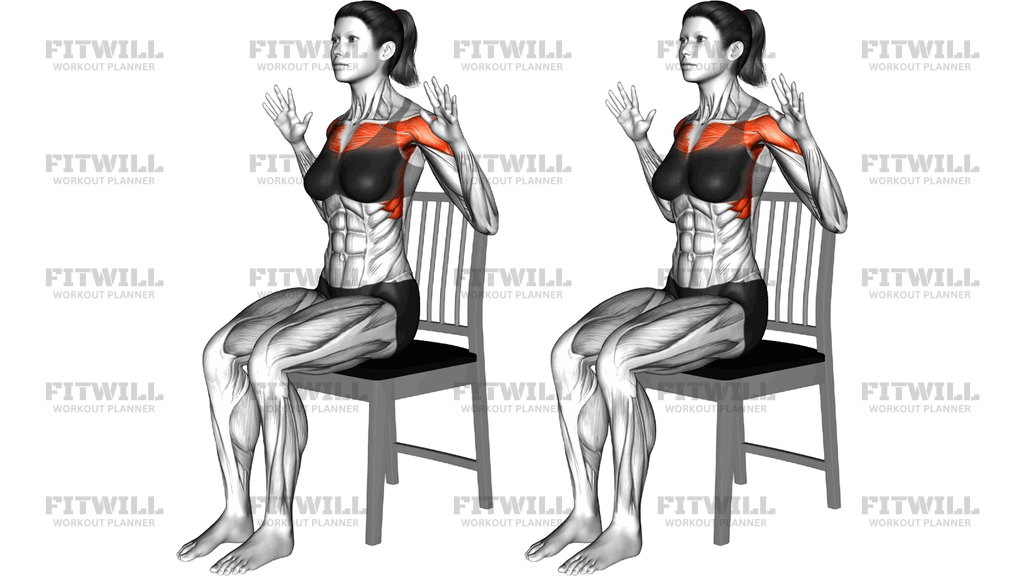
Start by standing tall with your feet about hip-width apart, knees soft, and your body lined up from head to heel. Bring your palms together at chest height, keep a small bend in the elbows, and aim the forearms forward so the pressure stays straight inward. Squeeze as if you are trying to flatten a ball or a folded towel between the palms, then hold that pressure without letting the hands drift apart or the shoulders roll forward.
During each rep or timed hold, keep the neck relaxed, breathe shallowly and steadily, and avoid turning the movement into a shrug or a chest pop. You should feel the inner chest working hardest near the centerline of the body, not the lower back or upper traps. If you want more intensity, press harder, extend the hands a little farther from the chest, or lengthen the hold while keeping the torso quiet.
Isometric Chest Squeeze fits well before pressing work, after heavier chest training, or anytime you want a low-impact option that still builds awareness of pec tension. It can also help beginners learn how to find and maintain chest contraction before moving to dumbbell, cable, or machine presses. Keep the effort pain-free and stop the set if the shoulders pinch, the wrists bend back, or the neck starts doing the work.
[ Workout Log & Planner ]
Put your next workout in Fitwill
Keep your plan and training log ready when you are.


Instructions
- Stand tall with your feet about hip-width apart, knees soft, and your ribs stacked over your pelvis.
- Raise both arms to chest height and bring your palms together in front of your sternum.
- Keep a small bend in the elbows so the pressure stays in the chest instead of locking the joints.
- Pull the shoulders down away from your ears and keep the neck long and relaxed.
- Exhale gently and press the palms together as hard as you can without letting the torso shift.
- Hold the squeeze for the planned count or pulse the pressure in short, controlled contractions.
- Keep breathing through the hold without flaring the ribs or arching the lower back.
- Release the pressure slowly, lower the arms, and reset before the next rep or hold.
Tips & Tricks
- Press through the base of the palms, not the fingertips, so the squeeze stays in the chest instead of the wrists.
- If the shoulders take over, lower the hands a few inches and keep the elbows softly bent.
- Keep the sternum from popping up; an overarched lower back turns the hold into a posture drill.
- Harder inward pressure usually matters more than moving the hands farther forward.
- For longer holds, think about hugging inward across the chest rather than locking the elbows straight.
- If the neck tightens, let the shoulders drop and lengthen the back of the neck before the next hold.
- Use shorter sets if the hands drift apart or the wrists start bending backward under pressure.
- A folded towel or a light ball between the palms can make the squeeze easier to feel.
Frequently Asked Questions
What muscles does Isometric Chest Squeeze work most?
The pectoralis major does most of the work, with the front shoulders, triceps, and core helping keep the position steady.
Do I need a bench or machine for Isometric Chest Squeeze?
No. This is a standing body-weight isometric, so the main requirement is enough space to stand and press the hands together.
Should my arms be straight or bent during Isometric Chest Squeeze?
Keep a small bend in the elbows. Locking them usually shifts tension toward the shoulders and makes the chest squeeze harder to feel.
How long should I hold each rep?
Start with 10-20 second holds or 5-10 hard pulses per set, then build time only if you can keep the ribs and shoulders quiet.
Where should I feel Isometric Chest Squeeze?
You should feel a strong squeeze across the center of the chest, with some support from the front shoulders and upper arms. If the neck or upper traps dominate, reset the shoulder position.
Is Isometric Chest Squeeze good before bench press or push-ups?
Yes. It is a useful warmup because it teaches you to find chest tension before pressing work, but it should not fatigue you so much that your main lift suffers.
Why do my wrists hurt during the squeeze?
The hands are usually angled back too far or the pressure is going into the fingers. Keep the wrists stacked and press through the heels of the palms.
Can beginners do Isometric Chest Squeeze?
Yes. Beginners can use short holds and lighter effort while learning to keep the torso still and the shoulders relaxed.