Dumbbell Hang Clean
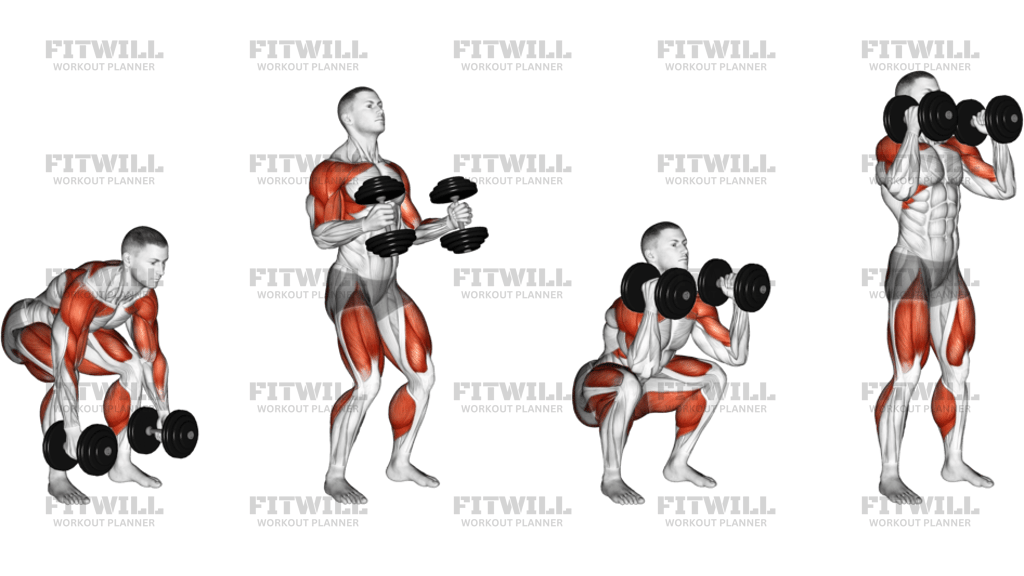
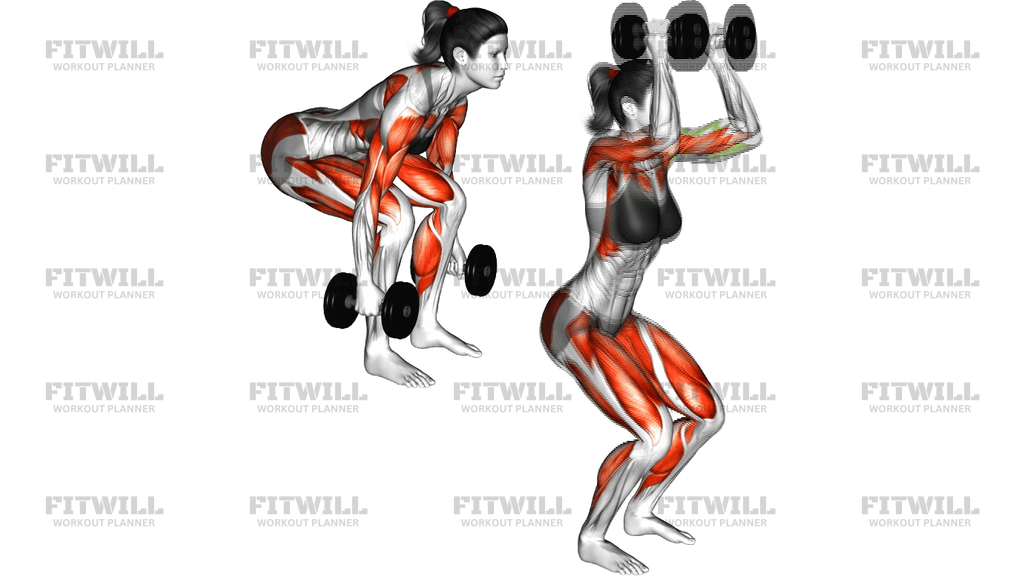
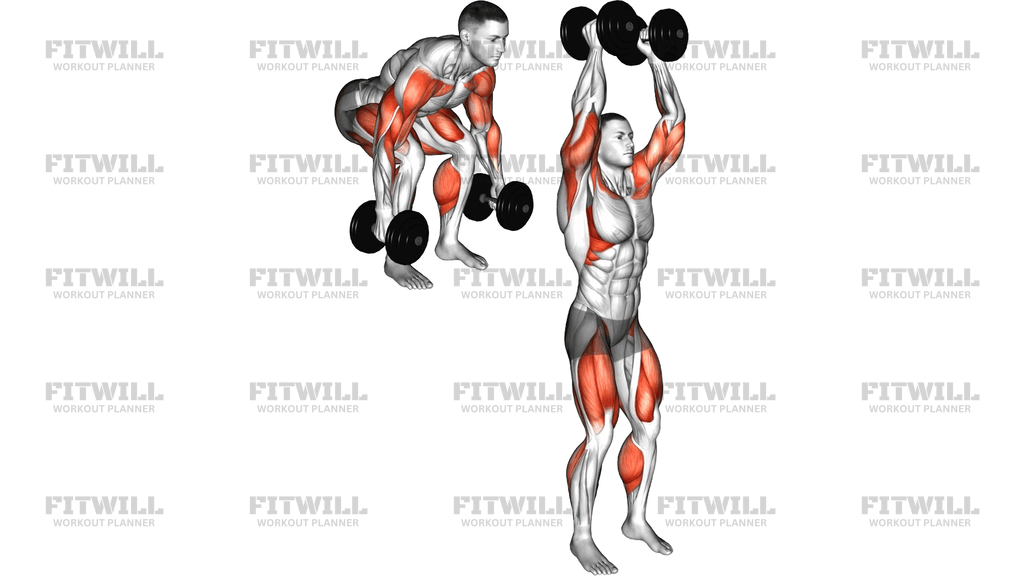
The Dumbbell Hang Clean is an explosive full-body lift that takes a pair of dumbbells from around upper-thigh height to your shoulders in one powerful, coordinated movement. The word "hang" refers to the starting position: instead of pulling from the floor, the dumbbells hang at your sides or just above knee level, and every rep begins from that suspended position. From there you dip slightly, drive through your hips and legs, shrug aggressively, and pull your elbows under the weights so you catch them at shoulder height while dropping into a quarter squat.
This lift is one of the best ways to train triple extension — the simultaneous straightening of the ankles, knees, and hips that powers sprinting, jumping, and nearly every athletic action. Because the load stays in your hands rather than on your back or in front rack position, the dumbbell version is more forgiving on the wrists and shoulders than a barbell clean, which makes it a smart entry point for anyone learning Olympic lifting patterns.
The movement trains the traps, glutes, hamstrings, quads, and shoulders as the primary drivers, with the forearms and grip working hard to keep the dumbbells under control, and the lower back and core stabilizing your torso through the explosive hip drive. Because the effort is explosive rather than grinding, it also develops rate of force production — your ability to switch on strength quickly — which is a quality slow lifts alone don't build well.
Setup matters more than people expect. Stand with feet about hip-width apart, a dumbbell in each hand at arm's length, and hinge forward slightly so the weights hang just in front of your thighs rather than drifting out to the sides. Keep your chest tall and your spine neutral before you initiate the dip. If the dumbbells swing away from your body or you start the rep with a rounded back, the power transfer up the chain gets lost and the catch becomes a struggle.
Good execution comes down to sequencing: hips first, then shrug, then fast elbows. The dumbbells should rise because your body extends violently, not because your arms heave them upward. In the catch, the elbows point forward with the dumbbells resting near your shoulders, and your hips absorb the landing in a shallow squat before you stand tall to finish the rep.
The Dumbbell Hang Clean fits well as the first explosive exercise in a workout, when you're fresh, typically for 3 to 6 sets of 3 to 6 quality reps. It's used by athletes building power for their sport, by general lifters who want a time-efficient full-body stimulus, and in conditioning circuits where lighter weights and controlled reps keep the movement crisp. Prioritize speed and technique over load — a clean done with a weight you can barely move is no longer a clean.
[ Workout Log & Planner ]
Put your next workout in Fitwill
Keep your plan and training log ready when you are.


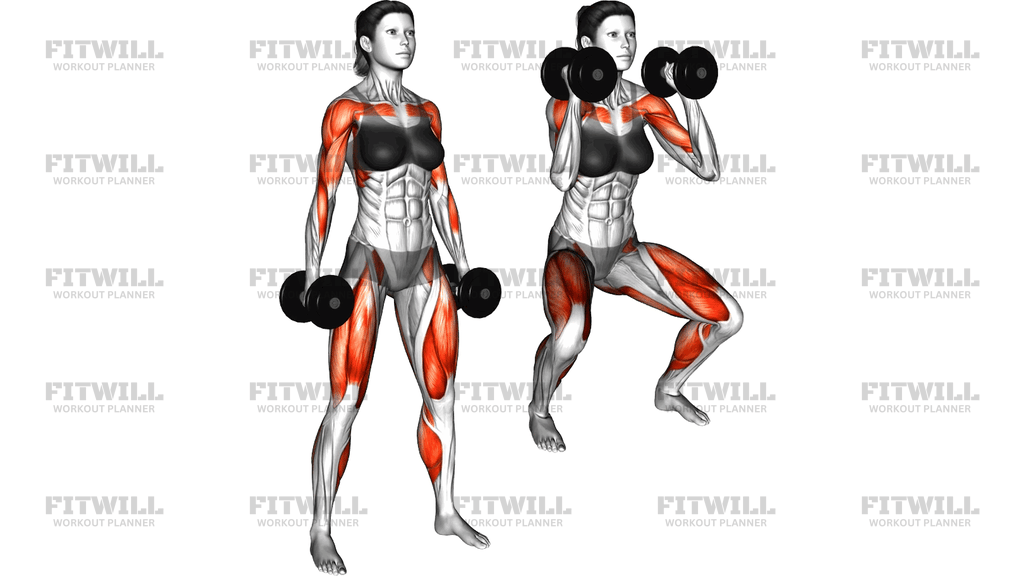
Instructions
- Stand with your feet hip-width apart, holding a dumbbell in each hand with a neutral grip, arms fully extended so the weights hang just in front of your thighs.
- Set your posture before moving: chest up, shoulders back and down, spine neutral, and your weight balanced over the middle of your feet.
- Brace your core as if preparing for a light impact, and take a breath to stiffen your torso.
- Push your hips back into a small hinge so the dumbbells lower to roughly mid-thigh or just above the knees, keeping them close to your legs.
- Drive your hips forward and extend your knees and ankles explosively, standing tall as the momentum lifts the dumbbells upward.
- As the dumbbells reach hip or waist height, shrug your traps hard and immediately pull your elbows up and around, letting the weights travel up the front of your body.
- Drop under the dumbbells and catch them at shoulder height with elbows pointing forward, absorbing the force by sinking into a quarter squat with knees tracking over your toes.
- Stand up fully out of the catch so you're upright with the dumbbells at your shoulders, then lower them back to the hang position in a controlled manner.
- Exhale sharply on the explosive drive, reset your stance and posture, and take a breath before starting the next rep.
- Complete all reps with a brief pause between each one — this is a power lift, not a race against the clock.
Tips & Tricks
- Let the legs create the lift. The most common mistake is pulling with the arms too early, which kills the power transfer — your arms should only guide the dumbbells after your hips have already exploded.
- Keep the dumbbells in contact with or very close to your thighs during the dip. If they drift forward, the pull becomes a swing and you'll catch the weights out in front of your shoulders.
- The dip before the drive should be short and quick, only a few inches. Over-dipping turns the clean into a slow deadlift-and-hop instead of a snappy hang.
- Punch your elbows through fast at the top. Slow elbow turnover is the usual reason the dumbbells crash down on your hands instead of landing cleanly on your shoulders.
- Catch with soft knees. Landing stiff-legged sends the impact straight into your joints — sink into that quarter squat and let your quads and hips absorb the weight.
- Use bumper-style or hexagon-free dumbbells that won't roll if you need to bail. If a rep goes wrong, push the dumbbells forward and step back rather than fighting to save it.
- Choose a weight you can move at full speed. If the last rep takes twice as long to reach your shoulders as the first, the load is too heavy to train power.
- Keep your lats engaged so your shoulders stay packed as you shrug — shrugging up around your ears with loose shoulders invites neck strain over high-rep sets.
- Film yourself from the side occasionally. Watching whether your hips extend fully before the dumbbells rise is the fastest way to spot sequencing faults.
Frequently Asked Questions
What muscles does the Dumbbell Hang Clean work?
It primarily targets the traps, glutes, hamstrings, and quads during the explosive hip and leg drive, with the shoulders helping guide the catch. Your forearms, grip, and lower back work isometrically to control the dumbbells and keep your torso stable.
Is the Dumbbell Hang Clean good for beginners?
Yes, it's one of the most beginner-friendly explosive lifts because dumbbells don't require the wrist flexibility or front rack mobility a barbell demands. Start light and master the hip drive before adding speed or load.
Where exactly should the dumbbells start in the hang position?
The dumbbells should hang at arm's length just in front of your thighs at the top, lowering to roughly mid-thigh or just above the knees during the dip. Keeping them close to your body throughout is what makes the pull efficient.
Why can't I catch the dumbbells smoothly at my shoulders?
This almost always means your elbows are turning over too slowly or your hips aren't finishing their extension. Focus on driving to full stand-tall extension before the shrug, then pull your elbows up and around as fast as possible while dropping under the weights.
How many reps should I do for the Dumbbell Hang Clean?
Work in the range of 3 to 6 reps per set, since the goal is explosive power and technique degrades quickly with fatigue. If your later reps slow down noticeably, end the set rather than grinding through it.
What's the difference between a hang clean and a clean from the floor?
A hang clean starts with the dumbbells suspended at thigh or knee height, while a floor clean begins from a bent-over position with the weights resting on the ground. The hang version puts more emphasis on the explosive second pull and is easier on the lower back for most people.
Can I use kettlebells instead of dumbbells for this exercise?
You can, though kettlebells shift the weight below the handle, which changes the swing path and makes the catch feel different. Dumbbells are the better tool for learning the movement before experimenting with kettlebell variations.
Should my knees bend during the catch?
Yes, you should sink into a quarter squat as you catch, letting your hips and quads absorb the force of the dumbbells landing at your shoulders. Catching with stiff legs concentrates impact in your knees and lower back and makes heavy reps much harder to control.
What should I do if I lose control of the dumbbells mid-rep?
Push the dumbbells forward and slightly away from your body, step back, and let them drop if you're using rubber-coated or hex weights on a forgiving floor. Never try to muscle a bad rep back into position, as that's when wrists and shoulders get hurt.