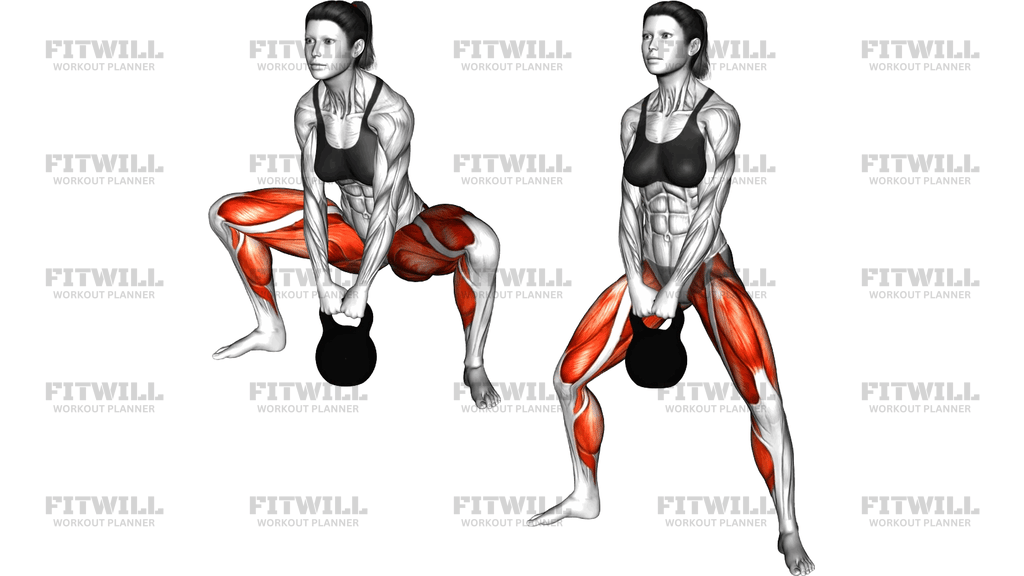
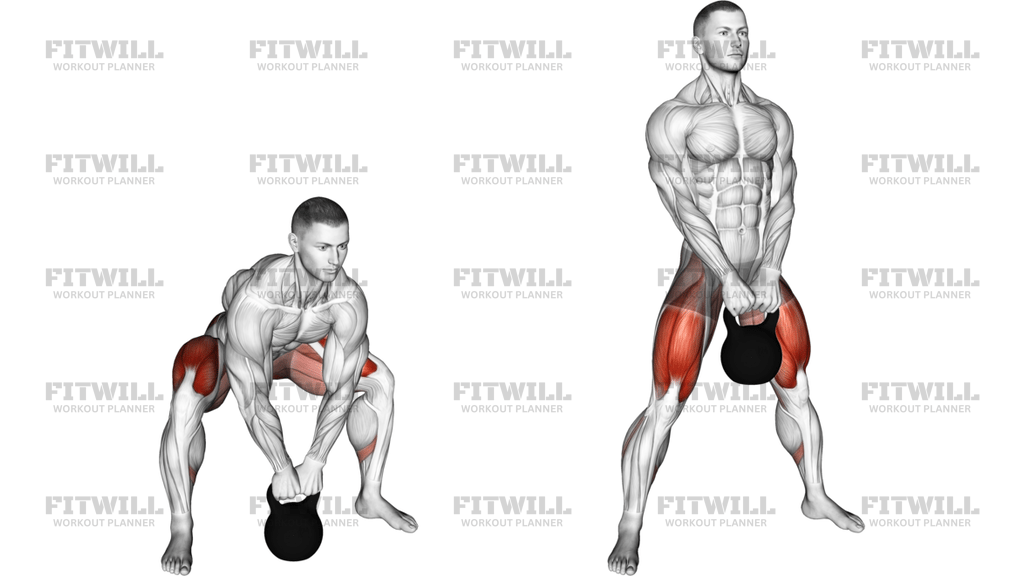
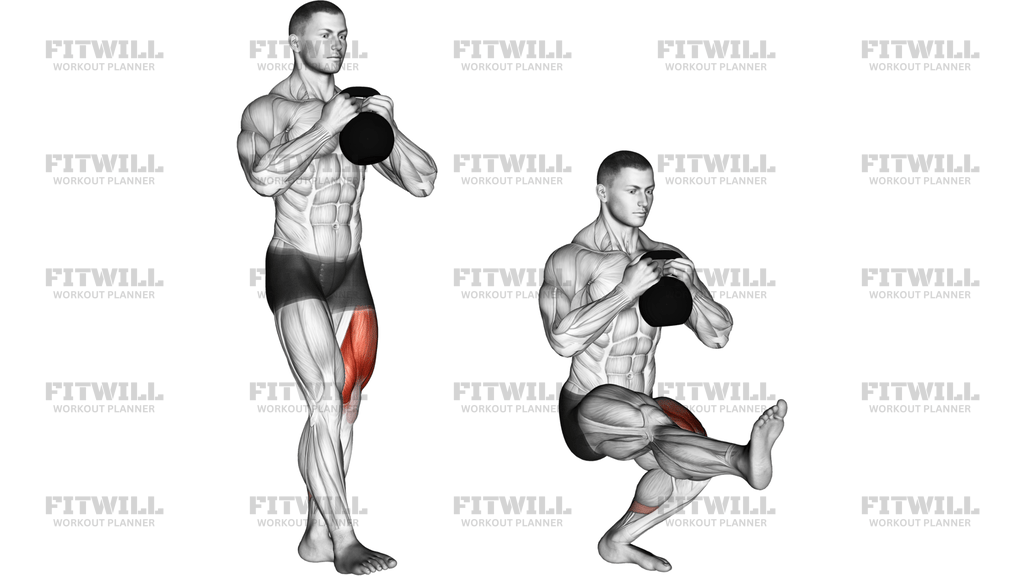
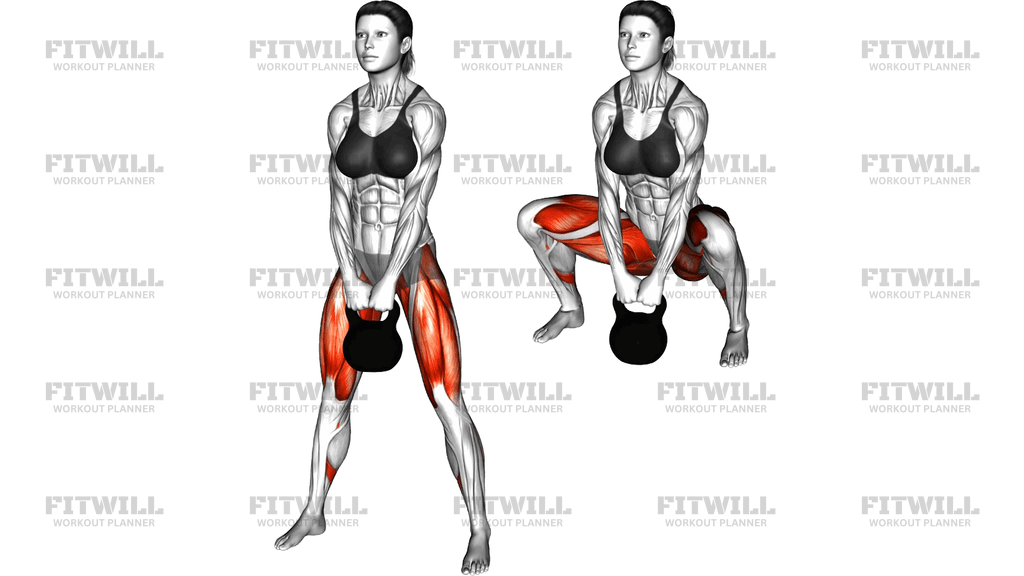
Kettlebell Split Squat
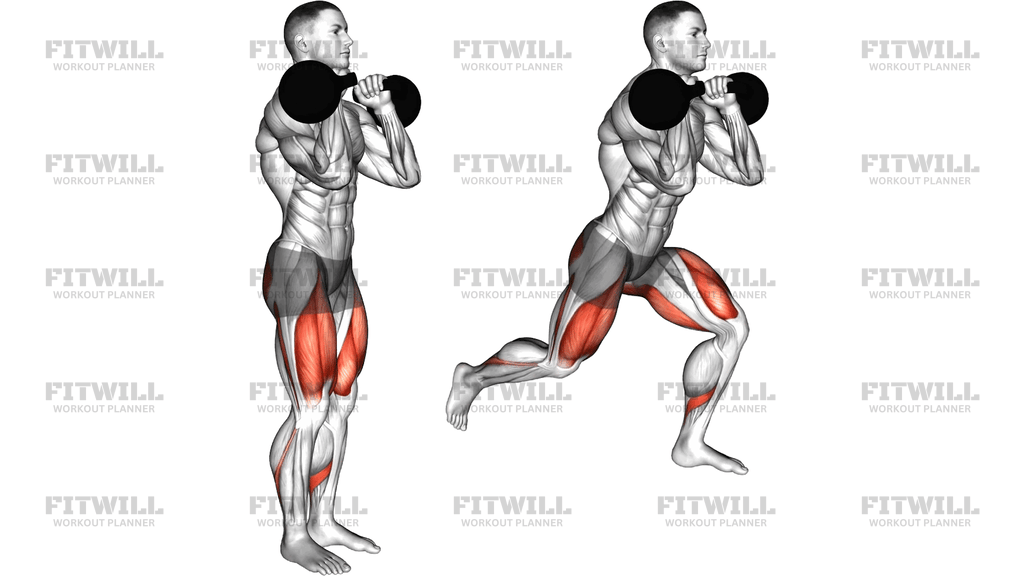
The Kettlebell Split Squat is a single-leg strength exercise performed from a staggered stance, with the kettlebell held at your side or at your chest while you bend both knees to lower straight down and drive back up. Unlike a lunge, your feet stay planted in the same position for the entire set, which turns it into a pure strength and control drill rather than a stepping movement. The front thigh does most of the work, while the rear leg, hips, and trunk handle the balance and stabilization demands.
This movement is especially useful for runners, cyclists, lifters, and anyone who wants to even out strength differences between legs. Because each side works on its own, your stronger leg can't quietly take over the way it might during a barbell squat. It also trains the front hip and knee through a deep, controlled range, which carries over well to stairs, hiking, sprinting, and heavier bilateral lifting.
The kettlebell placement matters more than people expect. Holding the weight at your side in a suitcase grip keeps your torso tall and adds a lateral challenge to your trunk and hip stabilizers, while a chest-held position shifts slightly more load toward the front-leg quads and lets you sit deeper. A heavier kettlebell can be held in both hands in front of the chest, or one in each hand at the sides for the most stable setup. Whichever grip you choose, keep the load centered so it doesn't drag you toward one side.
Execution comes down to stance length and vertical torso. Set your feet long enough apart that your front knee can travel over your mid-foot without jamming forward, then drop straight down rather than leaning forward. The front thigh should reach roughly parallel to the floor with your heel glued down, and your back knee should finish just above the ground without slamming into it.
Common use cases include unilateral leg days, warm-up ramping before heavier squats or deadlifts, and rehab-style strength work after resolving knee or hip asymmetries. Start with a light kettlebell or even bodyweight until you can complete all reps without wobbling, then progress the load gradually.
A few practical points protect your knees and lower back: brace your core before every rep, keep your weight distributed over the whole front foot rather than the toes, and avoid letting the knee cave inward. If balance is the limiting factor at first, that is normal — hold a wall or rack lightly with one hand for a few sessions until the position feels automatic.
Fitwill
Log Workouts, Track Progress & Build Strength.
Achieve more with Fitwill: explore over 9600 exercises with images and videos, access built-in and custom workouts, perfect for both gym and home sessions, and see real results.
Start your journey. Download today!




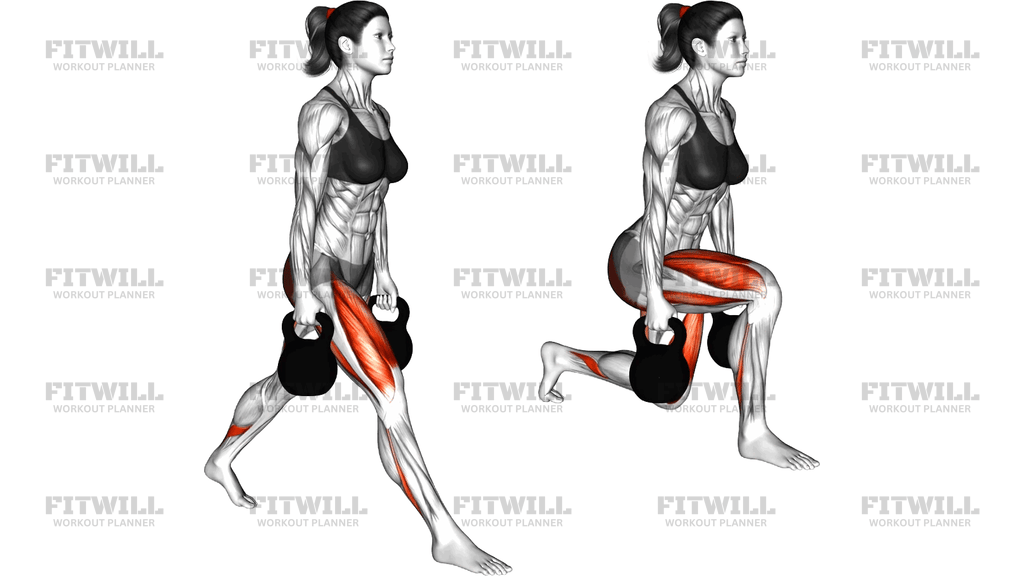
Instructions
- Pick up a kettlebell and stand tall, then take a long step forward as if starting a lunge, landing with your front foot flat and your back heel lifted.
- Adjust your feet so the stance is wide enough that both knees can bend to about 90 degrees; this is your fixed split stance for the whole set.
- Grip the kettlebell's handle with one hand at your side in a suitcase hold, or hold it with both hands at your chest if you prefer a more stable front-loaded position.
- Brace your core, pull your shoulders back and down, and keep your gaze forward with your chest lifted before descending.
- Bend your front knee and lower your hips straight down until your front thigh is about parallel to the floor and your back knee hovers just above the ground.
- Keep your front heel planted and your knee tracking over your mid-foot the entire way down; do not let it drift inward or collapse toward the inside arch.
- Press through the floor with your front foot, feeling the whole foot engaged, and extend the knee to return to the top of the split stance.
- Exhale as you drive up and inhale as you lower, keeping a steady rhythm through every repetition.
- Complete all reps on one leg, then re-set your stance and perform the same number of reps on the other side.
- Step your feet back together at the end of the set and either switch hands or rest before your next set.
Tips & Tricks
- If you wobble side to side, the kettlebell is probably too far from your body; pull your shoulder blade down and keep the weight snug against your thigh in the suitcase hold.
- Most people set their stance too short, which forces the front knee far past the toes; take a longer step and re-check that your back knee bends comfortably under your hip.
- If your back knee touches down hard, lower slower and think about hovering a coin under it rather than kneeling.
- A forward torso lean usually means weak glute engagement in the front leg — squeeze the front-side glute and lift the chest before descending.
- Start with all reps on your weaker leg first and match the reps with your stronger side to close strength gaps over time.
- Keep your rear heel high and your weight on the ball of the back foot; letting the back foot flatten changes the stretch on the hip flexor and destabilizes the stance.
- If your front heel lifts at the bottom, shorten the range slightly and work on ankle mobility before forcing the depth.
- Grip fatigue ends sets early with a heavy single kettlebell — switch hands halfway, or use two lighter kettlebells so the load is shared evenly.
- For extra stability during your first sessions, place a bench beside you and touch it lightly with your fingertips only when you truly lose balance.
Frequently Asked Questions
What muscles does the Kettlebell Split Squat work?
The front leg's quads do the bulk of the work, with the glutes and hamstrings contributing as you rise. The rear leg's hip flexors get a stretch, and the core, hip stabilizers, and calves work to keep you balanced throughout.
Should I hold the kettlebell at my side or at my chest?
A side (suitcase) hold challenges your trunk and hip stabilizers more, while a chest hold lets you handle heavier loads and sit deeper. Both are valid — side hold for balance work, chest hold when strength is the goal.
How far apart should my feet be in the Kettlebell Split Squat?
Use a stance roughly two of your shoe lengths long, so both knees reach about 90 degrees at the bottom. If your front knee jams forward or your back knee swings wide, the stance needs adjusting before you add weight.
Is the Kettlebell Split Squat good for beginners?
Yes, provided you start with bodyweight or a light kettlebell and prioritize balance before load. It is actually one of the more forgiving single-leg exercises because your feet never leave the floor.
Why does my front knee cave inward during the movement?
That usually comes from weak glute activation in the front leg or a stance that is too narrow. Deliberately push the knee out over your little toe, slow the descent down, and strengthen the outer hip with work like side-lying leg raises.
What can I use instead of a Kettlebell for the Kettlebell Split Squat?
A dumbbell works identically in the same positions, and a barbell across your upper back is the standard progression. Bodyweight with your hands on your hips is a solid starting version.
How deep should I go in the Kettlebell Split Squat?
Aim to bring your front thigh to about parallel with the floor while keeping your heel down and torso upright. If your form breaks or your heel lifts, shorten the range and rebuild depth gradually.
How is the Kettlebell Split Squat different from a Kettlebell Lunge?
In a split squat your feet stay planted for the whole set, so all the work is lowering and rising; in a lunge you step forward or backward each rep. The split squat lets you load heavier and focus purely on leg strength.
How many reps and sets should I do?
Three to four sets of 8 to 12 reps per leg works well for general strength. Keep the weight moderate until you can complete every rep without wobbling or losing your torso position.
Is it safe for my knees?
Performed with a controlled tempo, a stable stance, and the knee tracking over the mid-foot, it is a knee-friendly exercise that actually builds strength around the joint. Skip it or reduce depth if you have an acute knee injury, and check with a professional if pain persists.