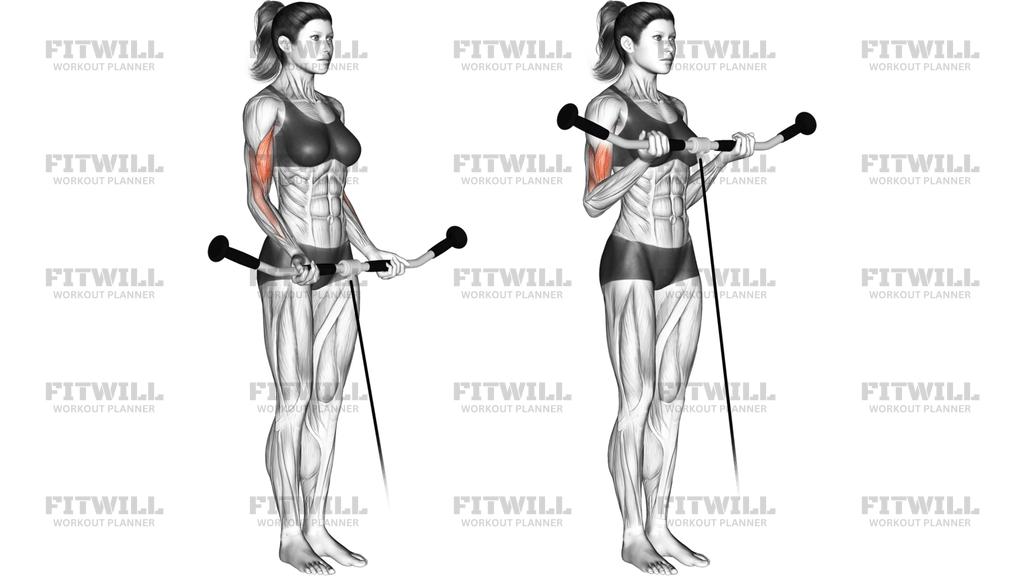
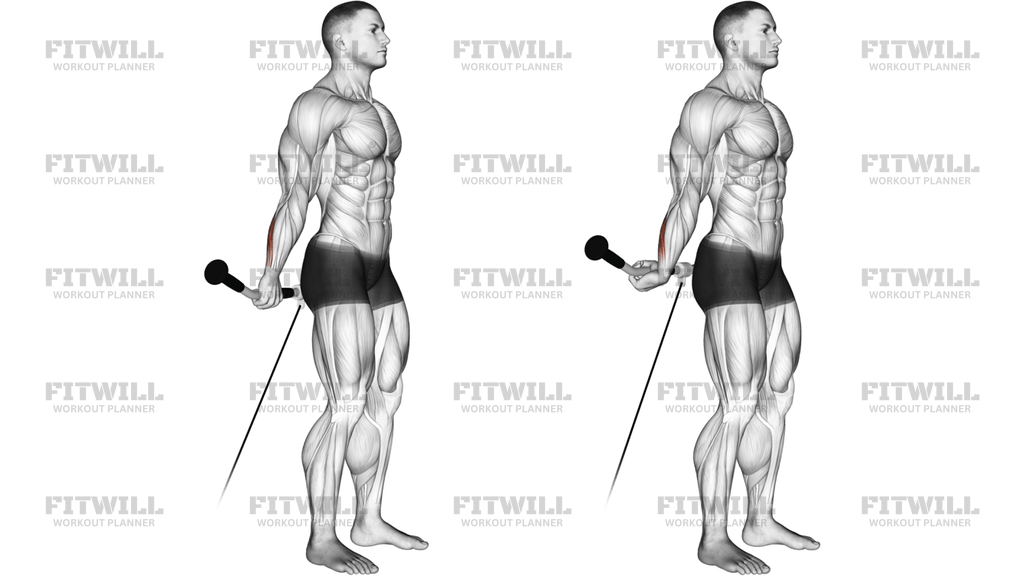
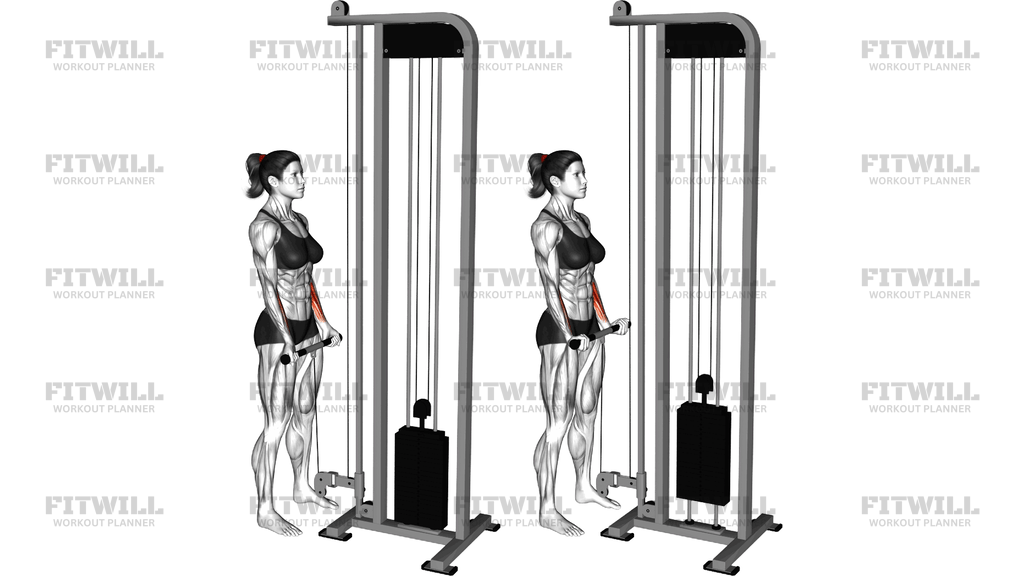
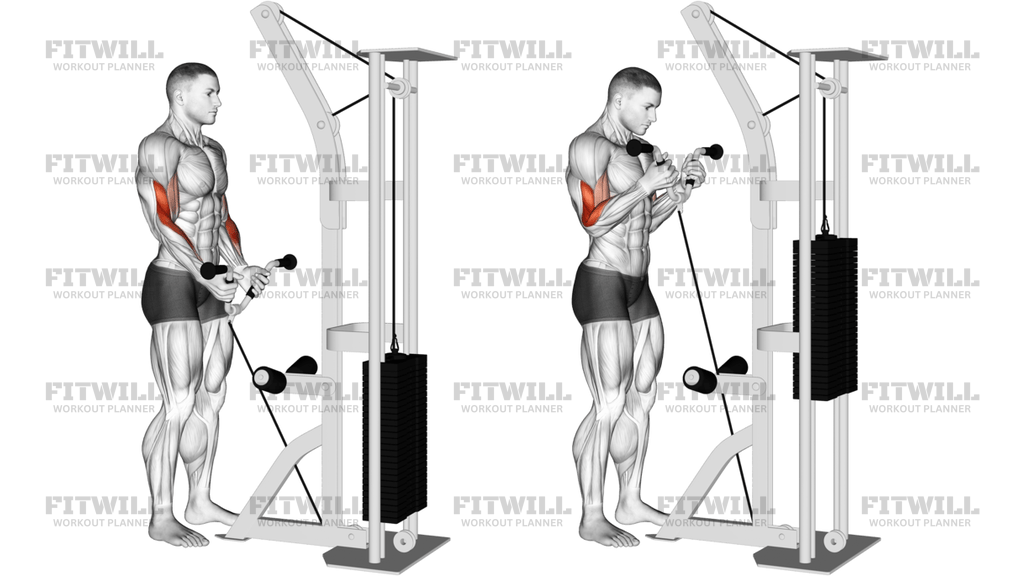
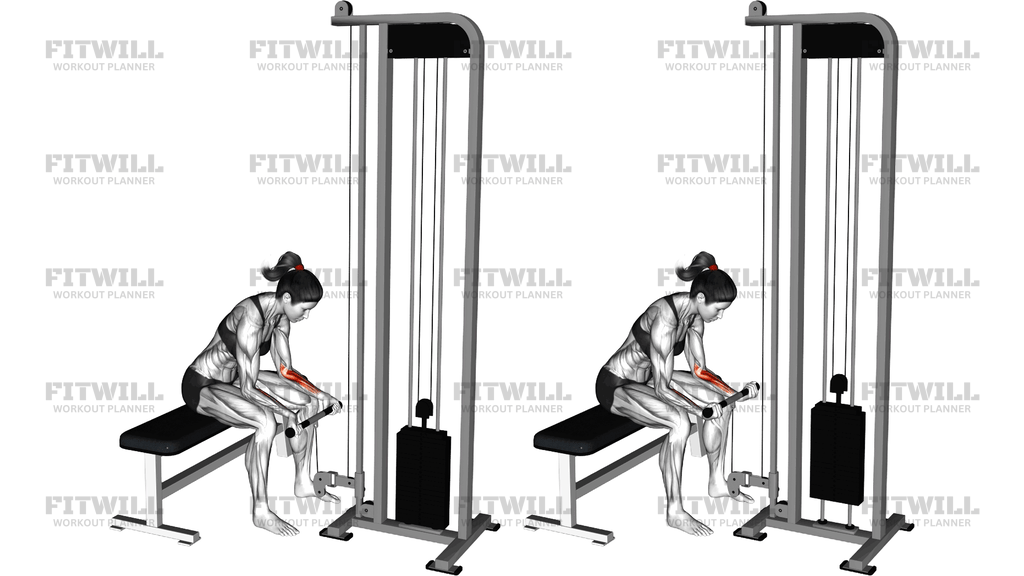
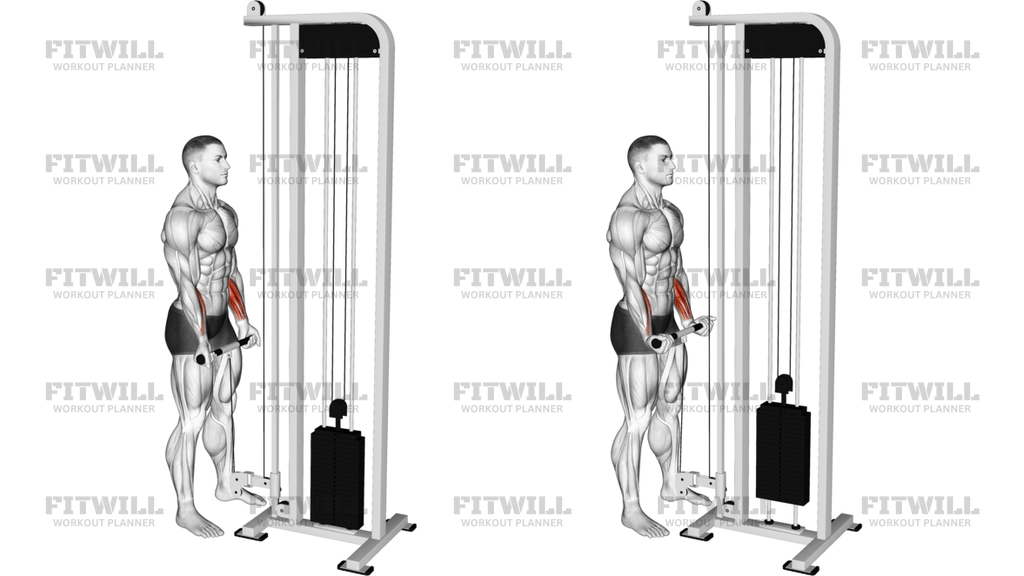
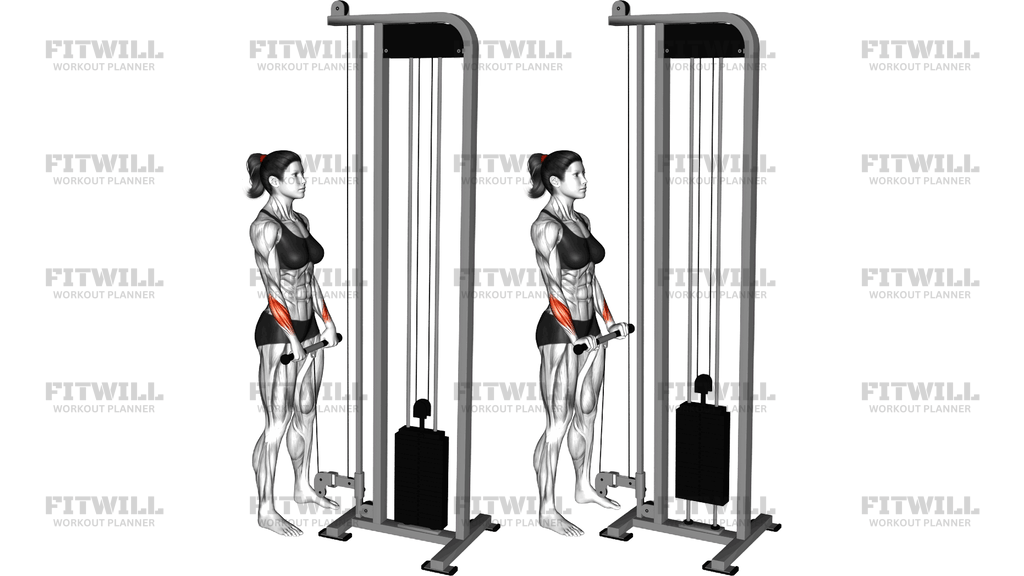
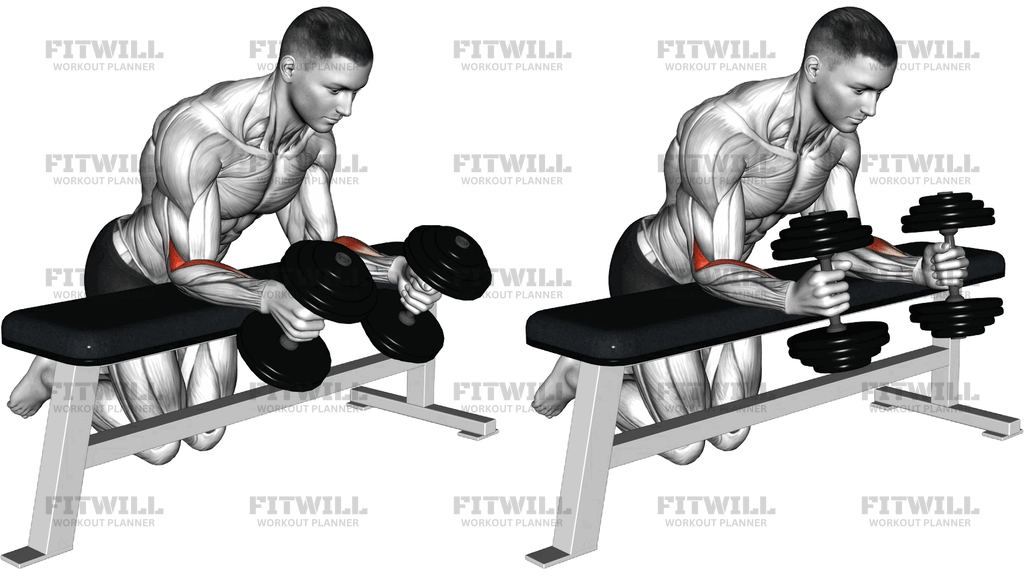
Cable Standing Back Wrist Curl
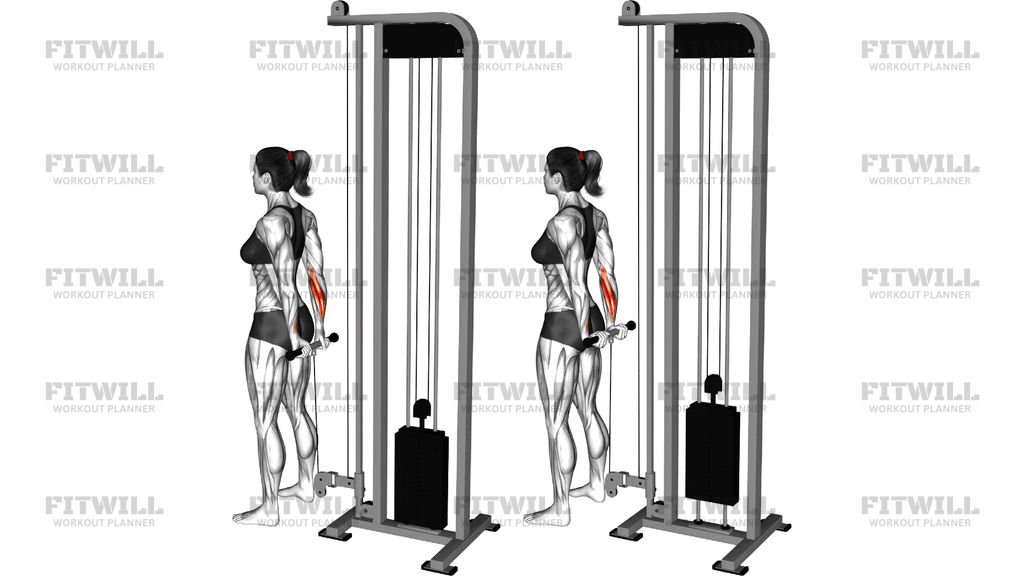
The Cable Standing Back Wrist Curl is a forearm isolation exercise performed with a straight bar attached to the low pulley of a cable machine. You stand with the cable running behind your body, hold the bar behind your glutes with your arm extended down and back, and curl the weight up by flexing at the wrist. Because the cable provides constant tension through the entire range of motion, the wrist flexors stay loaded even at the bottom of the rep, where a free-weight barbell behind-the-back curl tends to lose resistance.
This movement targets the flexor muscles on the underside of the forearm, which are responsible for curling the palm forward and closing the hand. Those same muscles drive your grip in pulling exercises like deadlifts, rows, and pull-ups, so training them directly pays off in nearly every heavy lift. The behind-the-back position also keeps the shoulder relaxed and the elbow in a natural line, which many people find more comfortable than front-facing wrist curls that load the wrist in front of the body.
Setup matters more here than in most small exercises. The pulley must be set at the bottom, you need enough distance from the machine that the cable runs behind your legs without touching them, and the bar should hang at arm's length behind your hips before you start curling. If you stand too close, the stack never fully engages and the plates will drift; if you stand too far, the cable pulls your shoulder forward and rounds your upper back. Find the spot where your arm hangs straight down and slightly back with the weight already tensioned.
Execution is deliberately small and controlled. Let the bar roll down to the ends of your fingers, then curl your knuckles and the bar upward by contracting the underside of the forearm. The movement happens only at the wrist — the elbow stays soft but fixed, and the shoulder should not rock with the reps. Because the range is only a few inches, it is easy to turn this into a sloppy shrug or a biceps swing if the weight is too heavy; a light stack with slow, deliberate reps builds far more forearm strength than heaving a big plate count.
This exercise fits well at the end of an upper-body or pull session, when the forearms are already warm but can still benefit from focused work. It is a common choice for lifters whose grip gives out before their back does, climbers who want stronger finger and wrist flexion, and anyone rehabbing or prehabbing the wrist area under a coach's guidance. One to three sets of ten to fifteen controlled reps is usually plenty, since the forearms get extra volume incidentally from holding the bar throughout the set.
Keep the reps smooth and never drop the wrist into a hard stretch at speed. The wrist joint works through a small range under load, so bouncing the weight out of the bottom position is the fastest way to irritate the joint. If your forearm cramps, which is common on cable wrist work, lower the weight slightly and shorten the pause at the top of each rep.
[ Workout Log & Planner ]
Put your next workout in Fitwill
Keep your plan and training log ready when you are.


Instructions
- Attach a straight bar to the low pulley of a cable machine and select a light weight to start.
- Face away from the machine and step forward until the cable runs behind your legs without touching them, holding the bar behind your glutes with an overhand grip, hands about shoulder-width apart.
- Let your arm hang straight down and slightly back with your elbow close to your body, and take up the cable tension so the weight stack is lifted before the first rep.
- Brace your core, keep your chest tall and shoulders relaxed, and plant your feet about hip-width apart in a stable stance.
- Allow the bar to roll down toward your fingertips, letting your wrist extend fully without letting the stack slam down.
- Curl the bar upward by flexing at the wrist, squeezing the underside of your forearm as your knuckles turn toward the ceiling behind you.
- Pause briefly at the top of the curl with the forearm flexed, keeping the movement isolated to the wrist joint.
- Lower the bar slowly and under control back to the full stretch, making sure the cable stays taut at the bottom of each rep.
- Exhale as you curl the bar up and inhale as you lower it back down, keeping your breathing steady throughout the set.
- Finish the set, then carefully release the bar and let the stack settle before stepping away from the machine.
Tips & Tricks
- If the weight stack drifts up and down during your set, you are standing too close to the machine — step forward until the cable stays engaged through the entire range.
- The most common mistake is turning the exercise into an elbow swing or shoulder shrug; check that your upper arm stays vertical and pinned beside your body while only the wrist moves.
- Choose a lighter weight than feels appropriate for other cable lifts — the wrist flexors are small muscles, and a weight you can lift for biceps curls will usually be far too heavy here.
- Let the bar roll to your fingertips at the bottom of each rep to get a stretch through the forearm flexors, but lower it slowly rather than letting it drop into that position.
- If your forearm cramps partway through a set, drop the weight one plate and keep the reps moving instead of pausing long at the top of the contraction.
- Chalk or a dry towel on your hands helps when the smooth cable bar gets slick — a slipping grip forces you to squeeze harder than the flexors are being asked to curl.
- Keep your knees slightly soft rather than locked; a stiff, locked-out stance makes it tempting to use body English and bounce the stack.
- Perform the set one arm at a time with a single handle if you notice one side taking over — the behind-the-back position makes side-to-side differences easy to hide.
- Place this exercise at the end of your session; doing it first will fatigue your grip and hurt your performance on rows, pulls, and deadlifts.
Frequently Asked Questions
Which muscles does the Cable Standing Back Wrist Curl work?
It primarily targets the wrist flexors on the underside of the forearm, with supporting work from the grip muscles that hold onto the bar. The movement is isolated to the wrist, so the rest of the arm mostly works to stabilize the position.
Why hold the bar behind the back instead of in front of the body?
The behind-the-back position keeps the shoulder in a relaxed, neutral line and lets the wrist flex through its natural arc under direct cable tension. Many lifters find it more comfortable on the wrist and elbow than front-facing wrist curls.
Is the Cable Standing Back Wrist Curl suitable for beginners?
Yes, as long as the weight is kept light and the reps are controlled. Beginners should focus on feeling the forearms do the work rather than counting plates, since the range of motion is small and easy to rush.
What grip should I use on the bar?
Use an overhand grip with your hands about shoulder-width apart, so your palms face away from your body behind you. From that position, curling the bar upward directly loads the wrist flexors.
How far should I stand from the cable machine?
Stand far enough forward that the cable runs behind your legs without touching them and the stack stays lifted at the bottom of every rep. If the weights drift or the cable brushes your body, adjust your distance before adding weight.
Why do my forearms cramp during this exercise?
The wrist flexors are small muscles working under constant cable tension, so they fatigue and cramp quickly, especially with heavy weights or long pauses at the top. Reduce the load slightly and keep the reps flowing to manage it.
Can I substitute the Cable Standing Back Wrist Curl with a barbell version?
Yes, a barbell behind-the-back wrist curl is the closest free-weight alternative. The main difference is that the cable keeps tension at the bottom of the rep, while the barbell's resistance drops off when the wrist is fully extended.
How many reps and sets should I do?
One to three sets of ten to fifteen controlled reps works well for most lifters, placed at the end of an upper-body or pull workout. The forearms already assist in pulling exercises, so they rarely need high-volume dedicated work.
Is it safe to use a heavy weight on this exercise?
Going heavy is rarely productive here because the movement happens at the wrist through a short range, and bouncing the stack out of the stretch can strain the joint. Use a moderate weight, full control, and no sudden drops into the bottom position.