Cable Standing Wrist Reverse Curl
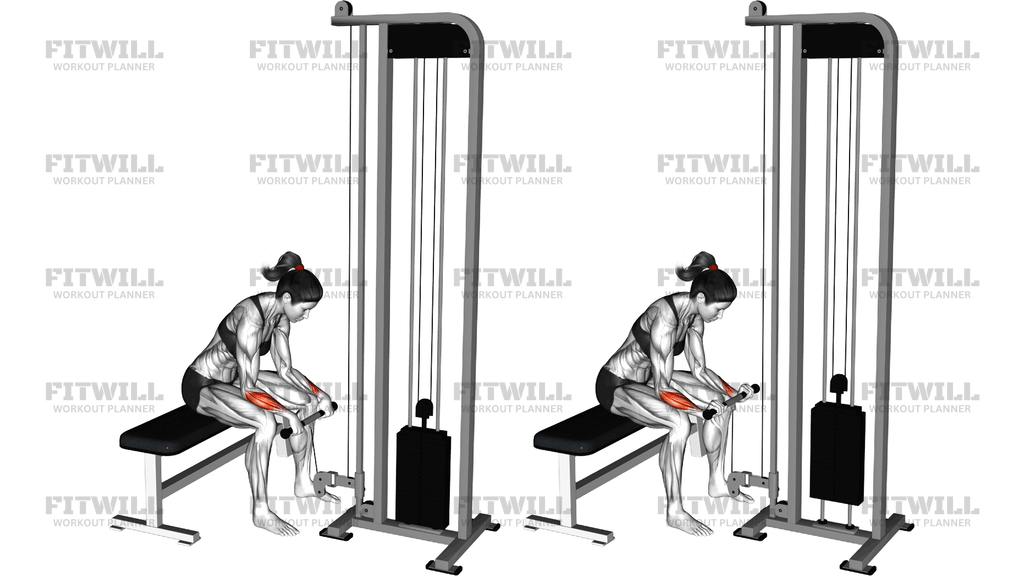
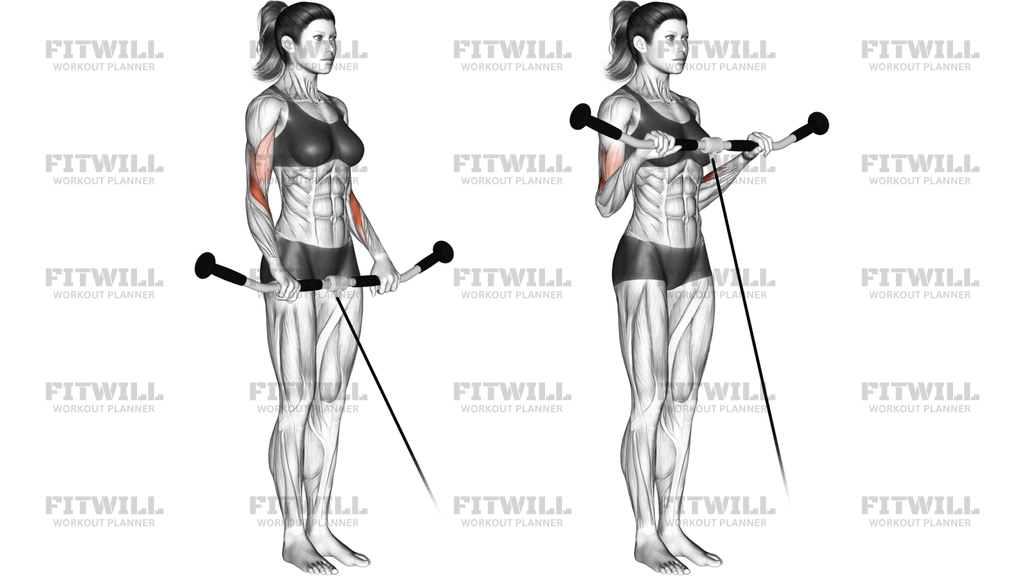
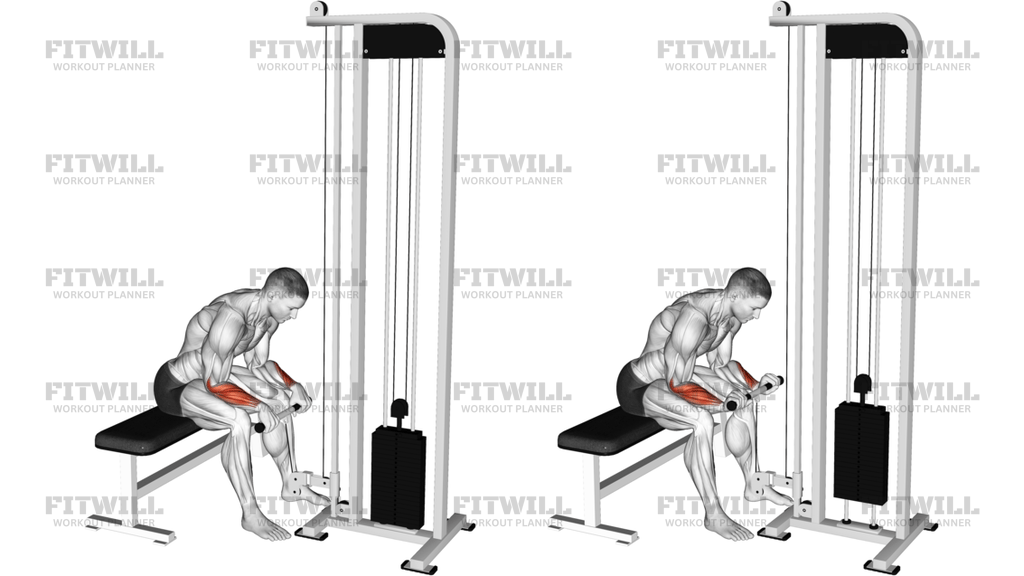
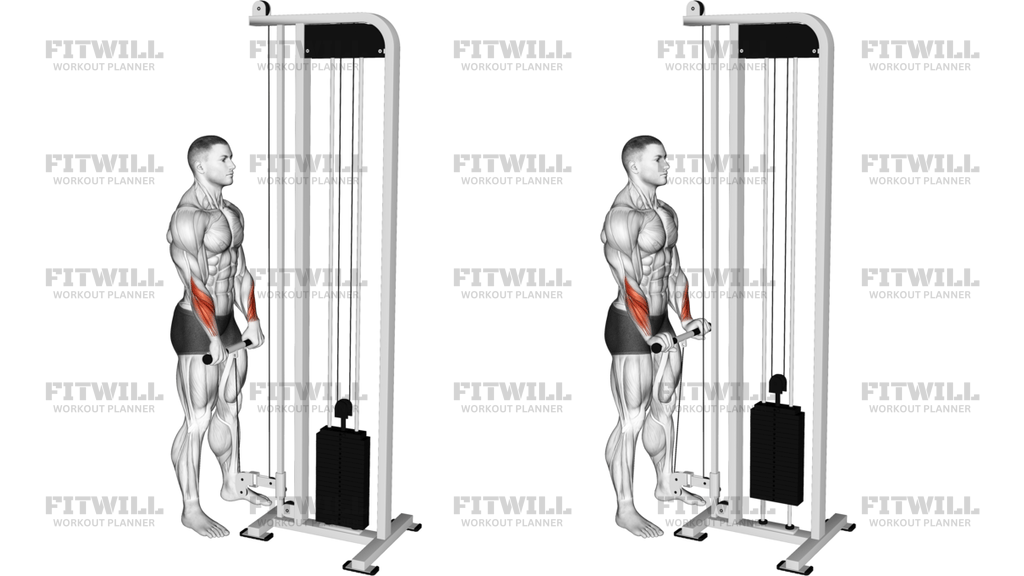
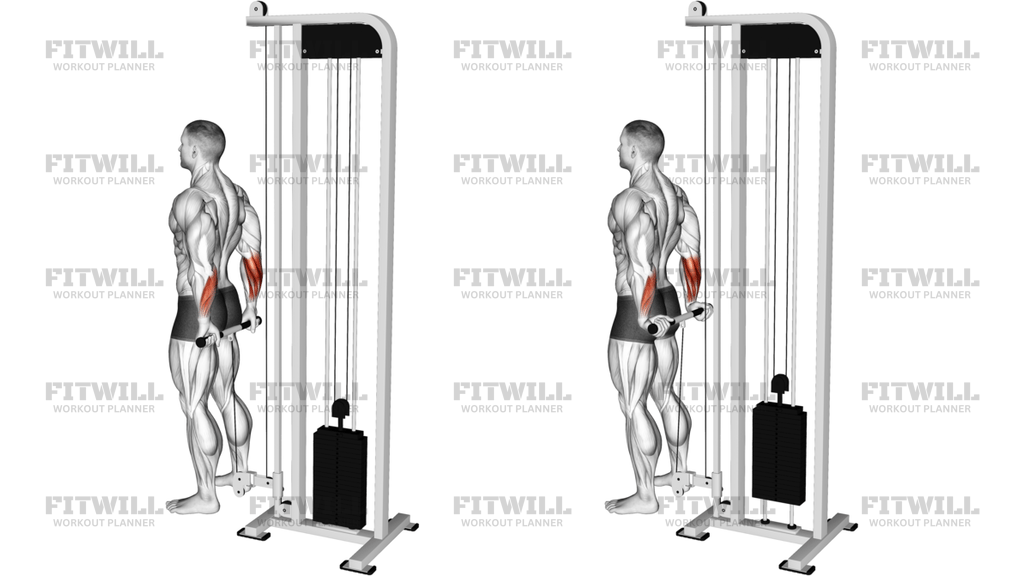
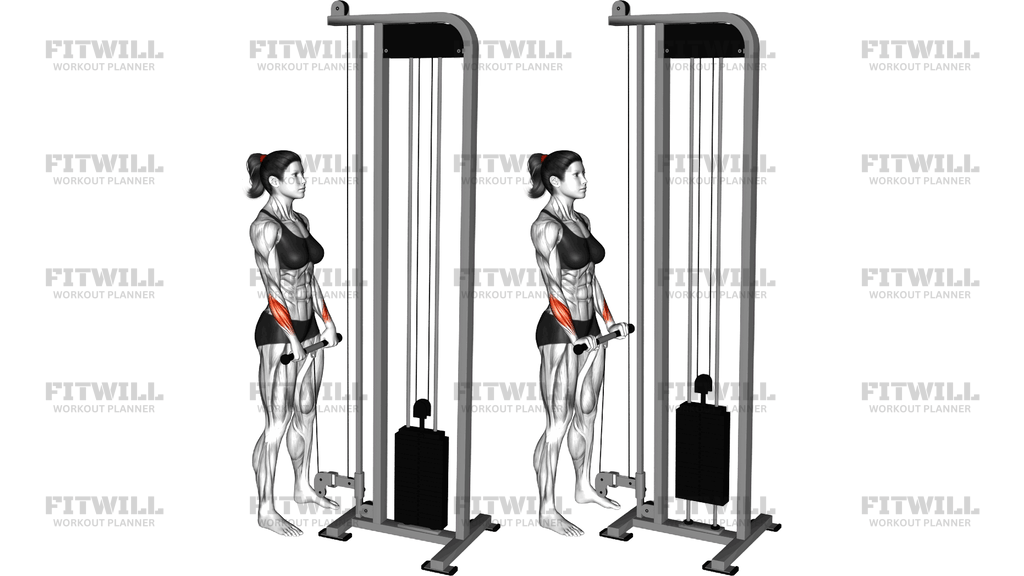
The Cable Standing Wrist Reverse Curl is a forearm isolation exercise performed with a straight bar attached to the low pulley of a cable machine. You stand with your back to the machine, hold the bar behind your thighs with an overhand (palms-down) grip, and curl your wrists upward by extending them against the cable's pull. Unlike a regular wrist curl, which trains the underside of the forearm, the reverse position shifts the work to the muscles on the top of the forearm — the wrist extensors.
This movement is especially useful for anyone whose forearm training is unbalanced. Most daily gripping and lifting tasks, plus exercises like deadlifts, rows, and standard curls, already load the wrist flexors heavily. The extensors on the back of the forearm often get neglected, which can leave the forearm development lopsided. Adding this exercise helps round out forearm size and supports balanced wrist strength for gripping-heavy sports like climbing, tennis, and golf.
The cable setup has one clear advantage over a barbell or dumbbell version: the pulley provides constant, even tension through the entire range of motion, including the stretched position at the bottom where the extensors are lengthened. With free weights, resistance drops off as the wrist rotates past certain angles. The cable keeps the target muscles under load from start to finish, which makes lighter weights feel effective.
Setup matters more than most people expect. Because the cable pulls the bar forward and down, you need a stable stance and a quiet upper body. Keep your arms relaxed and straight at your sides, shoulders pulled back, and let only the wrists move. If your elbows drift back or your shoulders roll forward to help lift the weight, the set stops training the extensors and starts turning into something else entirely.
To execute it well, stand about a foot in front of the low pulley, take a shoulder-width overhand grip on the straight bar, and let it rest just behind your hips with your arms hanging naturally. From there, hinge only at the wrists — pull the back of your hands up toward your forearms as high as they will comfortably go, pause briefly, then lower the bar under control until your wrists bend fully downward. The reps should be smooth and deliberate; this is a small muscle working through a short range, so heavy, jerky reps accomplish very little.
You will typically see this exercise used as a finisher at the end of arm or pull days, or as a targeted builder in a forearm-focused block. Because the load is light and the joints involved are small, keep the reps moderate to high, prioritize control, and stop if you feel sharp pain in the wrist rather than simple muscle effort.
[ Workout Log & Planner ]
Put your next workout in Fitwill
Keep your plan and training log ready when you are.


Instructions
- Attach a straight bar to the low pulley of a cable machine and select a light weight to start.
- Stand facing away from the machine with your back toward the pulley, feet about hip-width apart and roughly a foot in front of the pulley so the cable runs behind your legs.
- Reach behind your body and take a shoulder-width overhand grip on the bar, palms facing down, arms straight and relaxed at your sides.
- Let the bar hang just behind your hips with your wrists bent downward, and set your shoulders back and down so they stay out of the movement.
- Brace your core lightly and keep your knees soft to steady your stance against the forward pull of the cable.
- Curl your wrists upward by extending them, pulling the back of your hands toward your forearms as high as you can without moving your elbows or shoulders.
- Squeeze the top of your forearms at the highest point for a brief pause.
- Lower the bar slowly by bending your wrists downward until you feel a full stretch across the top of the forearms.
- Exhale as you curl the wrists up, and inhale as you lower the bar back down.
- Complete your reps, then set the bar down on the floor or release it safely before letting the weight stack settle.
Tips & Tricks
- Start lighter than you think you need — the wrist extensors are a small muscle group, and the cable's constant tension makes moderate weights feel much harder than a barbell equivalent.
- The most common mistake is turning this into a reverse curl by bending the elbows. Your forearms should stay vertical and fixed; if the bar is traveling up and down toward your shoulders, only the wrists should be moving, so drop the weight.
- Keep the bar just behind your hips rather than letting it drift away from your body — a bar held too far back lengthens the lever arm and strains the shoulders.
- If your shoulders creep forward during the set, squeeze your shoulder blades together before your first rep and re-check that position between sets.
- Use a full range at both ends: let the wrists bend fully downward at the bottom, then extend as high as possible at the top. Short, bouncy reps skip the stretch portion where the cable gives the most benefit.
- Avoid twisting the bar or letting one hand dominate — if the bar tilts noticeably during reps, your stronger side is compensating, so consider training one arm at a time with a single handle.
- Grip fatigue is often the limiting factor before the forearms are fully worked. Using lifting straps can transfer the holding work away from your grip, but only if grip failure is cutting sets short.
- Warm the wrists up with a few slow bodyweight wrist extensions before loading them, especially in cold gyms or early in a training session.
- If the stack weight jumps in increments too large for your wrists, slow the tempo to three seconds down and two seconds up to make the lighter settings challenging.
Frequently Asked Questions
What muscles does the Cable Standing Wrist Reverse Curl work?
It primarily targets the wrist extensors on the top of the forearm, with support from the brachioradialis and the small stabilizing muscles around the wrist and grip. The upper body itself stays largely static, acting as the frame for the movement.
Why is the cable version done standing with the back to the machine?
Facing away from the low pulley lets the cable travel behind your legs and pull the bar forward and down, which creates the resistance direction needed to load wrist extension. The standing position also keeps your arms free to hang naturally at your sides.
Is the Cable Standing Wrist Reverse Curl suitable for beginners?
Yes, as long as the weight is kept light and the reps are controlled. The movement itself is simple, but beginners should focus on isolating the wrists rather than chasing load, since the wrist joints are small and easily overloaded with sloppy, heavy reps.
How is this different from a regular cable wrist curl?
A regular wrist curl uses an underhand grip with the palms facing up and trains the wrist flexors on the underside of the forearm. The reverse version uses a palms-down overhand grip, which shifts the work to the extensors on the top of the forearm.
Why do my shoulders and elbows move during the exercise?
That usually means the weight is too heavy or the bar is held too far behind your body, forcing other joints to assist. Lighten the load, bring the bar closer to your hips, and consciously lock your elbows and shoulders in place so only the wrists hinge.
Can I use a single handle instead of a straight bar?
Yes, a single handle works well for unilateral training and can help if one side of your forearms is noticeably weaker. The mechanics stay the same — stand with your back to the low pulley, arm relaxed at your side, and extend the wrist against the cable.
How many reps and sets should I do?
Because the targeted muscles are small and endurance-oriented, higher rep ranges tend to work best — commonly 12 to 20 reps for 2 to 4 sets. Keep the tempo slow and the tension continuous rather than rushing through the range.
Should I feel this in my wrists as pain?
No — you should feel muscular effort across the top of the forearms, not sharp or pinching pain in the wrist joint itself. If joint pain appears, reduce the weight, shorten the range slightly, and make sure the wrists are moving straight up and down rather than twisting.
Can this exercise help my grip strength?
It supports grip indirectly by strengthening the extensors, which balance the flexors that do most of the gripping work. For direct grip strength you would still want dedicated holding or crushing work, but balanced forearms tend to hold up better under heavy pulling.