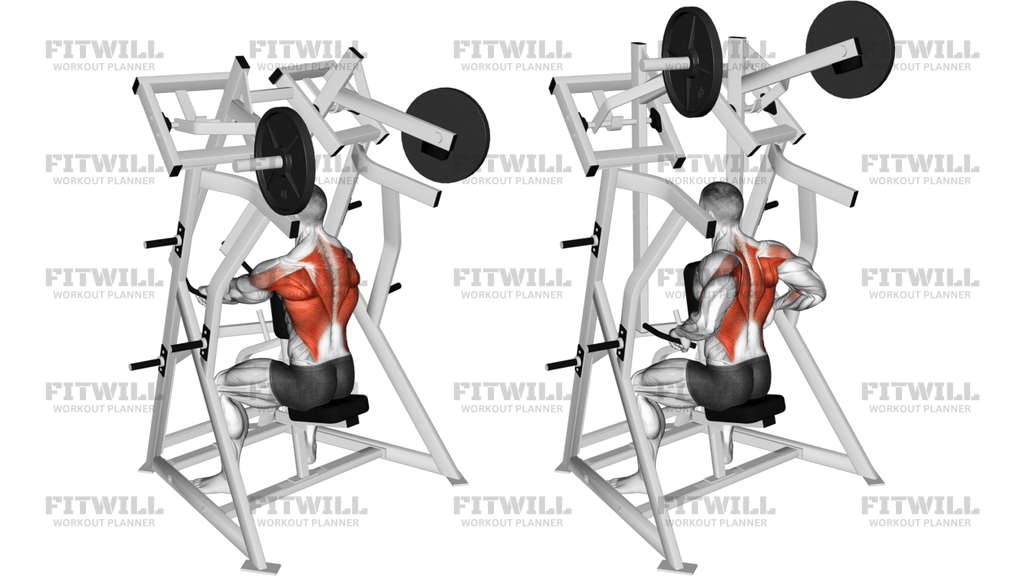
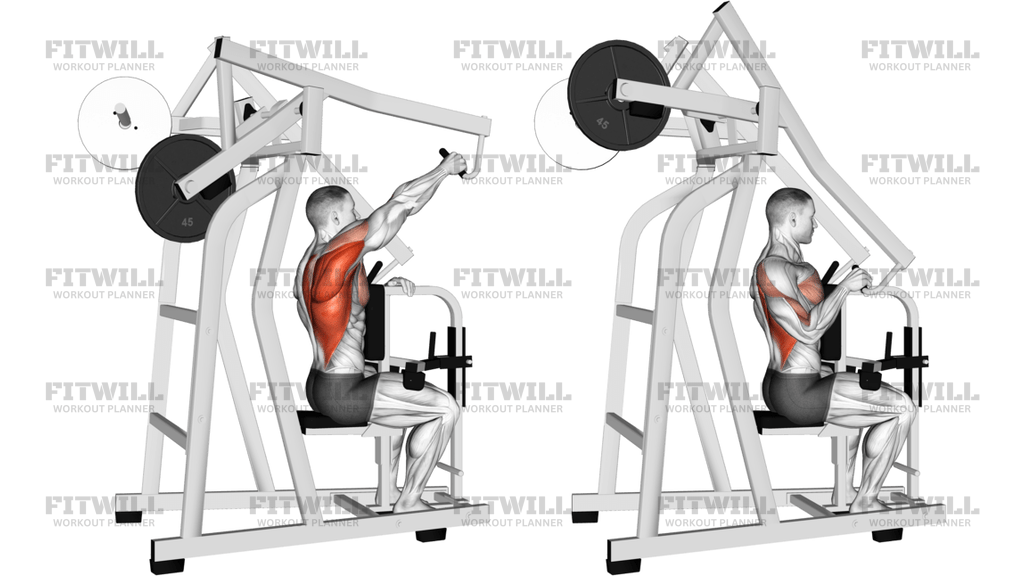
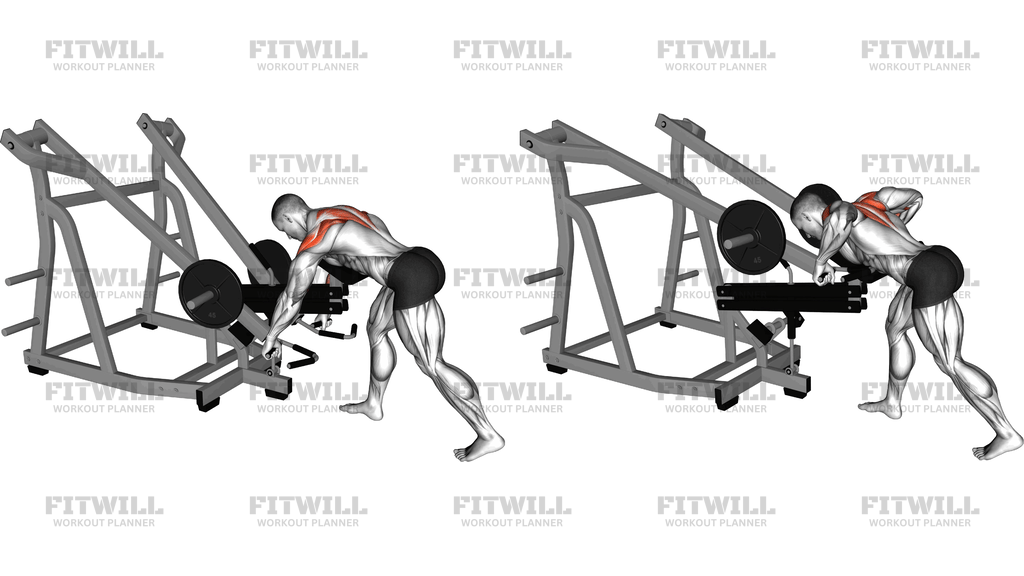
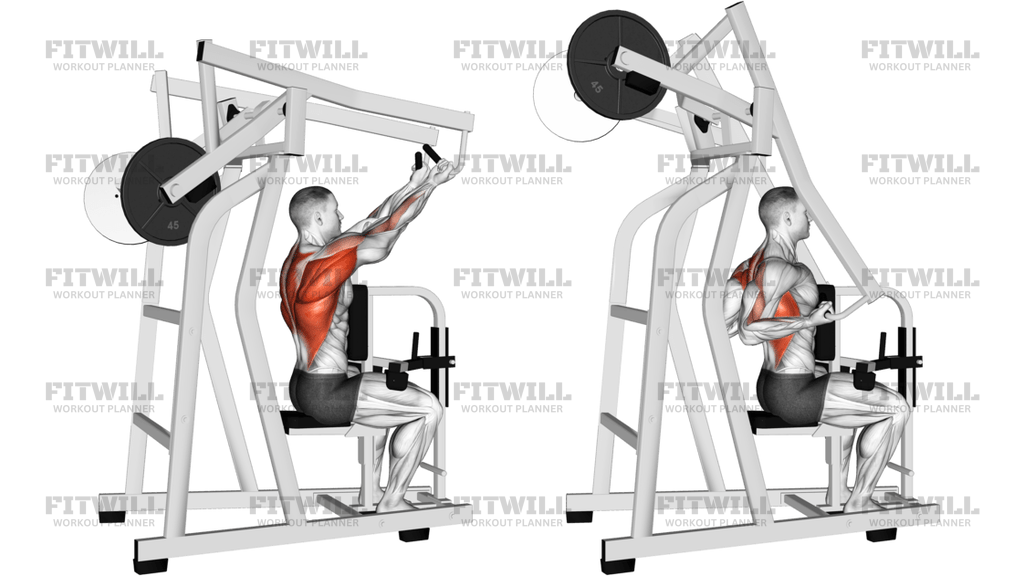
Lever Single Arm Reverse Grip Lateral Pulldown (P)
The Lever Single Arm Reverse Grip Lateral Pulldown is a plate-loaded leverage machine exercise performed seated with your chest braced against the machine's pad. You work one arm at a time, gripping the overhead handle with an underhand (reverse) palm facing you, and pull the lever down from a fully stretched overhead position until your hand is beside your shoulder. Because the resistance rides on a lever arm with plates loaded directly on it, the movement feels smooth and consistent through the whole range, with no cable stretch or momentum to hide behind.
The reverse grip changes the character of the pull compared with a standard overhand pulldown. With your palm turned toward you, your biceps sits in a stronger line of pull and assists more of the work, which lets you load the lat through a long range without the shoulder feeling pinched. It is a good option for people whose shoulders complain on pronated pulldowns, and for anyone who wants to feel the lat working on one side at a time instead of letting the stronger arm take over on a bar.
Single-arm work has real value beyond variety. It exposes and helps correct left-to-right strength differences, forces your core to resist rotation as you pull, and lets you focus on the squeeze of one lat at a time. The chest pad keeps your torso from leaning back and turning the exercise into a row, so the arm travels through a true vertical path and the lat does the work from a stretched position. The free hand holds the machine's fixed handle to keep you square to the pad.
This exercise fits well as a primary back builder in machine-based programs, as a second lat movement after heavier rows, or as a finisher where you chase a controlled squeeze on each side individually. It is also a practical choice for rehab-minded trainees or beginners, since the machine guides the path and the chest pad removes most of the balance demands.
To get the most from it, sit tall against the pad, keep the working shoulder from shrugging toward your ear, and think about driving your elbow down and back rather than simply bending your arm. Control the return fully; the stretch at the top is where much of the benefit lives. Stay within a load you can stop smoothly at any point, since the plate-loaded arm will keep pulling if you let it slam back.
Fitwill
Log Workouts, Track Progress & Build Strength.
Achieve more with Fitwill: explore over 9600 exercises with images and videos, access built-in and custom workouts, perfect for both gym and home sessions, and see real results.
Start your journey. Download today!




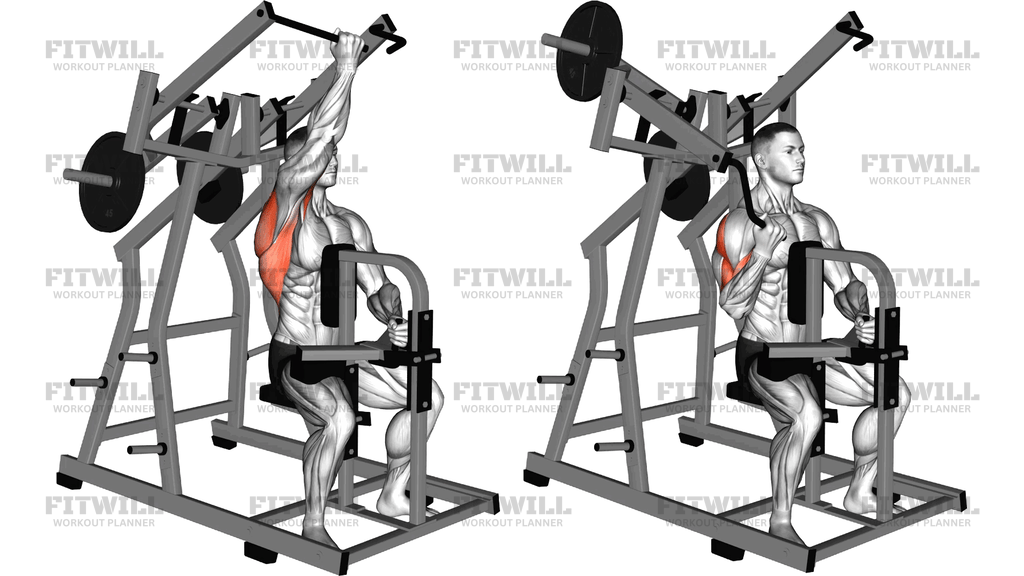
Instructions
- Sit on the machine facing the pad and adjust the seat so your chest rests firmly against the pad with your feet flat on the floor.
- Grip the overhead handle of the lever arm with one hand using an underhand, reverse grip so your palm faces your body, and take hold of the machine's fixed handle with your other hand.
- Sit tall, lift your chest onto the pad, and brace your abdominal muscles so your torso stays square and does not twist toward the working arm.
- Start with your working arm extended overhead and lean your torso very slightly forward so the lat is stretched before you pull.
- Exhale and pull the lever down by driving your elbow toward your hip, keeping the elbow pointing down rather than flaring out to the side.
- Pull until your hand is roughly level with your shoulder and your upper arm is close to your side, then pause briefly and squeeze the lat.
- Inhale and let the lever rise back up under control, following it with your arm until the lat is fully stretched overhead again.
- Complete all planned repetitions on one side, then switch your grip to the other arm and repeat, keeping the seat and pad settings identical.
- When finished, lower the lever slowly to the start position and check that the plates are fully settled before letting go of the handle.
Tips & Tricks
- If your torso rotates toward the working side as you pull, the weight is too heavy or you are losing the brace against the chest pad; drop the load and re-square your shoulders before continuing.
- A common mistake with the reverse grip is turning the pull into a biceps curl by bending only the elbow; cue yourself to lead with the elbow dropping straight down so the lat initiates the movement.
- Do not shrug the working shoulder toward your ear at the top; keep the shoulder blade depressed and let the stretch come from the lat, not from a slack shoulder girdle.
- Let the plates touch down lightly at the start of each rep if your machine allows it, but never bounce the stack, as the lever arm will whip the handle back toward the top position.
- Keep your wrist neutral and directly under the handle; a cocked or bent-back wrist on the underhand grip shifts tension into the forearm and irritates the elbow over time.
- Match the seat height between sides and between sessions; if the pad sits at collarbone height you will lean back, while a pad at mid-chest keeps the pull vertical.
- Because the biceps assists heavily in the reverse grip, expect your pulling strength here to differ slightly from your overhand pulldown; program the load by feel on each side, not by symmetry with other rows.
- Pause for a full second at the bottom with the hand beside the shoulder; on a machine with a fixed path the squeeze is the only part you can truly control, so make it count.
Frequently Asked Questions
What muscles does the Lever Single Arm Reverse Grip Lateral Pulldown work?
The latissimus dorsi is the primary mover, with the teres major and lower traps assisting. Because the grip is reversed, the biceps brachii contributes more than it would in an overhand pulldown.
Why use a reverse grip instead of a standard overhand grip on this pulldown?
The underhand grip puts the biceps in a stronger line of pull and many lifters find it more shoulder-friendly. It still drives the elbow down through the same lat-dominant path.
Is the Lever Single Arm Reverse Grip Lateral Pulldown suitable for beginners?
Yes. The machine fixes the movement path, the chest pad removes balance demands, and the single-arm setup makes it easy to spot and fix a weaker side early on.
What is the chest pad for on this machine?
It braces your torso so you cannot lean back and turn the pulldown into a row. That keeps the arm moving vertically and holds the tension on the lat through a stretched range.
Why does one arm at a time matter?
Unilateral work exposes side-to-side strength differences and stops your dominant arm from doing most of the pulling. It also challenges your core to resist rotation as you pull.
Should my elbow stay close to my body or flare out?
Keep the elbow pointing down and let it travel close to your side as you pull. Flaring the elbow wide shifts emphasis away from the lat and can strain the shoulder.
What are the most common mistakes with this exercise?
Rotating the torso toward the working arm, shrugging the shoulder at the top, half-repping the return so the lat never gets a full stretch, and letting the lever arm slam back down between reps.
How heavy should I go on this machine?
Choose a load you can stop smoothly at any point in the range, since the plate-loaded lever keeps pulling if released. If your torso twists or the pad loses contact with your chest, the weight is too heavy.
What can I substitute if my gym has no leverage pulldown machine?
A single-arm lat pulldown on a cable machine with an underhand handle grip is the closest match. A one-arm dumbbell pulldown or a kneeling single-arm cable pulldown also trains a similar vertical pulling pattern.