Barbell Box Squat
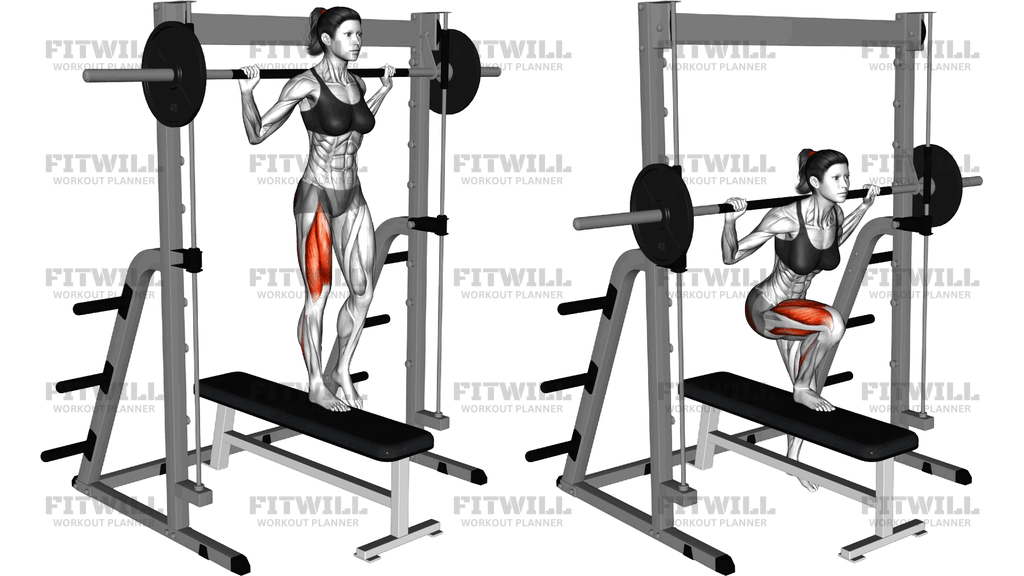
The Barbell Box Squat is a back squat performed to a sturdy box or bench set at a specific height. You unrack a barbell across your upper back, sit back onto the box with a vertical shin angle, pause briefly, and then drive up to a full stand. Unlike a free squat, the box gives you a fixed target and a hard stopping point, which removes the bounce from the bottom and forces your hips and legs to do all of the work.
This movement is popular with powerlifters because it teaches the sit-back hip pattern used in wide-stance competitive squatting, but it is just as valuable for general lifters. If you struggle to reach depth, dive your knees forward, or lose your lower back position at the bottom of a regular squat, the box gives you immediate feedback. Every rep ends at the same height, so you can gauge progress and build consistency.
The main muscles worked are the quadriceps, glutes, and hamstrings, with the lower back and core working hard to keep your torso rigid under the bar. Because you briefly unload your legs at the bottom by sitting down, the ascent starts from a dead stop. That paused, concentric-only start builds strong drive out of the hole and carries over well to regular squats.
Setup matters more here than in most squat variations. The box height determines how deep you go, so most lifters do best with a box at or just below parallel knee height. Position it directly behind you, set your stance a little wider than a normal squat, and make sure you can sit down without reaching or shuffling your feet. If the box is too far away you will lean forward excessively; too close and you will hit it with your knees instead of sitting onto it.
To perform it well, unrack the bar, step back, and push your hips backward as if closing a door with your glutes. Let your shins stay close to vertical while your torso leans slightly forward, and touch down fully rather than hovering above the box. Keep your weight midfoot and your chest proud, then drive the floor away to stand back up. Control matters on the way down; dropping onto the box with a heavy bar compresses your spine and teaches nothing.
You will see the Barbell Box Squat used in strength cycles, squat technique work, and rehabilitation-style programming where limiting depth is the goal. Start with a load well below your regular squat, master the touch-and-go rhythm, and progress the weight only when you can keep your torso angle consistent from top to bottom.
[ Workout Log & Planner ]
Put your next workout in Fitwill
Keep your plan and training log ready when you are.


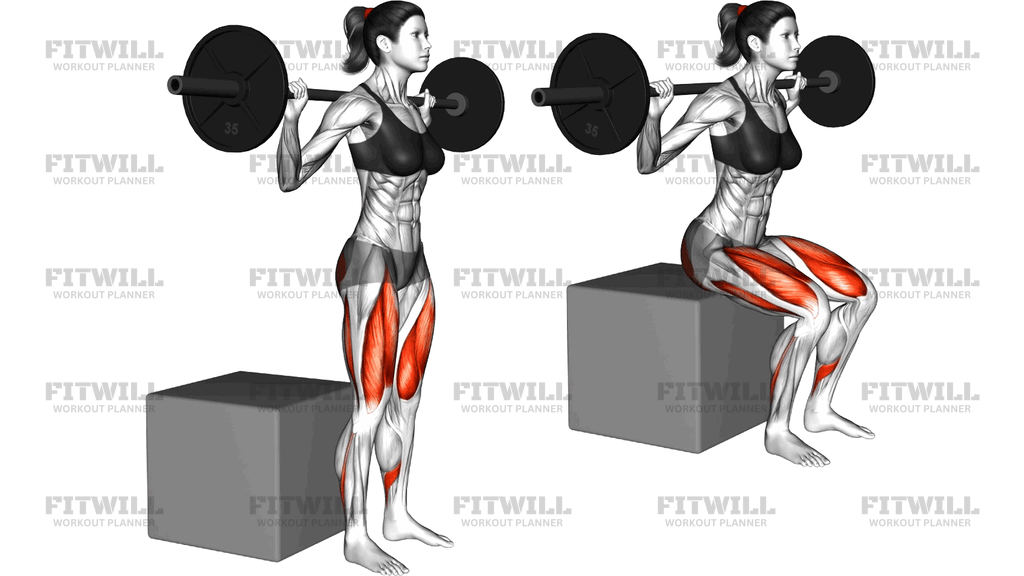
Instructions
- Set a sturdy box or bench directly behind you at roughly parallel knee height, and position a loaded barbell in the rack at upper-chest height.
- Grip the bar wider than shoulder width, duck under it, and rest it across your upper traps or the shelf of your rear shoulders, then unrack and step back with feet slightly wider than hip width, toes turned out a little.
- Take a deep breath into your belly, brace your core, and pull your shoulder blades together to keep the bar stable on your back.
- Push your hips straight back and begin sitting down, keeping your shins close to vertical and your knees from drifting forward past your toes.
- Lower under control until your glutes fully touch the box, letting your torso lean slightly forward while keeping your chest up and spine neutral.
- Pause briefly on the box, staying braced and keeping tension in your hips and legs rather than relaxing into a full sit.
- Drive your feet into the floor and push your hips forward to stand back up to a full lockout without rounding your lower back.
- Exhale as you rise, then reset your brace and stance before starting the next repetition.
- After your final rep, step forward carefully and re-rack the bar against the uprights.
Tips & Tricks
- Sitting too far forward onto the quads with knees shooting forward is the most common error—cue yourself to reach the box with your hips, not your knees.
- If you slump or exhale completely while seated, you will lose your brace; keep your air and stay tight through the pause.
- Choose a box height you can hit without your lower back rounding. If your pelvis tucks under at contact, the box is too low for your current mobility.
- Keep your whole foot loaded. Rocking onto your heels as you sit back makes the ascent shaky—shift your weight to midfoot before driving up.
- Do not bounce off the box. The dead-stop pause is the whole point of the variation, so a soft rebound means you are turning it into a regular squat.
- Start with around half of your regular squat weight. The paused position feels far harder than a touch-and-go free squat at the same load.
- Set the box square behind you before unracking. A box angled even slightly to one side encourages twisting under load.
- Wear flat, stable footwear or squat barefoot as shown—cushioned running shoes make the sit-back balance harder to control.
- Film from the side for a few sessions; the shin angle and torso lean are much easier to judge from a side view than by feel.
Frequently Asked Questions
What muscles does the Barbell Box Squat work?
It primarily targets the quadriceps, glutes, and hamstrings, while the lower back and core stabilize your torso under the bar. The sit-back pattern shifts slightly more emphasis to the hips than a regular back squat.
How high should the box be for the Barbell Box Squat?
Most lifters do well with a box at or just below parallel, meaning the top of the box lines up with the crease of the hip when seated. Lower boxes increase the demand on mobility and strength, so build up gradually.
Is the Barbell Box Squat good for beginners?
Yes, as long as the load is modest and the box height allows a comfortable, neutral spine position. The fixed depth gives beginners a clear depth target and helps them learn the hip-hinge squat pattern safely.
Should I fully relax on the box between reps?
No. Stay braced and keep light tension in your hips and legs during the brief pause, then drive up. Fully unloading and slumping puts stress on your lower back and makes every rep feel like a fresh heavy start.
Why does my Barbell Box Squat feel harder than my regular squat at the same weight?
The pause eliminates the stretch reflex you normally get at the bottom, so you start the ascent from a dead stop. This is expected and is exactly why the exercise builds strong drive out of the hole.
Can I use a regular bench instead of a squat box?
A stable, flat bench can work if it does not tip or slide, but dedicated squat boxes or stacked aerobic platforms with a non-slip surface are safer for heavier loads. Never use anything that wobbles under the bar.
What is the most common mistake in the Barbell Box Squat?
Dropping quickly onto the box and bouncing off it. This compresses the spine, bypasses the paused-start benefit, and can knock your torso position out of line—lower under control and touch down deliberately.
How close should the box be to my heels?
Close enough that you sit straight down without stepping or over-reaching, usually an inch or two behind your calves. If you have to shift your feet to reach it, reset your setup before continuing.
What can I substitute if I do not have a barbell?
A Dumbbell Box Squat or a bodyweight box squat to a chair trains the same sit-back pattern. You can also use a Smith Machine box squat if your gym has one, though the fixed bar path changes the feel.
Is it safe for my knees and lower back?
When performed with a controlled descent, an appropriate box height, and a braced torso, it is generally well tolerated and often used to manage squat depth. If either area hurts during the movement, reduce the load, raise the box, and check your setup before continuing.